Dragon's deployment will help defence but more assets needed, says ex-RN commander
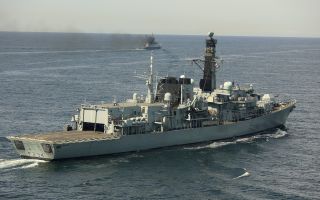
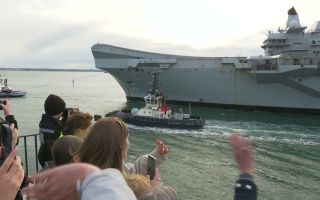
The deployment of the Type 45 destroyer HMS Dragon to defend personnel on UK bases in Cyprus adds another layer to the defence picture in the region – but it cannot be the only one, a respected former Royal Navy commander has said.
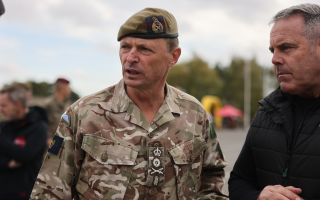
Tom Sharpe, who commanded four Royal Navy ships during a 27-year career, said the realistic impact of the warship's presence would soon become clear.
Capable of surface warfare, but specialising in tackling airborne threats, he says the destroyer "effectively throws a bubble, let's call it a dome, around herself, and puts whatever it is she wants to protect within that dome".
"[She] can then engage whatever is thrown towards that dome, whether that's a surface drone, an aerial drone, a missile, up to and including the low end of ballistic missile speeds," he explained.
The former commander also explained how the assets being protected can range from task groups, like recent carrier strike deployments, or shore facilities – such as RAF Akrotiri.
Part of a bigger picture
There is more to this than simply sending one ship, though.
Wildcat helicopters with counter-drone capabilities will also be deployed to the region as a full suite of assets is required to enable a destroyer to operate effectively.
"The thing when it comes to Cyprus is you never want to put just one thing in place. The secret of defending anything is layers of defence," he said.
"And that starts with intelligence-gathering... having an awareness of what's moving and what might be coming to get you."
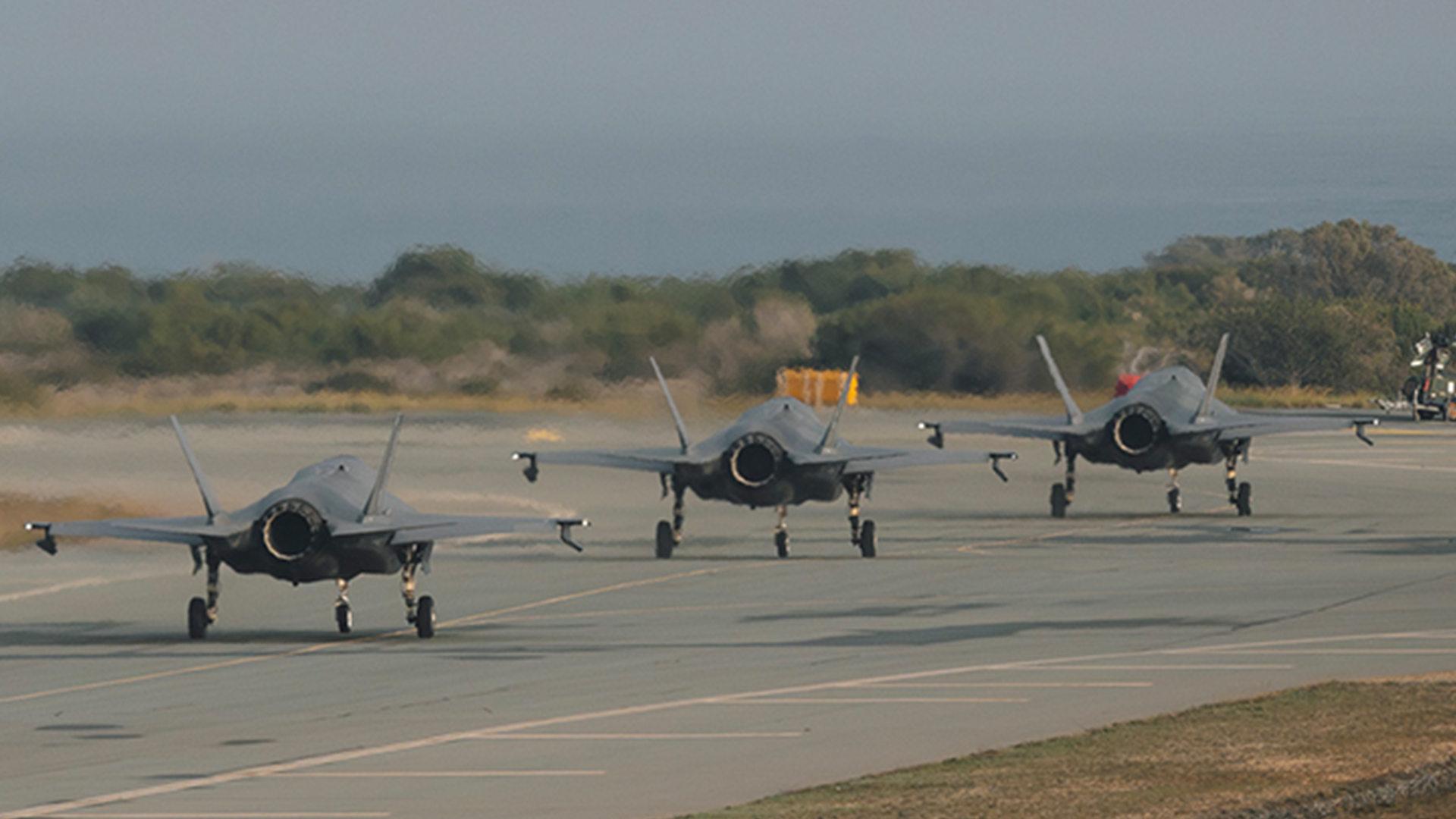
Cdr Sharpe described how the Type 45 would fit into a larger defence picture off the coast of Cyprus.
Referencing F-35 jets nearby, but questioning the suitability of the maintenance facilities available to them at Akrotiri, he noted how the treatment of these "layers" in recent had now been placed in the spotlight.
"You can't just put a ship there and go 'okay, that's fine, it's safe now'," he said. "We need ground-based air defence systems. I think that's what we're really lacking here.
"We used to have those all over the RAF and the Army [the Rapier air defence missile system], and they've essentially been reduced to zero.
"So the ship's a very capable, very expensive sticking plaster to a problem that's bigger than just the one layer.
"You really need all of them, and I think this is, I'm afraid to say, indicative of the fact that we've let most of this stuff rot away."
Uncertainty always a risk – but more warning time helps
On this kind of deployment, he described the number one risk as a "weapon system that lies outside of your capabilities – a new system or a very fast one that you either can't detect or you can detect but can't destroy".
Spotting, and perhaps even taking out, systems before they fire is key in this instance, he says, explaining how "it's much easier to hit the archer rather than the arrow".
Offering more cause for optimism, he says, is the mission itself. "I think this particular task is a relatively easy one," he said.
"Your air picture compilation – in other words your ability to determine what's around you, what's flying, what's good, what you're not sure about, and of course, most importantly, what's bad – is somewhat easier there.
"You have a little bit of notice time, if you compare it to say the Bab al-Mandeb or the Strait of Hormuz, where your warning time is seconds.
"If I was a destroyer captain being asked to sit off Akrotiri and protect it, and also protect myself and my ship's company, I'd feel reasonably confident doing that."
Related topics
Join Our Newsletter