No British casualties – but some US personnel hurt – as drones hit military bases in Iraq

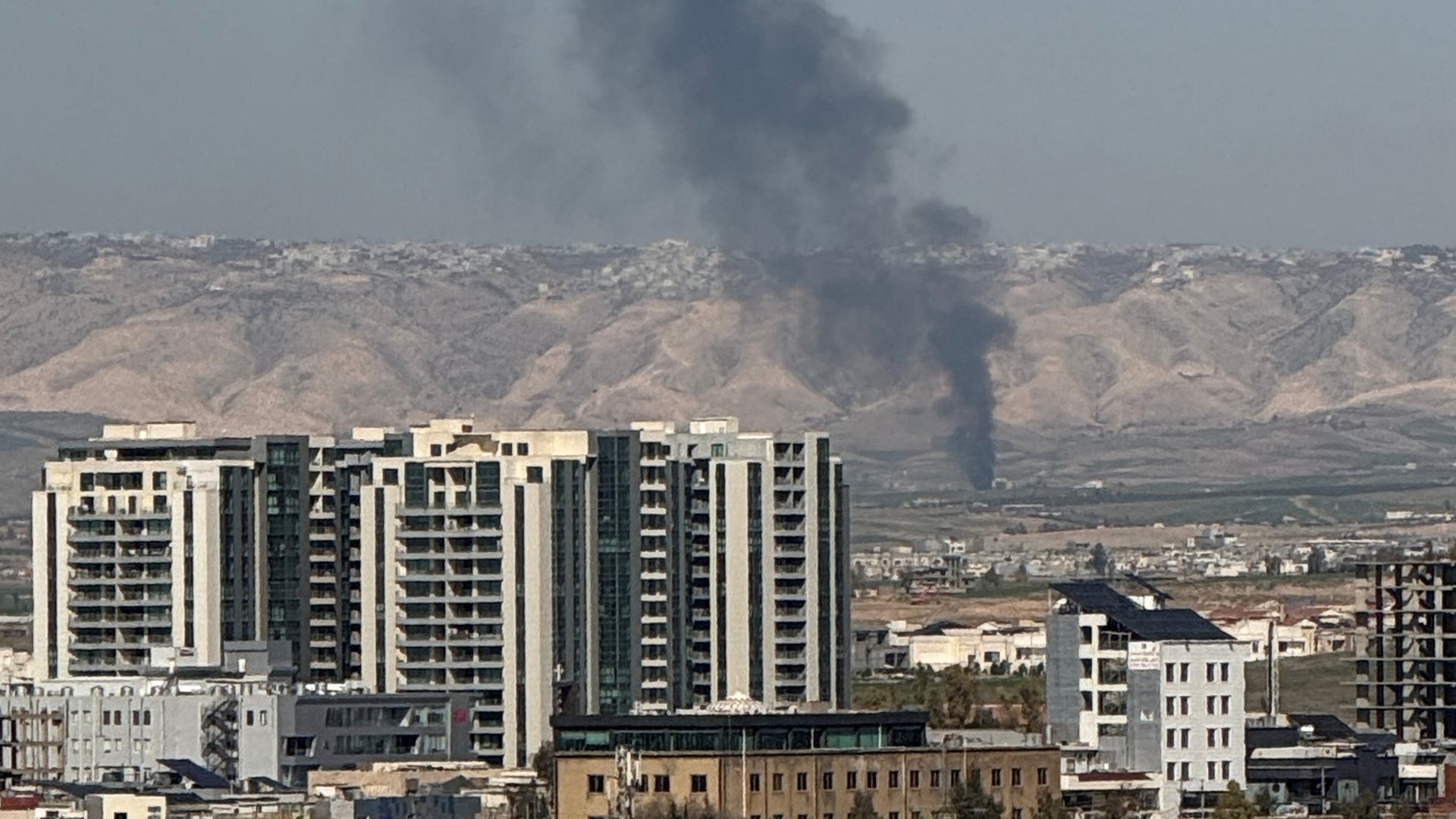
Military bases in Erbil and Baghdad in Iraq have been struck a number of times and British personnel are in Erbil helping to defend that base, a senior Army officer has confirmed.
"Last night they [UK forces] shot down two UAVs... but a number of UAVs did impact on the camp," said Brigadier Guy Foden.
Lieutenant General Nick Perry, the UK's chief of joint operations, added that there had been no British casualties, although a number of US personnel had been injured – but "nothing too serious".
Russian influence suspected
Lt Gen Perry was speaking at Permanent Joint Headquarters at Northwood during a visit by Defence Secretary John Healey.
Mr Healey suggested Russian President Vladimir Putin was behind some of Iran's tactics in the Middle East conflict.
During his visit to the military headquarters in Hertfordshire, he was briefed on the latest updates on British operations in the region.
Lt Gen Perry said there were definitely signs of a link between Russia and Iran, including Iran's use of drones, as had been learned from the Russians.
When he was asked later by reporters for examples of such links, Mr Healey said: "At the moment, we're taking part in analysing the drone that struck the hangar at Akrotiri for any evidence of Russian or any other foreign components and parts.
"We will update you and appropriately publish any findings from that when we've got them, but I think no one will be surprised to believe that Putin's hidden hand is behind some of the Iranian tactics, potentially some of their capabilities as well, not least because one world leader that is benefiting from the sky high oil prices at the moment is Putin.
"It helps him with a fresh supply of funds for his brutal war in Ukraine."
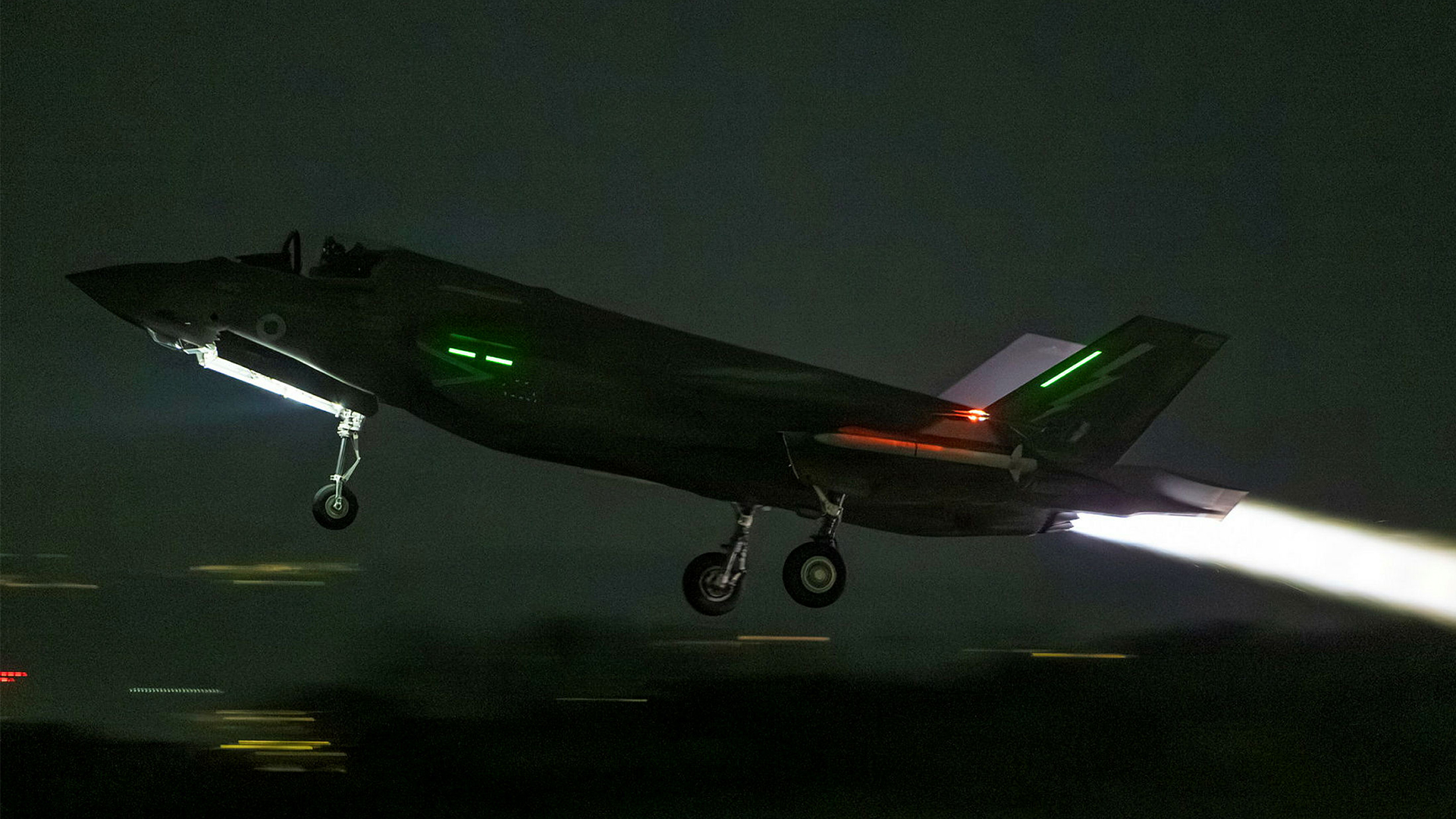
British jets patrolling the skies
The UK has been maintaining combat air patrols in the region.
Brig Foden said CAPs had been flown over Jordan and the United Arab Emirates, along with a number of sorties over Qatar.
RAF jets have also continued to fly in defence of Cyprus with European allies in the region.
The Defence Secretary said the UK had clocked up more than 300 pilot flying hours over the last 13 days and HMS Dragon was still on her way to the Mediterranean.
And overnight, a British counter-uncrewed aerial systems unit also took down two drones in the region that were threatening lives on the ground.
Demining efforts already underway
The Strait of Hormuz is also in the spotlight as Iran has warned vessels not to pass through the waterway, leading to the price of heating oil doubling in the past week.
Mr Healey said: "These are early days. The reports of Iran mining the Straits is becoming established. The evidence and number of commercial ships being attacked is becoming established.
"The two things that I think are most significant are, first, that recognising the huge impact that this potentially has on oil prices and on people's cost of living around the world.
"There is an international imperative and incentive to try and see this resolved.
"Big steps like the record release of reserve oil helps, but doesn't solve the problem.
"And the second is a realism that in a in circumstances of conflict, demining any waters is extremely difficult.
"And therefore, in addition to the additional options that, of course, as Defence Secretary, I'm discussing with our planners, in part, reflecting the fact that I've already got some demining autonomous systems in place in the region since before the conflict.
"In the end, this is likely to be most quickly sorted and the Straits are most likely to be quickly opened by a de-escalation of the conflict, by a greater stabilisation and confidence in the region and by all those nations that want to see the statues reopened being willing to work together."
Join Our Newsletter