Mystery Solved After 153 Years: What Happened To Submarine H.L. Hunley?
A 153-year-old mystery has finally been solved.
Research has revealed that the crew of the first military submarine to sink an enemy ship were killed by their own torpedo.
The study shows that the eight-man crew of the Confederate sub, H.L. Hunley, were killed instantly by the powerful explosion.
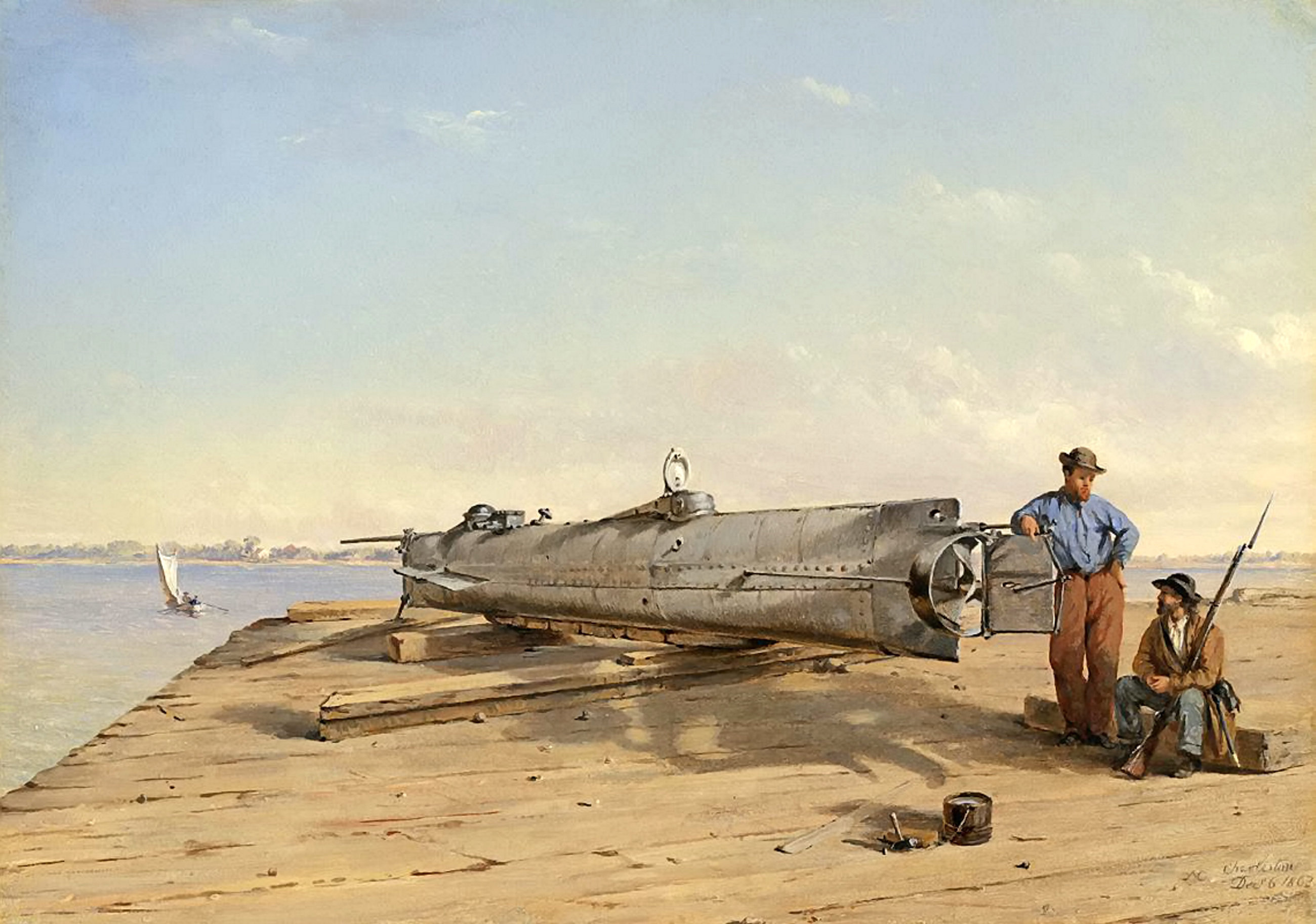
On February 17th, 1864, during the American Civil War the Hunley conducted its first and last combat mission.
On that mission it sank the 1,200-ton Union warship, USS Housatonic, delivering a blast from 135 pounds of black powder below the waterline at the stern.
The Housatonic lost five seamen but came to rest upright in 30 feet of water, which allowed the remaining crew to be rescued after climbing the rigging and deploying lifeboats.
But the fate of the 40-foot Hunley remained a mystery until 1995 when the submarine was discovered 300 meters away from the Housatonic's wreck.
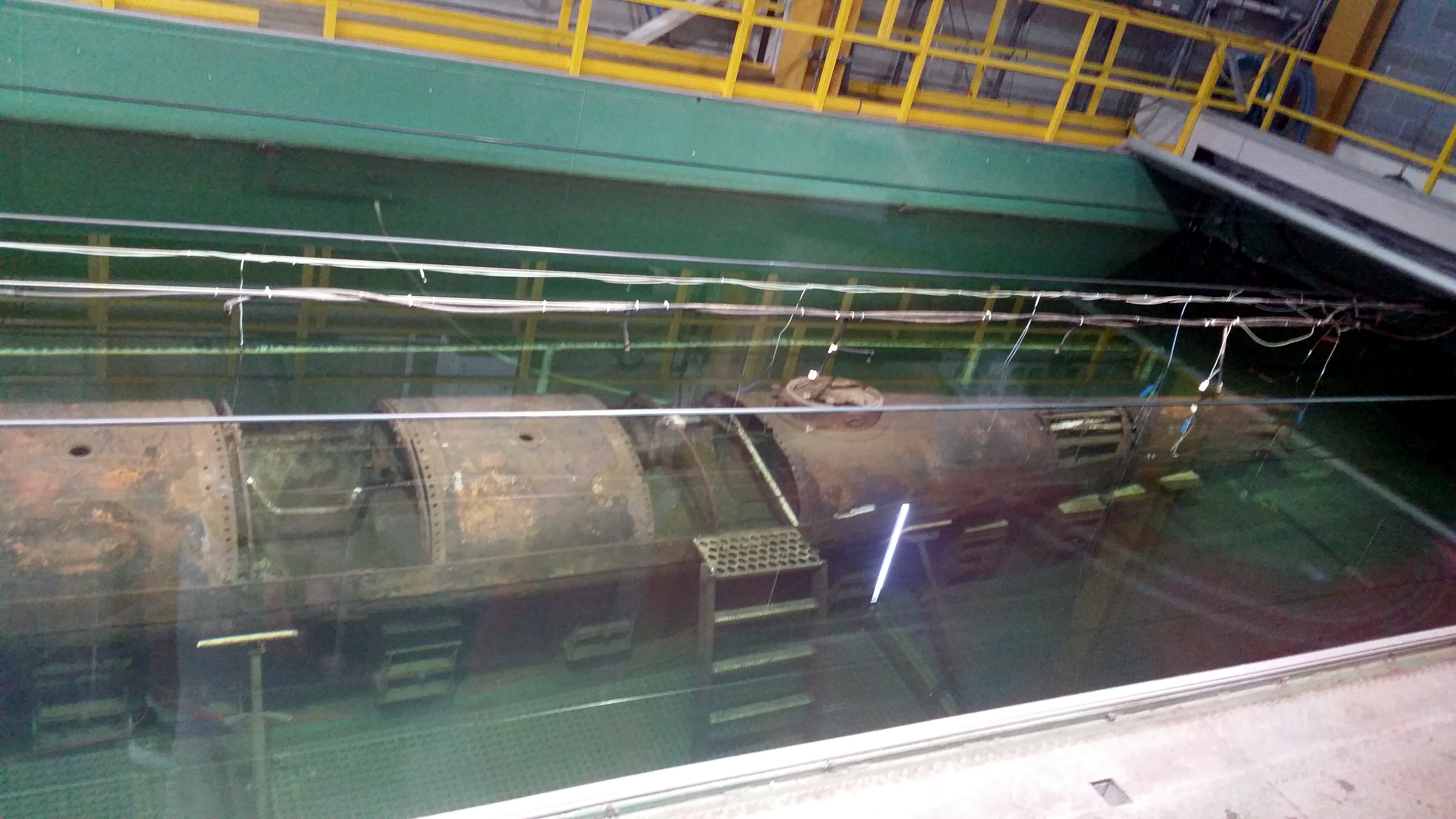
The submarine was raised 5 years later so a team of scientist in Charleston could examine the craft.
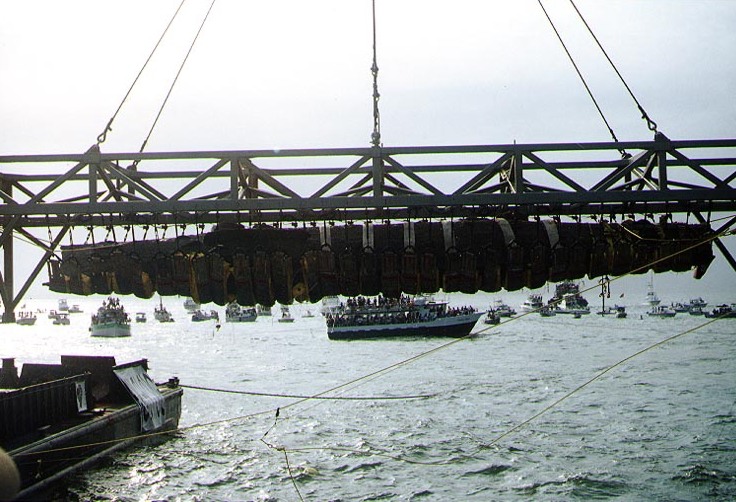
At first what happened to the submariners was not clear.
The crewmen's skeletons were found still at their stations, they suffered no broken bones, the bilge pumps hadn't been used and the air hatches were closed.
The original belief was that they had died from suffocation and drowning.
However, after a three-year study that involved repeatedly setting blasts near a scale model, shooting authentic weapons at the historically accurate iron plate and research on human respiration and the transmission of blast energy, researcher Rachel Lance says it was a powerful shockwave from the Hunley's weapon that killed the crew.
Back in 1864, a torpedo was not a self-propelled bomb, like today.
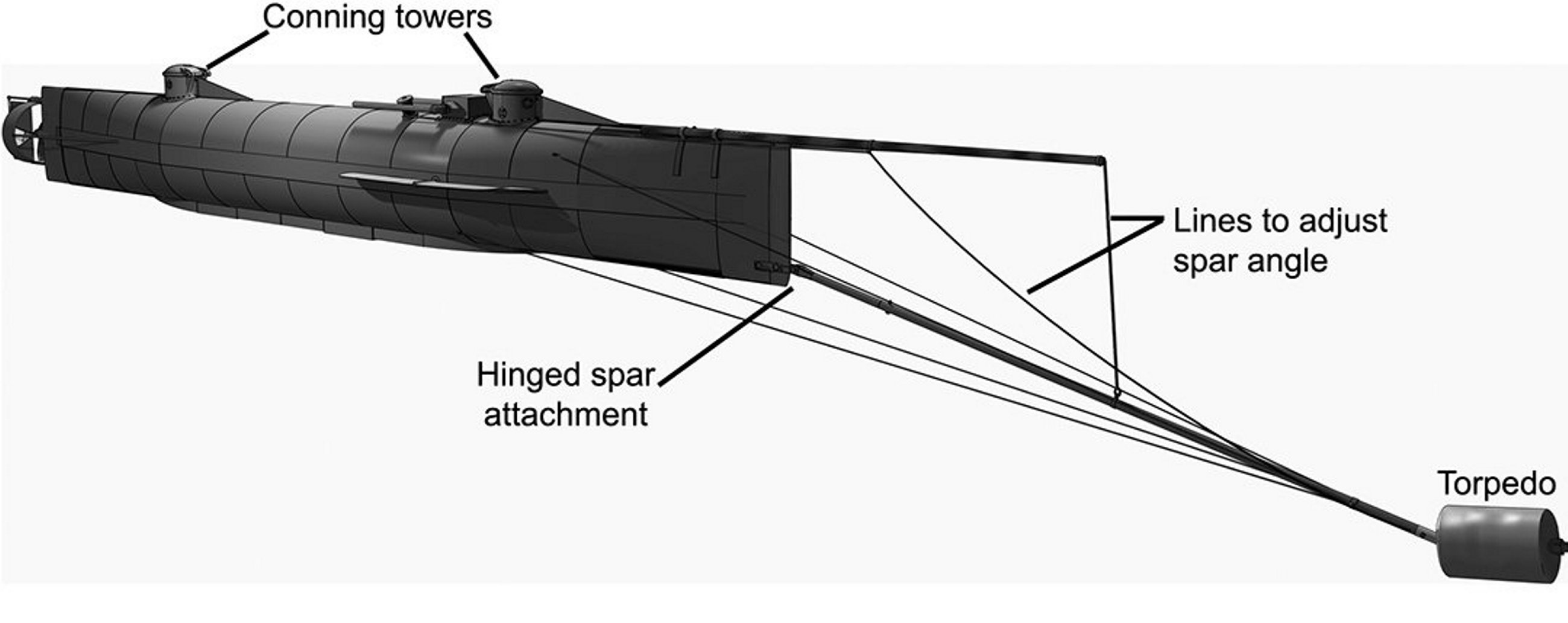
It was a copper keg of gunpowder held ahead and slightly below the Hunley's bow on a 16-foot pole called a spar.
The sub would then ram the spar into the enemy ship's hull and the bomb exploded.
The furthest any of the crew was from the blast was about 42 feet.
Dr Lance says the crew died instantly from the force of the explosion travelling through the soft tissues of their bodies, especially their lungs and brains:
"You have an instant fatality that leaves no marks on the skeletal remains".
The shockwave of the blast would travel about 1,500 meters per second in water, and 340 m/sec in air.
While a normal blast shockwave travelling in the air should last less than 10 milliseconds, Dr Lance calculated that the Hunley crew's lungs were subjected to 60 milliseconds or more of trauma.
She said:
"That creates kind of a worst case scenario for the lung."
Dr Lance based this conclusion on tests she carried out with a 6.5 foot mild steel scale model of the Hunley she had built for her experiments.
There is no physical evidence to suggest any of the crew survived, such as a crew member tried to release the keel ballast weights, set the bilge pumps to pump water or tried to get out the hatches.
Dr Lance is now working on a book about the Hunley and the experiments that were required to solve the mystery.
Related topics
Join Our Newsletter