Stop the Friendly Fire: How MOD's trying to stamp out sexualised comments in the military

The MOD has launched a new pilot scheme to tackle unacceptable sexualised behaviour in the Armed Forces.
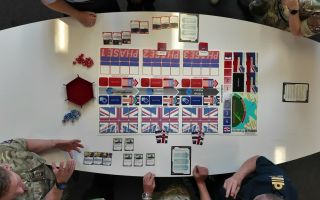
The Stop the Friendly Fire campaign was developed in conjunction with personnel and features a poster campaign that will be appearing at HMNB Portsmouth, Tidworth Garrison and RAF Marham, with the initiative running between now and October.
The posters feature incoming fire represented by red lines coming towards personnel, and at the tip of each burst is a word making up the sentence "Making sexual comments breaks trust which damages all of us" and urges all to "stop the friendly fire".
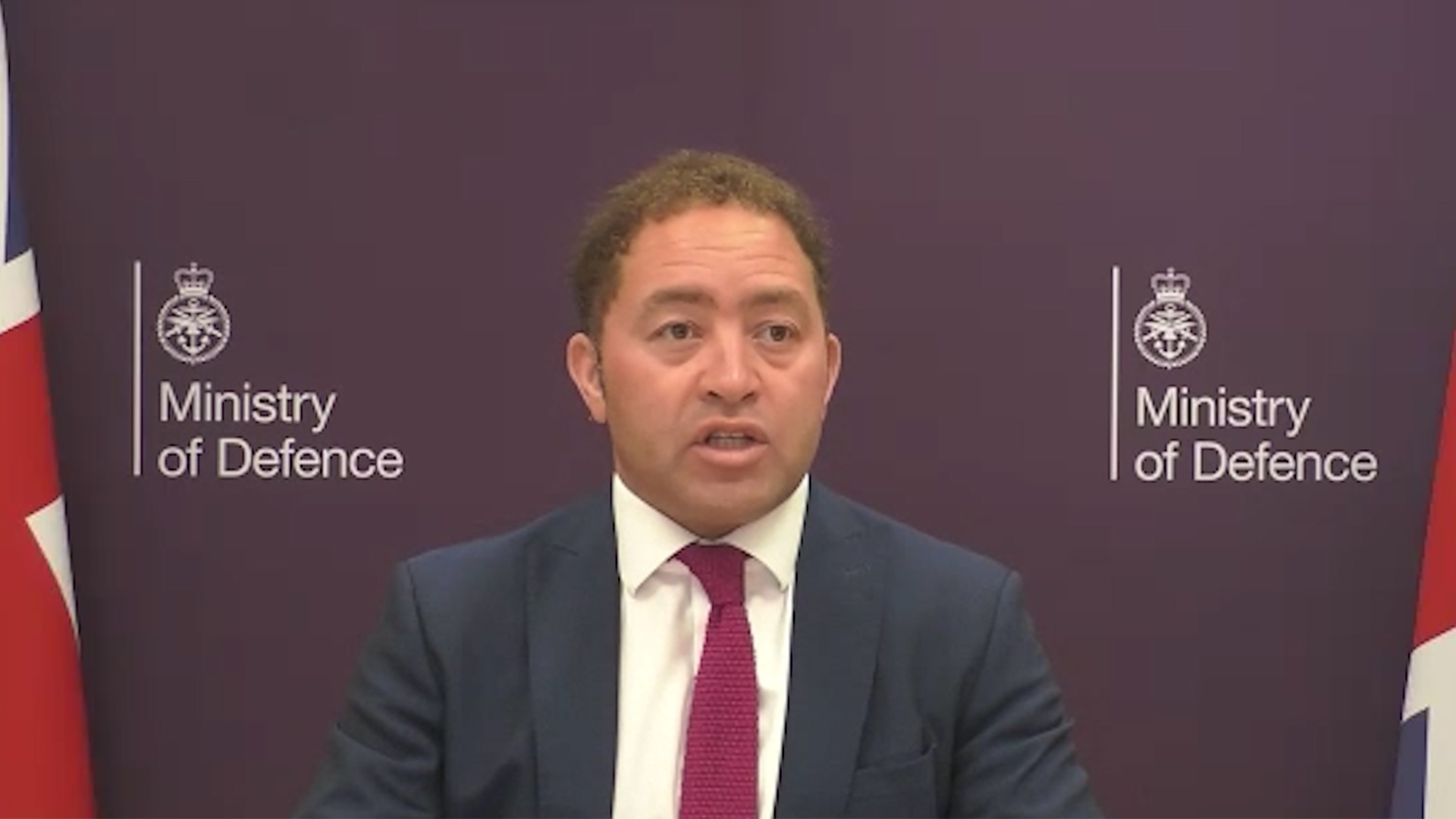
The Veterans and People Minister has warned that personnel making sexual comments to each other "erodes the ability to be under fire together".
Calvin Bailey, who is a former wing commander, told BFBS Forces News: "This isn't a comparison with people that have been under fire.
"This is about understanding how words and language can erode our ability to be under fire together and the damage that it does to trust and those people that will be under fire and alongside each other."
He added: "We are the military and we use military language and military symbolism and iconography and I think this resonates with what we're trying to do.
"In particular, to say to our teammates that you may not intend for this to be doing the damage that it does, but we know it does the damage it does, so please stop it."
Breaks trust, weakens morale and puts lives at risk
The MOD says the pilot includes targeted in-person training to help personnel recognise unacceptable language, understand the harm it causes, and know how to respond.
Vice-Chief of the Defence Staff, General Dame Sharon Nesmith, said: "We are clear: unacceptable behaviour in the Armed Forces, from harassment to so-called harmless comments is unacceptable. Unintentional or not, it breaks trust, weakens morale and damages operational effectiveness – putting lives at risk."
She added: "Our research shows that everyday sexualised behaviours, jokes and offensive language are among the most common forms of sexual harassment in the Armed Forces, and that most don't recognise it as harassment.
"This is not the high standard we set for ourselves, and Stop the Friendly Fire is designed to make these behaviours easier to recognise, harder to ignore, and more likely to be challenged – with in-person training built into the campaign. This isn't about singling anyone out – it's about taking collective responsibility."
Mr Bailey acknowledged that the training put in place at the moment "isn't necessarily cutting through".
He said: "Nearly 70% of women say that this has or is something that they've experienced... this scheme reinforces the training that we've got. It reinforces the standards that we've got and will be baked into the training of the three specific sites, that will be targeted."
According to the latest MOD survey two-thirds of female regular personnel experienced at least one form of sexualised behaviour in the past year, with sexualised language being the most common, particularly among junior ranks.
Fewer than two-thirds of personnel correctly identify sexual jokes and comments as sexual harassment and only 14% are confident enough to call it out.
Sexual comments in the Armed Forces most common in junior ranks
Concerns have been raised about younger members of the Armed Forces in particular.
Mr Bailey told BFBS Forces News: "I think one of the shocking things with what we've learned is that this is very generalised.
"This is very normal, it's very widespread and there isn't any specific area or one specific aspect of service life where this manifests; this is something that is quite broad and acceptable and increasingly it's becoming normal within society that is arriving in the military with our juniors in particular and therefore we have a responsibility to say that language and those behaviors isn't acceptable across our normal service life.
"But this is very definitely most common in our younger people, our youngest people, and those people tend to be direct entrants in the other ranks."
Related topics
Join Our Newsletter