Should the UK Commando Force be re-tasked to prioritise its focus on the High North?
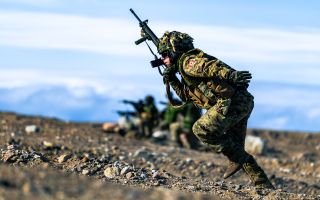
The UK Commando Force should prioritise the High North, where the next Russia-Nato conflict could be won or lost, according to a new report by defence and security think tank RUSI.
Produced by RUSI fellows Sidharth Kaushal and Edward Black, their findings are based on interviews with Royal Marine Commanders, in addition to their own research.
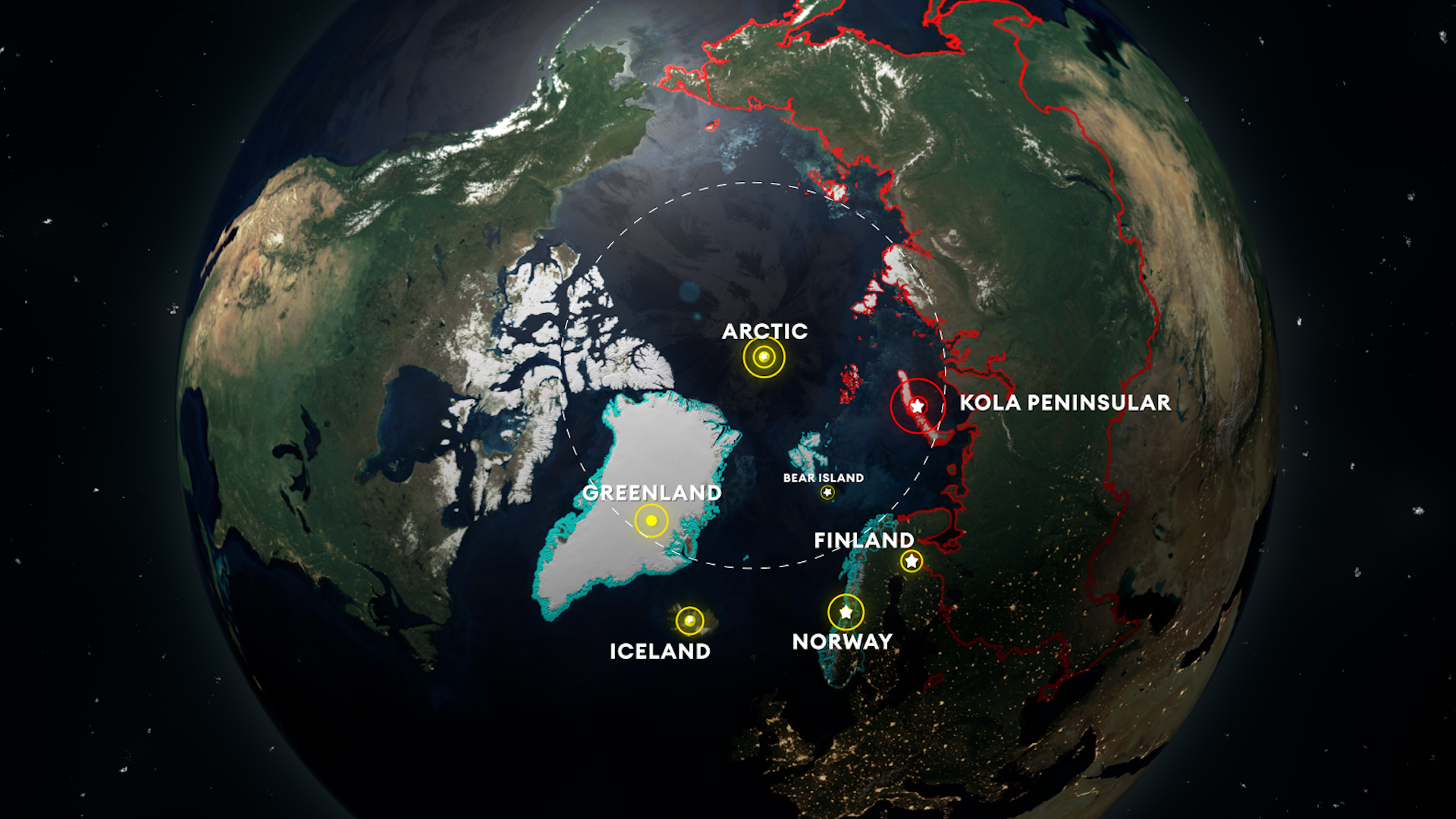
They argue that the High North, an area comprising the Arctic, Barents Sea and the Norwegian Sea, will be critical to deciding any future conflict between Nato and Russia.
"In effect, both sides can lose a wider campaign purely based on what happens in the High North," says the report.
It suggests that the Royal Marines long-standing Arctic experience and light footprint make them uniquely suited to achieving success in the High North.
Three distinct roles
The authors identify three key roles for each commando:
1) A Special Operations Task Force (SOTF) that could be persistently forward deployed to the region to: "set the conditions for attacks on key nodes in Russia’s anti-access / area denial".
Under the proposed re-organisation this task would fall to 45 Commando.
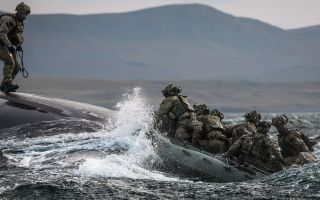
2) They suggest 40 Commando should take on the role of a Specialised Advanced Amphibious Force (SAAF) "to secure offshore islands and ensure its subsequent use to support crewed and uncrewed systems associated with the hybrid fleet".
Drawing on the US Marine Corps' Expeditionary Advanced Base Operations concept, the report argues the High North's geography is ideally suited to the Royal Marines' amphibious expertise.
It identifies remote islands such as Jan Mayen, Bear Island and Svalbard as key locations for extending Nato's reach and supporting the sensors and infrastructure needed for a hybrid fleet.
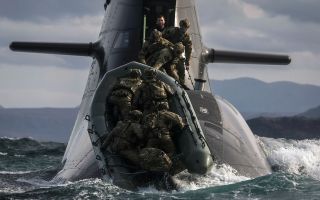
3) The report calls for 42 Commando to develop "a capacity for special maritime operations, which would allow the force to be employed to constrain Russian efforts to shape the theatre through ISR gathering and sabotage during the transition between a crisis and a conflict".
This would be in effect a specialist boarding force, trained and equipped to tackle Russian shadow fleet vessels and support ships being used for military tasks.
The authors anticipate a spike in the use of these in the run-up to any conflict and flag the possibility of opposed boardings, where a ship can refuse to slow down to assist a boarding, or even offer armed resistance.
Russia's strengths and weaknesses
As well as speaking to Royal Marines' leaders, the report authors examined Russian advantage and vulnerability in the High North.
This is certainly familiar territory for Russia; its navy's elite Northern Fleet is based on the Kola Peninsula and numerous submarines routinely operate in Arctic conditions.
The report also exposes weakness though, for example in air defence. It says: "The air defence network that defends Russia's anti-surface capabilities... against low-observable standoff is dependent on potential single points of failure".
"The climatic conditions of the region make the employment of some sensors more complicated, necessitating both networking to produce multiple observations of a given target and a reliance on static high-power sensors as key nodes within the system."
The report also points out that the Russians are also less doctrinally flexible, something Royal Marines' agility could exploit.
Strategic priority
The High North has been named in the Strategic Defence Review as a key priority.
The importance of the region has been further highlighted by the recent Russian launch of a Tupolev Tu-142 Bear F maritime patrol aircraft as HMS Prince of Wales deployed to the region on Nato duty, with the Defence Secretary onboard.
However, if the UK Commando Force was to focus entirely on this region, what would happen if their amphibious capability was to be required elsewhere around the globe?
There is a question mark over how the force could maintain a global footprint if it was to be so heavily committed to the High North.
Related topics
Join Our Newsletter