In God's name: Are more younger people in the Army turning to faith?

Faith is on the rise across the British Army.
That's according to evidence shared with BFBS Forces News by the Royal Army Chaplains' Department and the first-hand accounts of some of its padres.
But instead of the trend traditionally following organised religion, chaplains say these military-based interactions with faith tend to be more focused on spirituality, with younger soldiers seeking answers to searching questions in what's been described as a changing world.
Alongside this view, anecdotal evidence collated internally hints at more recruits attending services at Phase One training establishments and an increase in the number of baptisms being requested by personnel.
Nir Nadav is the regimental chaplain of the 1st Battalion, Royal Yorkshire Regiment, and is one of only two rabbis in the British Army.
Asked if he was noticing an increase in soldiers seeking guidance around faith, he says "the short answer is yes".
"People want to engage with something, and part of it is they don't know what shape that takes," he explained
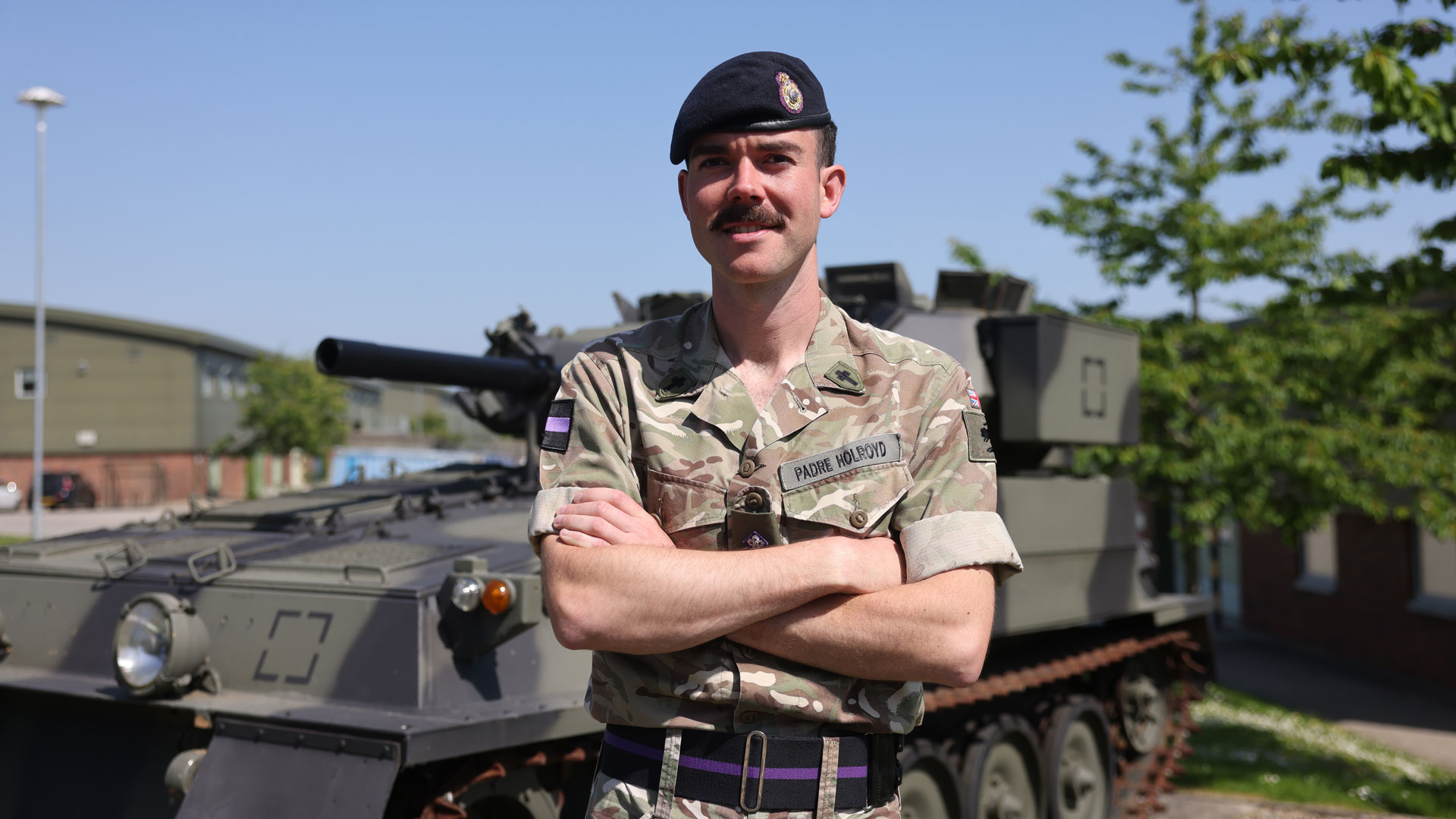
It's a view shared by fellow padre Dominic Holroyd, currently serving as chaplain to the Light Dragoons.
"What I've noticed is a spiritual inquisitiveness; that's how I would describe it," he says.
"There's a yearning for knowing something 'other'."
The uptake in religion within military circles has also been discussed at Westminster, with former Royal Marine-turned-MP Fred Thomas asking service chiefs their views on the topic during a recent meeting of the Defence Select Committee.
"I do think [religion] can bring people together," the MP tells BFBS Forces News, adding, "there's a strong teaching in Christianity around putting others first; across the military, certainly in the marines, putting others first is high up.
"When we would do the internal vote about who has been the best person in training, the vote would not be about 'who do you think is the best soldier?' the vote is actually 'who's the least selfish?."
Outside of the military, statistics provided by the Church of England show that across the UK the faith's worshipping community has decreased by about 10% since 2019 – with the pandemic thought to be a contributing factor.
But there are signs the trend is reversing, suggesting that if there is an increase in military circles, it could be an outlier for something more widespread nationally.
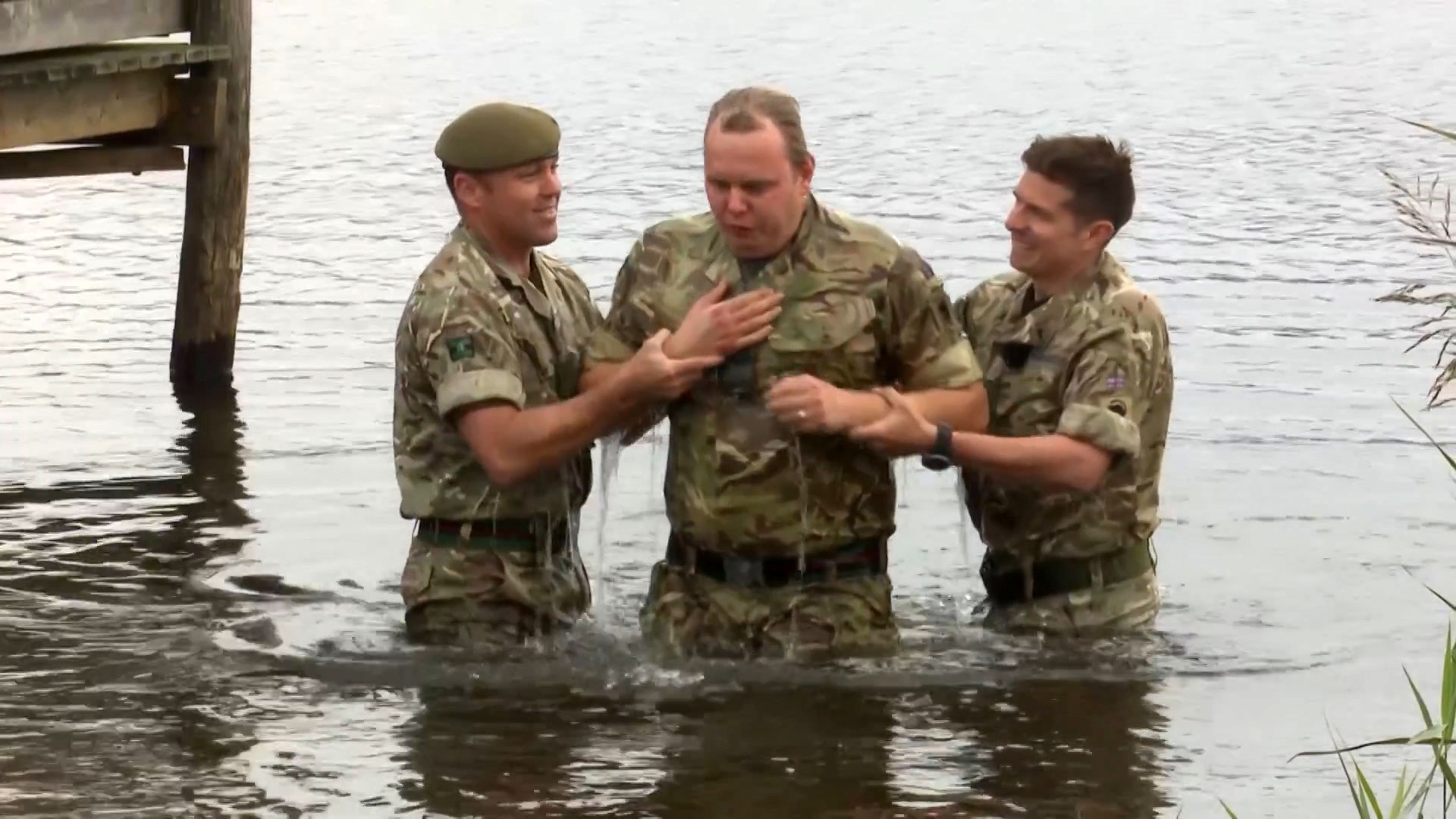
Significant rise in recruits seeking baptism during training
In the Army, while official statistics are not kept, anecdotal evidence gathered by the Royal Army Chaplains' Department reveals "a quiet revival" where faith and religion are concerned, particularly in basic training establishments.
The department's information includes dozens of instances of officer cadets being confirmed or baptised in Sandhurst, the latter of which saw 11 instances in a single month in October 2025.
During the same four weeks, a further 21 baptisms occurred at Army Training Regiment Winchester, and at Army Training Centre Pirbright, there was a 37.5% increase in recruit baptisms between 2024 and 2025.
The department's findings also reveal that at the Infantry Training Centre in Catterick recruits wanting to learn about Christianity for the first time has risen, and at the Army Foundation College in Harrogate, an estimated 20% of new recruits attend church services on Sunday mornings, although the figures show a drop off after the initial six weeks of training.
Doom scrolling playing its part
While these apparent increases have left some asking questions, not least in Westminster, others are linking the rise to the experiences of young people in the modern world.
"We've got a generation coming through now who are finding themselves feeling quite hopeless," says Major General (retired) Tim Cross, who became a Christian at the age of 30 while serving in the army.
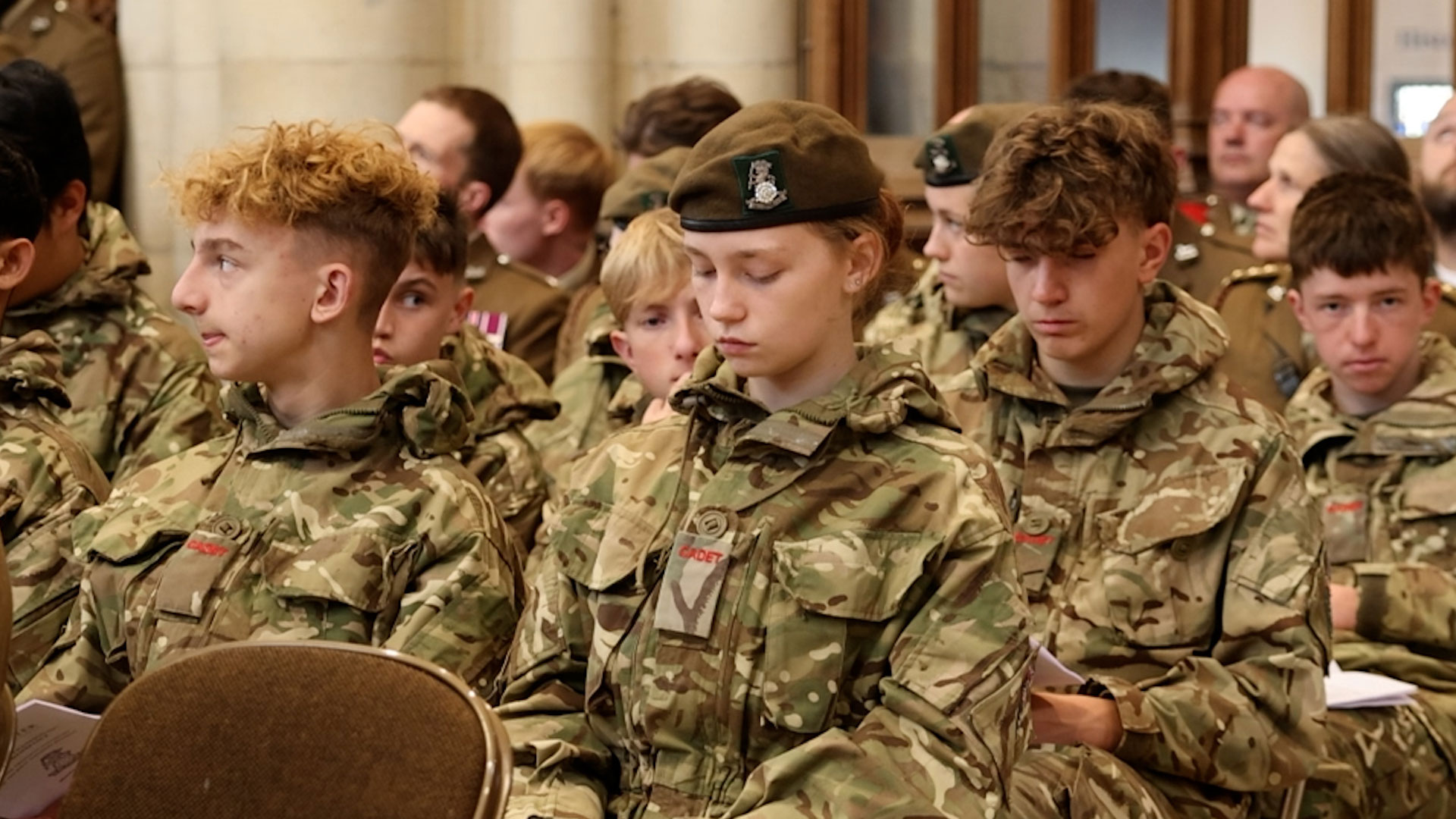
"They are finding themselves thinking, 'what is this all about?'"
He adds: "The quiet revival that's being talked about, I think, is a reality and we're seeing evidence of that."
Doom scrolling on X and a constant cycle of bad news is also playing its part, Maj Gen Cross says: "If you listen to the news every day, the basic message is we're all going to be dead by Friday."
The Army now has a humanist padre
Of course, Christianity is not the only faith service personnel require access to or are expressing interest in.
The Royal Army Chaplains' Department has even moved to appoint a humanist chaplain to its ranks which the department says "has helped soldiers in unpacking their sense of value and has steered some to explore baptism and a faith journey when appropriate”.
On this, Rabbi Nir ponders: "I don't know what to say about that in terms of faith, but it says something about what we're doing and what we can offer. And that is in response to what people want to engage in."
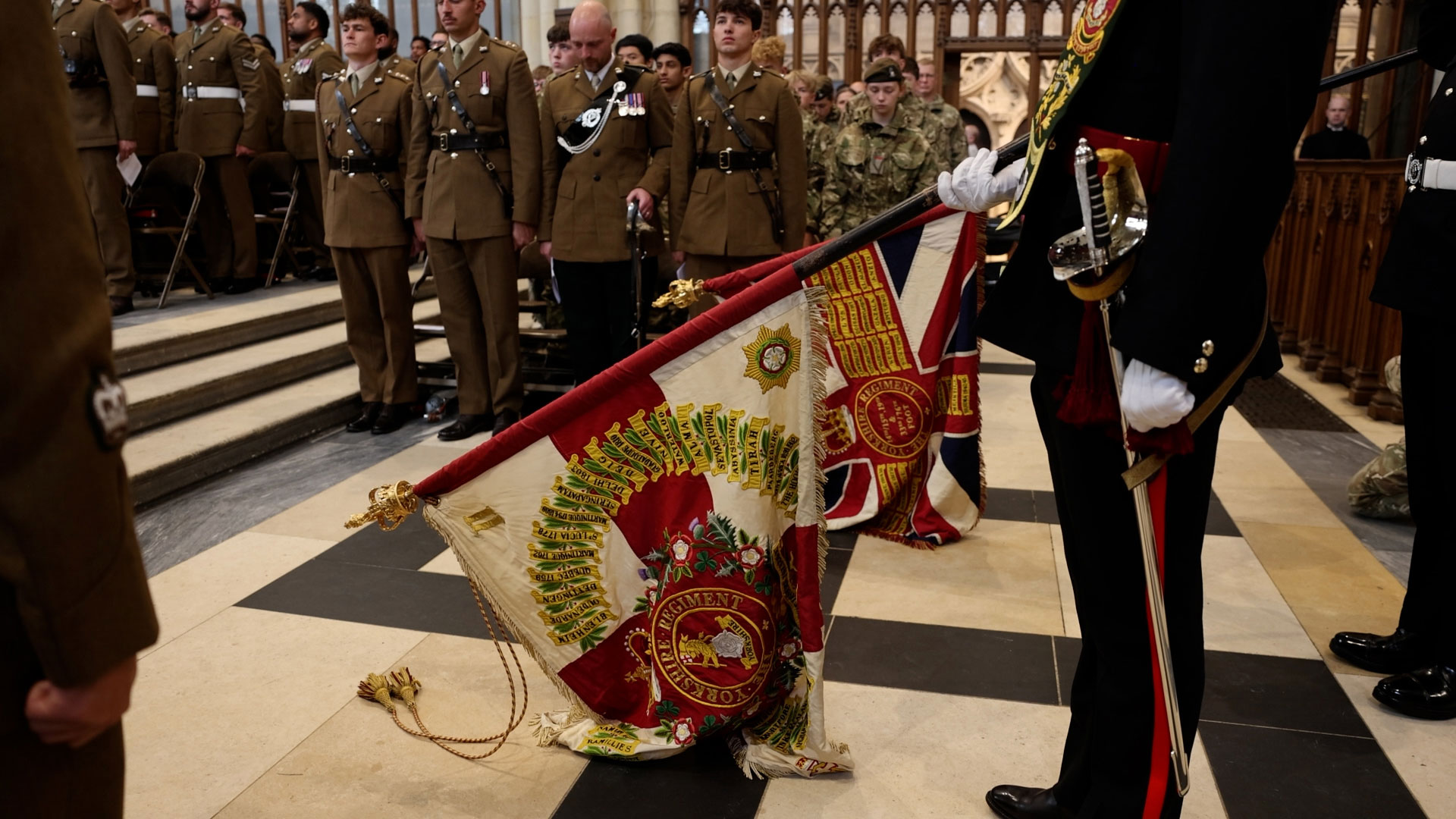
War and faith – a friction?
According to Maj Gen Cross, there are those who say religion has no place in the Army.
But he gives the argument little credibility.
In his view, "everybody" is a person of faith.
"When we come back to fighting power, the ability to deploy and succeed on operations, the most important aspect in British Army doctrine is the moral component of fighting power.
"It's the will to fight; the preparedness to die, if necessary, for the cause.
"And it's very difficult to define, but it includes words like duty, integrity, honour, friendship and love; it's a preparedness to say, 'I'm prepared to put my life at risk for my mates'.
"The whole business of 'if I die on this battlefield, what's going to happen next?' is a perfectly sensible conversation."
And what about the possibility of believers in God being ordered to kill others in war?
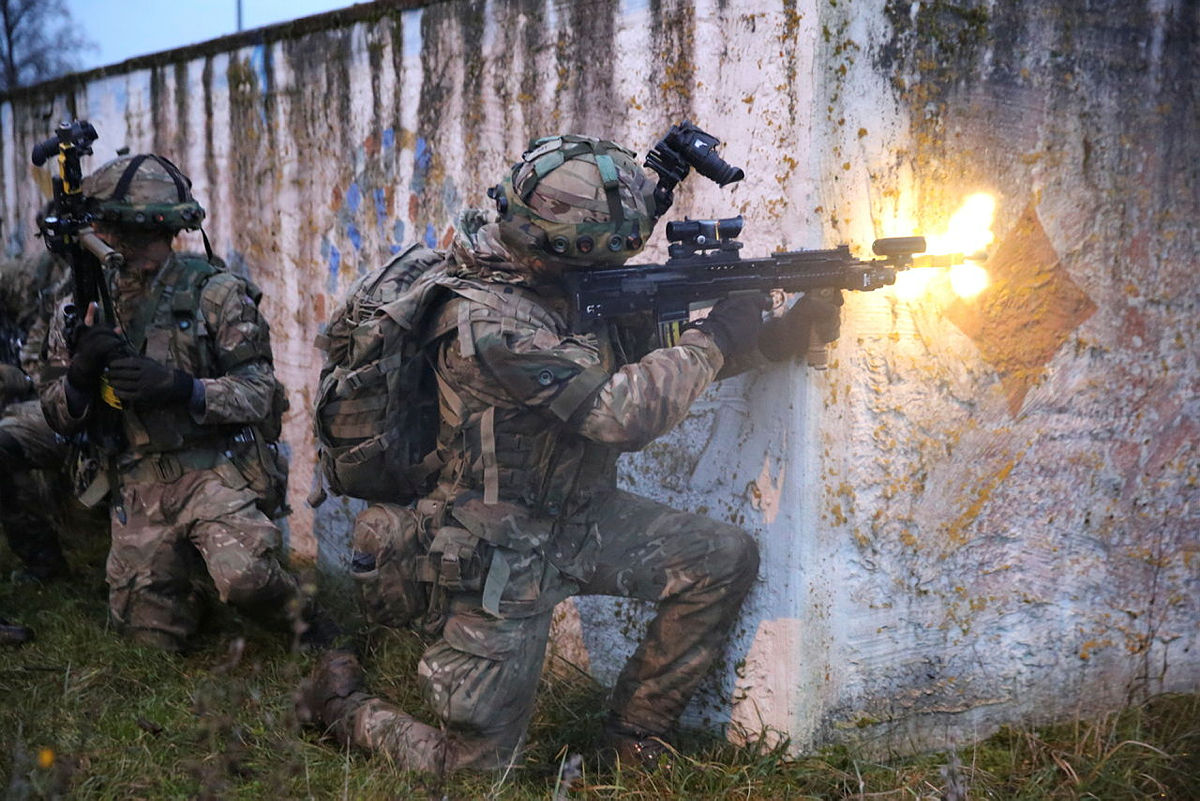
What do faith leaders in the military say on this awkward topic?
According to Padre Dominic, the issue is "the big conundrum" for any Christian serving in the Army.
"How you reconcile this following of the Prince of Peace, the one who preached peace wherever he went, with the role of the Army which in effect is to potentially kill the king's enemies?
"How do we reconcile that tension?
"Well thankfully, the decisions of battle or of wargaming battles does not fall to me.
"But there's certainly a tension and I think should I ever be in a situation where I am called upon to be at the front with our guys and girls, it's about loving and supporting; it's not there to cast judgments necessarily, although there is a space and a role of the padre to be the critical friend to commanding officers and people in command more generally."
Dominic adds: "It's about being that supportive figure; being that light in that darkness."
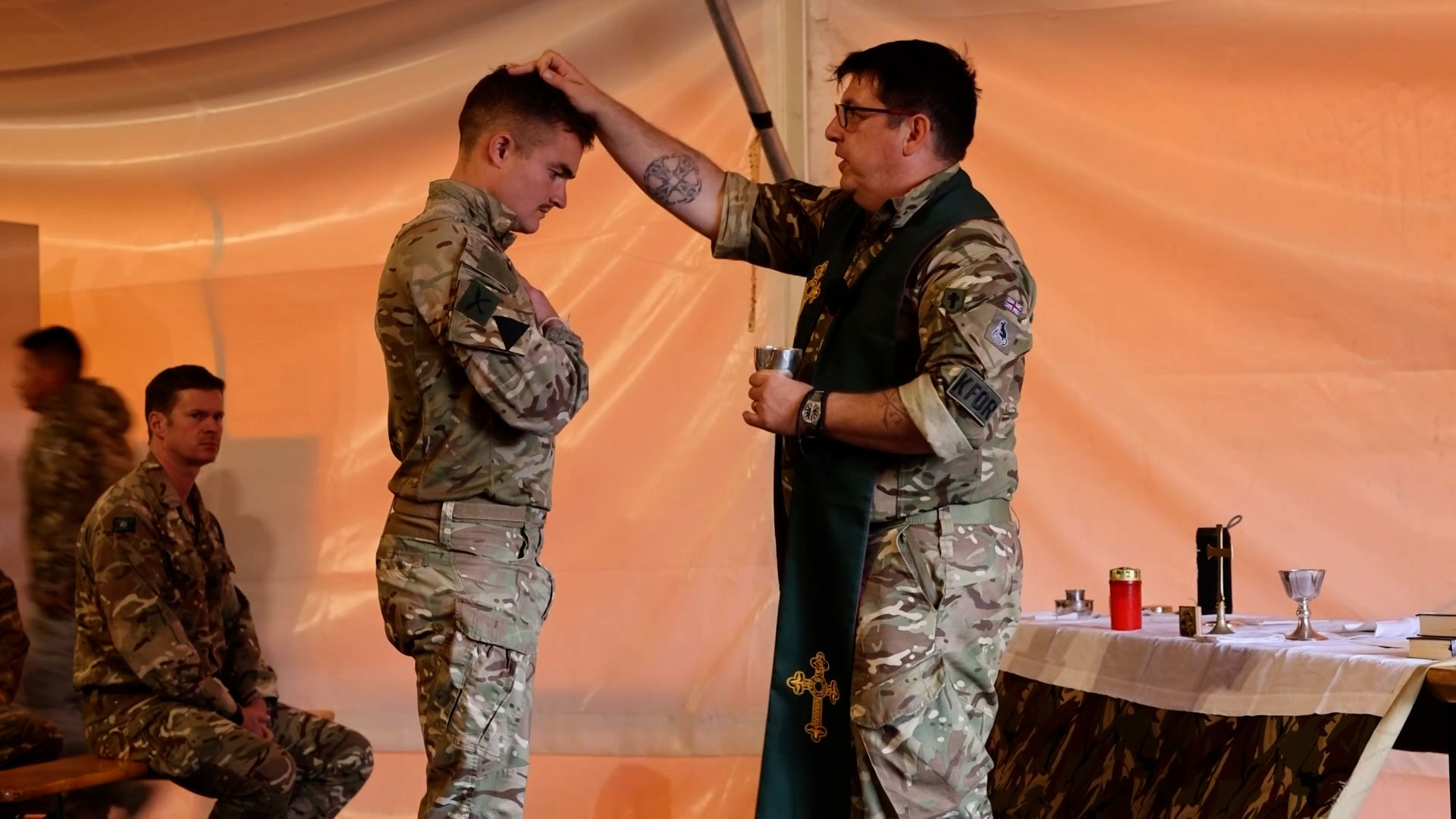
'We bring ourselves, regardless of what collar dog we're wearing'
Under international law, Padres like Dominic are protected under their status as non-combatants.
That means chaplains do not carry weapons, although they are embedded with troops and in uniform when deployed.
Their work is for everyone, be it performing last rites on fallen members of their own unit, or those killed on the other side.
"Thankfully, I don't have a lot of experience in conflict; which is a good thing," Rabbi Nir says. "We're in a precarious situation and we have to think about these things."
He adds: "It's how we carry ourselves that makes the difference.
"You say last rites? Yes, we might do that.
"But actually, we bring our presence and who we are as chaplains – whatever collar dog we're wearing – and that actually makes a difference."
Related topics
Join Our Newsletter