It's not a Dad's Army, the reserves are a real capability, Afghan veteran says


The reserves are not a Dad's Army and are a real capability, an Afghanistan veteran has told BFBS Forces News, following the publication of the Defence Investment Plan this week.
Jonny Ball, who served as a Pashto linguist on Operation Herrick 15 from 2011 to 2012, said that a "national conversation" has been started on defence as it has become part of the mainstream.
BFBS Forces News spoke to Mr Ball, who supports veterans entering politics and hosts the veterans in politics podcast, about the impact of the Defence Investment Plan (DIP) on the reserves and new Defence Secretary Dan Jarvis.
The DIP and a more resilient base
The DIP revealed that defence is getting an extra £15bn over the next four years, higher than the previous offer of £13.5bn, which led to John Healey quitting as Defence Secretary.
It will mean the government will spend 2.7% of GDP on defence by the end of the decade.
Mr Ball gave his own assessment of the DIP. "I think we've seen a new conversation about the relationship between industry and defence, and making that a more resilient base in which to draw upon a capability, particularly in the well-publicised area of drone technology," he said.
His verdict was that this was a "win" for former Armed Forces Minister and ex-Royal Marines colonel Al Carns, who joined Mr Healey in resigning on 11 June amid wrangling within the government over funding for the long-delayed military spending plan.
Society needs to front up to threats
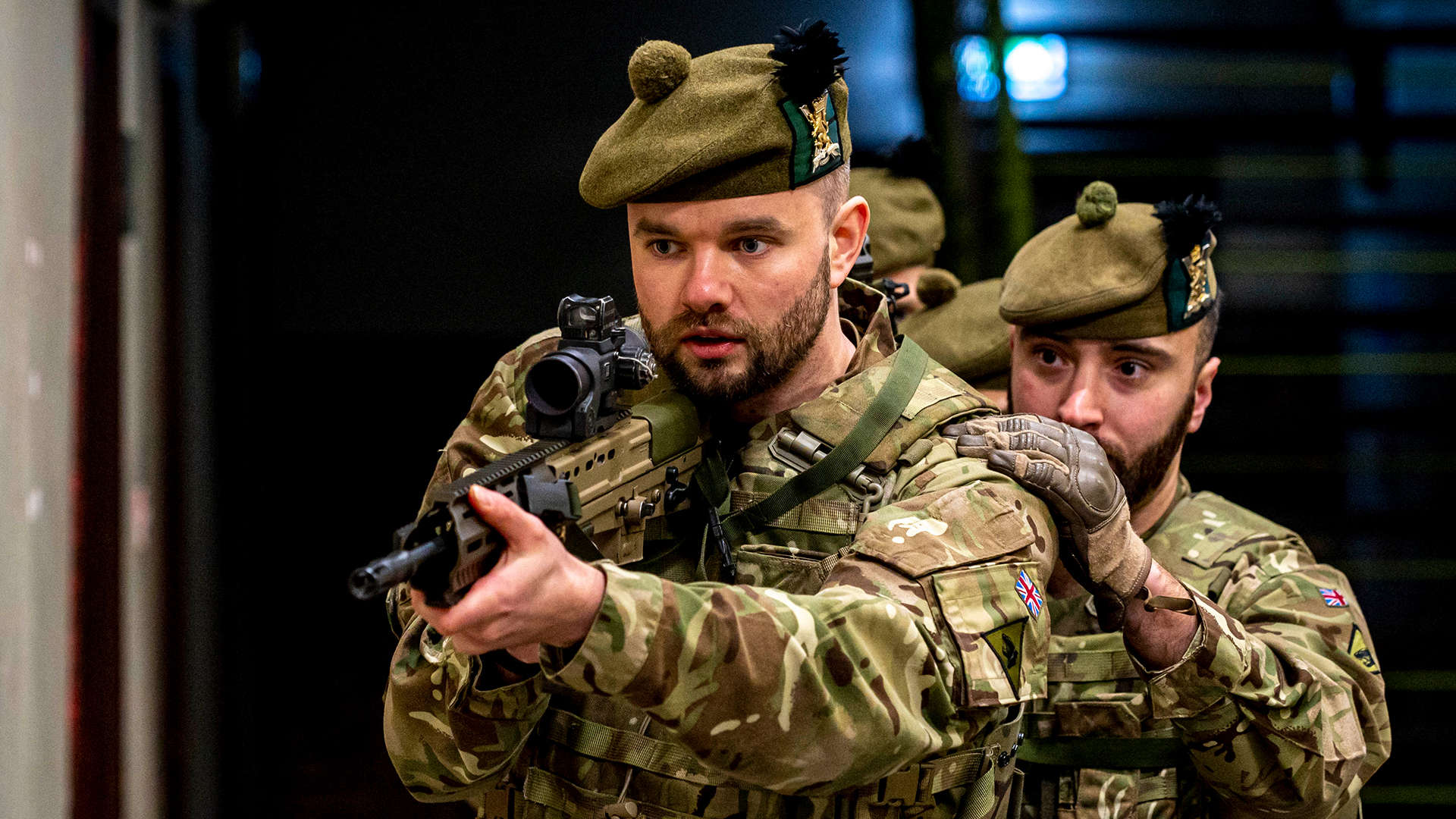
The reserves have been awarded £4.2bn for the next four years, according to the DIP.
The Strategic Defence Review, which was released last year, stated that the Ministry of Defence would aim to expand the number of reserves by 20% by 2030, although this has been altered to "when funding allows".
"I would like to have seen a firmer direction and less of a get-out-of-jail-free card," Mr Ball, who co-founded the UK Afghanistan Veterans Community, an association supporting those who served on Op Herrick, added.
Mr Ball also said that there are several reservists sitting in the House of Commons, including Helena Dollimore and Jenny Riddell-Carpenter, who can vouch for the reservists' cause in Parliament.
"This gives us an opportunity… for us to continue to invest in our reserve forces because it's not a Dad's Army. This is a real capability," he said.
Elsewhere, the DIP outlined that the strategic reserves, or as Mr Ball called them, "the hidden reserve", will be getting investment in methods and technology, increased access to specialist skills and protection of their funding and equipment for reserves in training.
It comes after the government announced new measures at the start of the year in the Armed Forces Bill, currently going through Parliament, to improve the strategic reserve, such as by raising the maximum age for call from 55 to 65.
"[The strategic reserve are] those that have served in the regular Armed Forces that now walk amongst us. They might be seen at the school gates. They might be colleagues at work. They're not the people who tip up on a Tuesday night in uniform or go away on the weekend on exercise," Mr Ball explained.
"We see this as part of the 'whole society approach' to what's facing us. It's a response to the defence dividend being over, and the reality that we as a society need to front up to look after ourselves."
The 'honourable' Defence Secretary
On Mr Jarvis' first three weeks in the role, Mr Ball said that he knows the Defence Secretary well and that he is an honourable man.
"You can bet your bottom dollar he will be fighting tooth and nail within the corridors of Whitehall for our people, because these aren't just our people, they are his people too," Mr Ball said.
"They're people that he's served alongside on operations as a former member of the Parachute Regiment."
Mr Jarvis served as a platoon commander with 1 Para, aide-de-camp to General Sir Mike Jackson and adjutant 3 Para during a distinguished military career.
He deployed on operations in Northern Ireland, Kosovo, Iraq and Afghanistan before leaving the Army to enter politics.
His military background has long made him a respected figure in defence circles.
"I think he's a similar character to John Healey. Dan isn't particularly a party animal, overly political. He's just someone that stood up to serve again to do the right thing," Mr Ball added.
"I think that's a good thing for us. It's good to have one of us [veterans] in such a key role. That's an opportunity for us too."
Join Our Newsletter