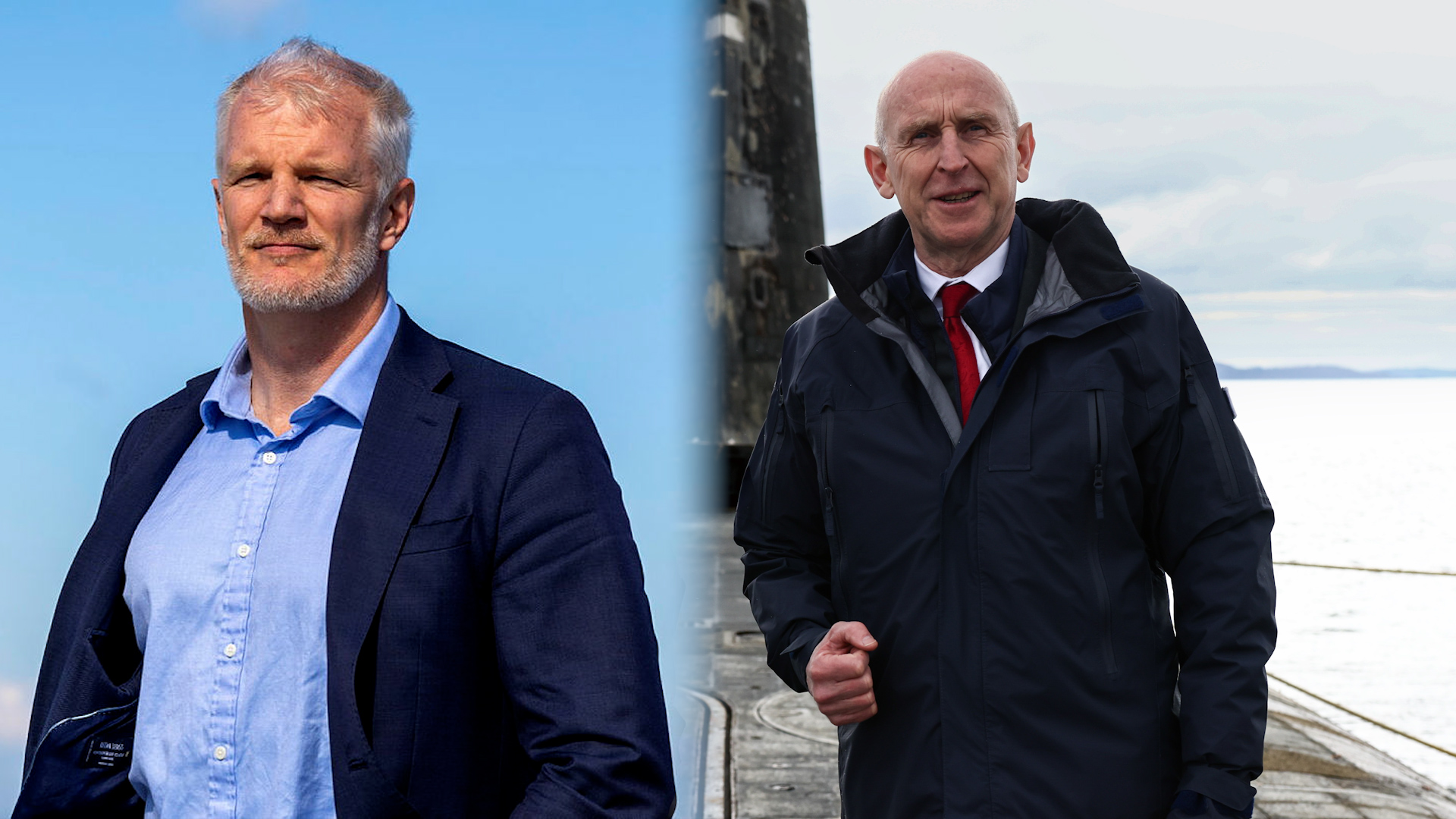
What do the former ministers who resigned over the Defence Investment Plan think about it?

Sections of the Defence Investment Plan are a shift in the "right direction", former Armed Forces minister Al Carns has said – having resigned ahead of its publication.
In a post on X, the former Royal Marines colonel said he had decided to quit "because the original plan was not transformative enough nor financed correctly".
The double resignation of Mr Carns and former defence secretary John Healey came on 11 June amid a backdrop of wrangling within the Government over funding for the long-delayed military spending plan.
- The Defence Investment Plan: What's in, what's out and what it means for the Armed Forces
- Armed Forces funding announced at last – here's everything you need to know
- Hybrid navy may be a risk – but it may also be the only choice, says former commodore
Having served 24 years in the Royal Marines, Mr Carns said at the time of his resignation that the DIP "did not strike the right balance" and was not built for the threat the UK is currently facing.
And Mr Healey said: "At this dangerous time, I see the current defence investment plans falling well short of what is required."
Both men posted lengthy comments on X after the DIP was finally published.
Big-ticket programmes
Tuesday's published DIP outlined that defence will now get an extra £15bn over the next four years, £1.5bn higher than the previous offer that led to Mr Healey's resignation.
The DIP covers the next 10 years, but only has costings for the next four.
"Modern warfare is being decided by drones, autonomy, cyber and industrial resilience, the language in the DIP does begin to reflect that reality," Mr Carns continued in his post.
"The majority of the defence budget is still being spent on legacy heavy-metal platforms and big-ticket programmes that take a decade to arrive and a fortune to maintain."
Among the so-called big-ticket items in the DIP, it was revealed that more than £5bn will be invested to fund a "drone transformation" for the Armed Forces, while more than £8bn is earmarked for the Global Combat Air Programme (GCAP).
The GCAP will create the next-generation Tempest stealth fighter jet for the Royal Air Force in concert with Japan and Italy.
Questions over when the UK will spend 3% of GDP on defence
Both former ministers commented on the exact spending levels. They argued that the UK needs to set a date for when the country must reach the target of spending 3% of GDP on defence.
"We need a target date for 3%," the former defence secretary said, "and a clear, credible funding plan to meet our Nato commitment for 3.5% on defence by 2035, while Mr Carns said that "3% has to be the floor, not the ceiling, and we need a date to reach that target".
The DIP said that defence spending will hit 2.7% of GDP by the end of the decade.
Meanwhile, Mr Healey praised the MOD officials who worked on the DIP and welcomed the additional funding for defence, saying he hoped it would be successful.
"The DIP is not only a spending plan to transform Britain's Armed Forces to meet growing threats. It must be a growth and reform plan to back British industry, innovation, jobs for communities across the UK. And it must provide the British leadership allies are looking for," Mr Healey added in his X post.
"The SDR [Strategic Defence Review] set the vision for a safer Britain. It can be accelerated. Since then, the world has changed. Threats have increased. Demands on defence have risen. The PM has important new UK commitments. So, we must now do more."
Mr Healey was appointed as Defence Secretary back in July 2024. He previously served in the Blair-Brown governments, as well as in the shadow cabinets of Ed Miliband and Jeremy Corbyn, before becoming Sir Keir Starmer's shadow defence secretary in 2020.
He was a staunch supporter of Ukraine in its over four-year-long war against Russia and prioritised improving the UK Armed Forces’ housing during his tenure as Defence Secretary.
Mr Carns, who left the Royal Marines in 2024, was elected as the Labour MP for Birmingham Selly Oak in the same year. He was subsequently appointed Armed Forces minister the following year.
Join Our Newsletter