Armed Forces funding announced at last – here's everything you need to know

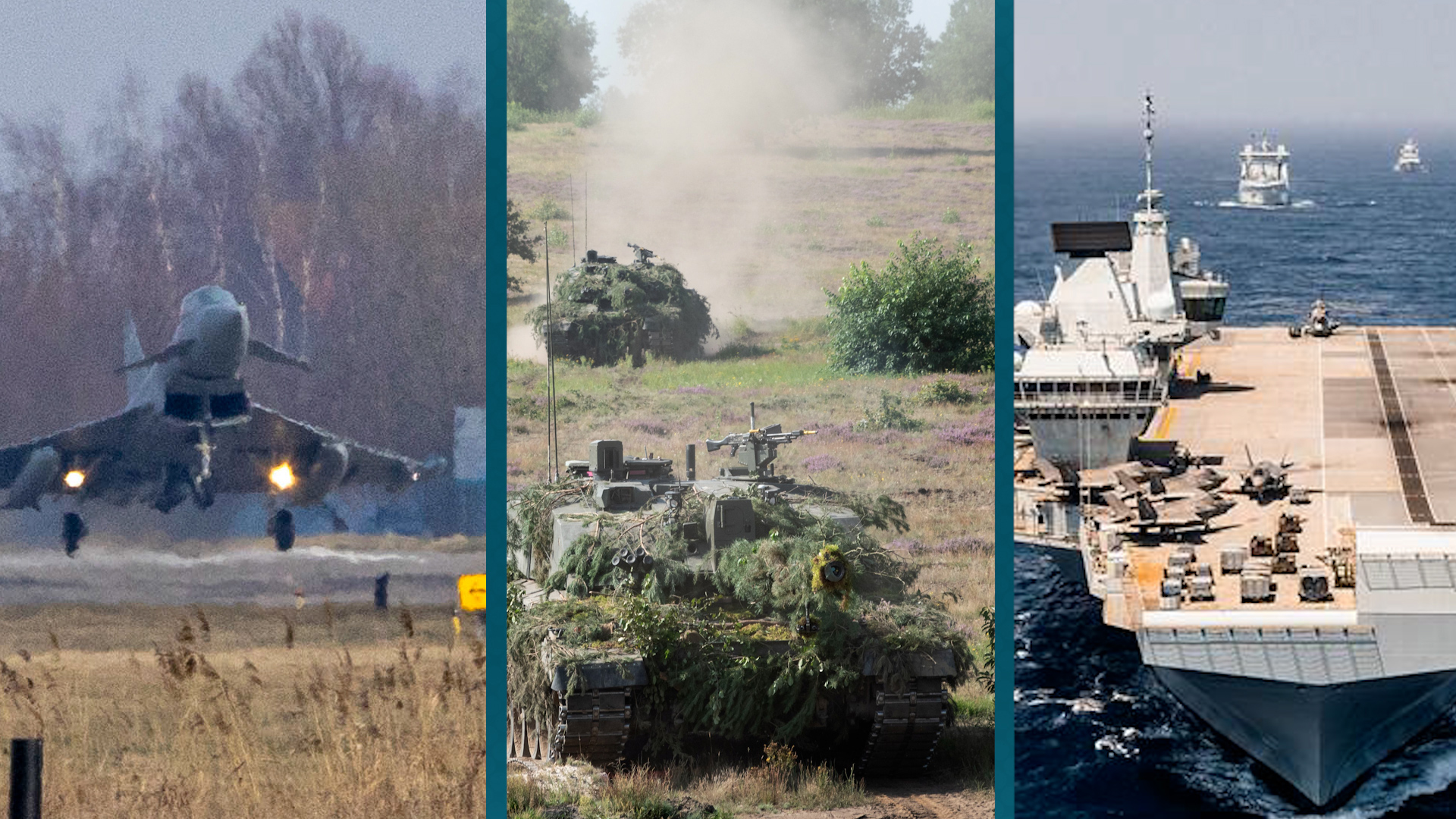
The Government's long-awaited Defence Investment Plan has set out how billions of pounds will be spent to transform the Armed Forces, with major announcements on drones, munitions, cyber, shipbuilding and military infrastructure.
Speaking at British defence firm Malloy Aeronautics, the Prime Minister announced an additional £15bn for defence spending, representing a 27% increase in real terms.
Sir Keir Starmer said total defence spending was expected to rise to almost £80bn by 2029.
Our live coverage has now concluded, but you can catch up on the detail from the day below.
:: Let us know your views on the Defence Investment Plan announcements at [email protected]
Common Combat Vessels capability
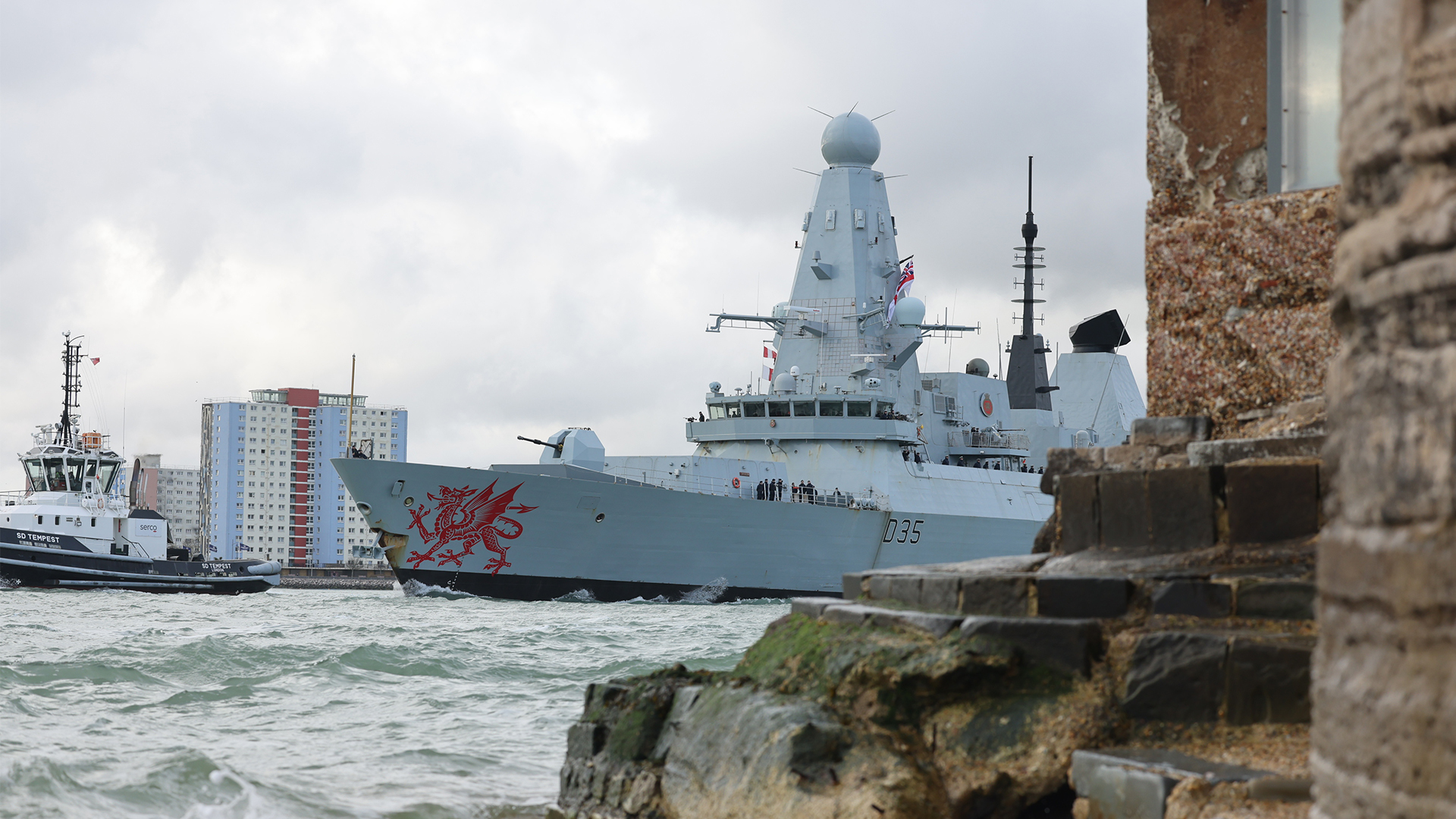
Labour MP Emma Lewell questioned the Defence Secretary over the Government's decision to scrap the planned Type 83 destroyers, which had been intended to replace the Royal Navy's Type 45 fleet.
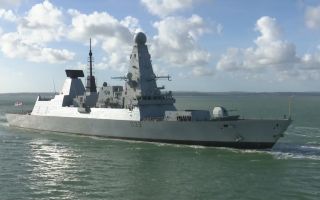
Instead, the UK is opting in favour of at least six hybrid Common Combat Vessels (CCVs) which will work with crewed platforms such as the Type 26 and 31 frigates, as well as uncrewed platforms.
Ms Lewell asked whether Defence Secretary Dan Jarvis thought these new platforms would be effective in delivering not only strike capabilities, but also a deterrence presence.
He said in terms of the specific capability that she referenced, there was no budget line attached to it.
"As part of the transition to the hybrid navy, the First Sea Lord has set out an alternative vision for how we're going to field that kind of capability," he said.
"But hopefully she will see from the investment and the commitment that we've made through the Defence Investment Plan that we are absolutely committed to ensuring that as an island nation we retain the Royal Navy capabilities that we need now and in the future.
"They are vital to the defence of our nation, and we will always make sure that we've got the right kit in the right place at the right time."
More needs to be done
Former defence secretary John Healey warned European security is "at stake", and the plan revealed today means Britain will be spending 2.7% of its GDP on defence in 2030 – the date that Nato warns "we could now face a Russian attack".
More needed to be done "to develop a clear, credible funding plan" to address this, he said.
Mr Jarvis said he was right, adding: "We need to do more.
"That's why there was a clear commitment that will be a number one priority at the next spending review," he said.
Military housing and cadet forces
Shadow defence secretary James Cartlidge asked whether the defence funding plan would cut hundreds of millions of pounds from the military housing budget.
He also sought confirmation on whether funding for cadet forces would be reduced over the same period.
Defence Secretary Mr Jarvis replied: "Housing is hugely important for defence and for the Armed Forces community, and I know what it's like to live in Armed Forces accommodation.
"I said in my earlier remarks that we absolutely have a moral responsibility to those who serve to ensure that we are able to provide them with the best possible living accommodations."
He pointed to the Government's £9bn investment in military housing over the next 10 years.
Under this investment, the MOD said nine in 10 properties would receive some form of improvement. However, it also identified that three in 10 properties - or 14,000 - required significant work or rebuilding altogether.
According to the plan, work on those 14,000 properties has been delayed to fund the Defence Investment Plan.
On cadet forces, Mr Jarvis described them as "an absolute force for good in communities around the country" and said the Government remained committed to investing in and modernising them.
Defence Secretary faces response from MPs
Mr Cartlidge said the plan was too little, too late.
"Not just because the plan is months overdue, but also because much of the capability it contains won't be in service until the 2030s, when the threat we face is right now," he said.
Mr Cartlidge says the plan is barely half of what the Chief of Defence Staff, Air Chief Marshal Sir Rich Knighton, said was needed – £28bn to fund the Armed Forces over the next four years.
"This plan is barely half that requirement," he told MPs.
Commitment to Nato is 'absolute'
Mr Jarvis said the UK had made a commitment to its allies, "just as they have to us", to increase defence spending to 3.5% of GDP by 2035.
"In a more dangerous world, our commitment to Nato is absolute," he added.
He said spending would reach 3% in the next parliament, with funding set out at the next spending review "in which defence will be the number one priority".
"Britain has always stood with our allies, and under this government we always will," he said.
"This plan accelerates deep precision strike weapons and close support artillery with Germany. It creates an amphibious combined fleet with the Netherlands. We will also invite JEF Nations to join our Northern Navy's initiative and build a hybrid force together."
Armed Forces the very best of us, insists Jarvis
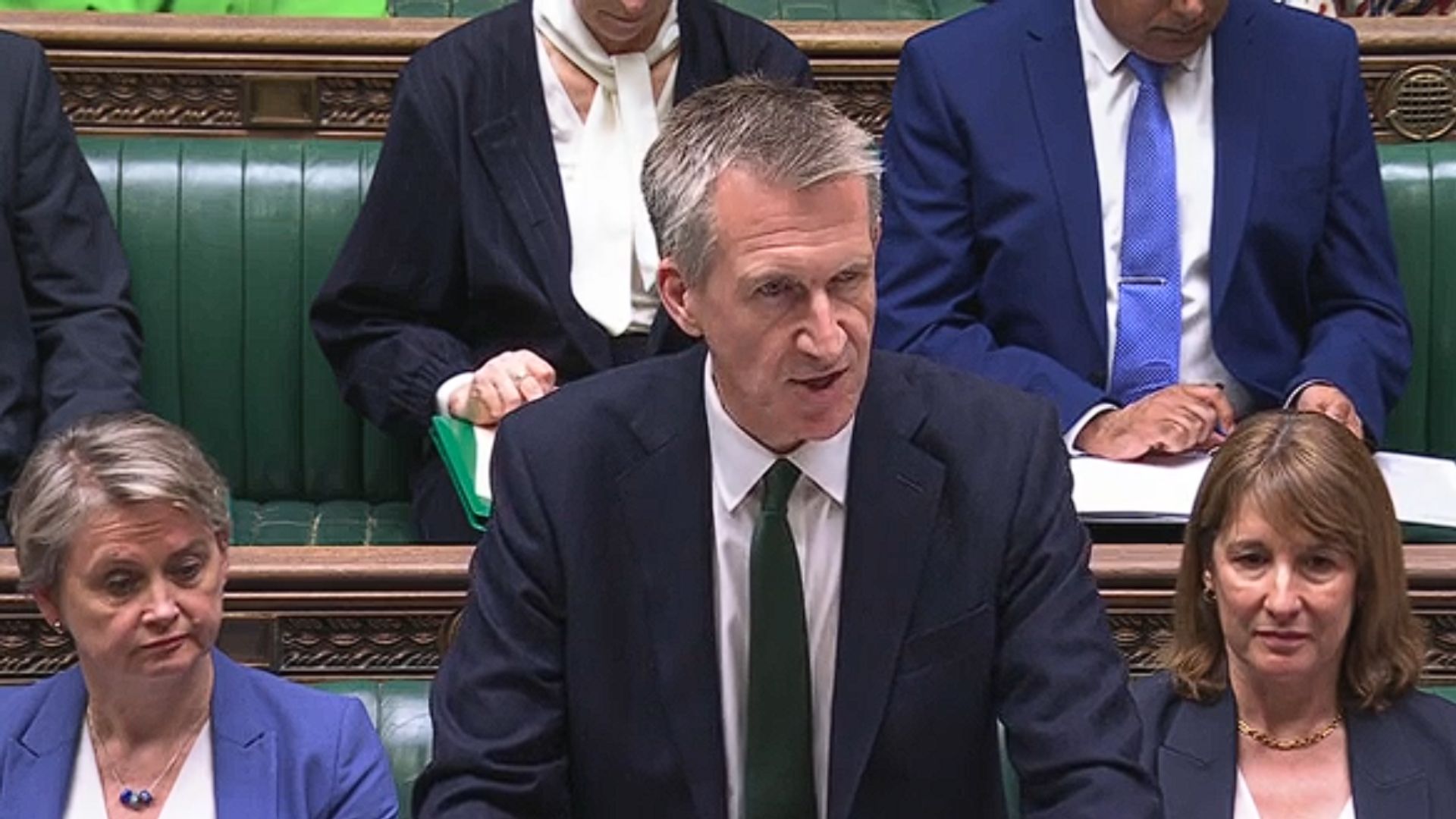
Hours after the announcement of the Defence Investment Plan, Defence Secretary Dan Jarvis spoke in the House of Commons.
He began by describing the Armed Forces as "the very best of us".
"From our sailors patrolling the High North and protecting the seabed, to our pilots, aircrew, and air defence teams in the Middle East defending the skies, or Paras in the South Atlantic, and marines in the Channel, and, as I speak, we have personnel supporting the humanitarian mission in Venezuela," he said.
"We all recognise that they serve at an increasingly dangerous and unpredictable moment in history", he said, noting that the central purpose of the plan is to "ensure that they have the kit and technology they need to do the difficult job that we ask of them".
Nato commitments
Sir Keir was asked whether it was realistic for the UK to meet US president Donald Trump's target for Nato members to spend 5% of GDP on defence by 2035.
He said he had spoken to Mr Trump at the G7 summit and discussed the Ukraine and Iran conflicts, and more recently to Mark Rutte, the Nato Secretary General, to discuss the Defence Investment Plan.
Referencing the 5% commitment by 2035, Sir Keir said the plan would take the UK to 4.2% of GDP on defence and national security – 0.8% below the target set by Mr Trump last year.
Military housing
The Prime Minister was also asked about reports that defence spending had been diverted from military housing to help fund the Defence Investment Plan.
In November, he pledged £9bn to upgrade 90% of military housing.
BFBS Forces News reporter Tom Sables asked Sir Keir what message that sent to military personnel who are currently living in substandard accommodation.
Sir Keir said his government had put "a lot of money into military housing" and again pointed to the three above-inflation pay increases.
"I'm really proud that was the right thing to do, because it affects morale and retention rates and reflects the service that is given to this country by those that serve," he said.
He said the Government would continue to do that, but it must balance against investment in military capabilities "that we need".
PM faces more questions
During the Q&A session, the Prime Minister was asked about comments made by General Richard Barrons – a co-author of the Strategic Defence Review – who said Britain was not keeping up with both its allies and enemies in terms of its defence capabilities.
Sir Keir reiterated his criticism that the Armed Forces he had inherited had been "hollowed out" by the previous government, and pointed to the biggest increase in spending since the 1980s, with a further £15bn invested as part of today's plan.
"I have to make the right judgements on the capability that many think is right for our country to meet the threats, not just of today, but tomorrow, and that is what this defence investment plan is about," he said.
The DIP in numbers
Sixth-generation jets
£8.2bn will be spent renewing the Global Air Programme (GCAP), which will see the UK, Italy and Japan develop the sixth-generation Tempest stealth fighter.
Nuclear deterrence
£64bn will be spent on renewing and strengthening Britain's nuclear deterrent, including funding for the Dreadnought and SSN-Aukus submarines and a new warhead. Additionally, 12 F35-As will be purchased and will join Nato's nuclear mission.
Upgrade to naval bases
£26bn over the next 10 years will fund Project Royal Oak – the biggest naval base upgrade for over 45 years – including multi-billion-pound upgrades at Faslane, Portsmouth and Devonport.
Drone warfare
£5bn will be invested into a drone transformation for the Armed Forces. As part of this, £650m will deliver expendable autonomous systems, including drones and uncrewed ground vehicles.
Integration
Nearly £2bn will be spent to integrate the Armed Forces through the new Digital Targeting Web, which will enable faster decision-making and speed in destroying identified targets.
Drone protection for bases
£790m will be spent over the next four years to enhance protection of the UK homeland and overseas bases from air, drone and missile threats. This will revolutionise command and control and buy new radars and sensors.
There will also be an investment in Directed Energy Weapons, upgrades to Sea Viper for Type 45 destroyers, expanded counter drone systems, and a new Integrated Air, Space and Missile Defence Operations Centre will be built.
Stockpiles
£11bn will be spent on munitions and weapons to increase UK stockpiles and ensure the Armed Forces have the right mix of capabilities to defeat targets, including long-range strike weapons, low-cost cruise missiles and one-way effectors.
By 2030, the aim is to have had built at least six new energetics factories and to have increased national munitions production capacity.
AI capabilities
The Prime Minister's Rapid AI Delivery Taskforce (RAID) will see £100m funding to accelerate the deployment of AI-enabled capabilities into the hands of our Armed Forces.

Ten times more lethal
Sir Keir also pledged to build an Army that is "10 times more lethal", backed by further investment in one-way attack drones, long-range missiles, armoured vehicles and counter-drone defences.
Additional investments in drone tech
Sir Keir said the war in Ukraine had highlighted important lessons for the UK, with the Government now placing a greater focus on drone technology to "modernise our military, equipped to fight the wars both of today and tomorrow".
He announced more than £5bn of investment in drones, describing it as "the largest ever UK investment in this technology".
The UK will build a hybrid navy, the PM also said, adding that should ships present a threat to British interests – like a Russian vessel – "they will do so with outriders, uncrewed ships above and below the surface".
He added that the next generation of RAF Typhoon jets will operate alongside autonomous wingmen, making them "invisible" to enemy detection.
Extra £15bn for defence
Sir Keir said the Government was already delivering what he described as the largest sustained increase in defence spending since the 1980s.
Unveiling the Defence Investment Plan, he announced an additional £15bn for defence, calling it a record level of funding.
He said the previous government spent £54bn on defence per year before his government took office, which he said would be increased to "almost £80bn" per year by 2029.
"That is a real terms increase of 27%," he said.
Sir Keir said military spending had previously been seen as a "bottomless pit" but added :"This time must be different, we can't just spend more, we have to spend better."
The Prime Minister also added that some road and energy projects that are not "immediately vital" would be scrapped to pay for increased defence spending.
Threats not remote
Sir Keir insisted the conflicts in Ukraine and in the Middle East were not "remote" threats.
"We see the horrendous human toll of these conflicts, which cuts across our values of justice and sovereignty, and that simple British impulse that bullies and dictators cannot be allowed to push people around," he said.
"We also know that these threats are not remote. We see foreign states targeting our nation as well, thugs hired by foreign powers conducting violence, vandalism and arson on our streets.
"Disinformation aimed at sowing division and stoking disorder, spreading lies and undermining our democracy, Russian ships targeting the underwater cables that carry the data on which modern life depends."
Support for service personnel and families
Defence Secretary Dan Jarvis was also present at the DIP launch event at Malloy Aeronautics, where he thanked members of the Armed Forces and stressed the importance of keeping Ukraine "strong".
"Life in the Armed Forces isn't always easy. I know from personal experience what it can be like to raise a young family on the patch," said the former Parachute Regiment officer.
"It's often the small things that really make a difference. We've still got some way to go on an improving service life, but I know that what we've done so far is really being felt and making a difference."
Mr Jarvis pointed to a series of measures aimed at improving conditions for service personnel and their families, including three above-inflation pay rises, the extension of free childcare, and raising the standard of military homes.
:: Let us know your views on the Defence Investment Plan announcements at [email protected]
Related topics
Join Our Newsletter