RAF engineers use 3D tech to supercharge Olympic skeleton racer
2026 Olympic skeleton athlete Flight Lieutenant Nicole Burger is working with engineers from 71 Inspection and Repair Squadron (71 IR Sqn) at RAF Wittering to help improve her aerodynamic performance in skeleton events.
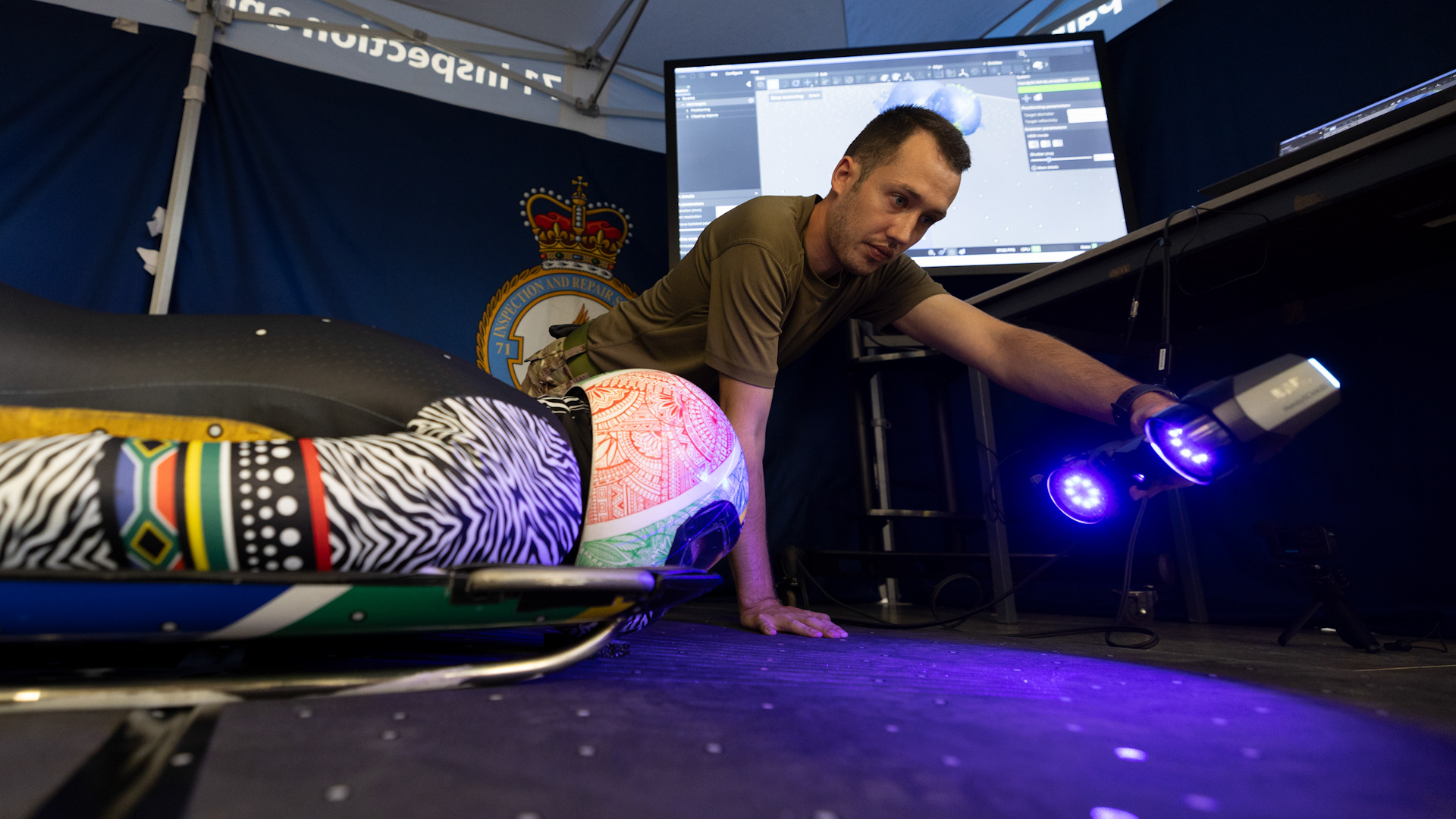
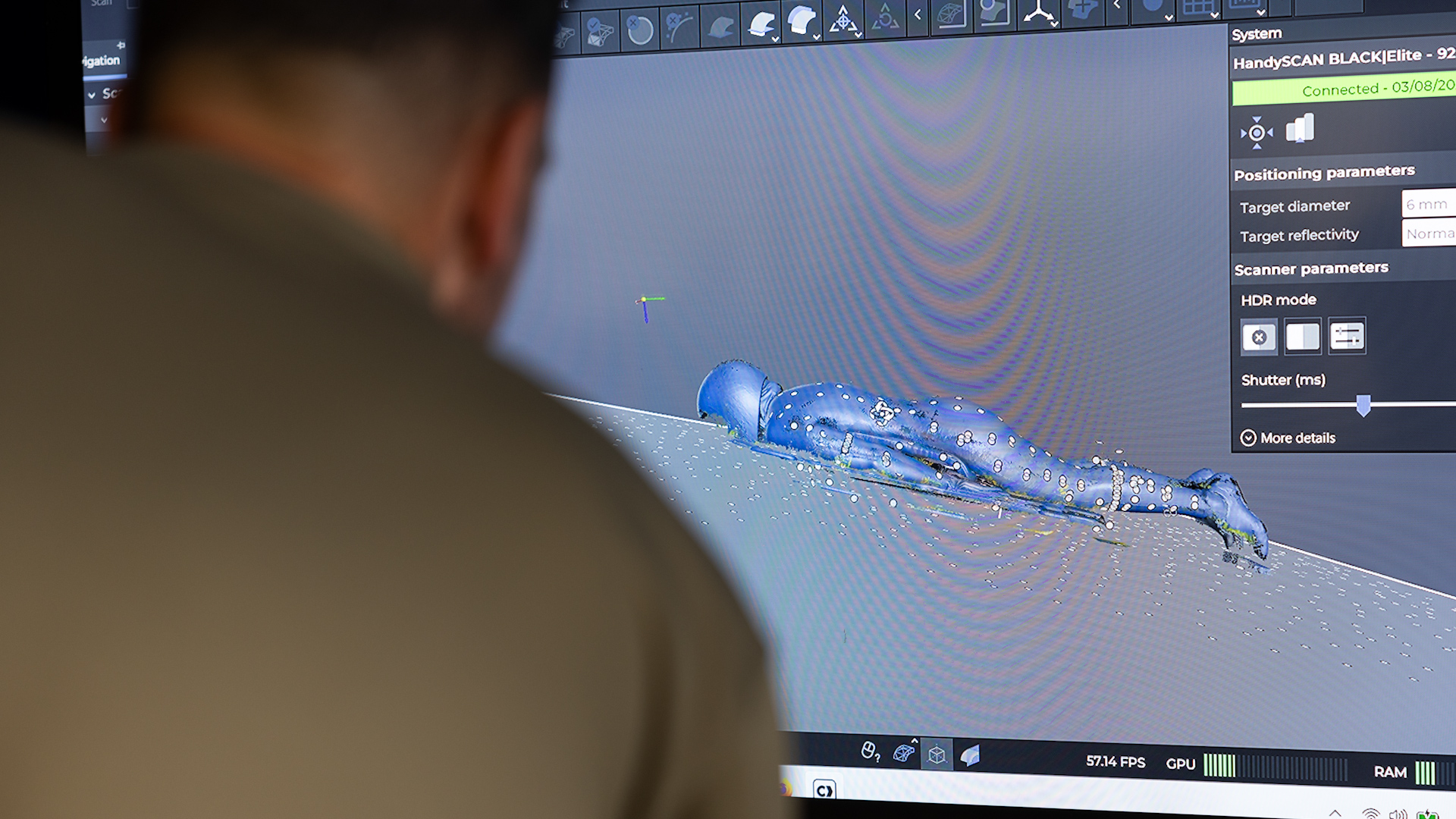
Using advanced HandySCAN 3D scanning technology, 71 IR Sqn are collecting data using captured detailed images of Flt Lt Burger on her skeleton sled, which will be used to analyse her aerodynamic airflow and find ways to improve her race times.
Flt Lt Burger, who is a full-time RAF athlete, made her Olympic debut at the 2026 Milano-Cortina Winter Games where she made history by becoming the first female South African to compete in the skeleton event at an Olympic Games.
She has since expressed her goal of competing at a second Olympic Winter Games with her eyes set on the French Alps in 2030.
The 3D HandySCAN technology is regularly used by 71 IR Sqn for precision measurement tasks in order to maintain aircraft airworthiness.
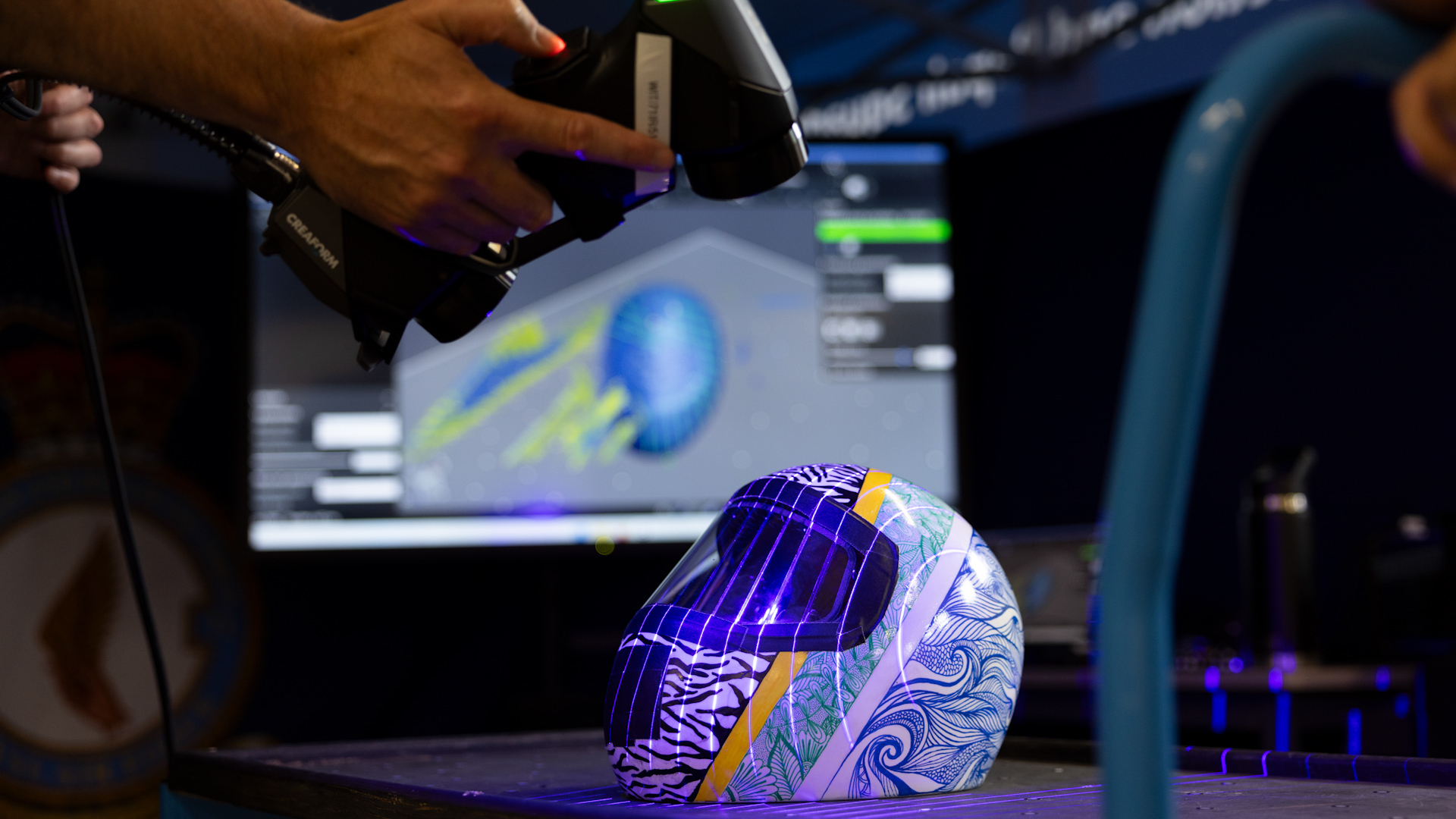
Their engineers are are now applying their skills and expertise to support elite athletes like Flt Lt Burger – creating detailed digital models to analyse airflow around both Flt Lt Burger and her sled.
"The aim is to transfer these 3D scan models into a Computational Fluid Dynamic programme to see how the aerodynamics can be optimised with the overall goal of improving her run times," Chief Technician Walkman from 71 IR Sqn said.
Based at RAF Wittering, the aircraft mechanical technicians of 71 IR Sqn are highly skilled engineers who specialise in precision metalwork and the use of composite materials like carbon fibre.
It is there where they can deliver engineering manufacture and design capabilities in deployed locations – where they often work to provide repair solutions in circumstances where conventional fixes may not be effective.
Related topics
Join Our Newsletter