Aukus explained as tri-nation nuclear submarine pact faces scrutiny in Australia
Aukus was launched in 2021 as Australia's route into the nuclear-powered submarine club.
Five years on, it is being tested by second-hand US submarines, unresolved nuclear waste plans and a public inquiry asking whether the pact serves Australia's interests.
The agreement with the UK and US is designed to give Australia conventionally armed submarines powered by nuclear reactors, using technology Washington had previously shared only with London.
- Government puts money where its mouth is on Aukus as it unveils underwater drones
- Government must inject renewed impetus into the Aukus partnership, report says
- Enduring relationship: Prince William marks Submarine Service and Australian navy milestones
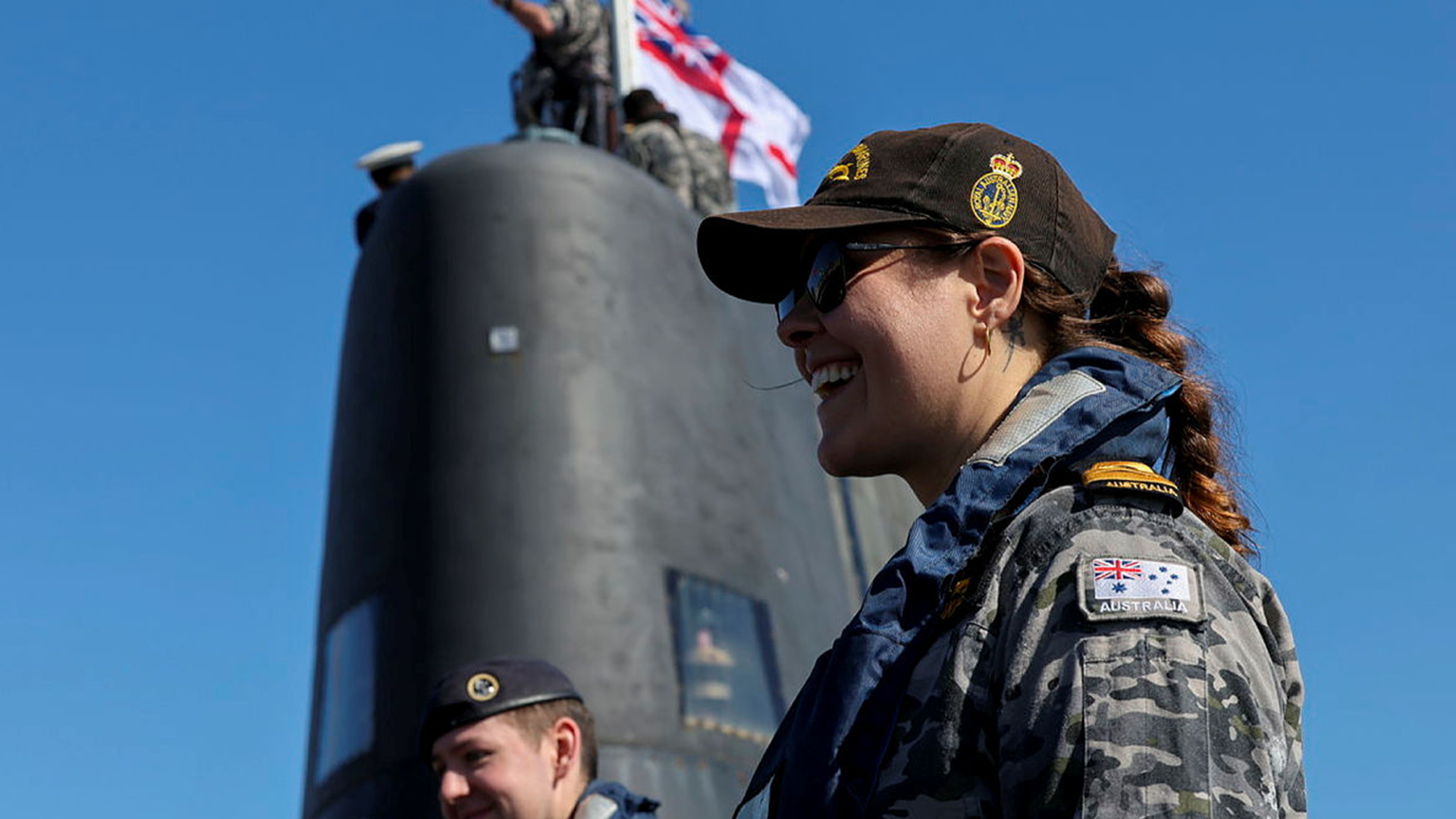
Before Australia receives any nuclear-powered submarines of its own, UK and US boats are due to begin regular rotations through HMAS Stirling, a naval base near Perth, from 2027.
The three governments say the programme remains on track, but the latest plan would see Australia buy three used Virginia-class submarines from the US instead of the earlier planned mix of new and used submarines.
Australian Peter Garrett, the former Labour environment minister and Midnight Oil frontman, is leading a five-month public inquiry into the $368bn pact, with a final report due by 30 October.
The inquiry is expected to examine whether the agreement serves Australia's defence and strategic interests, with cost, delivery timelines, nuclear waste, and environmental issues under scrutiny.
Australia has not yet identified a permanent storage site for radioactive waste from the future submarine fleet, including high-level radioactive waste that will remain toxic for thousands of years.
Australia's route to its own fleet will start with US submarines and allied rotations before Australian-built SSN-Aukus boats arrive in the 2040s.
For the UK, the pact is expected to deliver up to 12 SSN-Aukus submarines for the Royal Navy, with the first due in the late 2030s.
Aukus goes beyond submarines, with the latest announcement in Singapore setting out plans for Australia, the UK and US to start delivering systems for uncrewed undersea vehicles from 2027.
What is Aukus?
Aukus is a security partnership between Australia, the United Kingdom and the United States.
It was announced in September 2021 by then UK Prime Minister Boris Johnson, Australian Prime Minister Scott Morrison and US President Joe Biden.
The pact is Australia's biggest-ever defence project, giving it access to US and UK nuclear-powered submarine technology.
In 2021, Australia cancelled a previous submarine deal with France, causing a major diplomatic dispute, with French foreign minister Jean-Yves Le Drian calling it a stab in the back.
The pact is closely tied to security in the Indo-Pacific, where Australia wants submarines with greater range and endurance to counter China's growing influence in the region.
Aukus has two main parts, known as pillars.
Pillar 1 covers submarines and is designed to help Australia acquire a sovereign fleet of conventionally armed, nuclear-powered submarines.
Pillar 2 covers advanced military technologies, including cyber, artificial intelligence, quantum technologies, hypersonics, electronic warfare and undersea systems.
What does the UK get from Aukus?
SSN-Aukus is based on a UK design and will replace the Royal Navy's Astute-class attack submarines.
The UK plans to build up to 12 SSN-Aukus submarines.
The main UK industrial sites are Barrow-in-Furness, where submarines are built, and Raynesway in Derby, where Rolls-Royce works on nuclear propulsion.
The Strategic Defence Review set out an ambition to move towards continuous submarine production, with a submarine produced every 18 months.
At the same time, the UK must maintain its Dreadnought ballistic missile submarine programme, which is designed to replace the ageing Vanguard class from the early 2030s and carry the UK's Continuous at-Sea Deterrent.
The Defence Committee has warned that the UK needs sustained funding to deliver Aukus at pace.
Pillar 2: Drones and AI
Pillar 2 is the second part of Aukus which is meant to deliver advanced military technology before the submarine fleet arrives.
This part of the pact covers undersea systems, cyber, artificial intelligence, quantum technologies, hypersonics and electronic warfare.
At a meeting in Singapore, Australian, UK and US defence ministers announced the first Aukus Pillar 2 signature project, with delivery due to start in 2027.
The three countries will develop payloads and enabling systems for uncrewed undersea vehicles.
Payloads are the systems carried by the vehicles, such as sensors, navigation equipment or offensive capabilities.
Enabling systems support how those vehicles share information and operate with submarines, ships and other uncrewed platforms.
The project is designed to make undersea systems more interchangeable between the three countries.
The planned roles include surveillance, protection of seabed infrastructure, mine countermeasures, electronic warfare and anti-submarine operations.
Aukus is built around access below the surface, from nuclear-powered submarines to smaller uncrewed systems that can extend what crewed boats and ships are able to do.
The undersea focus also reflects growing concern over cables, pipelines and other seabed infrastructure, after a series of suspected sabotage incidents in European waters.
In a hybrid navy, drones and AI go hand in hand, and the Aukus partners are testing how uncrewed systems can detect, track and navigate.
The first AI and autonomy trial was hosted by the UK at Upavon in Wiltshire in 2023. Australian, UK and US systems worked together in a collaborative swarm to detect and track military targets in real time.
The trial also tested whether AI models could be retrained during a mission and shared between the three countries.
A second trial in Australia, known as Torvice, tested robotic vehicles and sensors against electronic warfare, laser threats and attacks on GPS and other positioning systems.
The aim is to make autonomous systems more useful in wartime conditions where signals can be jammed.
What has Aukus delivered so far?
The most important agreement is the naval nuclear propulsion framework signed by Australia, the UK and US, which sets the legal basis for sharing information, equipment and material linked to conventionally armed, nuclear-powered submarines.
Australian personnel are already working with the US Navy, Royal Navy and submarine industrial bases, while UK and US nuclear-powered submarines have increased visits to Australia.
HMAS Stirling is being prepared for Submarine Rotational Force-West, the arrangement that will see UK and US nuclear-powered submarines rotate through Western Australia from as early as 2027.
On Pillar 2, the three countries have held AI and autonomy trials, worked on quantum technologies and changed export-control rules to make defence technology easier to share.
The Singapore announcement gives Pillar 2 its first named delivery project, with systems for uncrewed undersea vehicles due to start arriving from 2027.
Holding course
Richard Marles has argued that Australia should stay with Aukus rather than look for another route to nuclear-powered submarines.
ABC reported him as saying Aukus was "kind of plan C", and that moving beyond it would come close to deciding not to acquire the submarines at all.
Aukus now has to move from agreements into routine operations.
The first measure will be whether Australia can host UK and US nuclear-powered submarines at HMAS Stirling from 2027, while building the workforce and safety infrastructure needed for a fleet it will not own for years.
The pressure is not only Australian. The US must make Virginia-class submarines available while trying to increase production for its own Navy, and the UK must expand its submarine programme while also delivering Dreadnought.
Join Our Newsletter