Drones and dragging anchors: Inside Nato's secret undersea battle against Russia
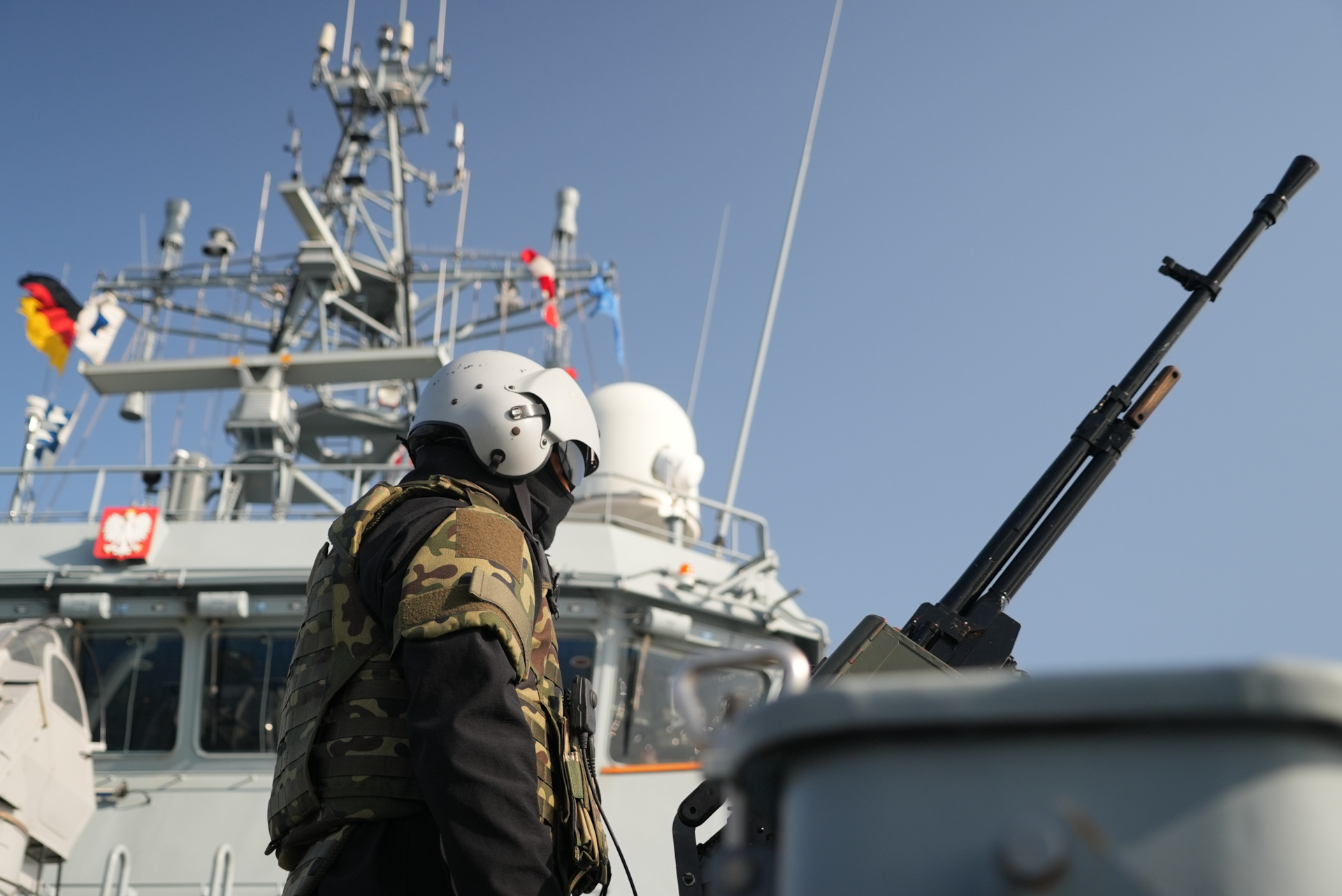
Manning guns on deck, and scanning the horizon – but this is not an exercise. The Polish sailors on board ORP Czernicki are on an active mission defending Nato from covert Russian attack.
BFBS Forces News is the first British broadcaster to sail with Baltic Sentry, the maritime surveillance and monitoring mission set up to respond to attacks on critical undersea cables and infrastructure.
ORP Czernicki is the command platform, and Lieutenant Commander Thomas Støkket is the Chief of Staff on board. He set out the potential consequences of sabotage in this area.
"That will be more or less able to not paralyse the society, but it will be hampered. All the internet traffic, between the bigger countries, between Norway, UK, between Europe, essentially, is travelled by cables undersea, so it is important," he told BFBS Forces News.
Nine countries border the Baltic Sea: Germany, Poland, Lithuania, Latvia, Estonia, Russia, Finland, Sweden and Denmark. All are Nato countries apart from Russia, which has access to the Baltic via its second city, St Petersburg, and its tiny enclave, Kaliningrad.
For all these countries, there is just one narrow exit point via the Danish straits, leading to the North Sea. With a goldmine of critical infrastructure underneath, it's no wonder the Baltic is such a highly contested strategic space.
Lt Cdr Støkket describes to me examples of suspicious behaviour, but on camera, he’s unwilling to categorically point the finger at Russia.
"Merchant ships accidentally dropping anchor and dragging it – it's impossible to say if that's an accident or not, because we're not on board when it happens."
When I press him on how likely it is that a ship might drag its anchor alongside and over undersea cables for tens of kilometres by accident, he admits it's not likely.
Baltic Sentry was stood up in January 2025, Nato's response to a spike in anchor dragging and cable cutting. This means there is now a permanent and significant maritime presence in the Baltic and, according to the Commanding Officer of the ORP Czernicki, Commander Kacper Sterne, it's led to a dramatic improvement in response times.
"Before the Baltic Sentry, a lot of incidents regards to undersea infrastructure... I think the biggest success is we reduce the responding time from 17 hours to one hour," he said.
After a few hours on board Czernicki, we transfer by seaboat to HNMLS Scheidam, one of two minehunters in the Nato Maritime Group.
The minehunters have dive crews and specialist equipment, like the autonomous sea drone Remus and the remotely operated Seafox.
The ship's CO, Lieutenant Commander Edo, explains: "So if we have to look into the critical underwater infrastructure, like gas or pipelines on the sea bottom, our tools can be easily used to check if they put, for example, explosives, or destroy or hamper things."
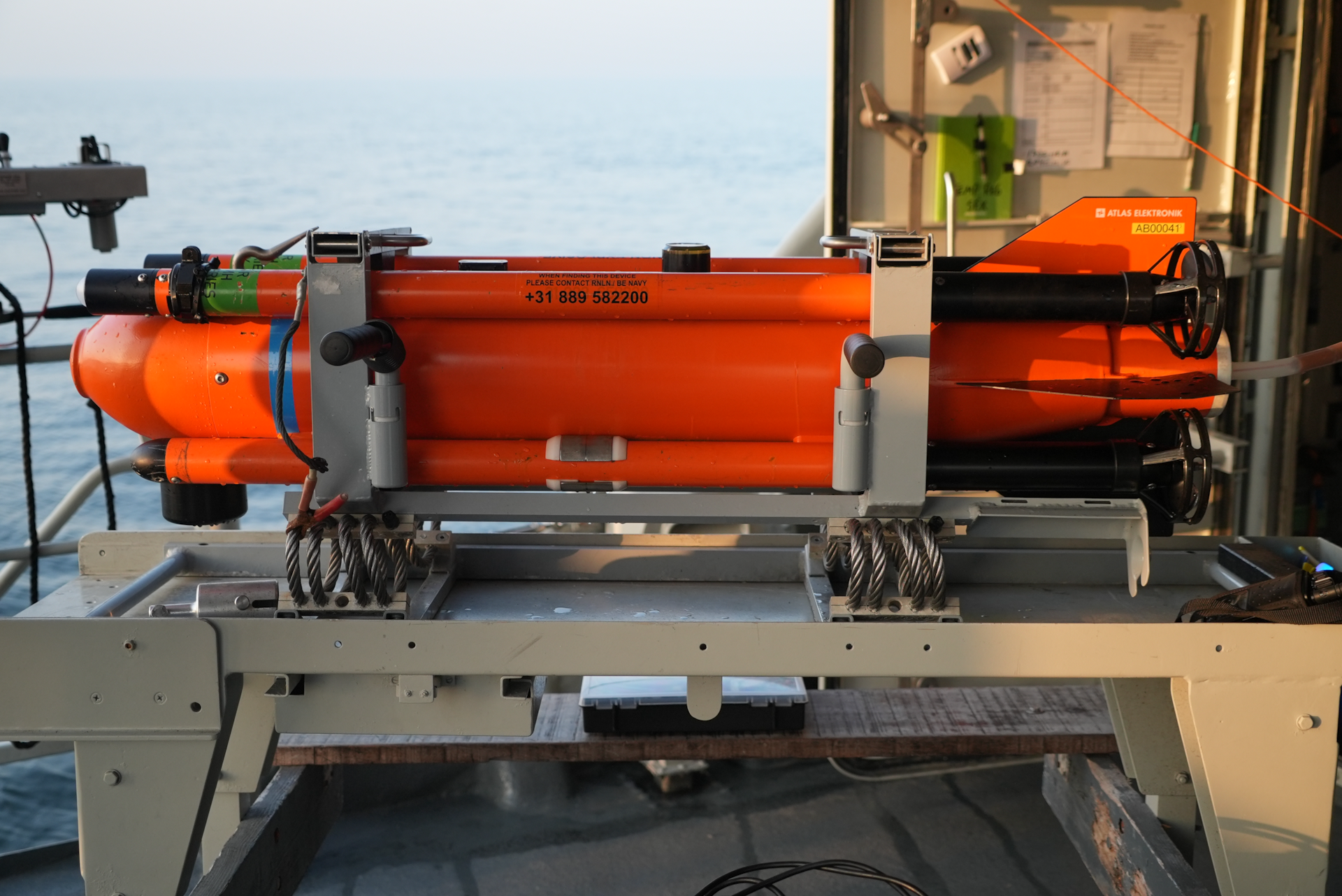
The Dutch crew launch both the Seafox and Remus to show us how they work and what they can see on the seabed.
Seafox can dive more than 200 metres and the Remus even deeper, and both have onboard cameras. One of the ship's officers, Lieutenant Hidde, explains how they are flexing between the ship's original minehunter role and this new tasking for protecting seabed cables and pipelines.
"We are all dependent on internet, phone and all these cables are just going under the sea and through international waters where everyone has access to them. Five to 10 years ago, we didn't really talk about it, but now it's a hot topic."
On board the last ship we visit, the German minehunter FGS Fulda, Commanding Officer Michael Voigt says he often observes Russian shadow fleet vessels in the Baltic, and, increasingly, they travel with naval escorts.
"[We see] routine transiting, especially of the shadow fleet and merchant ships... accompanied by some Russian units, more and more. And also, the Russian units use the Baltic Sea for their own training."
Seventeen hours to one: that's the Nato commander's assessment of the dramatic cut in response times since Baltic Sentry was stood up.
It makes it harder for Russia to deny responsibility. Moscow has adapted, sending warships to escort its shadow fleet, but that imposes another cost, tying up precious military resources.
Baltic Sentry hasn't stopped undersea sabotage. But it's made it much harder to get away with.
Join Our Newsletter