My resignation was regretful but necessary for future of Armed Forces, says Healey

John Healey has said his surprise resignation last week was "necessary in securing the future of Britain's Armed Forces".
The former defence secretary, who is now a backbench Labour MP, told the House of Commons: "I took the decision to resign with the very greatest regret and reluctance, but I continue to be certain about this decision.
"In time, I believe it will be seen as necessary in securing the future of our Armed Forces and our alliances."
Frontbench MPs go back to back
He was sitting two seats down from fellow former frontbencher Al Carns, who resigned shortly after Mr Healey.
"My decision last week was about our country, not career," said Mr Healey.
"I love the job, I won't miss going to bed with three phones or 3am phone calls, and I'm proud of what we've done in less than two years as a Labour Government."

We must not fall short
He continued: "At this dangerous time, I see the current defence investment plans falling well short of what is required, a rise at 0.08% from next year to 2030, no date for reaching 3%, no path to 3.5%.
"By 2030, well over half of Nato members will be spending 3% or more. And when allies are looking for British leadership, we must not fall behind.
"When Nato needs European nations to step up, we must not fall short. Our adversaries do not follow timetables set by the Treasury.
"I appreciate how hard this is for Cabinet colleagues and I am very grateful to those who support what is required, but not all needs to be done by cutbacks elsewhere.
"There are credible ways of meeting the mid-term funding challenges, working multinationally and, as other nations in Europe are doing, that could allow us to protect the ability to deliver our Labour missions across government."

Letters through a stick of rock
Mr Healey also suggested all government departments should be involved in national security.
"We need a bigger view of national security," he told his fellow MPs. "It's not just a job for defence or the agencies, every department has a part to play in national security and national resilience, from energy to transport to health.
"Security must run through the Government like letters through a stick of rock.
"Security must be felt in the communities right across Britain, reversing long-term decline and bringing new jobs and new hope."
Not just money, but the approach to war
Mr Carns also explained to the House his reasons for resigning as Armed Forces Minister, citing his unhappiness with the Government's approach to modern warfare, the funding of the Defence Investment Plan and its policy towards Northern Ireland veterans.
The former Royal Marines colonel said the Government was not paying enough attention to drone warfare, and was too focused on traditional defence hardware.
"I no longer believe the Defence Investment Plan was prepared for the wars we are most likely to fight," he said.
"The character of warfare is changing at an exceptional speed. In Ukraine a navy without a ship has destroyed a navy. A drone costing thousands can destroy a tank costing millions.
"A drone can now strike 2,000 km into Russia, a fraction of the cost of fighter jets.
"It is not either or, it is an equitable mix of high-end sophistication, coupled with low-end mass. That's the balance we must seek - but from my view the Defence Investment Plan did not strike that balance."
NI veterans not treated properly
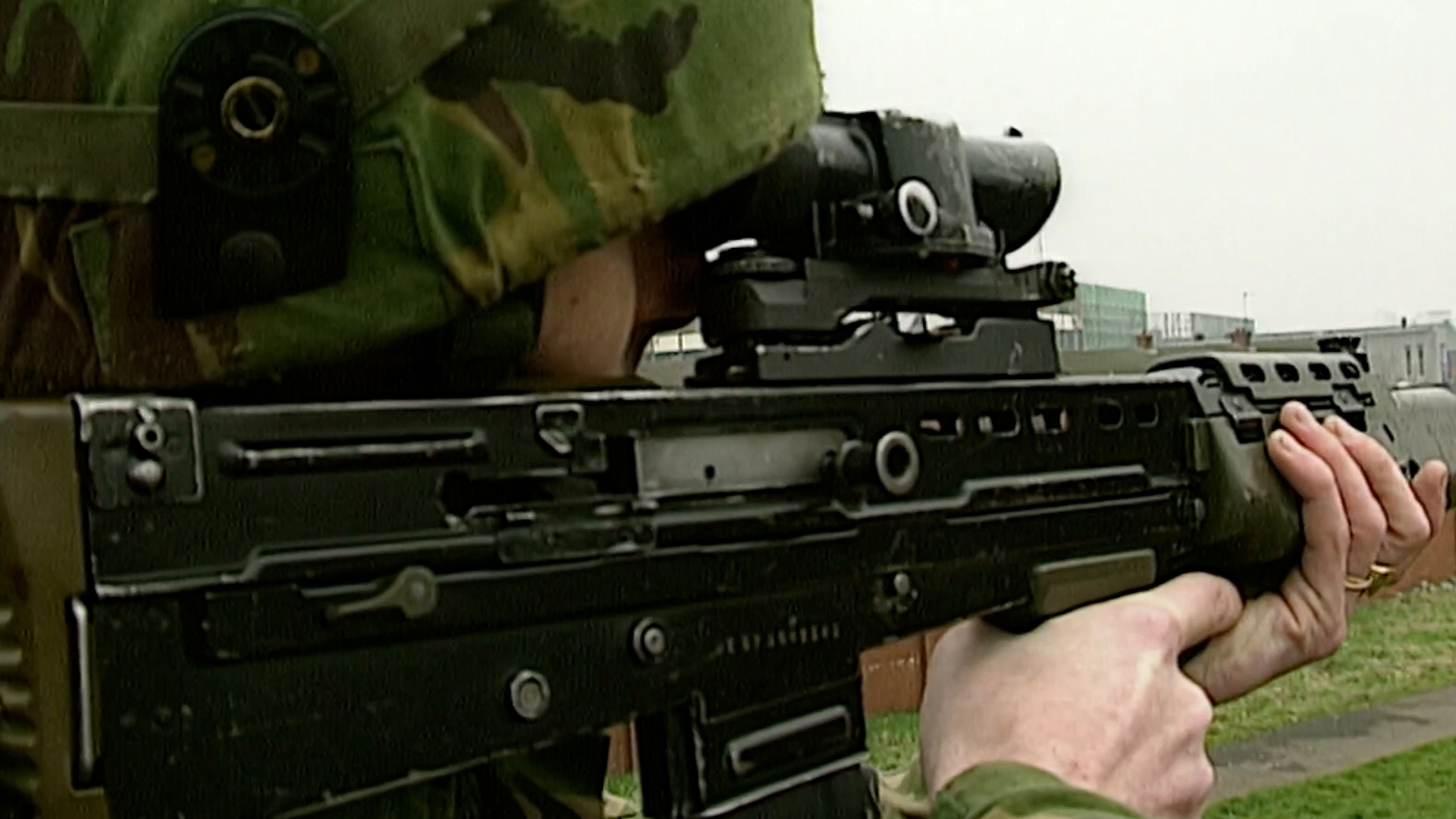
Mr Carns, who continues to have a military role as a colonel in the Royal Marines Reserve, said the Government had failed to treat Northern Ireland veterans properly.
"It's a difficult issue," he said "and I cannot describe how difficult this fight has been, whatever the view people will have on the Troubles, our country owes a duty to those sent into harm's way under lawful orders.
"That duty does not end when that uniform comes off. The Labour movement was built on a simple idea, that the people who do the hard work this country asks of them, deserve the backing of the state in return.
"Too many veterans have carried uncertainty for too long while others have benefited from political accommodations that were never available to those who served, and I could never reconcile that with my own understanding of duty.
"The IRA failed to achieve its political ends through the use of terrorist tactics. We must be exceptionally careful that we do not help them achieve those ends through other means.
"Constant, neverending legal wranglings that undermine the contract between the nation and those that serve is neither a good use of taxpaying money nor an effective execution of strategy, inquests, inquiries and an independent commission creates a hierarchy of truth."
Related topics
Join Our Newsletter