Why do the Army's AFVs have wheels or tracks? The pressure's on to find the answer

Armoured vehicles need to be able to be driven on roads, but fundamentally, they are designed to cross rough terrain in austere conditions and need to function in mud, dust, ice and snow.
You'd think then that tracks would always be the answer – only there are plenty of AFVs that use just wheels.
Why is that? Isn't one system better than the other?
Under pressure
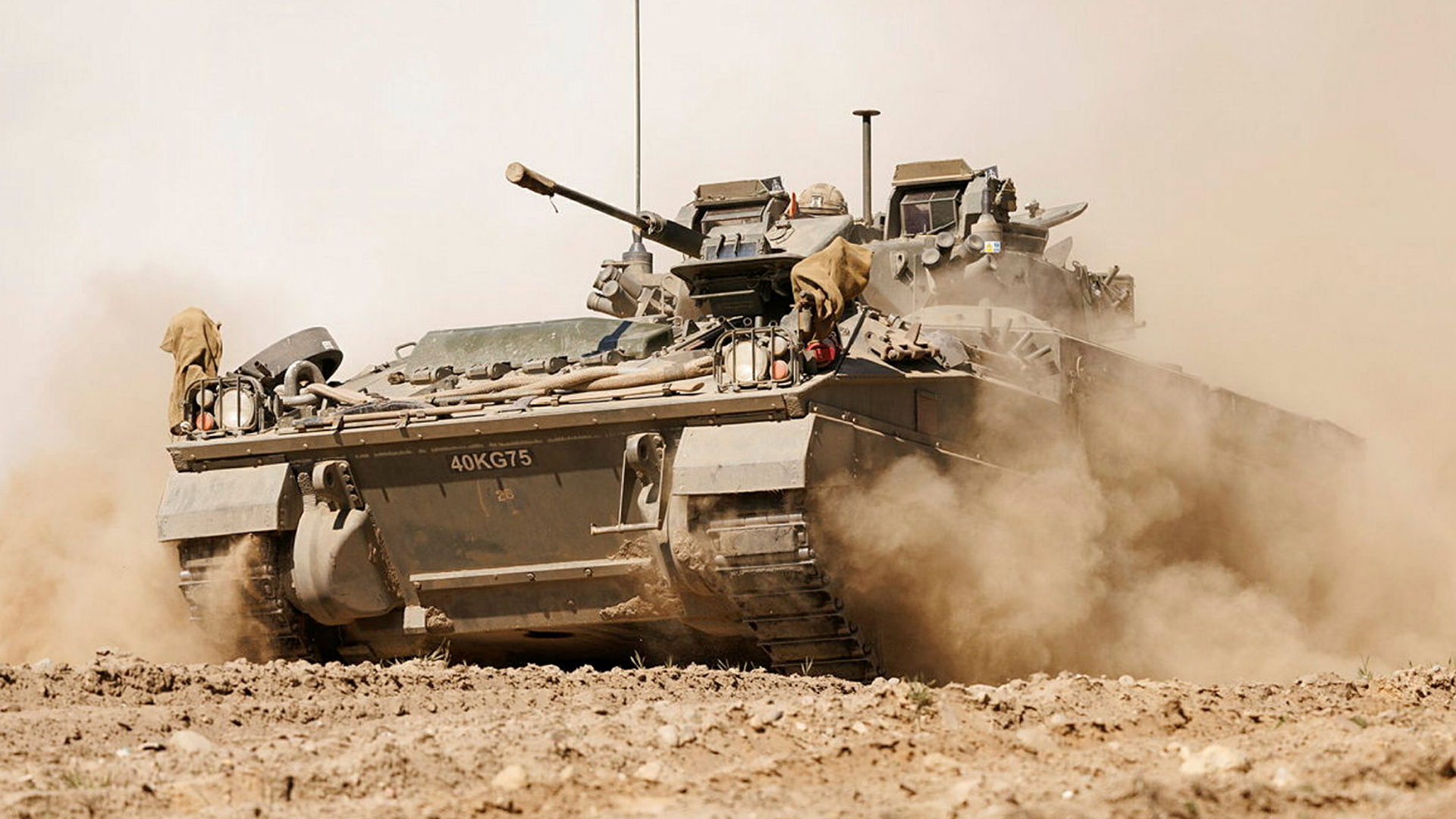
Take the British Army, for example. The Warrior, the Army's infantry fighting vehicle, has tracks.
The Boxer, its new armoured personnel carrier, has wheels.
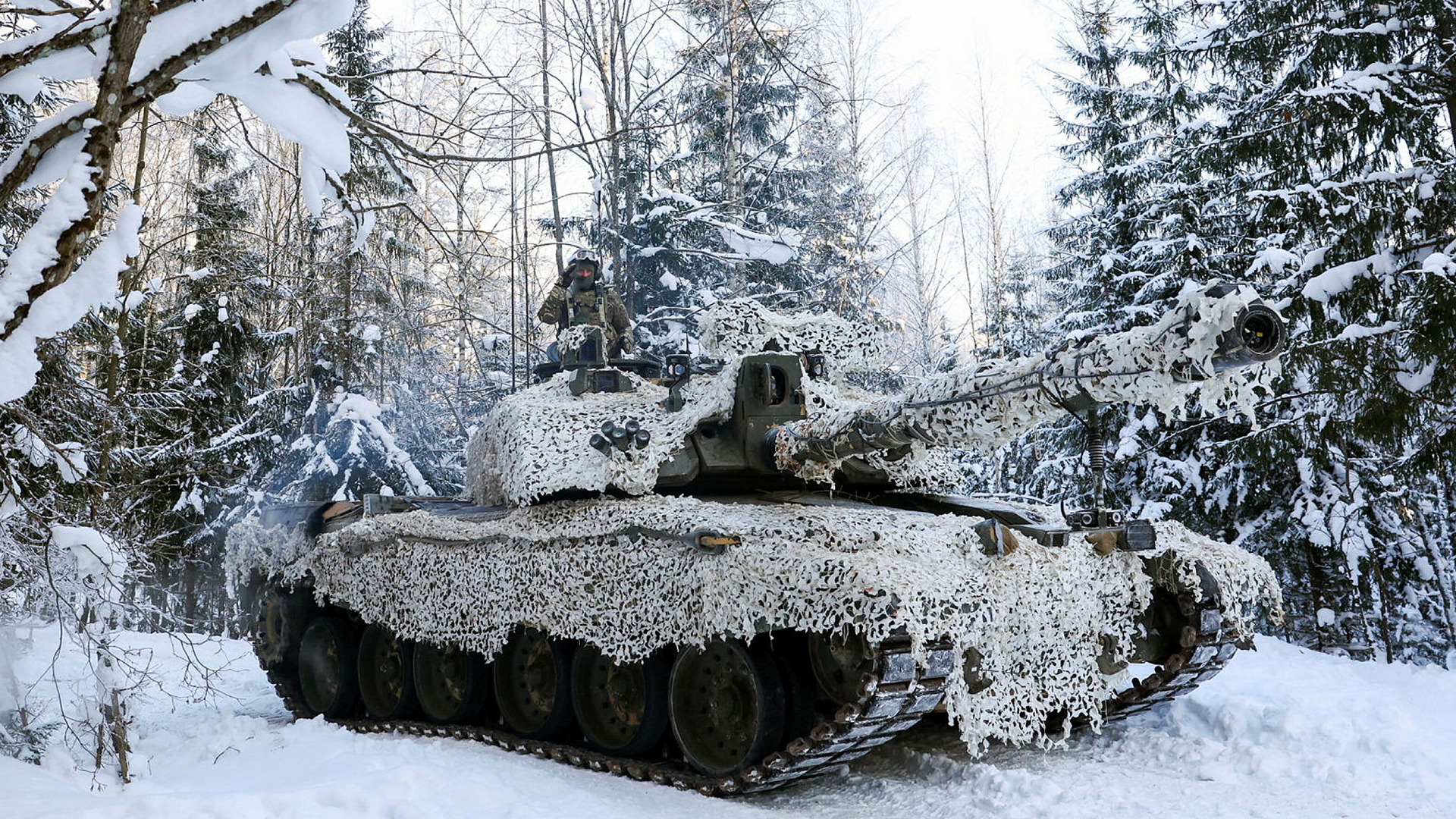
Both the Challenger 2 and the Challenger 3 main battle tanks have tracks.
And while the Royal Artillery's now-retired AS90 self-propelled howitzer has tracks, the current Archer and incoming RCH 155 have wheels.
How come? Well, it all comes down to pressure – ground pressure.
Some of you may remember the old physics lesson where you're asked which would cause more damage to a wooden floor – a massive elephant or a lady wearing stiletto heels?
The answer, of course, is heels because the pressure of the woman's weight is being applied to a smaller, more concentrated area.
The idea behind a set of tracks then, in addition to providing effective traction, is to spread the load of a heavy armoured vehicle – elephant-style – over a larger area, a phenomenon known as track flotation.
But this only works properly if the tracks are wide enough.
This was something most nations found out the hard way during the Second World War, with the narrow tracks of pre- and early-War tanks generally making way for wider ones as vehicle weights increased.
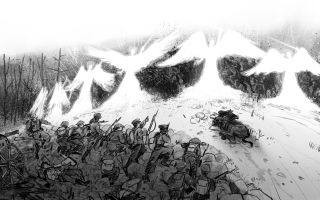
Take the example of the snow and ice of the Eastern Front – and the seas of mud that were created during the spring thaw.
This was an unpleasant surprise for the Germans, but one the Red Army had already catered well for with the wide-tracked T-34/76 and KV-1.
Tracks for all?
But if tracks are so great then why don't all armoured vehicles use them?
After all, during the Second World War ultra-light British vehicles like the Universal Carrier had tracks – as did the 78-ton Tortoise heavy assault tank at war's end.
As with most things in life, it comes down to cost, time and practicality. Plus efficiency.
Tank tracks need to be set to the correct tension – and this will constantly need adjusting.
If the tracks are too tight then they can break, while if they're too loose they can be thrown off the drive sprocket, idler wheel or road wheels.
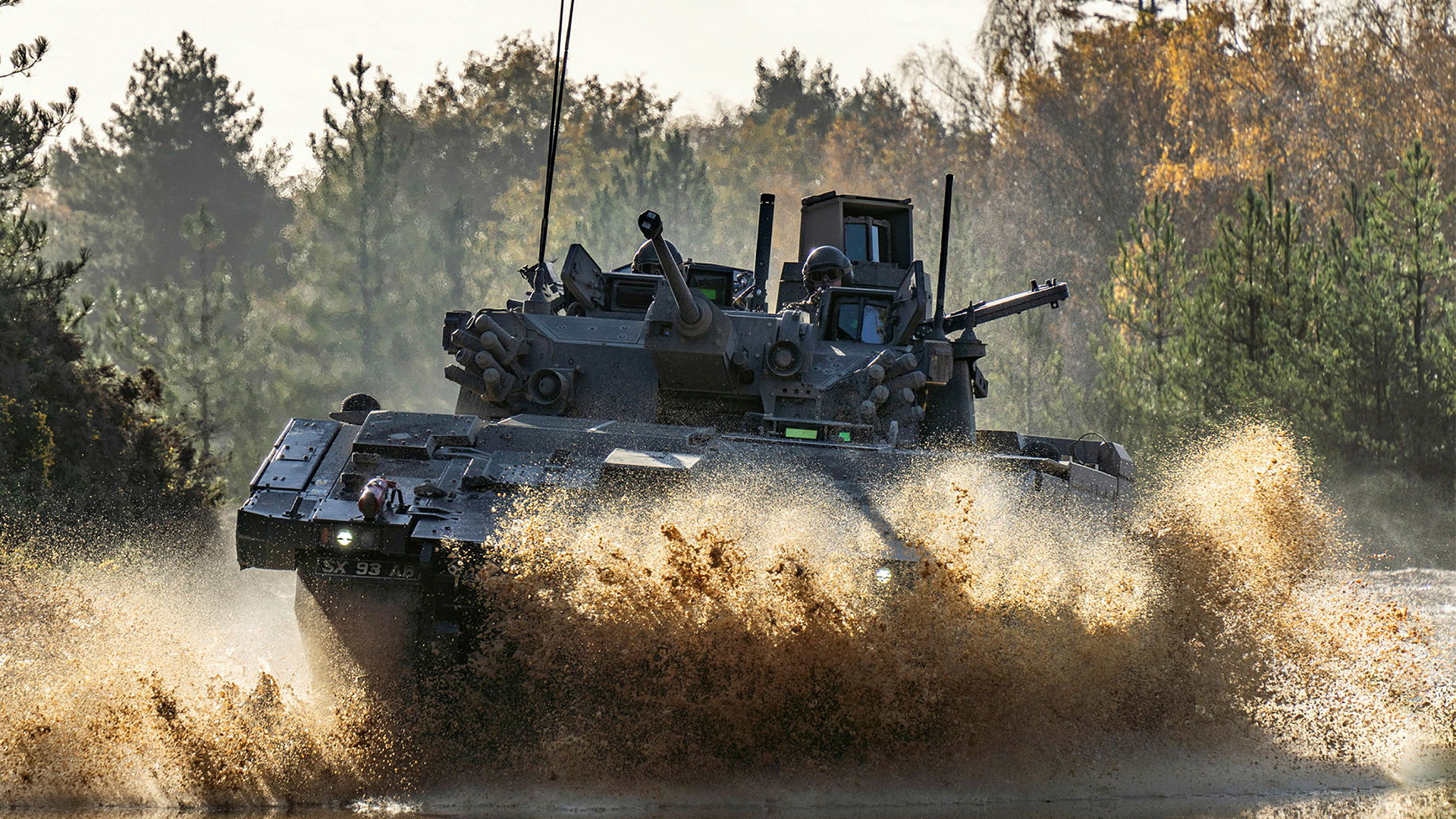
Correct track tension was one of the things affecting Ajax, with a recommendation being made to fit an internal track tensioning system.
While this might seem an obvious thing to say yes to, it would add cost, weight and complexity to a vehicle that already exhibits all three of these characteristics.
If track pins break or links crack, they need to be replaced. If a drive sprocket needs to be serviced or a road wheel needs to be swapped out, the track on that side of the vehicle must first be removed.
These jobs can be carried out by the crew, often with the help of their REME support colleagues, but it takes time. And that means time the vehicle is not operational.
In a warfighting scenario, that could prove costly.
Tracks will happily tear up road surfaces. In wartime that's not much of an issue, but in peacetime it's a problem.
Years ago, when I was a cadet, my school was lucky enough to have been visited by a Scorpion CVR(T), which was a fantastic treat.
For some reason known only to the crew, no track pads were fitted, even though they were meant to be kept in situ all the time unless they were being swapped for fresh ones.
So when this particular vehicle drove off, using public roads, it left chunks of asphalt in its wake.
Track pads stop this from happening. They also increase crew comfort on long road marches, reducing vibration and noise.
But they also reduce traction off-road – something Ukrainian crews have complained about with their British-supplied Challenger 2s.
The type of track was another problem area highlighted by Ajax, with the suggestion that the vehicle use all-rubber ones to minimise crew discomfort and potential illness.
What about wheels?
Wheels with tyres offer a number of advantages over tracks, being generally cheaper and the running gear being easier to build and maintain.
And while a thrown track might put a vehicle out of action, a non-tracked AFV won't necessarily be completely incapacitated by a damaged or destroyed wheel or blown tyre.
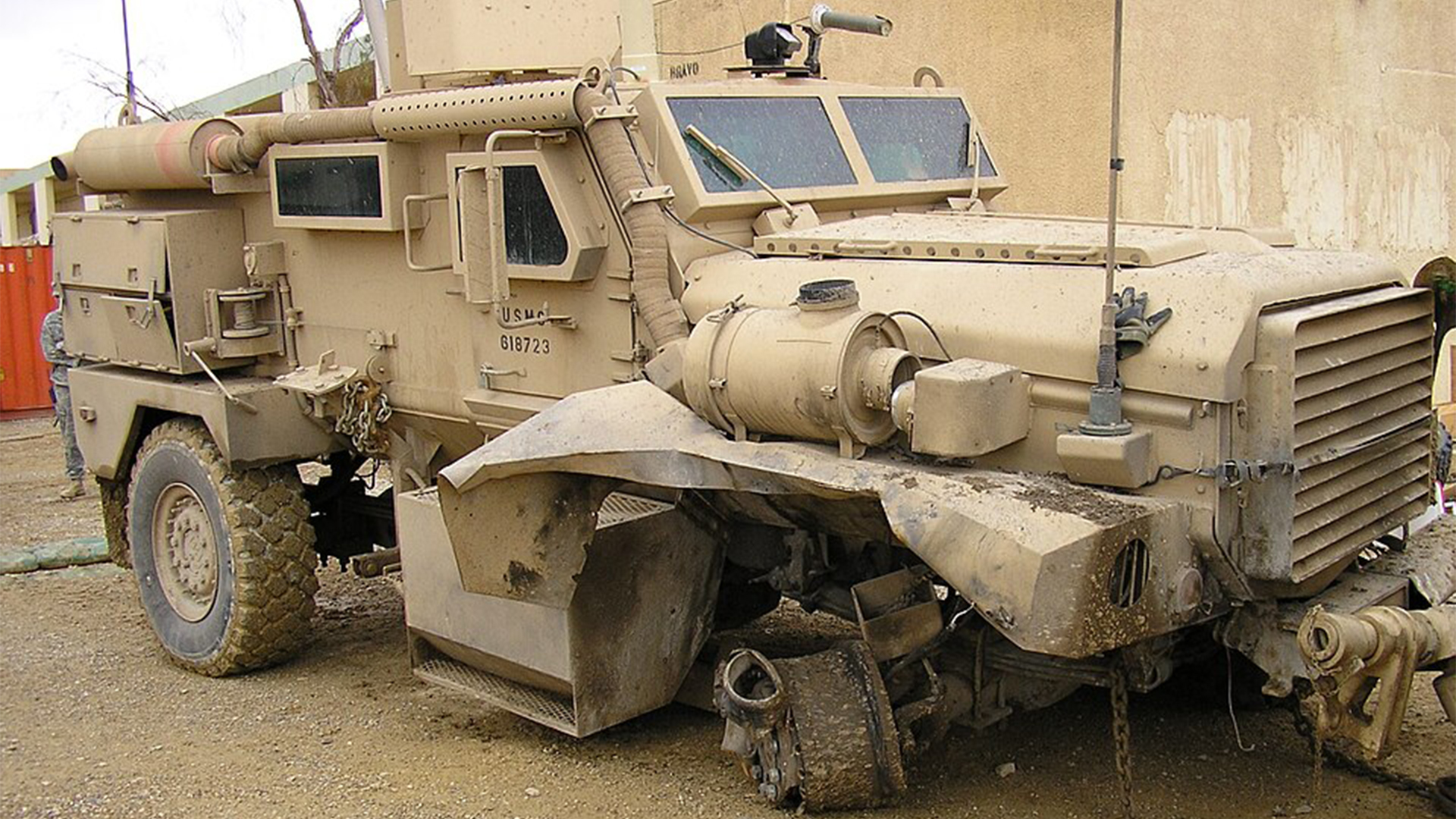
To give one example, a US Marine Corps Cougar – which is known as the Ridgback Protected Patrol Vehicle in British Army service, drove over a mine in Iraq.
Despite losing its right-hand front wheel, the vehicle was able to be driven two miles to safety on the remaining three wheels.
All three soldiers inside suffered no injuries other than headaches and a slight concussion.
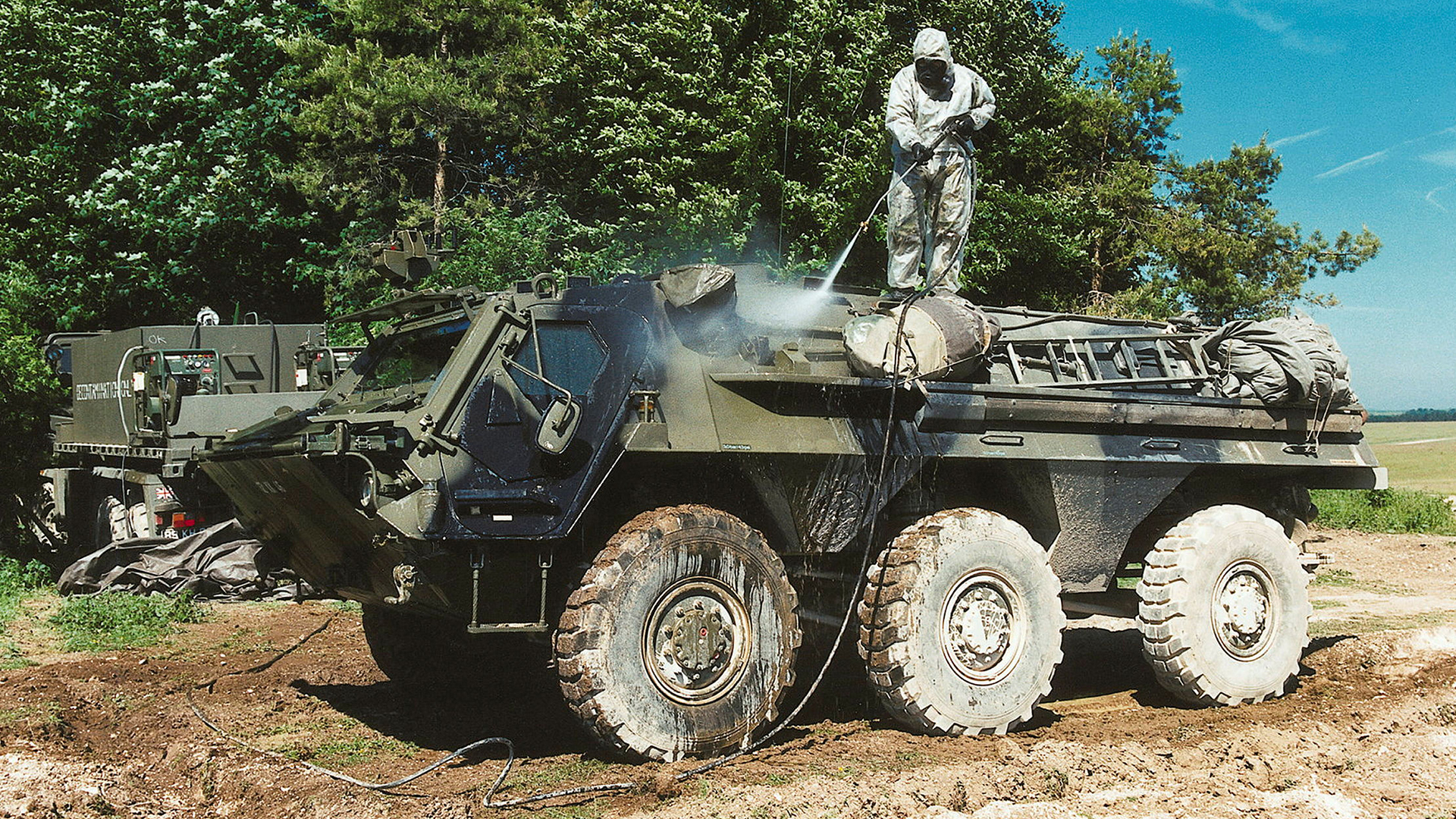
The six-wheeled Fuchs CBRN detection vehicle operated by the Royal Engineers and the eight-wheeled Boxer APC and RCH 155 SPG should be similarly effective should they lose a wheel in any future combat.
Wheeled vehicles are generally capable of being driven faster – the Boxer can make 64mph on a road – and use less fuel, which can also give them greater range.
They're certainly capable off-road performers too.
Last year the Boxer proved just how well it can cope with uneven terrain and steep slopes, with a test vehicle being deliberately tilted on a ramp to see how far it could go before toppling over.
And instead of the standard Boxer, the test vehicle was adapted to mimic the weight and centre of gravity of the turreted RCH 155 self-propelled howitzer variant.
The vehicle managed to tilt past a highly impressive 45° angle before one set of wheels finally lifted off the platform at Millbrook Proving Ground.
Let's talk tanks
Numerous countries operate vehicles that would seem to offer the best of both worlds – a 6x6 or 8x8 wheeled chassis with a turret and gun.
A good example of this concept is the US Army's Stryker M1926 Dragoon – but this is an infantry fighting vehicle.
While IFVs are capable of taking on enemy infantry and light armour, they are not intended to destroy tanks.
However, in January 2024 footage emerged showing two Ukrainian M2A2 Bradleys engaging a Russian T-90M near Stepove.
These tracked IFVs opened fire at very close range, and although their 25mm M242 Bushmaster cannons were incapable of penetrating the Russian tank's armour, they were able to damage external components, crippling it.
Nevertheless, whether wheeled or tracked, IFVs are not designed to destroy tanks.
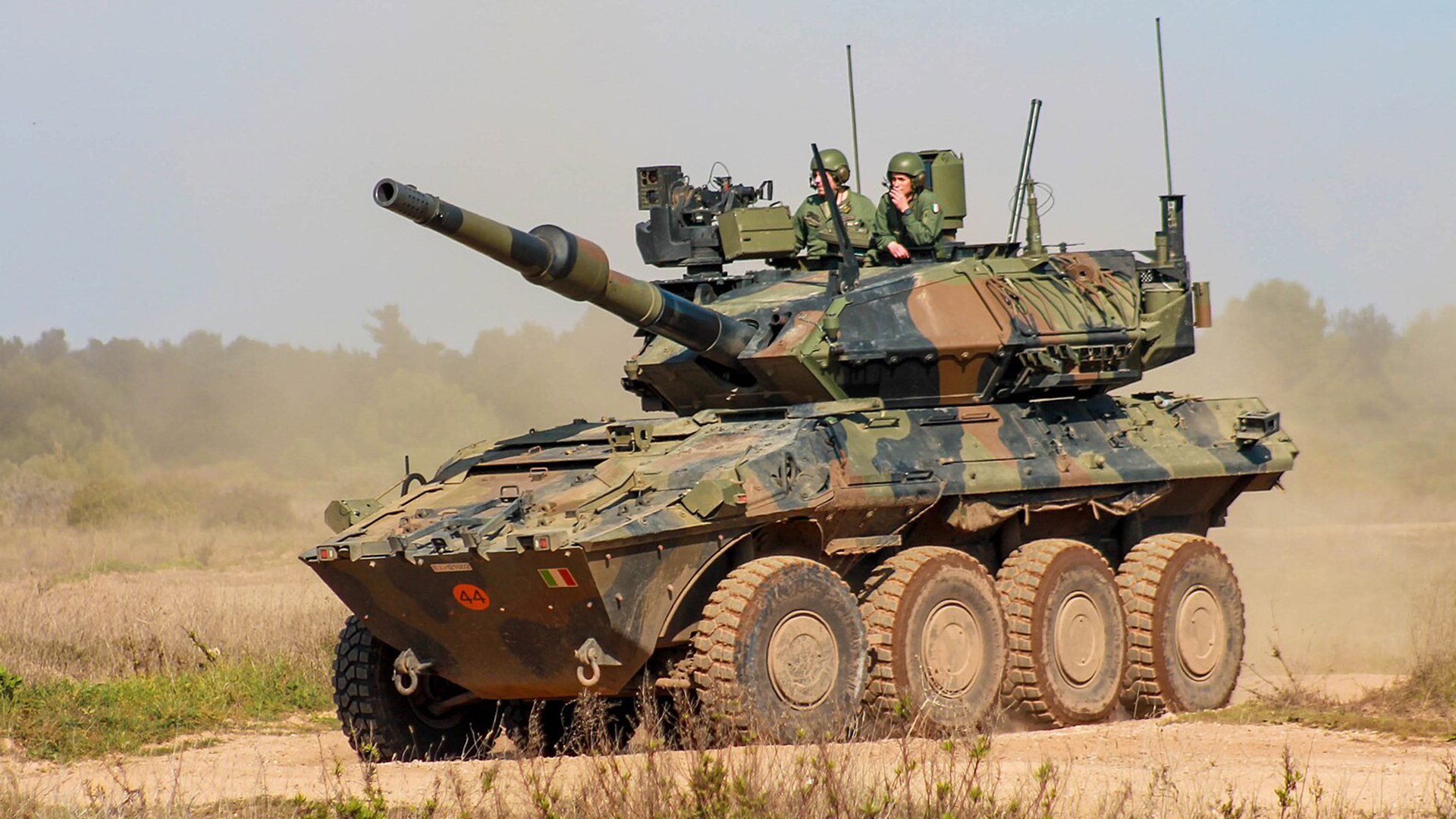
Then there's the Italian Centauro II – an 8x8 wheeled and turreted tank destroyer, which is armed with an Oto Melara 120mm smoothbore gun.
But if the Centauro II can take on enemy armour, does that make its wheels and powerful main gun the ultimate combo for tanks of the future?
Not really, because this vehicle is intended to be used in a light to medium defensive role, while main battle tanks are all about aggression and are more heavily armoured.
The weight of the vehicle, the traction required and the ground pressure make a compelling and practical case for tracks.
Compare the 24 tonnes of the Centauro II to the 64 tonnes of the Challenger 2 and imagine an eight-wheeled Challenger variant.
Instead of spreading the weight over the entire run of track links that is in contact with the ground, it would now be spread over eight ground pressure points.
While wheels and tyres that could take the weight might be developed to do this, the MBT's cross-country ability would no doubt be affected.
If doctrine was to change, it would technically be possible to field a vehicle that slotted in part-way between a more lightly armoured tank-killer like the Centauro II and a main battle tank like the Challenger 2 or Leopard 2.
But this would represent a rebalancing of mobilty, protection and firepower.
So when it comes to wheels and tracks it's not really a choice of either/or – because today's armies need a combination of vehicles equipped with both.
Related topics
Join Our Newsletter