How could Hillsborough Law give bereaved Chinook disaster families the chance for justice?
The long-awaited 'Hillsborough Bill' has passed through the House of Commons and is progressing through the House of Lords.
Once enacted, it will be a landmark piece of legislation that introduces seismic changes to prevent official cover-ups by public bodies, including the Ministry of Defence.
Born out of decades of campaigning by bereaved families, its primary mechanism is a statutory duty of candour which legally forces public authorities to tell the truth and proactively disclose relevant information during official inquiries and inquests.
Application to the Chinook disaster
The Chinook disaster illustrates exactly why the Hillsborough Law is necessary and could be one of the first tests for the new legislation.
The 1994 RAF Chinook crash, which claimed the lives of 29 intelligence and special forces personnel, shares similarities with the Hillsborough disaster.
In both instances, the state initially shifted blame onto the deceased.
An internal investigation carried out by the MOD found the Chinook pilots guilty of "gross negligence", but this conclusion was officially overturned in 2011 after relentless campaigning by the families.
It has been 32 years since the disaster and the families still do not know what happened to their loved ones, despite multiple requests for a fresh investigation.
Following the High Court's dismissal of the families' case earlier this month, the Chinook Justice Campaign have pivoted their quest for justice and named the Hillsborough Law as their core tool to force a judge-led public inquiry.
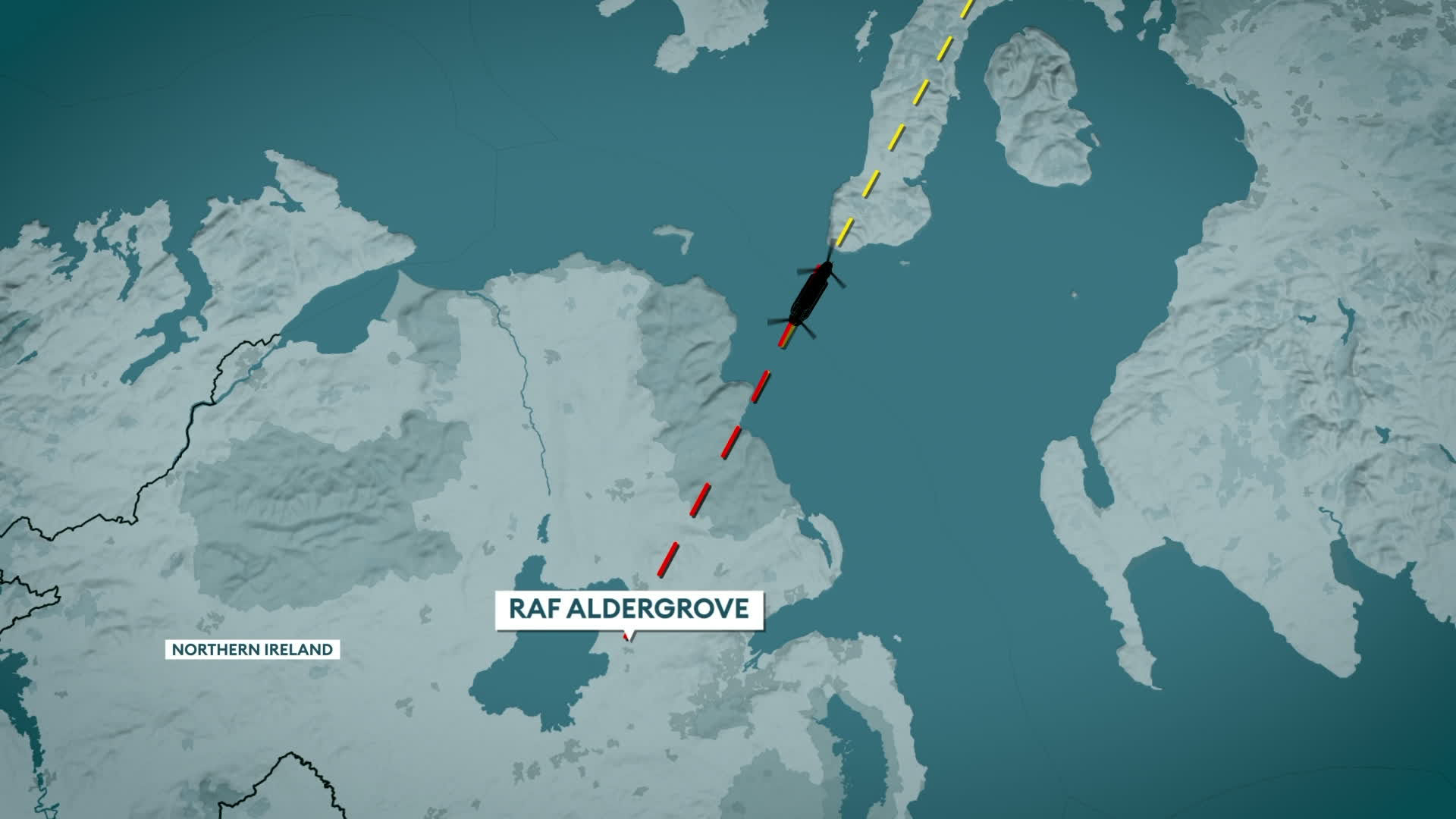
While the law will not apply retrospectively, if a judge-led inquiry is opened after the law is enacted, it will dismantle the previous defence strategies used by the MOD by:
Compelling the release of previously withheld documents:
The Chinook Justice Campaign is fighting to access official papers locked away under a 100-year secrecy rule.
The statutory duty of candour would force the MOD to proactively disclose these documents from the start of any new inquiry.
Encouraging institutional accountability rather than victim-blaming:
The new law makes it a criminal offence for public officials to intentionally mislead the public or investigations, making it illegal to sustain a false narrative if, for example, evidence of mechanical unairworthiness exists.
Weakening the national security veto:
The Chinook crash killed 25 top British intelligence experts.
The House of Commons scrapped sweeping national security exemptions allowing intelligence agencies to withhold information and bypass the duty of candour earlier this year.
If the MOD wanted to withhold information on this basis, they would have to make a specific court application and prove that a true national security risk exists.
Wider implications for military investigations
The current drafting of the Bill means the statutory duty of candour only applies to formal inquiries and inquests.
To effect real cultural change, this duty should also be extended to all internal investigations, civil cases and related inquiries involving the Ministry of Defence irrespective of the seriousness or wrongdoing.
It is not a stretch to suggest that the MOD and its personnel, should be truthful and take accountability whenever mistakes are made.
The Bill does require the MOD to establish "a professional duty of candour for staff, to be set out within a wider code of ethics", but it does not specify how this will be discharged or what the consequences are for non-compliance.
This risks a more watered-down definition being adopted and misses an opportunity to make a real difference to shift the defensive culture currently adopted to one of accountability.
In addition to the Duty of Candour, one of the biggest changes introduced by the Hillsborough Bill is that it provides 'equality of arms' so that bereaved families can access non-means tested legal aid and legal representation at military inquests.
Historically, bereaved military families had to self-fund or rely on pro-bono representation while the MOD had access to large state-funded legal teams.
By levelling the playing field, families of service personnel who die in service can more easily challenge official narratives and ensure there is greater accountability.
However, the proposed rates for legal aid funding are very low and there are concerns that many solicitors will not be able to take on these cases.
For real equality to be achieved, the proposed rates need to be economically viable.
Regardless of the challenges, the Bill's implementation will, no doubt, be a powerful tool for military justice campaigners and it will transform how wider military investigations are conducted.
Truth will no longer be a matter of administrative grace; it will be a statutory command.
Victoria Sedgwick, a Senior Associate in the Military Claims Team at Bolt Burdon Kemp, has worked on several high-profile claims and inquests, such as the Voyager and Snatch Land Rover litigation and the inquest of Olivia Perks.
Join Our Newsletter