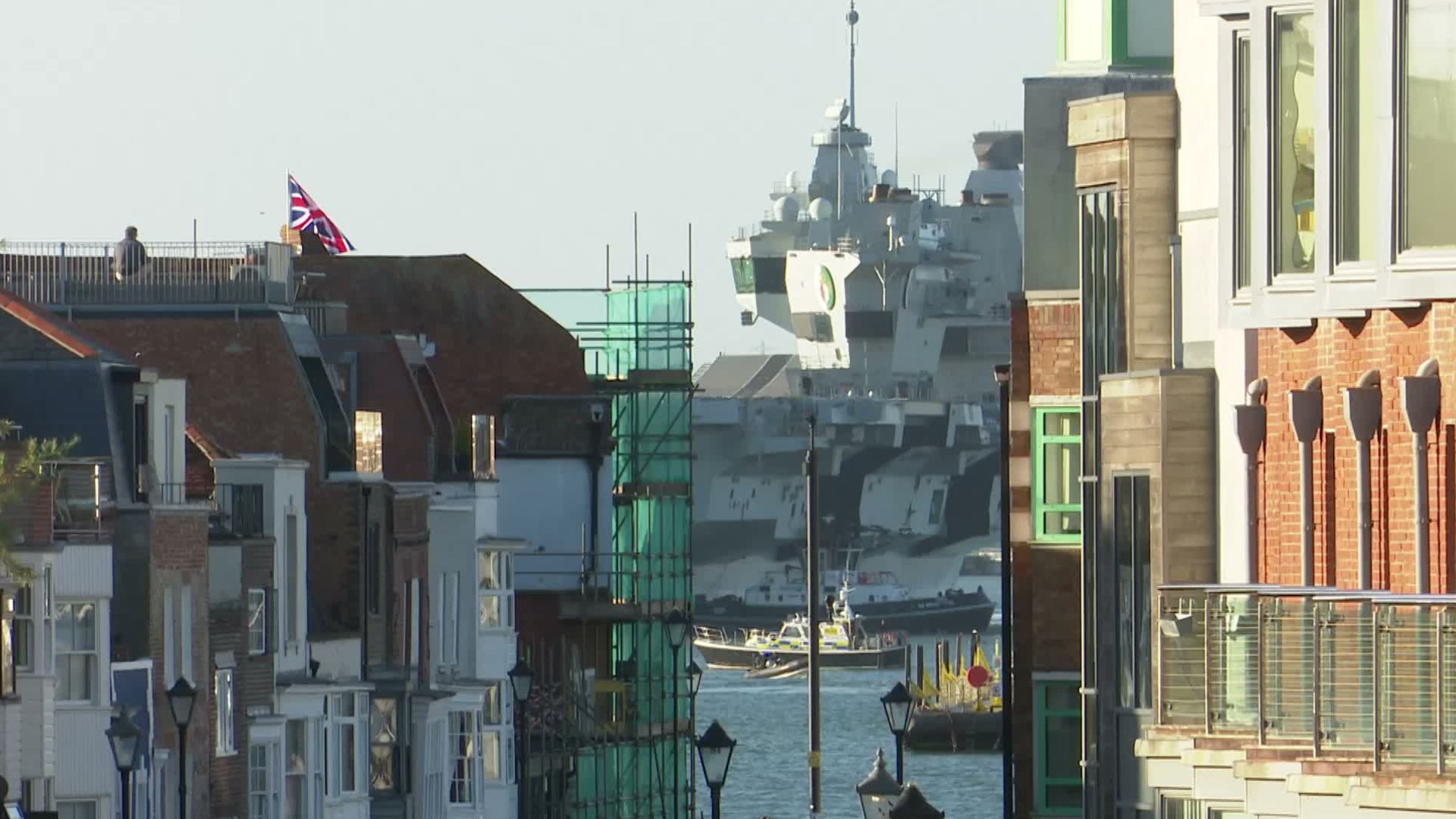
If you happened to be passing through the cobbled streets of Old Portsmouth over the weekend, you may have caught a glimpse, through the narrow buildings, of the gargantuan sight of HMS Queen Elizabeth.
Head further towards the harbour, and you would have been greeted by the cheers of friends and family on the harbourside, waving goodbye to their loved ones as they embarked on training operations around the UK and northern Europe.
Over the next three months, the 65,000-tonne warship and her crew of more than 800 sailors will work alongside allies to enhance collective security, deterrence and readiness.
Flagship role to be regained
Throughout the deployment, she and her crew will undertake advanced training under the Royal Navy's Fleet Operational Standards and Training (FOST) organisation, exercising across the full spectrum of modern naval warfare to ensure the carrier is ready to respond to emerging threats.
And, having assumed the role of Nato's command ship for the Allied Reaction Force earlier this year - the first time either of the Queen Elizabeth-class ships has had this role - the carrier will also rehearse how an allied naval force would operate together in the event of a crisis.
The training programme will continue into next year, including participation in major Nato exercises that will prepare the HMS Queen Elizabeth to take over from HMS Prince of Wales as the UK's flagship and high-readiness strike carrier in late 2027.
The Commanding Officer of HMS Queen Elizabeth, Captain Claire Thompson, said the crew had returned from summer leave rested and ready for the next phase of training.
She described the deployment as a key milestone for both Nato and next year's takeover.
"Sailing with an embarked battle staff, integration and training is essential whilst relearning the skills required to conduct safe and effective aviation as we ensure that we are prepared to deliver operational activity at the heart of Nato should it be required," she added.
The deployment comes as the UK continues its vital roles of deterrence and defence under its Nato commitments.
Last month, HMS Duncan slipped her moorings under the cover of darkness for the second phase of Operation Firecrest, helping to bolster regional security and deterrence in the North Atlantic and the Arctic.
Elsewhere, UK forces have remained on the frontline, from an 800-strong battlegroup in Estonia to previous deployments which saw Typhoon jets defending the skies over Romania and RAF P-8 Poseidon and Rivet Joint surveillance aircraft patrolling the Baltic Sea.
Join Our Newsletter