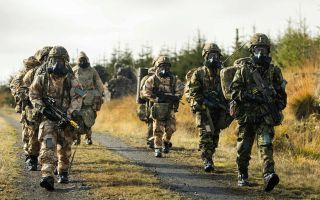
Marijampolė: The unassuming Lithuanian city which might break Nato
Europe should have begun serious preparations for war with Russia the moment Putin's forces crossed into Ukraine in 2022.
Nearly four years on, after watching Ukraine bleed to halt Russian expansion, a newly released wargame suggests a deeply uncomfortable truth: we are still not ready.
Marijampolė, a modest Lithuanian city, sits astride one of the most strategically critical transport hubs in northern Europe. To the south-west runs the Via Baltica, the arterial highway linking the Baltic states to Poland, perpetually choked with commercial traffic from across the EU and Ukraine.
To the west lies the transit corridor between Belarus and Kaliningrad, Russia's heavily militarised exclave on the Baltic Sea, a route Lithuania is treaty-bound to keep open to Russian traffic. Geography, as ever, is destiny.
The cost of complacency
The prospect of a Russian incursion into Nato and EU territory is no longer theoretical. Political leaders and academics increasingly warn that tensions between Europe and President Trump over Greenland, Ukraine, trade, and broader strategic alignment have sharpened Moscow's appetite for risk.
Yet in the UK, this barely registers. Westminster remains distracted by scandal and conspiracy, while the serious business of national and continental security is starved of oxygen.
Russia, by contrast, has been on a war footing almost from the outset of what Putin euphemistically termed his "Special Military Operation."
Today, roughly half of Russian government expenditure is directed towards defence, or more accurately, attack, amounting to around 10% of GDP.
Meanwhile, Britain continues to argue over whether 2.3% is too much to spend on its own security, preferring welfare spending for the few over deterrence for the many. Russia's rearmament and recruitment drive now far exceeds the requirements of the war in Ukraine. This is preparation for something larger.
Even the famously pragmatic Dutch are sounding the alarm.
As Netherlands Defence Minister Ruben Brekelmans recently put it: "Our assessment is that Russia will be able to move large amounts of troops within one year. We see that they are already increasing their strategic inventories and expanding their presence along Nato's borders."
This is not rhetoric; it is intelligence-led assessment.
Deterrence fails when ambiguity exists
In the wargame, Russia exploited a fabricated humanitarian crisis in Kaliningrad as a pretext to seize Marijampolė, the key crossroads in the narrow gap between Belarus and Russia.
Moscow's familiar tactic of cloaking aggression in humanitarian language proved sufficient – within the simulation – for the United States to hesitate and decline invoking Nato's Article 5.
In the absence of decisive American leadership, Russia shattered Nato's credibility within days and established dominance over the Baltic states using an initial force of just 15,000 troops.
This was, of course, a worst-case scenario, one in which every assumption breaks against Nato. The most significant of these is US inaction. But that is precisely the point. Deterrence fails when ambiguity exists.
The remedy is obvious: European Nato members must state unequivocally that if Washington hesitates, Europe will not.
Europe's conventional forces already outweigh Russia's, and they are growing. That fact alone, if clearly communicated, would go a long way to restraining Putin's ambitions in the Baltics.
Suggested way forward
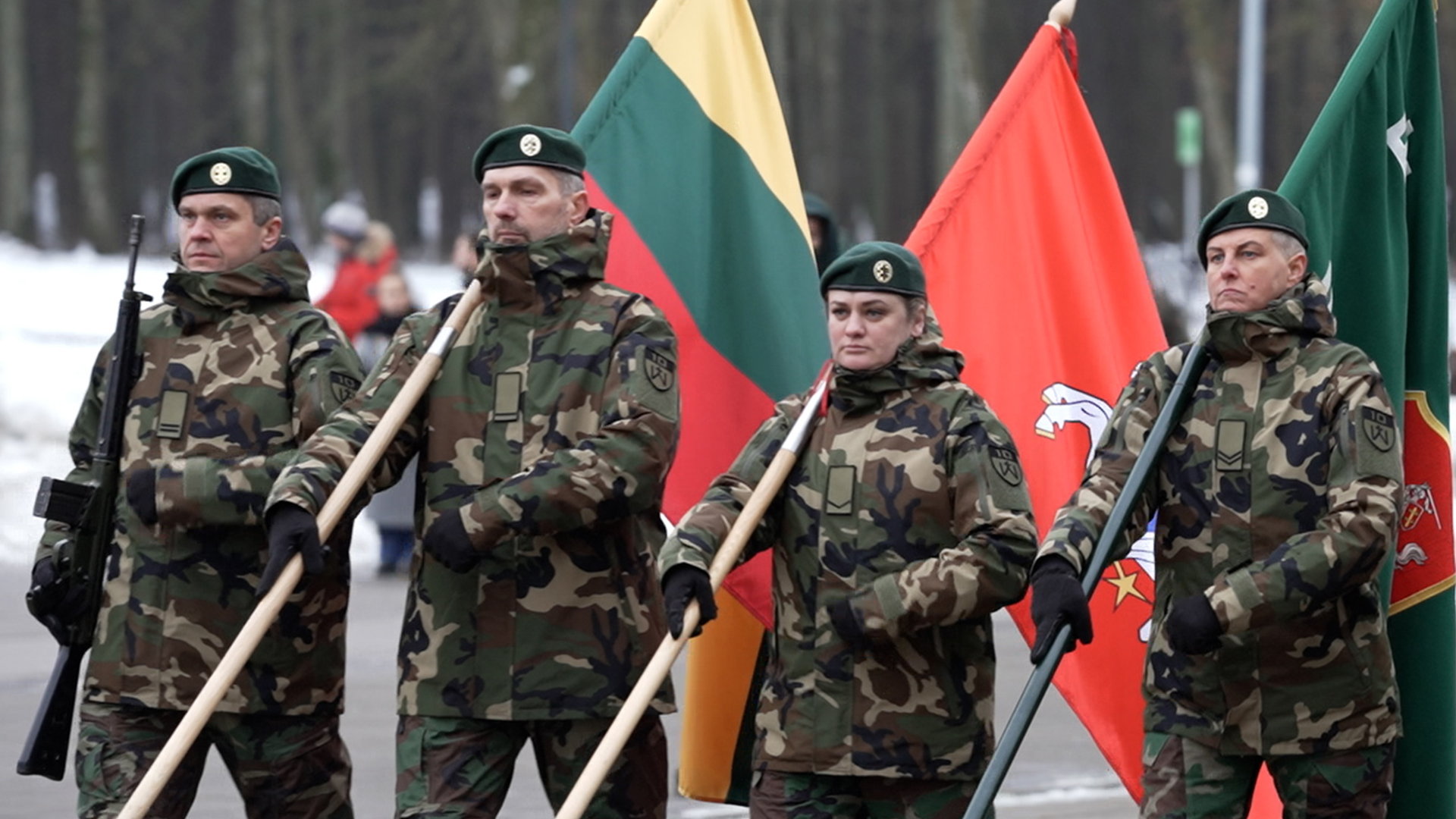
There is also a strong case for reinforcing deterrence on the ground.
Moving the British Battle Group permanently to Lithuania, or, God forbid, deploying a second, would stretch MOD resources to the absolute limit. Still, it would send an unmistakable signal of resolve.
Adding a British armoured force to the German one already in Lithuania may provide the heft and potential firepower to put off an incursion in this area at least.
This is only a wargame. But amid today's strategic turbulence, it is another stark reminder that Europe is one miscalculation, misjudgement or misunderstanding away from a wider war; a war for which Russia appears comprehensively prepared, and Europe manifestly is not.
The old maxim "prepare for war to prevent war" has rarely been more relevant. We do not have a decade, as last year's Strategic Defence Review implied: we may have one or two years at best.
Whatever else occupies the Prime Minister's in-tray today, preventing war in Europe is his overriding responsibility. And the path to doing so is clear.
To borrow President Trump's blunt vernacular: "build baby, build" - and fast, real military capability. Only then might we persuade Vladimir Putin to leave Marijampolė alone.
Retired Colonel Hamish de Bretton-Gordon is a former commander of the UK Chemical Biological Radiological & Nuclear Defence Regiment.
Join Our Newsletter