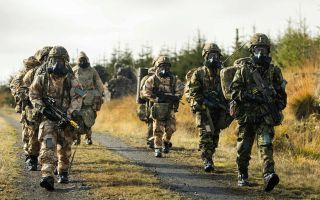
Royal Marines and Rangers prove aggression credentials on special operations exercise

A joint force of UK military personnel – primarily comprised of Royal Marines Commandos and British Army Rangers – has taken part in a major exercise required for a key Nato role.
Exercise Hyperion Storm, which culminated at Otterburn over the weekend, marked the final hurdle after two years of preparation by Britain's Armed Forces.
The successful training operation, which saw highly skilled troops fast-rope from Chinook helicopters to capture an objective in a matter of minutes, means that from 1 July around 650 UK personnel will be available to provide Nato with its crucial "special operations" capability.
What is a special operation?
Colonel Phil O'Callaghan, Deputy Commander of the Special Operations Component Command, described the possible scenarios.
"So, there's probably three broad categories you can wrap it up under. One is military assistance, where we, for example, would go into a country to assist them in the development of their indigenous capability or work with partners," Col O'Callaghan said.
"One is special reconnaissance, where we might look at surveillance activities or even post-strike assessments to gain information for Nato and our alliance partners," he added.
"And then also, subject to the right permissions, we can conduct direct actions, such as raids or attacks onto targets, if the military necessity judges that a requirement."
Dawn assault
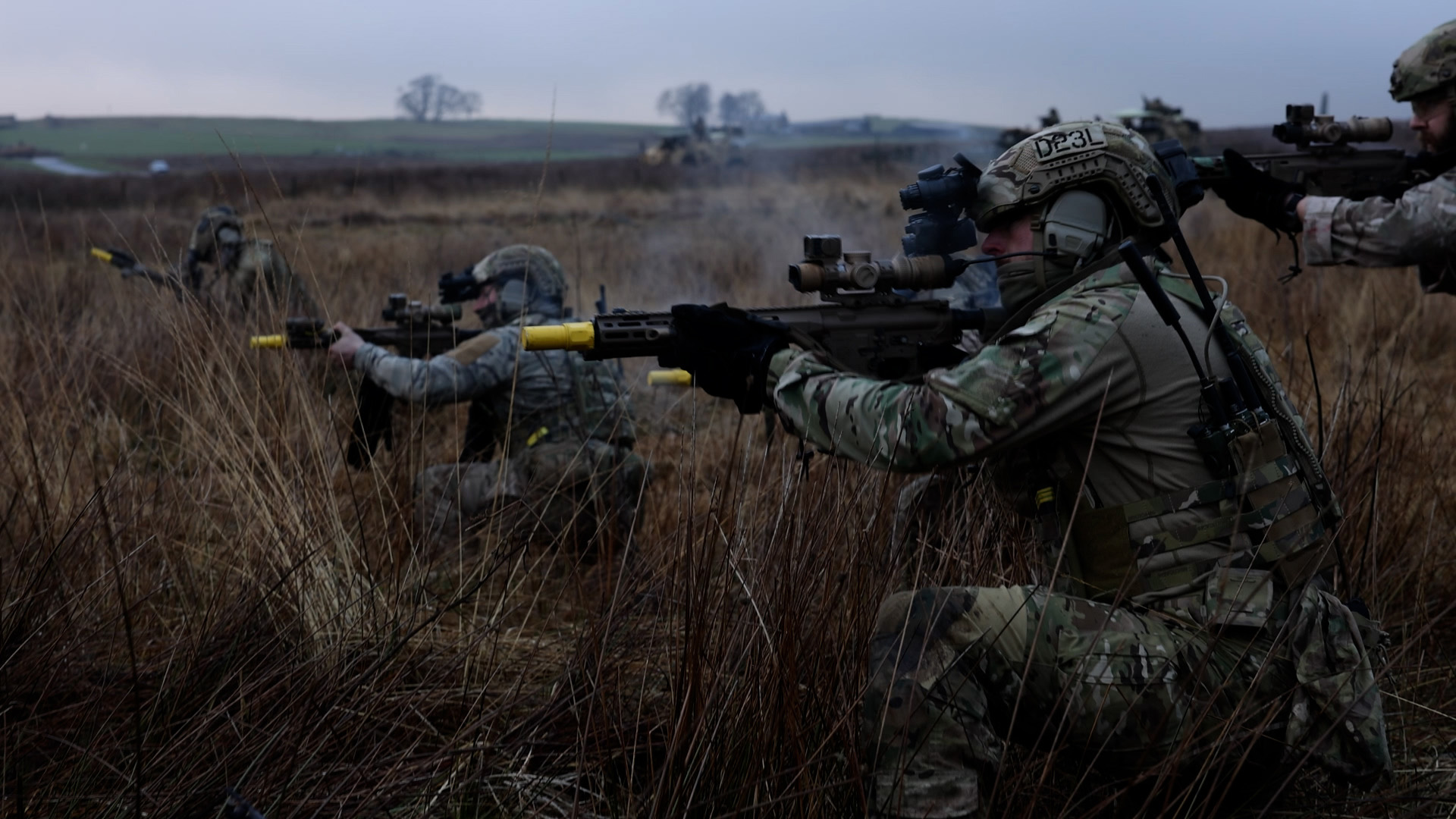
BFBS Forces News joined personnel for the final 24 hours of the exercise, which included a period of pre-battle preparation ahead of a dawn assault launched from an air base in the north of England.
There, Royal Marines and Rangers were seen refining room-clearing drills, practising the embarkation and disembarkation of Chinook helicopters, and packing kit and weapons onto WMIK Land Rovers and Jackal vehicles.
An orders process also took place, during which troops involved in the assault walked through each stage of the planned mission.
Medical facilities were prepared for potential casualties, including a trauma bed for a surgeon to operate on if required.
Early the next morning, the joint force – which also included gunners from the RAF Regiment – inserted into their target location and carried out the dawn assault with speed and precision.
After abseiling from the Chinooks, troops fought their way from their landing point, clearing buildings and enemy positions within minutes.
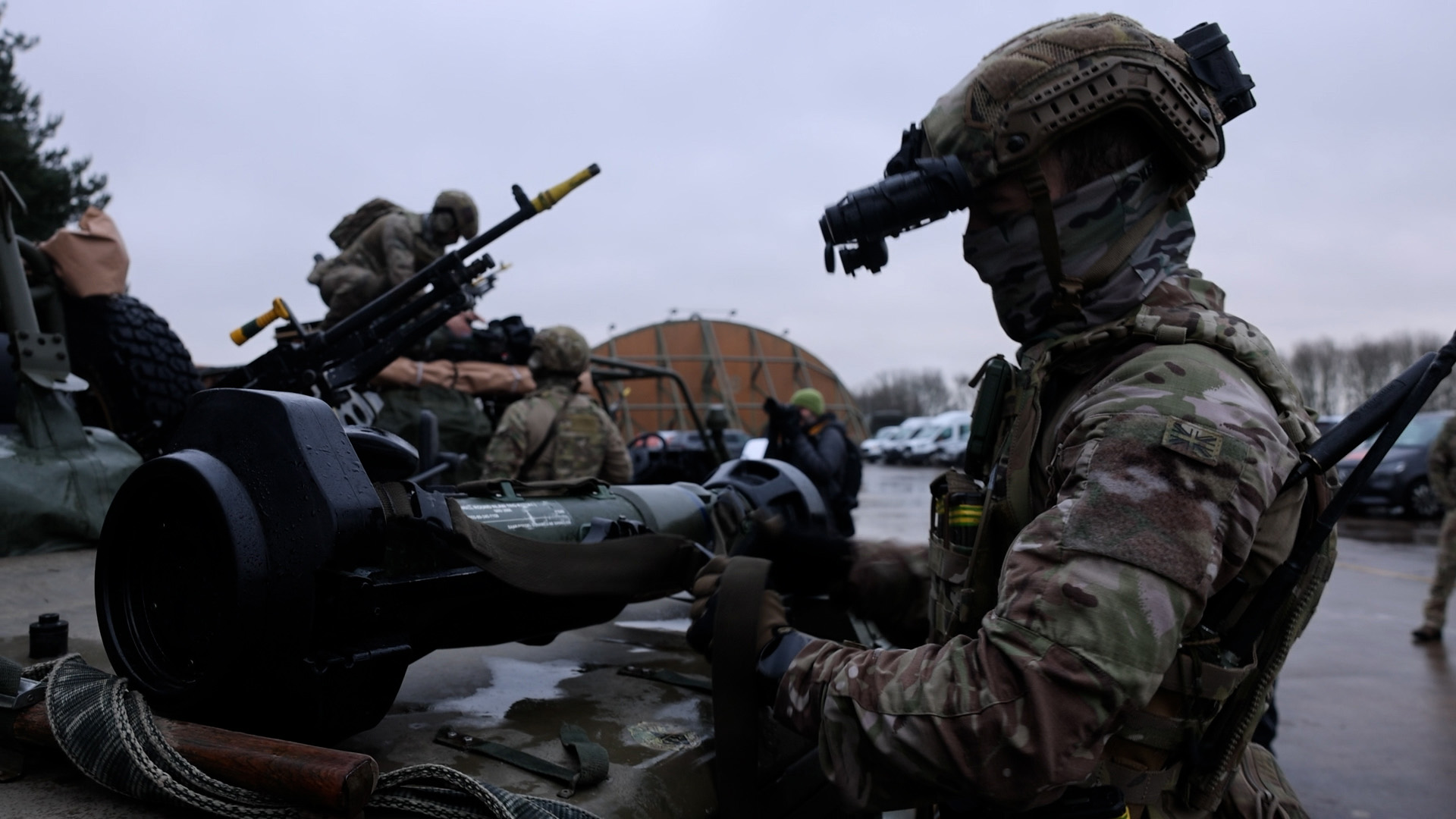
Rather than withdrawing immediately, the force secured the area and demonstrated the process of collecting biometric data from enemy fighters who had been killed, including photographing faces. Col O'Callaghan explained that although personnel are trained to fight, "they are also trained in 'site exploitation'," the term used to describe the collection of forensic material during an operation.
With the site secured, the threat neutralised and key evidence gathered, the Chinooks returned, and the troops departed with the same vigour with which they arrived – quickly, professionally and without fuss.
"I'm delighted with what we've seen today," Col O'Callaghan said.
"This is the culmination of 18 months of exceptionally hard work by forces across all branches of our service, and particularly the junior ranks, of whom I'm extremely proud."
From 1 July, the UK will be responsible for leading Nato's Special Operations Capability – under the alliance's Allied Reaction Force. Those involved will be on standby to deploy until the role ends in mid-2027.
Related topics
Join Our Newsletter