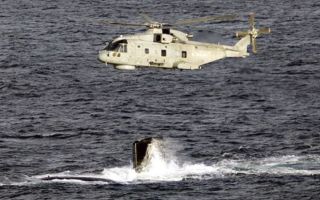
At any given time, a number of Russian submarines operate silently, hundreds of metres below the surface, remaining undetected for weeks or even months – but that could be about to change.
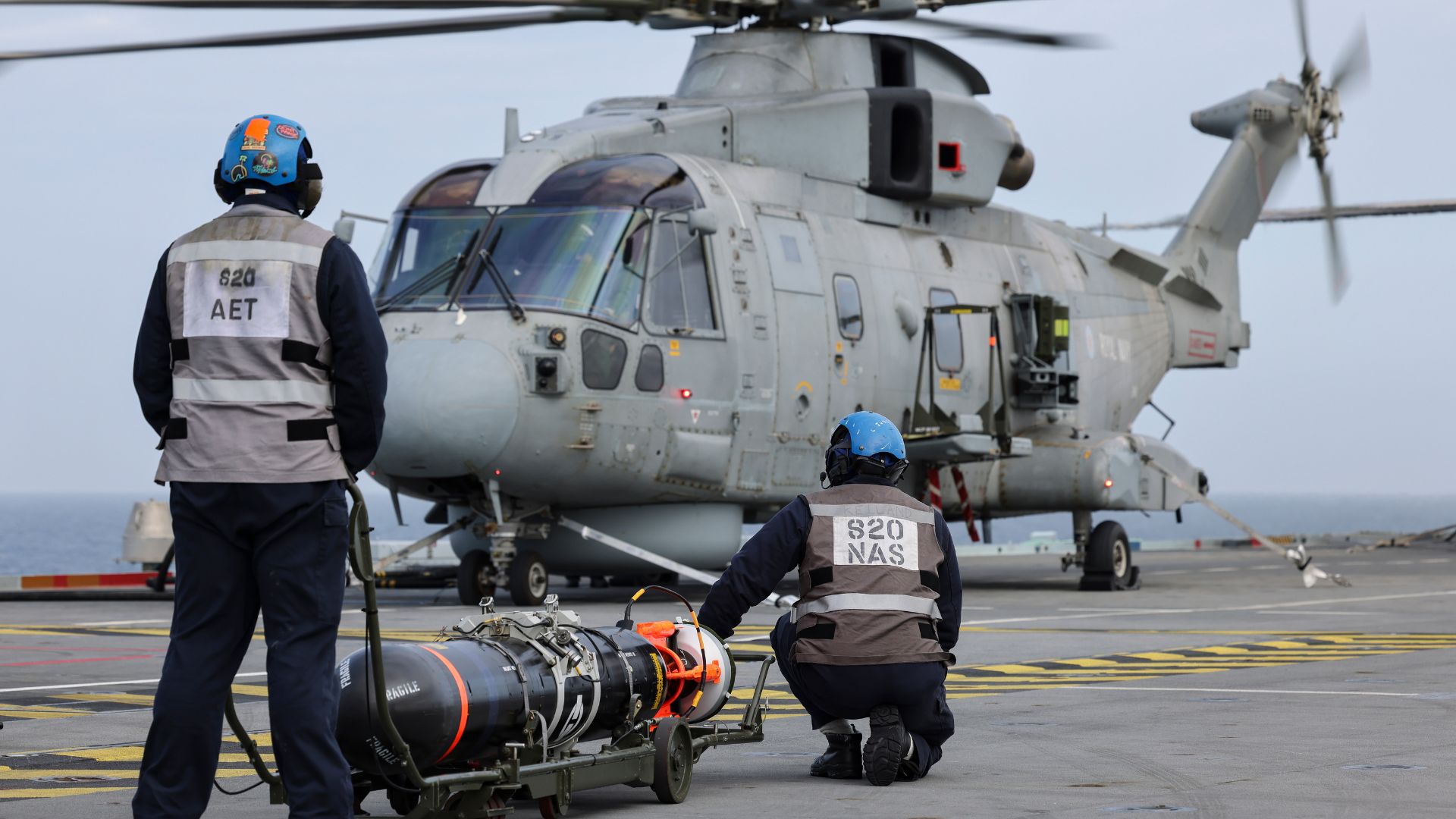
In a new £40m agreement between the MOD and Ultra Maritime, the Royal Navy's Merlin Helicopter Force is set to acquire additional sonobuoys, state-of-the-art sonar systems capable of detecting, tracking, and deterring hostile submarines and other underwater vessels.
While not an entirely new concept – having first been developed and deployed during the Second World War to locate German U-boats – the system has since undergone significant modernisation, aligned with the Royal Navy's Atlantic Bastion programme.
What are these state-of-the-art bits of kit?
Typically deployed from helicopters or fixed-wing aircraft, sonobuoys act as portable sonar devices, listening for underwater sounds or emitting active pings.
Once a sonobuoy makes contact with water, it separates; an inflatable with a radio transmitter sits on the surface while the equipment for detecting noise is strung along a wire and descends below the surface to a predetermined depth.
Any signals picked up are then relayed from the transmitter on the surface to the aircraft.
Because radio and GPS signals cannot penetrate water effectively, sonobuoys are essential for maintaining undersea awareness.
How do they pick up sound?
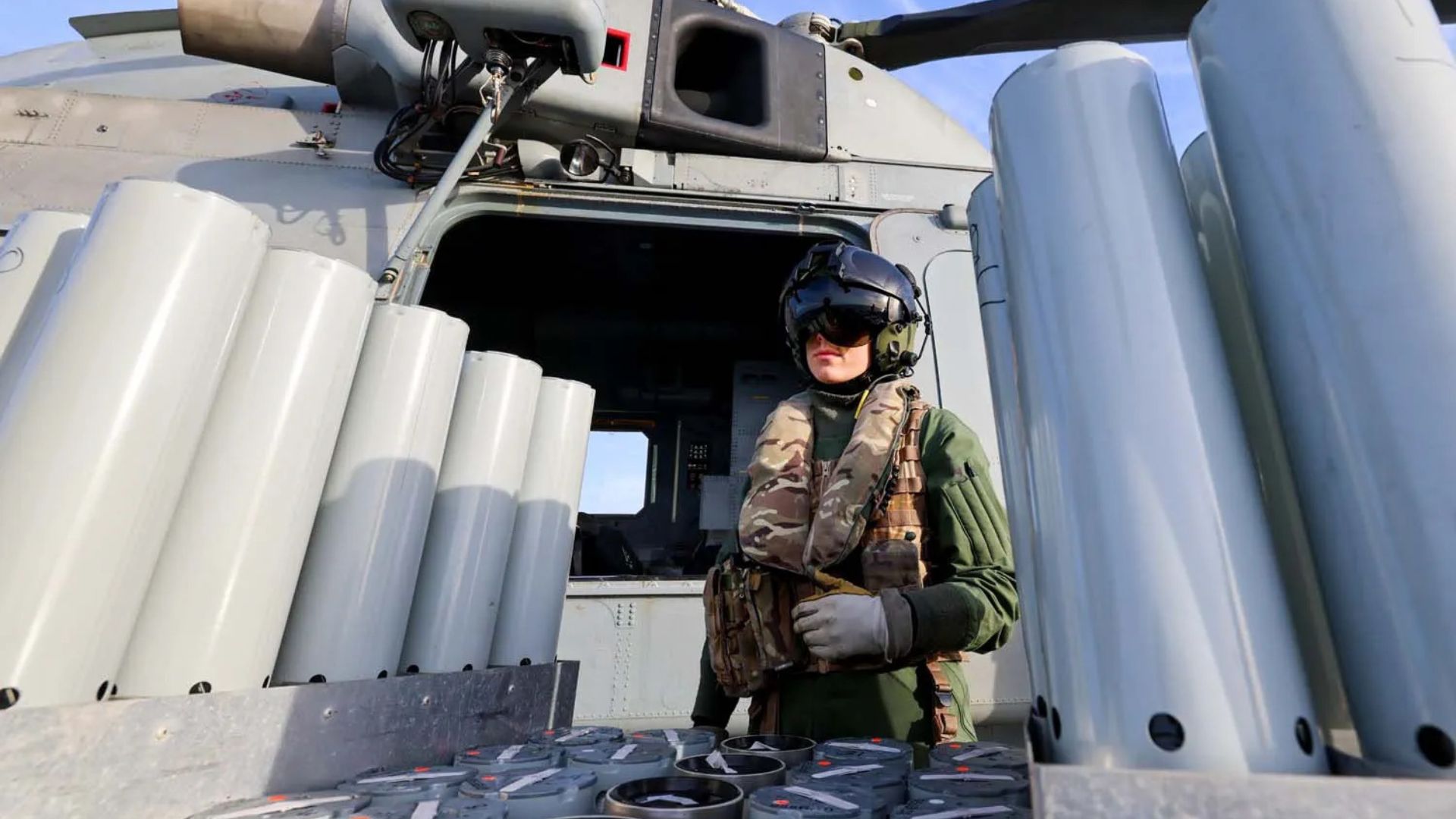
Sonobuoys use two forms of detection to identify noise underwater.
Passive sonobuoys do not emit sound signals and are therefore designed for stealth. Once deployed, hydrophones listen for noises such as propeller sounds, machinery vibrations, or even marine life.
As a cheaper and simpler form of sonobuoy, they are well-suited to long-range, covert monitoring while remaining difficult to detect.
Active sonobuoys emit sonar pings and listen for echoes reflected off objects. Instead of a hydrophone, it uses a transducer, which acts like an underwater antenna.
Although it can provide the precise distance and location of a target, its ping can be detectable by enemy submarines or ships.
When were they first used?
They were first deployed operationally in 1942 during the Second World War, and used by the Allies to detect German U-boats.
By 1945, more than 150,000 units were produced, marking a pivotal innovation in Airborne Anti-Submarine Warfare that helped shift the balance in the Battle of the Atlantic.
Through the Cold War era, this technology evolved to counter increasingly stealthy Soviet submarines – helping to monitor strategic chokepoints such as the GIUK (Greenland-Iceland-UK) gap.
Today, several countries, including the UK, France and the United States, actively use sonobuoys to monitor and safeguard sea lanes and critical infrastructure.
Providing near-instant coverage of more than 100 square kilometres and depths of up to 457 metres, they offer a much faster and more flexible surveillance than a ship-mounted system.
Where are they being deployed?
Taking ownership of the additional state-of-the-art sonar system will be the Royal Navy's Merlin Helicopter Force.
Based at RNAS Culdrose in Cornwall, they are primed for anti-submarine warfare and are continually deployed on the frontline with their Merlin Mk2 aircraft to defend UK waters.
Captain James Hall, the commanding officer of RNAS Culdrose, said: "Our anti-submarine capability is essential to protect Royal Navy submarines and the UK's nuclear deterrent. The capability offered using sonobuoys forms an essential part of the toolkit used to identify, track and deter submarine threats.
"It is not an exaggeration to say that Merlin Helicopter Force – combining its aircraft, its sensors and equipment, and the crews' extensive tactical training – is a world leader in anti-submarine warfare."
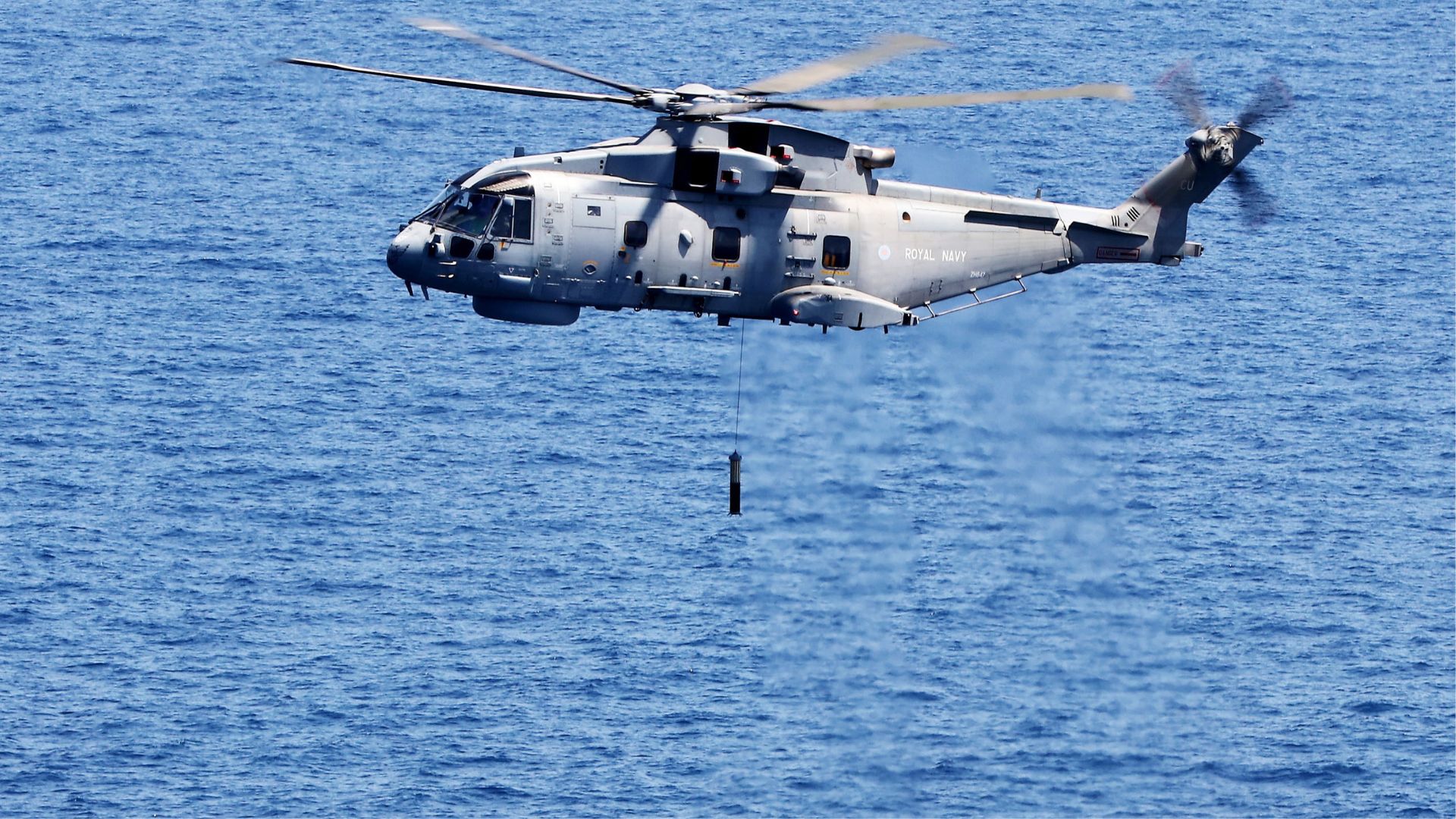
The Merlin is equipped with a powerful, reusable dipping sonar, deployed into the water via a winch. Used in conjunction with sonobuoys, it can form an acoustic network to hunt and track adversary submarines.
Armed with Sting Ray torpedoes, the Merlin is also well positioned to neutralise the target when required.
"We face an increasingly uncertain and contested world, which includes ever-evolving threats to our critical undersea national infrastructure. Our control of the subsurface maritime environment is a key pillar of the Royal Navy's ability to confront global threats and ensure operational success as we defend the nation," Capt Hall added.
Why the new contract?
It comes alongside the government's recent pledge to increase defence spending with UK-based small and medium-sized enterprises by 50% by 2028.
Defence Secretary John Healey also announced the launch of a £20m pot of "accelerated contracts" for British startups, with a Dragon's Den-style pitching event for ideas.
"I want to make the UK the best place in the world to start and grow a defence business... It's a signal of something bigger that as a country we need. We need to reward risk takers, we need to reward innovators," he said.
Related topics
Join Our Newsletter