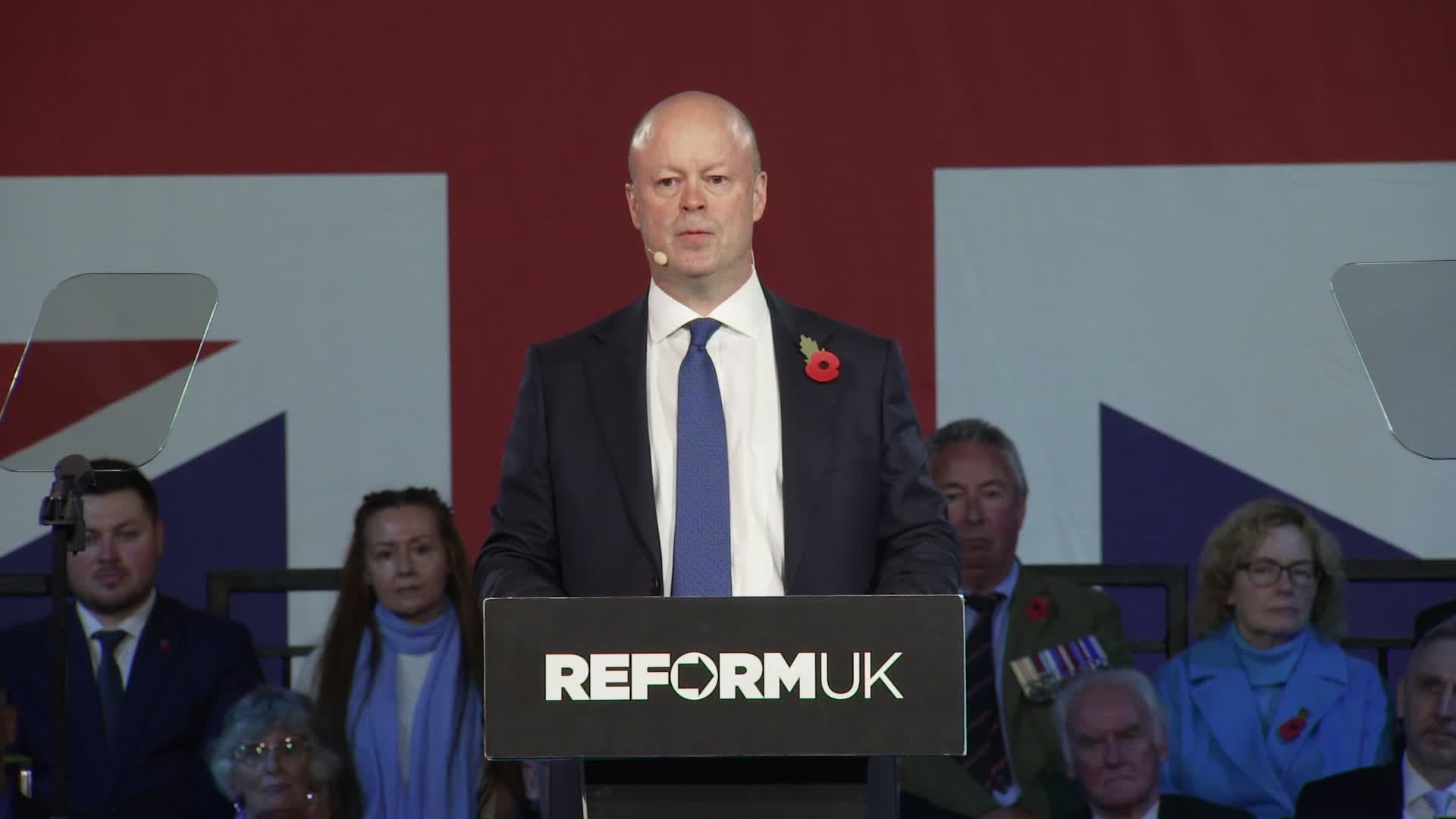
Reform's defence spokesperson says he'll end Forces prosecutions within 100 days – or resign
Reform UK has appointed former RAF Wing Commander Angus MacIntyre as its first defence spokesperson, who pledged a quick end to prosecutions of veterans and serving personnel within 100 days if his party were to come to power.
Taking to the stage at a party press conference, Mr MacIntyre, who served 40 years in the Armed Forces, said he and others who would form a Reform UK cabinet had all taken the stance and agreed to a self-set deadline.
Having left the military last week ahead of his new political role, the shadown armed forces minister was critical of the current Labour and former Conservative governments' defence spending and policies.
Mr MacIntyre also criticised legislation designed to address the legacy of the Troubles in Northern Ireland, which has passed its stages in the House of Commons.
The bill would replace the previous Conservative government's 2023 Legacy Act, which banned inquests and civil actions related to Troubles-era incidents.
Delivering his first speech, Mr MacIntyre, who served in Northern Ireland, said: "It is a scandal that those who served there, who faced down the horrors of the IRA, now find themselves punished with lawfare for doing their duties."
He also made a reference to further investigations into the actions of UK Special Forces operatives, including those in recent years.
"Today our current government actively handicaps them and all service personnel with the threat of prosecution. Under Reform UK this will stop," he said.
"Within 100 days of a Reform government being formed, we will end all ongoing and future prosecutions of service personnel and veterans, save the explicit consent of the Secretary of State for Defence.
"This isn't just a moral duty; this is a national security imperative. Which is why, if I fail in those first 100 days, I will resign as the armed forces minister."
He added that all Reform UK cabinet members had made the same pledge.
Armed Forces "facing challenges"
The veteran, who began service with the British Army in 1986 before transferring to the RAF Regiment in 1999, made broad references to the size of the Armed Forces and how it is equipped.
"Forty years ago I joined the military that numbered 330,000 troops. The Army had three armoured divisions, eight armoured brigades. I was in one of them as a 19-year-old," he said.
"The Navy had a surface fleet numbering nearly 50 frigates and destroyers, and the Royal Air Force had over 500 fast jets.
"Last week I left a military that has less than half as many men and women under arms as when I joined. It has one armoured division that cannot train because there's no budget and just two armoured brigades.
"The Royal Navy has just 13 frigates and destroyers, and the RAF, my own service, has less than one third of the fighter aircraft it had when I joined it.
"Meanwhile, we're failing to procure the new kit - the unmanned and cyber weapons that are transforming the battlefield that we will fight on in any future conflict."
Funding any transformation, no matter how critical, has been a challenge for previous defence secretaries.
Current Chancellor John Healey resigned from the role in June after arguing the Defence Investment Plan did not provide enough funding to give the Armed Forces what they need.
He then faced criticism more recently as he delivered the Autumn Budget.
Mr MacIntyre referenced this in his speech, calling on the Chancellor to offer more clarity on defence spending deadlines.
"The Armed Forces are facing challenges," he said. "Rebuilding them will be a national challenge, which is why Reform is committed to spending 3% on defence by 2030 and meeting the Nato target of 3.5% by 2035.
"If John Healey won't match that, despite everything, then he should resign again," he added.
Related topics
Join Our Newsletter