GUGI: Russia's secretive and strategically important special forces of the sea explained
When you hear about Russian subs and warships in UK waters, spying on data cables or testing UK defences, they are probably part of GUGI – the Russian acronym for the Main Directorate of Deep Sea Research.
Since the end of the Cold War, GUGI has avoided the defence cuts imposed elsewhere, allowing them to pour millions into submarine development.
They are effectively Russia's Special Forces of the sea, who are capable of carrying out extreme deep sea operations.
These can range from intelligence gathering and surveillance to inflicting damage to undersea infrastructure, like pipelines and cables that Nato countries rely on.
Espionage and sabotage
Senior research fellow in sea power at defence think tank Rusi, Dr Sidharth Kaushal explains, "what GUGI essentially provides is a special operations capability in the maritime domain".
"It's responsible for operating deep diving submersible submarines, like the Palthus, X Ray and Losharik, which are capable of operating of depths of thousands of metres and supporting tasks ranging from espionage all the way through to sabotage."
During April, the Ministry of Defence disclosed a UK/Norwegian month-long operation tracking Russian warships and submarines in and around UK waters.
The MOD said it believed the Acula class submarine they photographed was acting as a decoy for two covert GUGI subs.
Independent defence analyst and renowned submarine expert H I Sutton sees this as an indication of GUGI's clout, saying: "It's an elite unit. If they go out and do a mission and you've got an Acula or a nuclear attack submarine at their disposal, then they must be pretty important."
UK Russia watchers will be familiar with the Yantar spy ship, seen frequently in and around UK waters, which Russia insists is a research vessel.
"I wouldn't suggest it's ever scientific," said Mr Sutton. "It is a military ship, developed for operating on objects on the seafloor, typically cables and pipes, things like this, and can survey and investigate them, and potentially attack or repair them."

Mr Sutton explains one of the Yantar's key capabilities are its onboard submersibles that are believed to be able to dive down and operate at depths of 5,000 metres.
"Undersea cables are damaged all the time, but it's nearly all in shallow water. If it's happening at thousands of metres at depth, it's much harder to repair it."
Formidable assets with decades of investment
GUGI's submarine assets are formidable and the product of decades of investment.
"I think in the 90s, the Russian Navy basically mothballed almost everything," Mr Sutton said.
"The one thing they continued to develop was this undersea capability, seabed warfare capability, building incredibly expensive submarines, the largest submarines in the world."
This includes Russia's most secret sub, the titanium-hulled Losharik.
Built with seven special internal compartments shaped like balls, these distribute the pressure to cope with diving down to depths believed to be to a maximum of between 1,000 and 3,000 metres.
The titanium build prevents corrosion and allows the boat to dive under ice.
"It also appears to be equipped with capabilities such as manipulator arms, which allow it to tamper with objects on the seabed, and that could include things like cables, if necessary," said Dr Kaushal.
He added: "It is very much a capability that's optimised for espionage, or potentially sabotage, at depths of thousands of metres, where the tracking that something was occurring or repairing damage after the fact, would be extremely difficult."
Losharik itself is currently under repair after a fire on board in 2019, but GUGI still has predecessor subs like the X ray and the Palthus class in service, which have similar capabilities.
These are also made of titanium and fitted with manipulator arms.
It is believed one of these would have been on patrol with the Acula-class sub on its recent unwanted visit to UK waters.
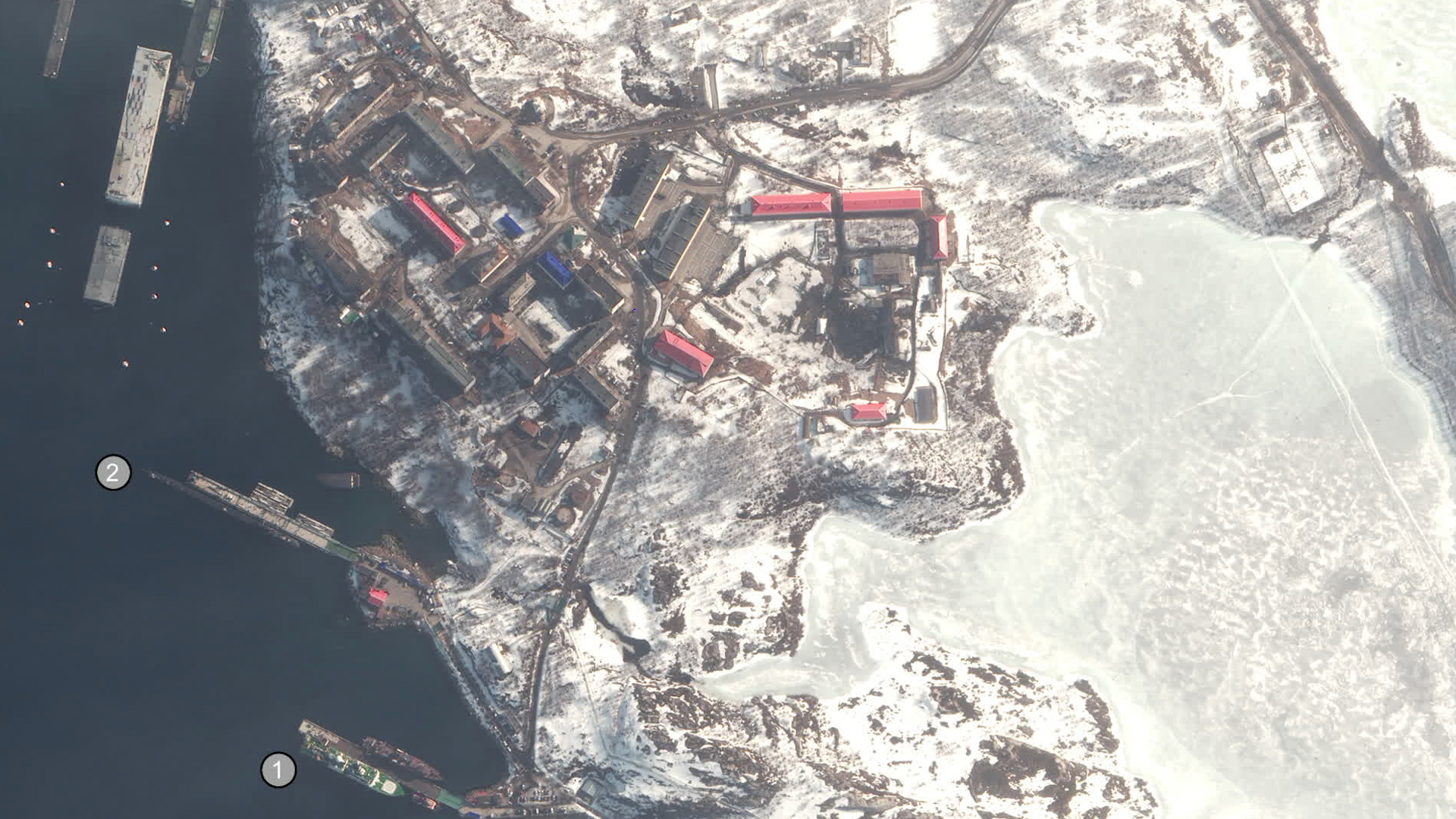
Even when GUGI assets are in port, they represent a threat, located at Olenya Guba naval base in the High North, they pose difficult questions for UK and Royal Navy ambitions to be more active in this key strategic theatre.
Related topics
Join Our Newsletter