Army's new drone degree will help soldiers tackle near-surface threats
If it wants to be successful on the modern battlefield, the British Army must get better at tackling near surface threats.
The urgency has come from the war in Ukraine, where 80% of all casualties in the conflict are caused by drones, also known as UAVs (uncrewed aerial/aircraft systems).
Colonel Toby Till, from Army Training, told BFBS Forces News: "Fundamental to how we fight with robotic and autonomous systems is everyone understanding electronic warfare in much greater detail and everyone working on how to fight in what we're calling the near-surface."
'Everyone has to become experts' on drones
"So how to fight your own reconnaissance strike system through drones, loitering munitions, ground sensors, integrated through a tactical network."
This is re-iterated by the UK's latest Strategic Defence Review, released in June 2025.
It is a 140-page report outlining the challenges facing UK defence and national security, and said the MOD "must drive a new partnership with industry" if it wants to keep up with innovation. This is relevant for both offensive and defensive action, such as protecting military sites from drone threats.
Ukraine is now producing four million drones a year – more than any other Nato country.
Col Till added that fighting in the near surface is "a whole new thing which everyone has to become experts on".
It is what has led to the UK's first military-backed drone degree at the New Model Institute for Technology and Engineering in Hereford.
The British Army has poured nearly a quarter of a million pounds (£240,000) into the accelerated Engineering Masters, which will cover the design, building and testing of drone systems for real-life scenarios.
In the modern battlespace, it is increasingly likely that any system you turn on is going to emit an electronic signature.
The ethics of drone flights
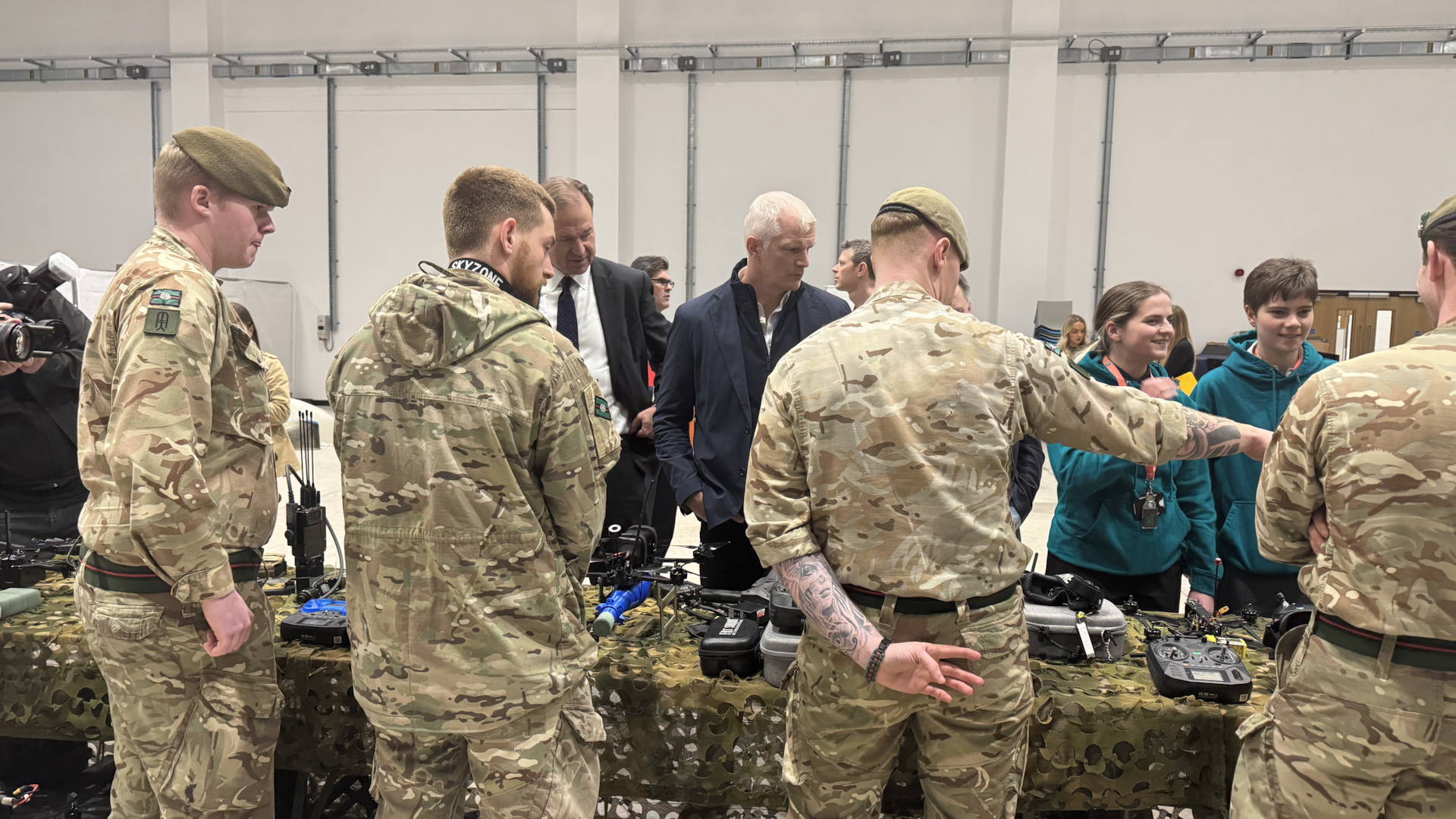
"If your drone breaks, you might have to mend it. You're not sending it all the way back to the manufacturers to get an upgrade. You have potentially got to do that in a trench, or in a bunker somewhere," said Col Till.
Students will get a Master's in Engineering (MEng) in three years, rather than the normal four years in traditional universities.
It is part of the £182m the Government is spending on defence skills, which includes five Defence Technical Excellence Colleges and regional STEM initiatives, with the aim of engaging thousands of school-age students.
When the drone degree launches in September, military and civilian students will also study theory modules such as ethics – a growing concern in the autonomous world.
Col Till told BFBS Forces News: "There is always going to be a human in the decision space but if you can use AI to assist you with sensing so it can spot a tank and know what it is and helps you with that, or choosing which effector you're going to use.
"If you can speed up that kill chain, that's going to be where AIs come in, but there'll still be a human in the loop."
Joined-up thinking on drone development
There is no obligation to join the military or a civilian company in the defence industry on completion of the degree.
The 2nd Battalion, The Royal Yorkshire Regiment, is part of the Army's Experimentation and Trials Group.
Soldiers from the battalion with little prior experience of drones are able to build a drone and fly it successfully long distances with a payload in up to three weeks.
BFBS Forces News asked the Armed Forces Minister Al Carns why the funding for this degree hasn't been invested back into the military's own drone school.
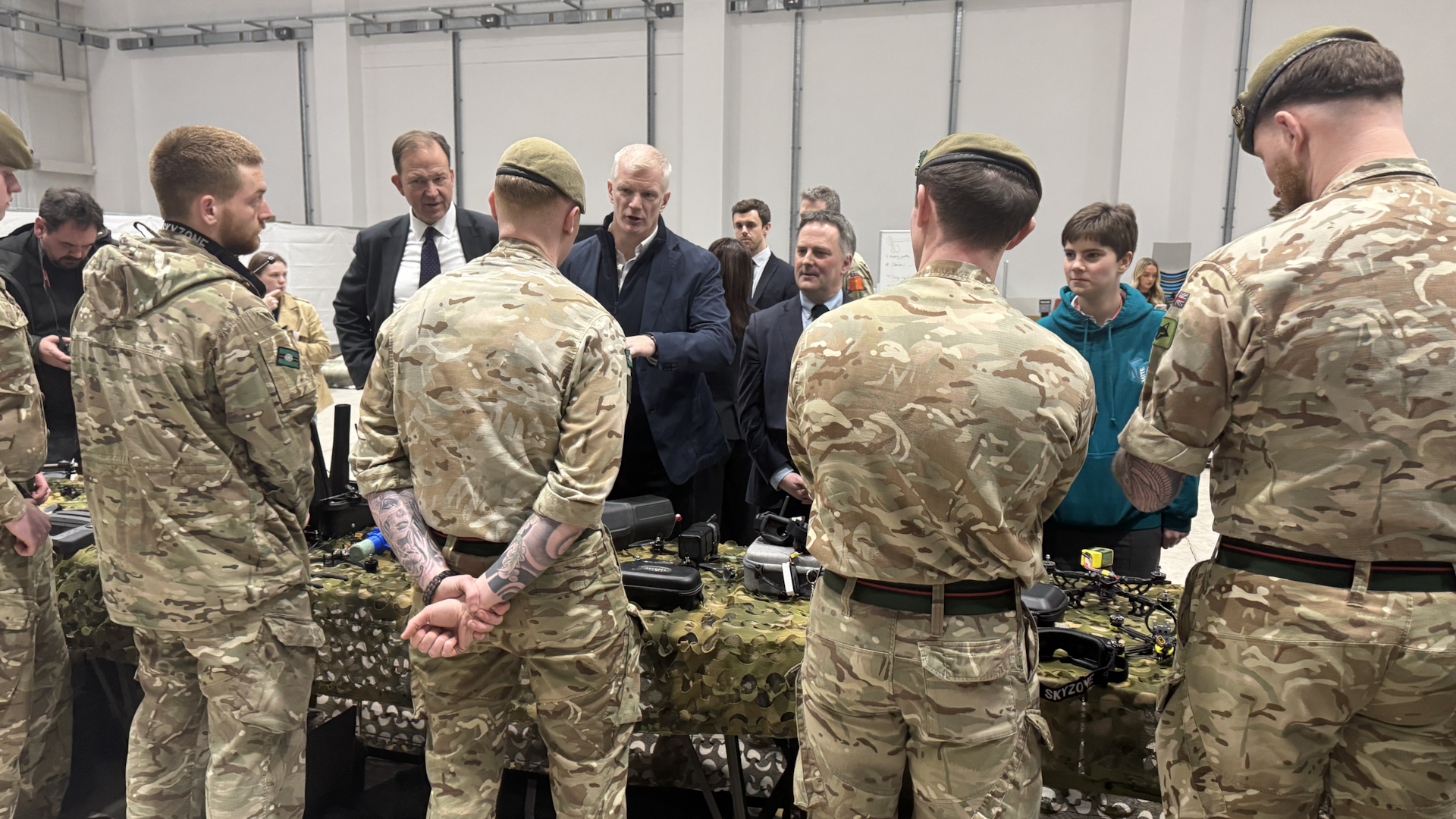
Mr Carns said: "Military doing things by itself is good", but by working with industry, "we move much faster, because we have diversity of thought," likening it to the collaboration being seen in Ukraine, where industry has close ties with their military force.
Despite no direct Nato or Ukrainian input, the minister said the new degree is part of a wider plan for joined-up thinking on drone development, citing plans to launch the 'Drone Uncrewed Centre of Excellence' aimed at providing better co-ordination across defence, industries and academia.
The UK government plans to buy 8,000 drones this year, compared to 5,400 in 2024.
Join Our Newsletter