Creating the curve: Find out how a British firm produces female-specific body armour
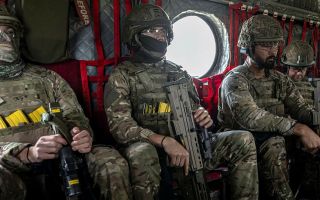
Two thousand sets of female-specific curved plate body armour are currently being made to send to women on the frontline in Ukraine.
The sets are being made by NP Aerospace in Coventry, and while British servicewomen are unlikely to see them soon, change is on the horizon.
The MOD has suggested curved plate body armour could be on the way by 2029.
A layered defence
The main difference to what women currently have is the curved plate, as opposed to the single-size flat plate designed for men.
The hard armour plate is made up of two layers, a ceramic strike face and a composite backing.
The ceramic strike face is the outside layer that breaks up the bullet, and the debris is then caught by the softer backing.
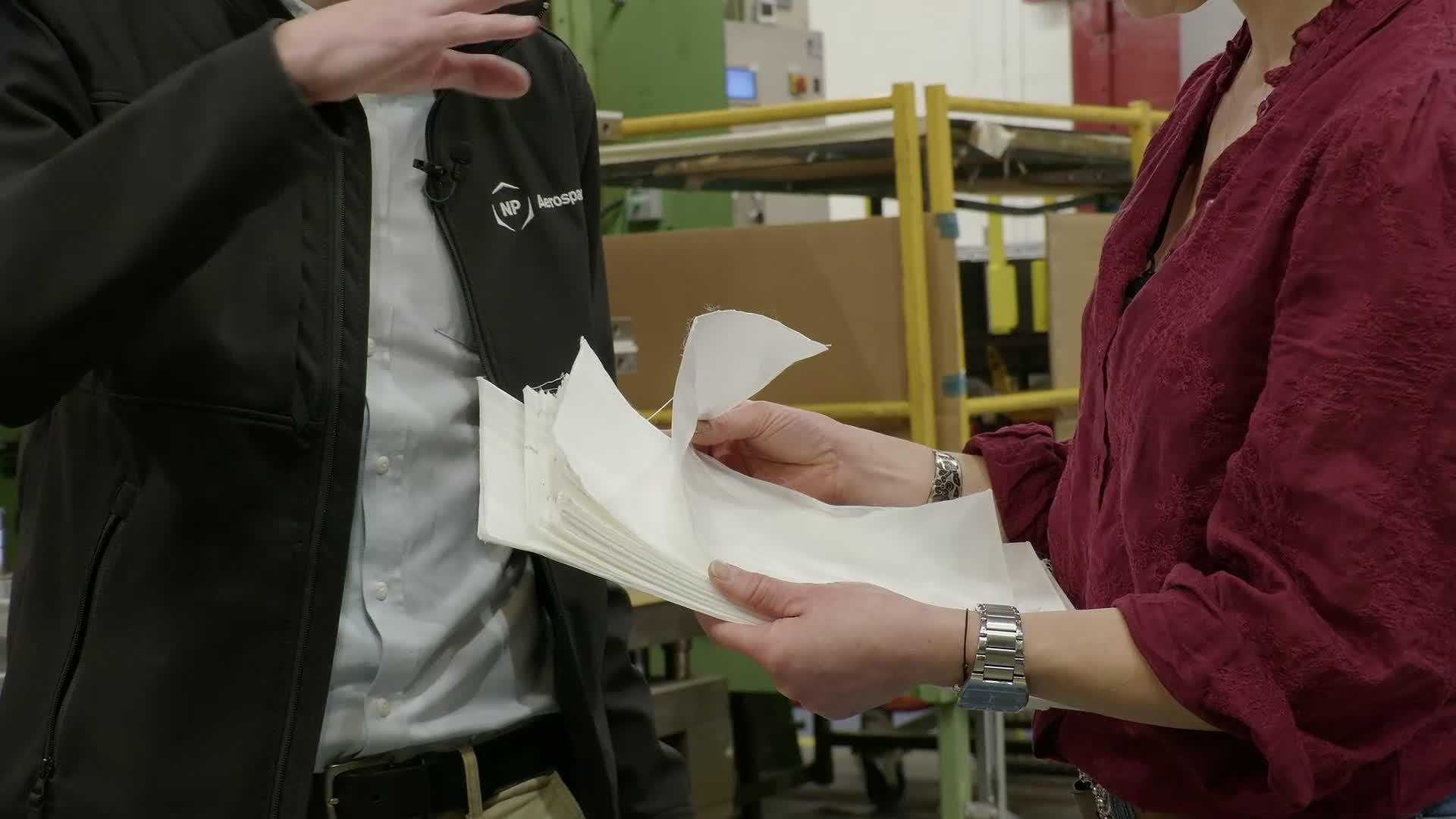
Mike Sandercott, director of development at NP Aerospace, explained how the body armour starts off as layers of ultra-high molecular weight polyethylene.
"So there is a very fine yarn, and that is laid in a nought and 90-degree direction as a fabric, and that has a resin system applied to it," he said.
"It's incredibly high-tenacity yarn, so it's very, very strong. And then that is on a sheet of resin, effectively.
"So what we do is we put that into the press. The press applies high temperature and very, very high pressure, and it consolidates that material.
"So all of those layers will go down into this very, very thin consolidated plastic backing.
"And so now that is hard, and that is ready to be cut into shape and then be matched with its ceramic strike face in the next stage of the process."
Creating the curves
A separate machine is used to make the women-specific body armour, forming the material into that all-important curve.
The press applies about 1,000 tonnes of force at 140°C. The thickness and mass of both layers are meticulously checked in case the curved plate is thinner anywhere.
The backing layer is cut to the correct size using a water jet cutter, then put together with its ceramic strike face in a vacuum bag, placed inside what is effectively a giant pressure cooker and left for three hours, which bonds them together.
A foam and nylon covering are added to protect it.
Testing times
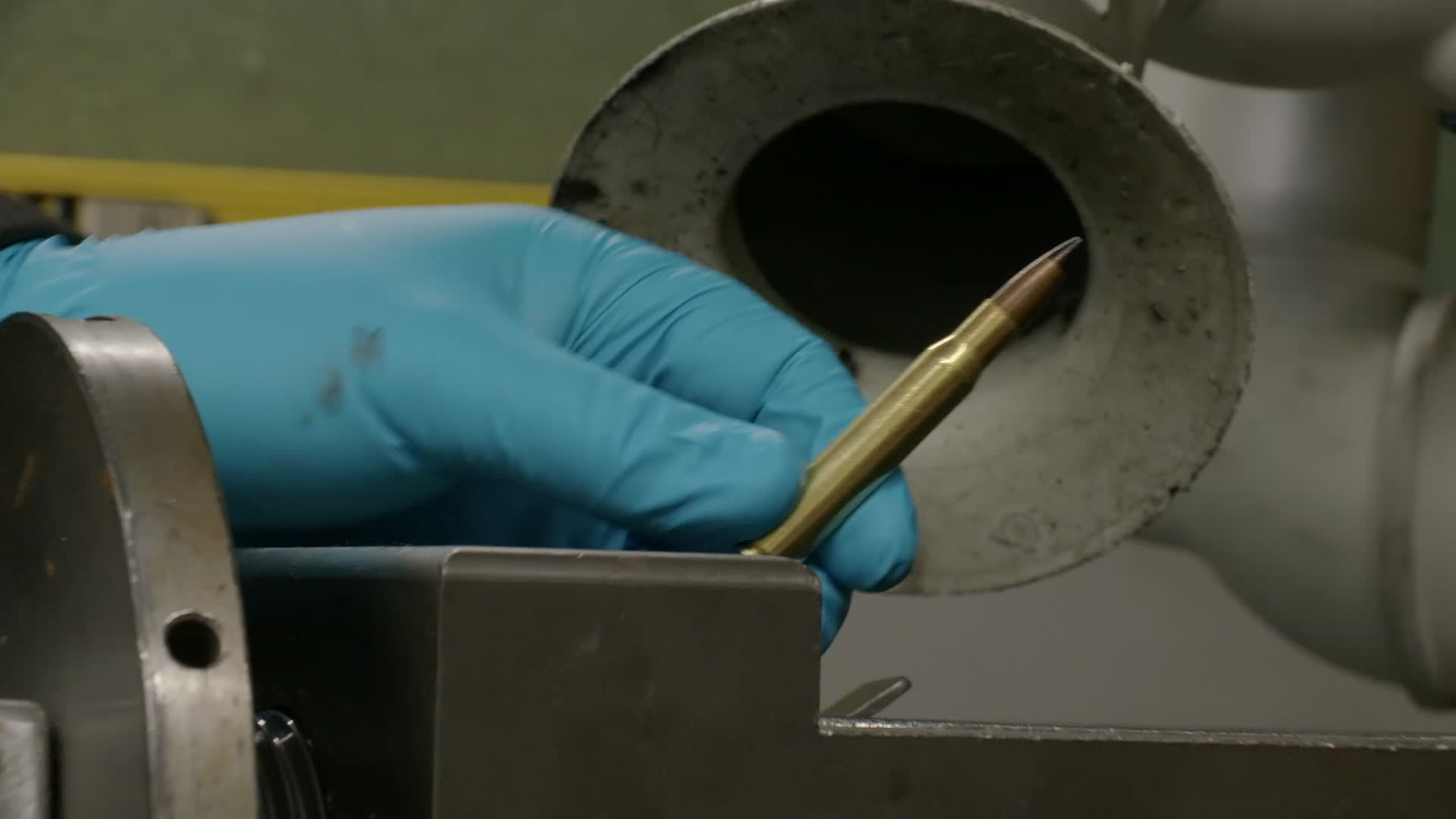
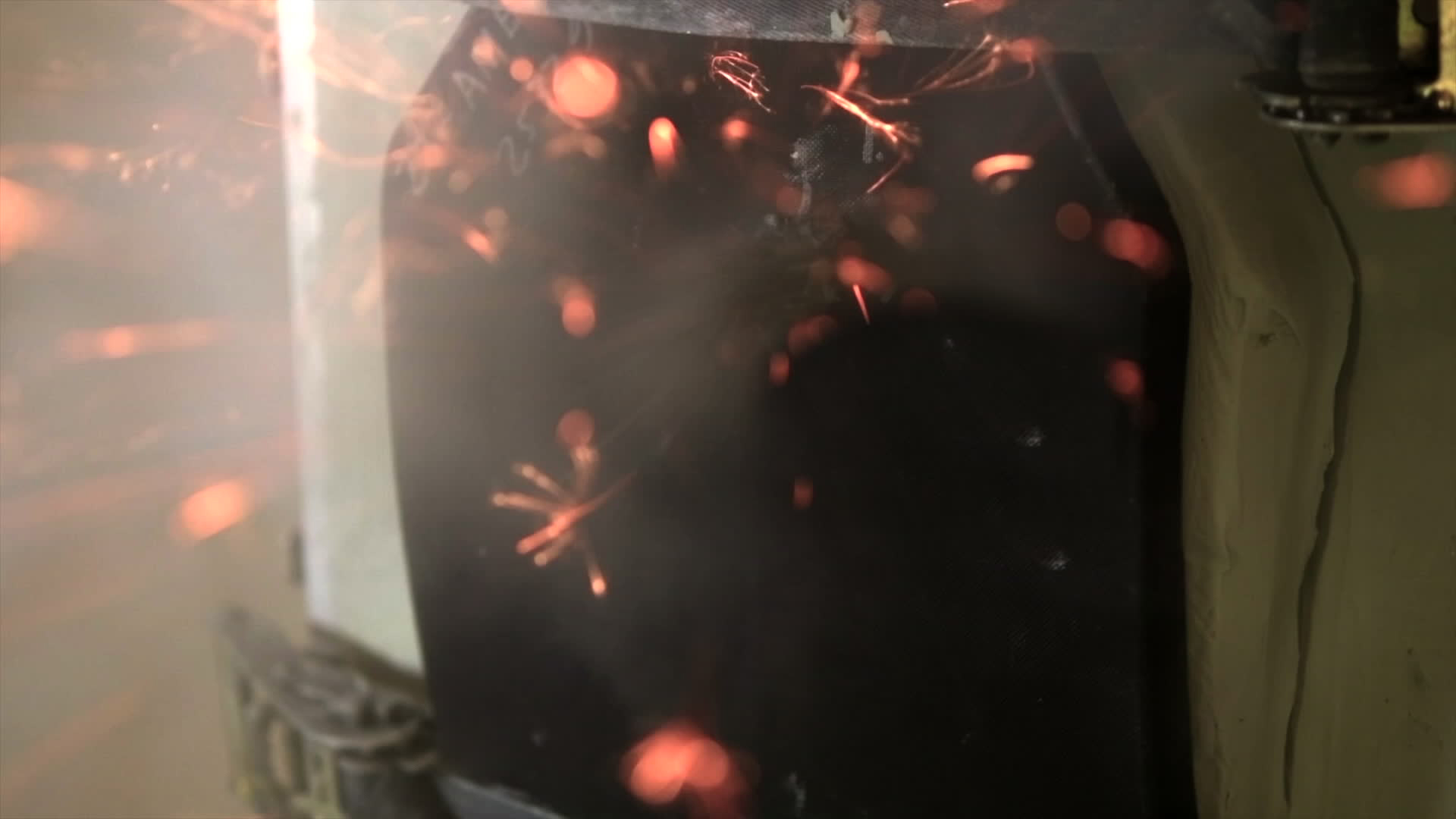
"We have found that the concave and convex plates and the curvatures of the plates do behave differently to each other," said Mr Sandercott.
"So that's why we're having to test the plate all over it to make sure that the performance in both of those types of curvature meet the minimum requirements.
"The performance of the ballistics and also the behind-armour trauma vary depending on the type of curvature and the tightness of that curvature.
"We've made enormous leaps forward and our understanding today is so much better than it was even six months ago now. In just the last month we have tested hundreds of plates.
"We originally started with quite severe curvature and we have softened that to a quite large extent based on women's feedback of wearing it and how comfortable it was and where pressure points were applied outside of the engineering of why it stops bullets."
Coverage as well as comfort
The factory has 23 of these presses, five of them brand-new to ramp up its recent production capacity, and they're multi-purpose.
One day they can be making body armour, the next helmets or vehicle armour. All Osprey plates currently in service came from this factory, as well as all the military's Virtus helmets.
The 100-year-old company even has its own test range. To date it's delivered more than 100,000 sets of body armour, 80,000 helmets and 200 bomb disposal suits to Ukraine.
NP has been working on women's body armour for more than two years and whilst curved plates have been made before, what the company has done is make plates with different curvatures and different sizes, allowing for a significantly better fit and better coverage.
Related topics
Join Our Newsletter