Combat curves: Could British servicewomen soon be wearing dedicated body armour?
For years there has been talk of body armour tailored specifically for women and rumours of other forces adopting it.
So where has the UK got to on this rather complicated subject?
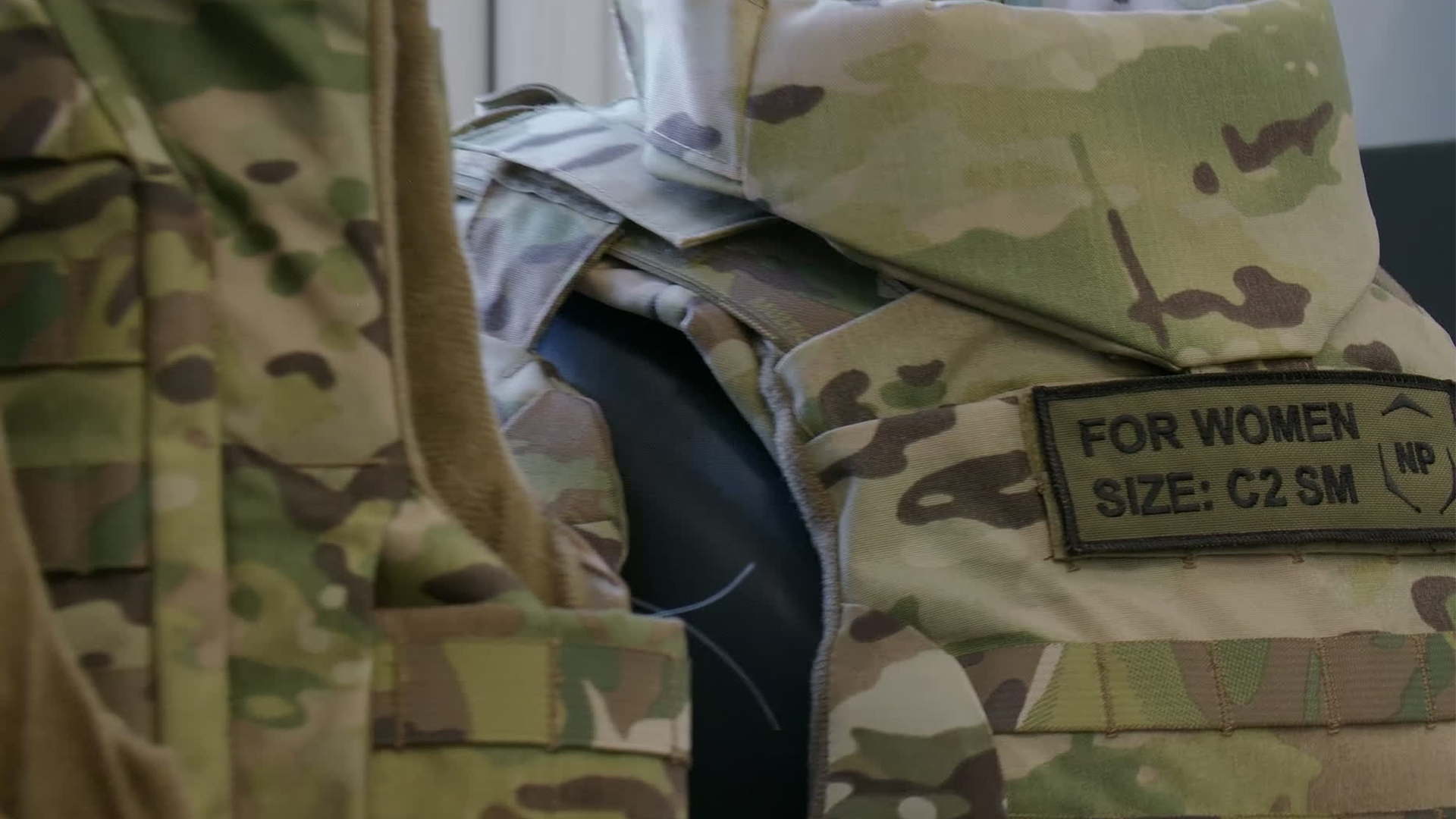
Coventry-based company NP Aerospace is currently manufacturing 2,000 sets of possibly the most sophisticated women's body armour developed to date.
No gaps
These have been purchased by the MOD to send to women fighting on the frontline in Ukraine.
The company has spent the past two years researching the difference in ballistic protection for men and women when wearing the current issue single-size Osprey tactical ballistic plate, and designing an alternative specifically for women.
The key to protection is having no gaps so NP Aerospace set about designing body armour specifically for women.
It got hold of a huge set of anthropometric data – detailing all the critical measurements of a cohort of British servicewomen.
Creating body armour that actually fits women may sound simple, but it really is not.
Some women have big breasts and small bodies, others are tall with small chests. So "small", "medium" and "large" don't really work.
The magic matrix
Hard body armour consists of two layers – a ceramic strike face and a composite backing.
The ceramic strike face is the outside layer – that breaks up the steel core of an armour-piercing bullet and the debris is then caught by the softer backing.
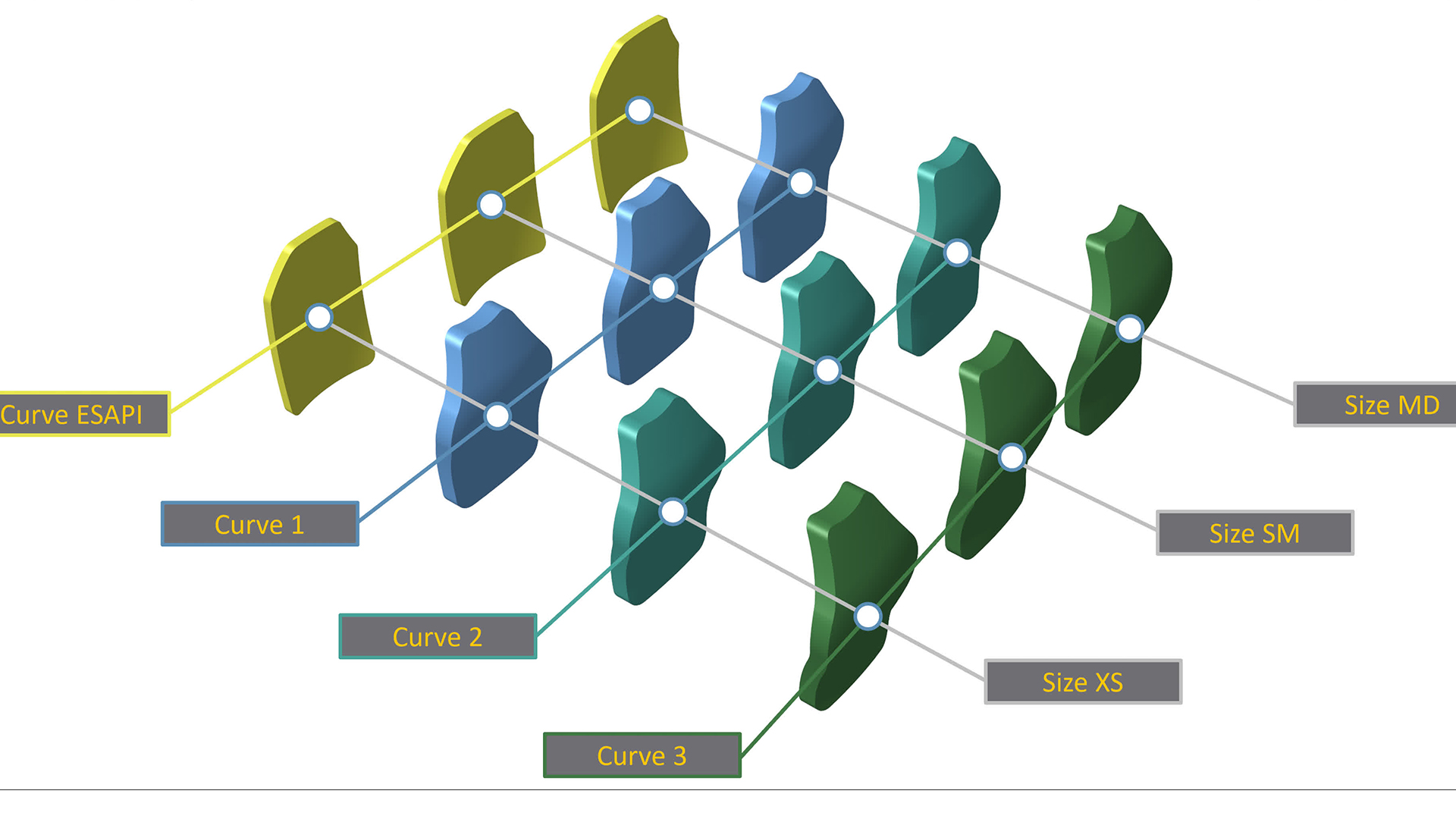
The outer ceramic strike face comes in just three sizes – but behind it the composite backing layer can be more tailored – with nine different sizing options.
The complication of a curve
There are nine different sizes available which NP Aerospace claim fit 95% of the female population of servicewomen.
NP Aerospace says women are 11% better protected when wearing its tailored body armour.
Introducing a curve to ballistic protection does complicate things. The plates have to be weighed and measured meticulously all over to ensure they're not thinner in places.
"The performance of the ballistics and also the behind-armour trauma vary, depending on the type of curvature and the tightness of that curvature," explains Mike Sandercott, director of development at NP Aerospace.
"We've made enormous leaps forward, and our understanding today is so much better than it was. In just the last month we have tested hundreds of plates."
It's not just a question of protection. The team has adapted the design based on feedback. Women also need to be able to move easily and feel comfortable.
Mike told us they originally started with quite a severe curvature, and then softened it.
Being able to do your job
Women can be hugely restricted when wearing body armour that doesn't fit. When the shoulders of the carrier vest are wide enough for a man for example, a small woman cannot lift her arms above shoulder height.
"One of the things that's really important is being able to do a pistol grip," says senior project engineer Seren White. "So putting your hands out in front of you and crossing your arms over.
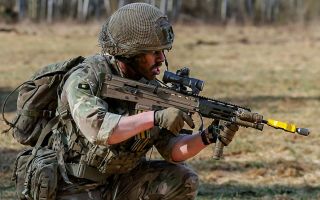
"And I can tell you that there are so many women out there that can't get into a pistol-carrying position when they're wearing their body armour, or they can't get in the rifle-prone position or they can't look down their weapon properly.
"There's loads of these human factor challenges that we've solved by just fitting it properly."
What about UK servicewomen?
Curved plates have been made before and women-specific carriers – the thing you wear that holds the body armour within it – have also been made and are in use in some places.
But this is the first set of women's body armour with quite such a comprehensive set of sizes. More size options means better fit, better fit means better coverage and better coverage means better protection.
As to whether British servicewomen get it, the short answer is "not any time soon" – although there is hope!
These 2,000 sets currently in production are bound for women in Ukraine.
When we contacted the MOD, it told us new tactile ballistic plates, which will be delivered in 2028, will be available in multiple sizes, offering a better fit for all service personnel.
These however are still flat plates, not curved plates.
But the MOD spokesperson also told us: "A project for complex geometry body armour is being initiated.
"Subject to trials and validation, this could begin to deliver new armour plates from 2029."
Join Our Newsletter