Forget Nato, give British soldiers what they need to replace the SA80, MOD urged

The Army's new assault rifle should be what British soldiers actually need regardless of what their Nato allies are using, a serving officer and defence expert have concluded.
Major Laurence Thomson and Jack Watling pointed out in a report for defence analysis organisation Rusi that Nato interoperability was already fragmenting, with allies making divergent calibre choices.
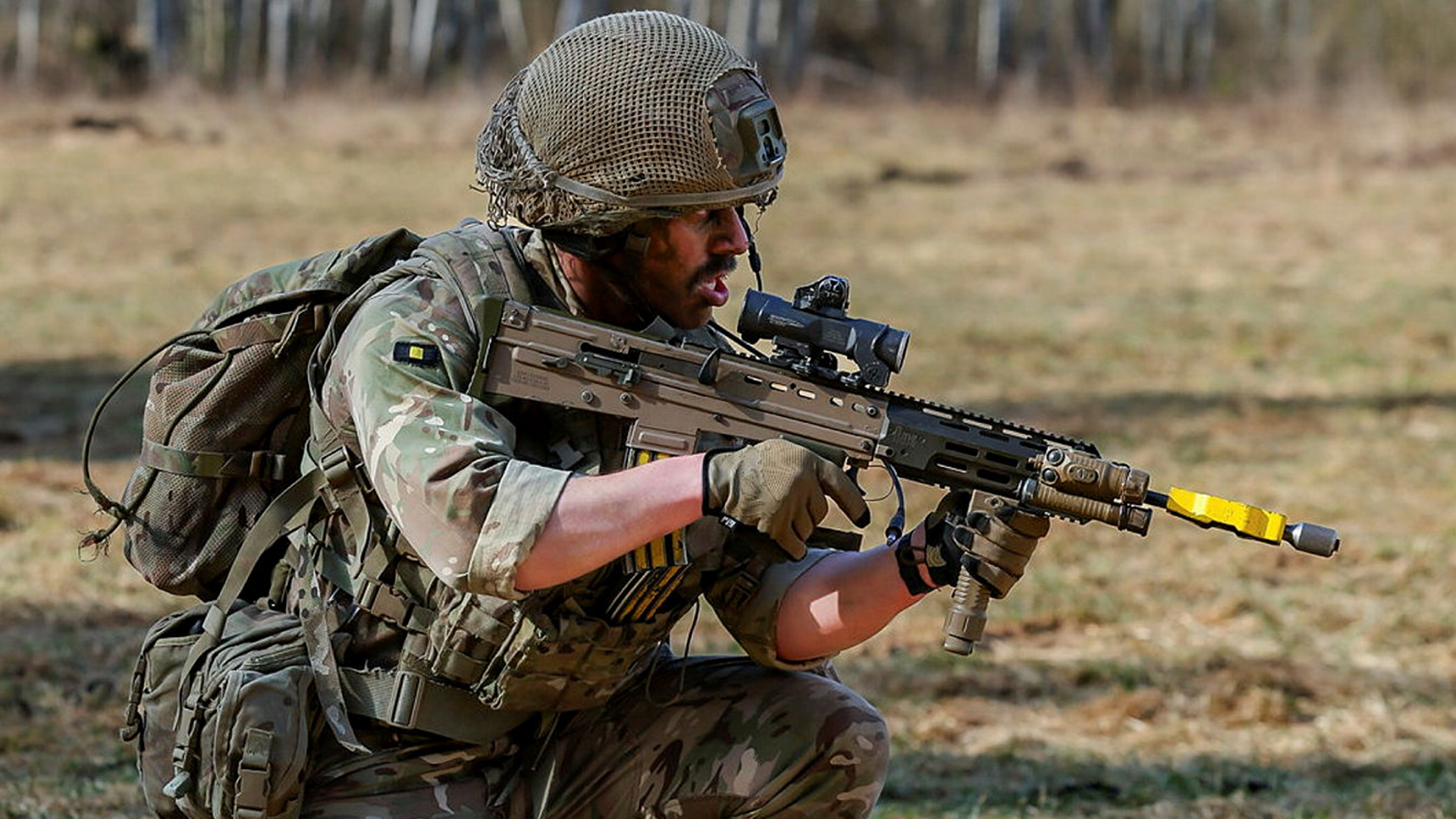
Parachute Regiment officer Maj Thomson and senior research fellow Mr Watling said the weapon chosen to replace the SA80 L85 should be compact, reliable and ergonomic.
Rifles still relevant
The pair suggested the final choice would be tough as various technical characteristics had to be considered, each of which influences battlefield performance.
Project Grayburn – the MOD's initiative to choose a new individual weapon – is currently underway, but only a few specific requirements have been laid out.
The SA80 family of weapons, and specifically the L85, entered service 41 years ago, and the Rusi co-authors remarked how its replacement would also need to be in service for a generation.
Their report notes that while artillery and drones now account for most casualties, rifles remain critical for suppressing enemies and taking and holding ground.
The co-authors also said whatever rifle ended up being chosen, the Armed Forces must develop and maintain the sovereign ability to manufacture the weapon and its ammunition.
Several key areas were explored in their report.
Lethality and range
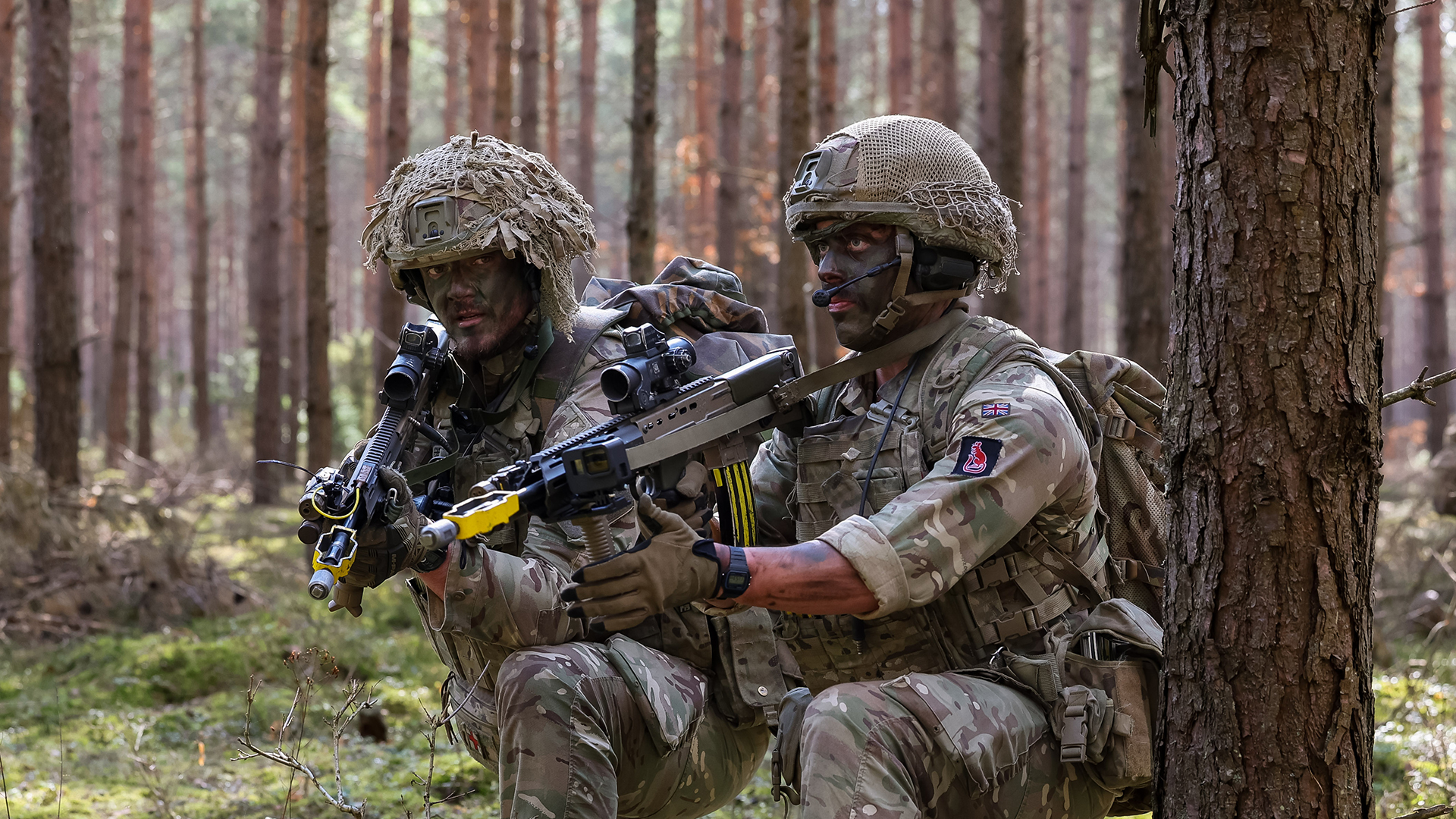
They stated how close combat soldiers need a rifle that can suppress an enemy at ranges out to 400 metres and be reliably lethal within 150 metres.
This is largely in keeping with current doctrine that says the L85 is capable of a high rate of accurate, rapid fire at ranges up to 300 metres and accurate deliberate fire at longer ranges, especially when fired as a section.
By drawing on the analysis of recent combat operations in the Middle East and Ukraine, the report says that most small arms engagements are likely to be within a few hundred metres.
And it notes how a higher proportion of small arms kills have been at ranges between 40 metres and 150 metres.
Size, reliability and ergonomics
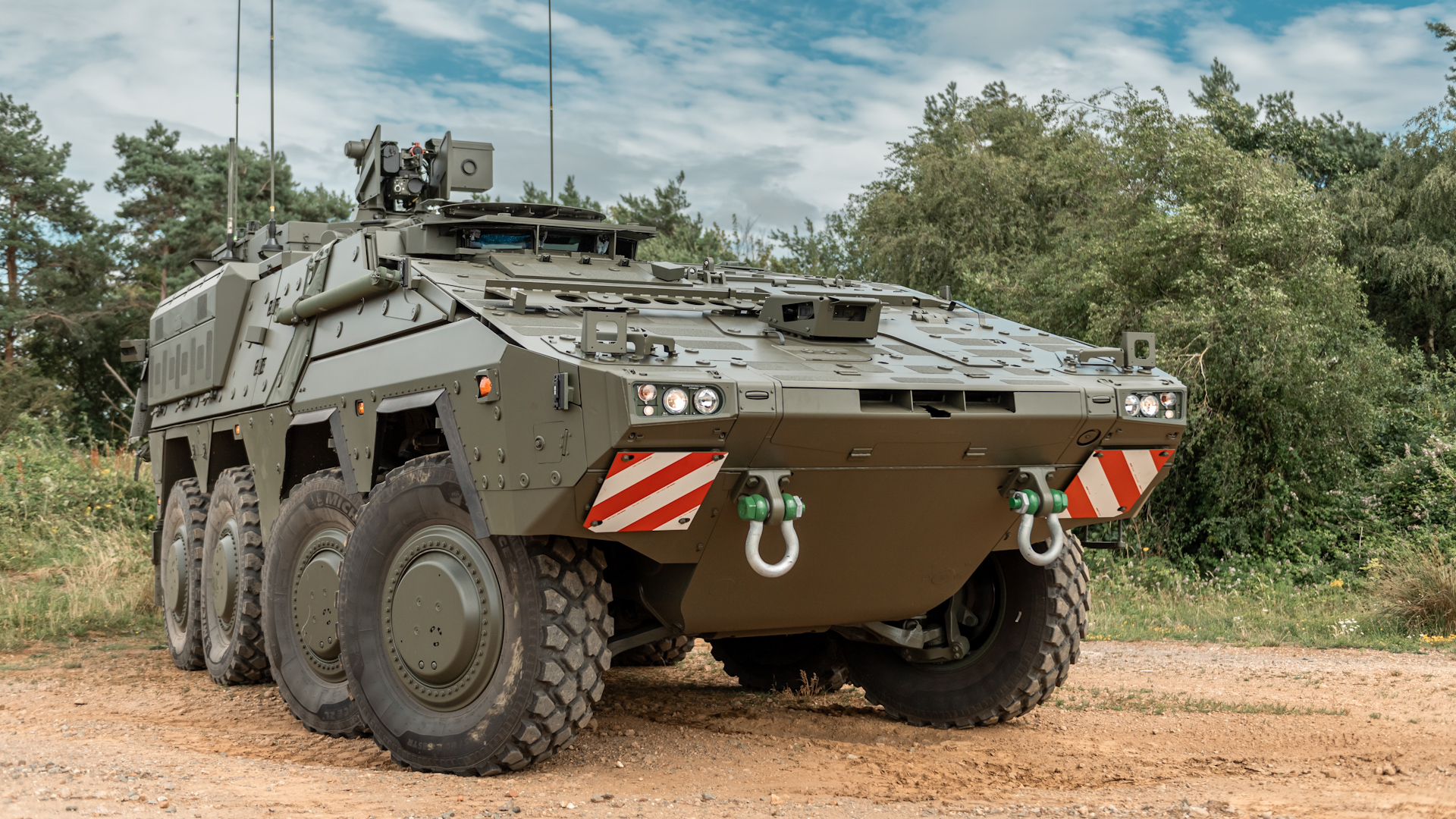
Maj Thomson and Mr Watling noted how future operating environments would mostly involve fighting from and into closed fighting positions, from vehicles and in complex terrain.
"[This makes] size and handling critical," they said. "Entering and exiting, or fighting from vehicles, makes compact weapons a decided advantage."
All this places a premium on a compact, reliable and ergonomic weapon.
The current L85A3 meets two of these criteria. Being a bullpup, it has a relatively long barrel for a weapon with an overall length of just 773mm.
While the A1 was poorly received, the improvements that were initially made, such as the trigger blade being resigned for use in compacted snow, plus the major Heckler & Koch upgrades to A2 and then A3 standards, mean the L85A3 is now a reliable weapon.
However its ergonomics do not suit every firer as length of pull cannot be adjusted and the weapon is not designed to be shot from the left shoulder – although CQB drills are in place to allow for this.
In order to fulfil all three criteria, its replacement may well be another bullpup – but one that can be shot left-handed – or a shorter rifle with a telescopic butt stock.
Calibre choice and body armour
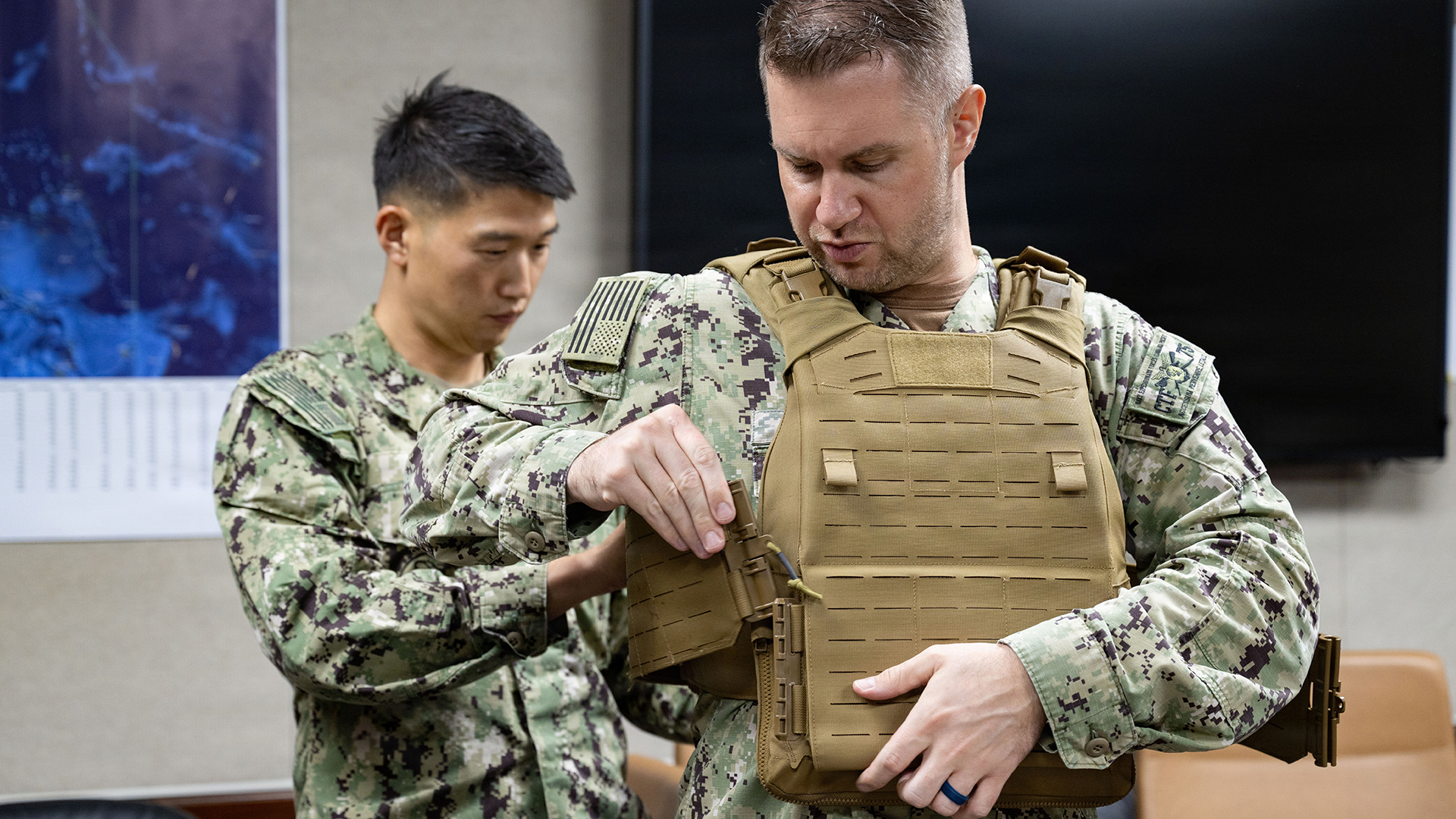
One of the few specific requirements laid out under Project Grayburn is the need for the new weapon to be able to "provide sufficient lethality to defeat current and emerging body armour".
The wording does not specifically say the round should penetrate the armour.
The co-authors remarked how the inherent accuracy of a weapon could not compensate for the limitations of the firer under field conditions, therefore it was likely to depend primarily on the skill of the user.
They presented three ways enemy body armour could be defeated.
:: By seeking to penetrate improved body armour by increasing the kinetic performance of the rifle
:: Improving accuracy sufficiently to circumvent armour reliably
:: Firing more rounds to improve the statistical probability of bypassing armour
The last two points are relevant. Some British casualties in Afghanistan were caused by incoming rounds finding the gaps between the soldiers' armoured plates.
Calibre choice and interoperability
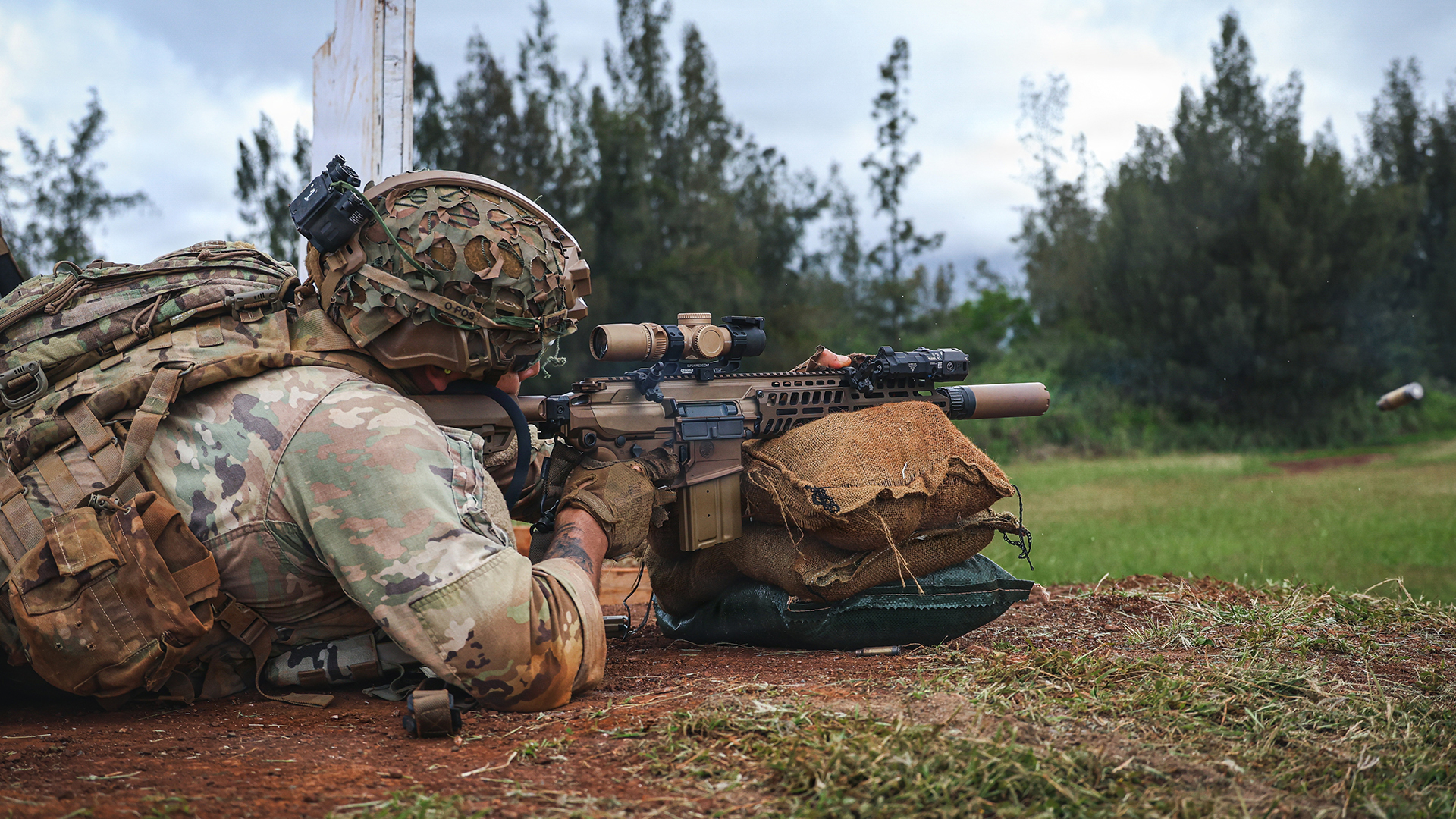
The Rusi report says increasing the calibre from the current 5.56x45mm to defeat body armour would impose significant logistical and training burdens.
Nevertheless, the authors pointed out how some Nato allies were already choosing non-standard calibres.
One example of this is the US Army's SIG Sauer M7, which is chambered in 6.8x51mm.
"The UK should not seek to chase others in pursuit of standardisation because Nato is becoming increasingly fragmented," it said.
"The UK has historically had its small arms adversely affected by trying to align with allies."
Maj Thomson and Mr Watling say the UK should therefore select the calibre and rifle that best suits the Army's own operational requirements rather that prioritising interoperability with allies.
And as previously mentioned, they said not just the rifle, but the ball ammunition too, should be able to be manufactured in the UK.
Hard choices lie ahead
The paper says British soldiers deserve a weapon chosen through rigorous analysis and backed by sovereign manufacturing capacity.
No single rifle will simultaneously maximise all desired attributes as every design choice involves trade-offs.
It acknowledges that getting this right is not merely a matter of procurement – but a matter of trust between the state and the people it asks to fight on its behalf.
A recent BFBS Forces News poll drew 12,000 votes, with 64% of the vote going to the Heckler & Koch HK416.
This is an excellent weapon, but like the report says, still represents a compromise as while it's fairly ambidextrous it's longer than the L85 while being chambered in the same calibre.
So it remains to be seen which contenders will emerge – and which rifle will be chosen to serve for the next few decades.
Related topics
Join Our Newsletter