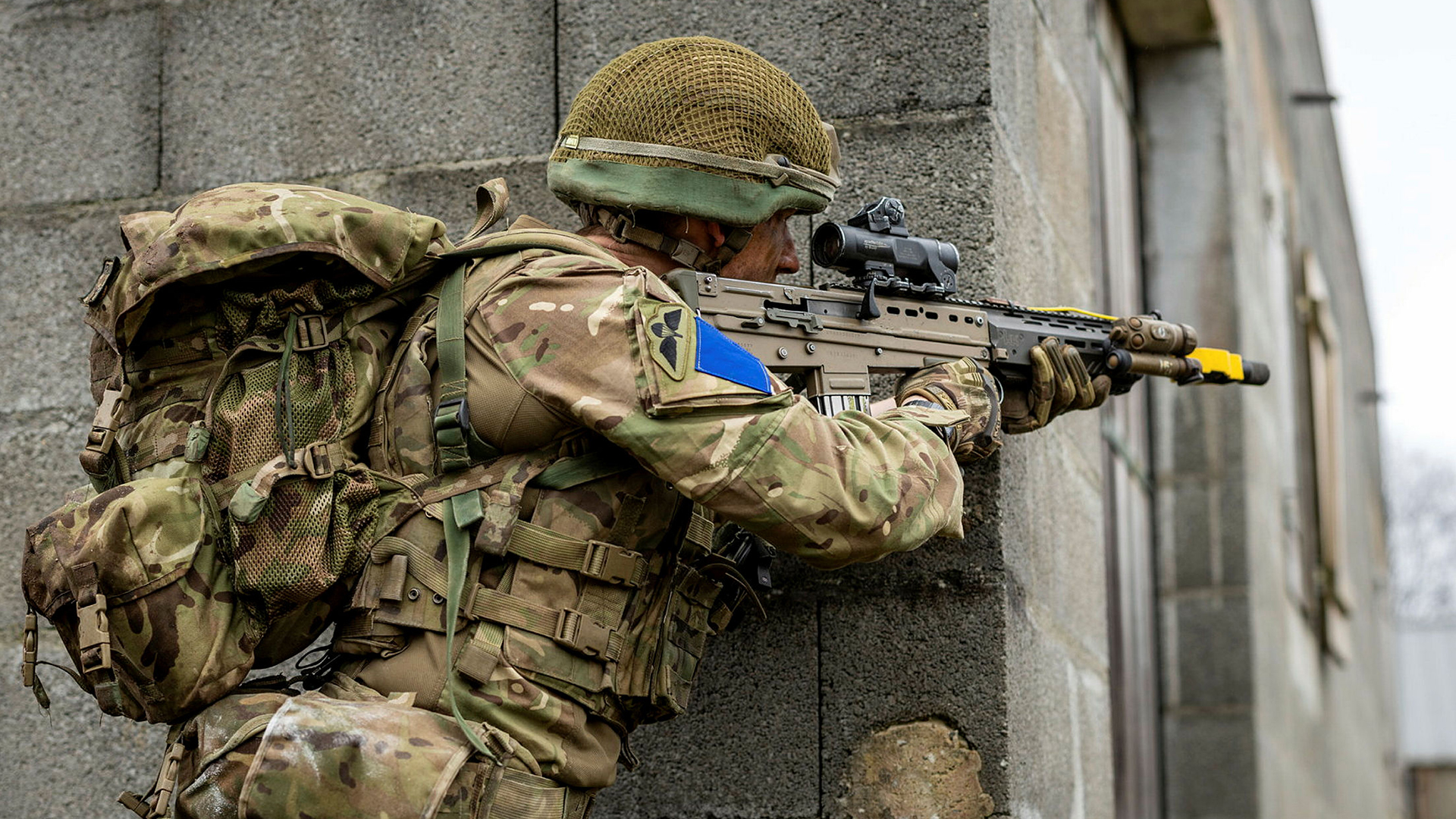
Project Grayburn: MOD still undecided on SA80 replacement so you had your say instead

The search is on to find replacements for the SA80 family of individual weapons, but with only a few specific requirements laid out and no sign of any official decision, we decided to ask you which weapon system the MOD should adopt.
Project Grayburn, the programme set up by Defence Equipment & Support to choose the new weapon, stipulates that it should be manufactured in the UK and the rounds should be able to defeat body armour.
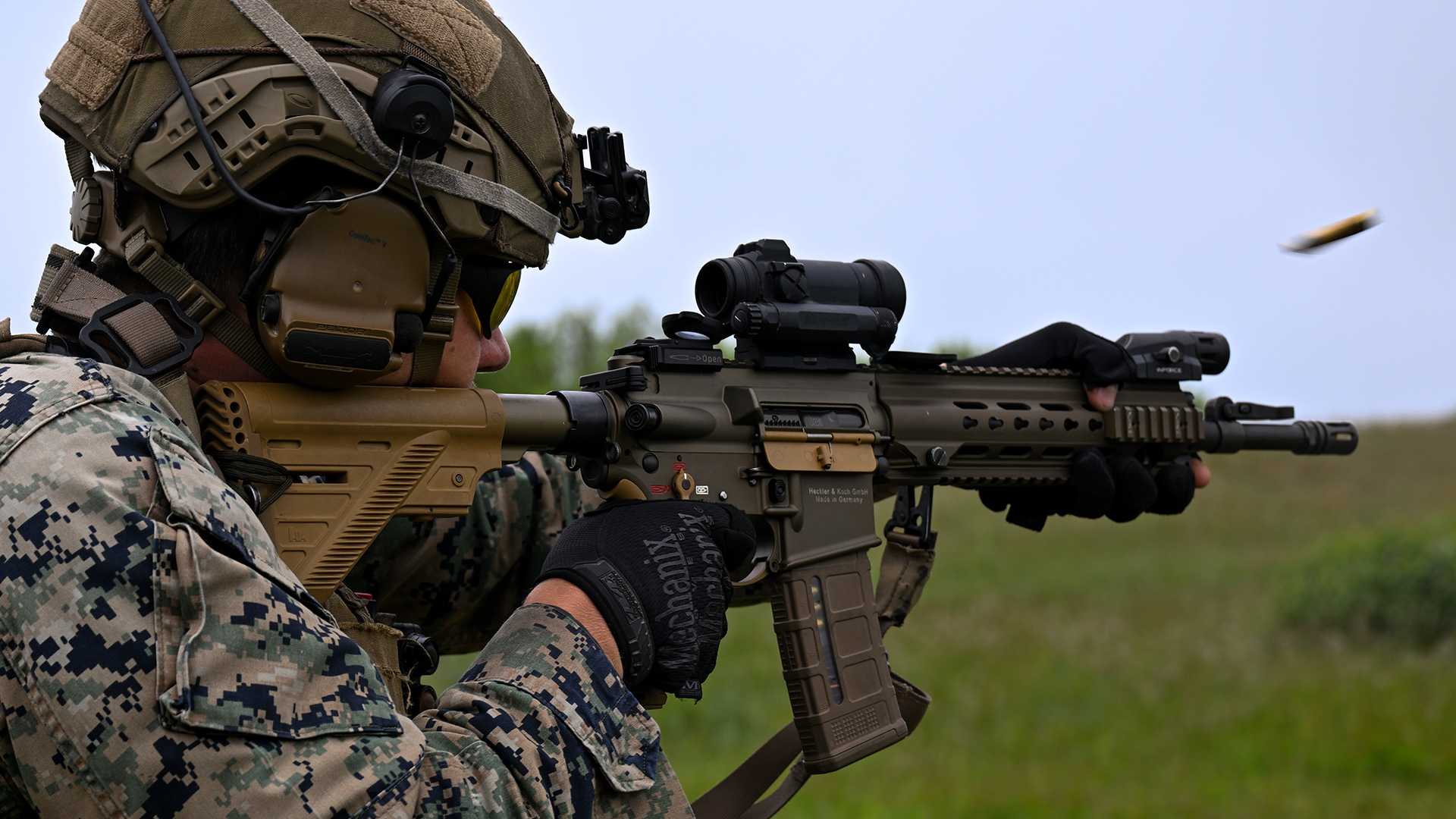
With the potential to build foreign weapons under licence in the UK, we ran a BFBS Forces News audience poll offering four potential choices – and there was one clear winner – Heckler & Koch's HK416, which is chambered in 5.56x45mm Nato.
Four choices, one winner
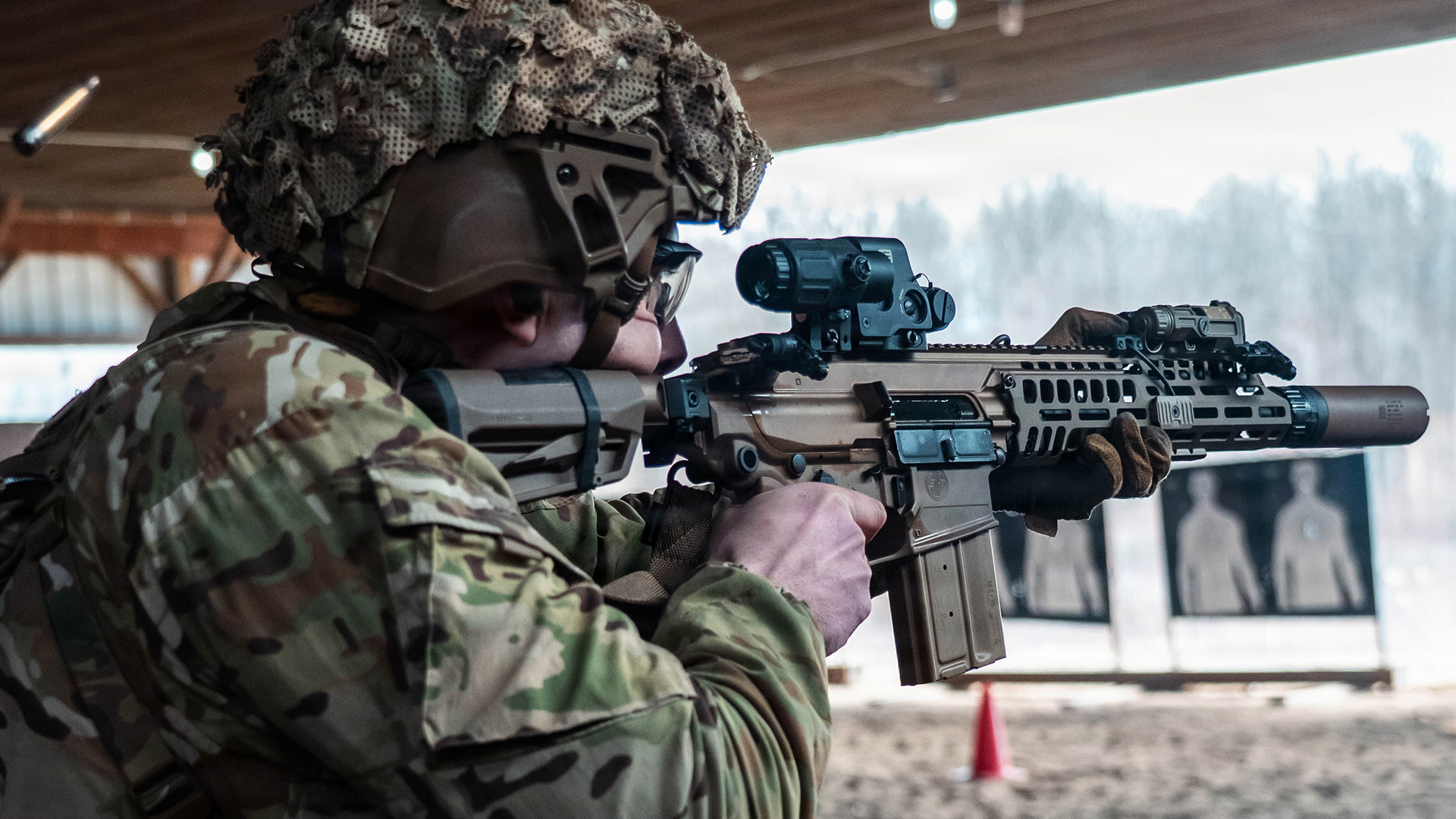
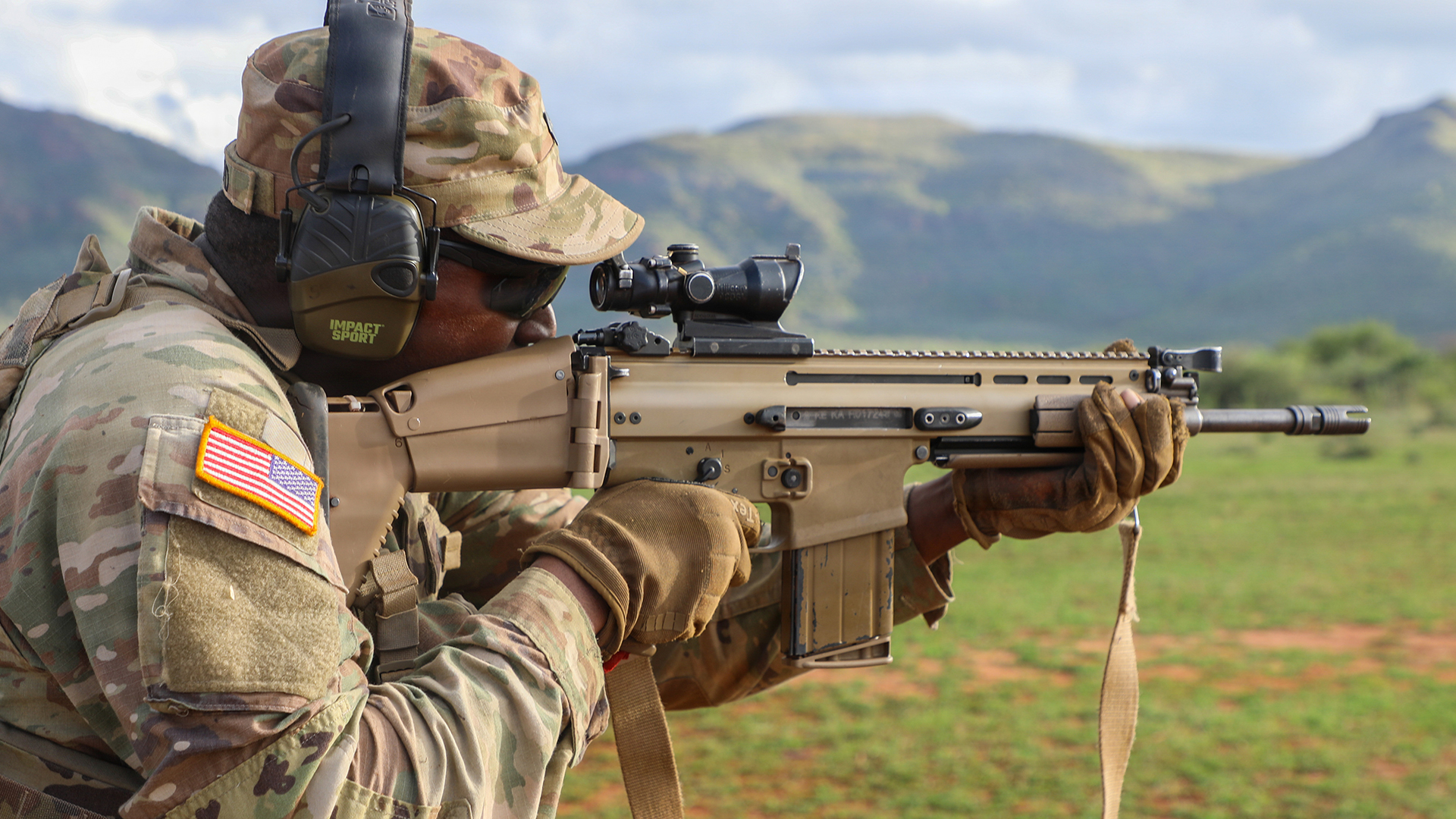
The other options, reflecting a variety of different weapon layouts and calibre options, were the Beretta NARP (New Assault Rifle Platform), also chambered in 5.56x45mm, the FN SCAR-H in 7.62x51mm and the SIG Sauer M7, the US Army's new assault rifle, that's chambered in 6.8x51mm.
Of the 12,000 votes received, 64% of you chose the HK416, which has a control layout similar to the AR-15, but uses a short-stroke gas piston system like the SA80.
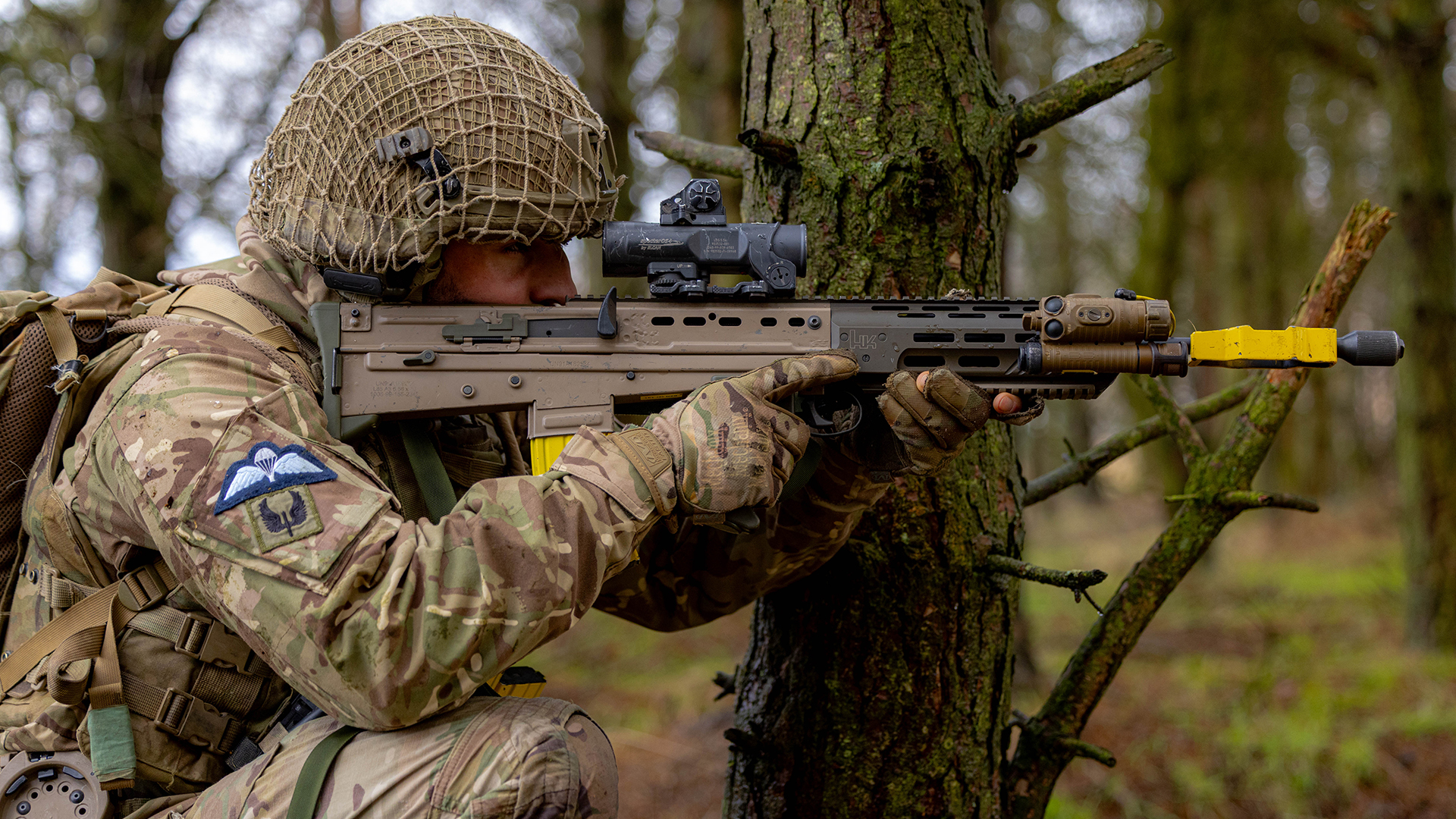
Unlike the SA80, which is a bullpup, the HK416 can be shot from the left shoulder, which offers tactical advantages as well as being a more natural configuration for left-handed firers.
However, the ejection port is still on the right side of the body of the rifle, so spent cases fly out in front of the firer's face, but this is deemed manageable.
Heckler & Koch is already well known among the Armed Forces as it was this firm's then-UK arm that carried out the multiple necessary modifications to upgrade the SA80 L85A1 to A2 – and then to A3 – standards.
These numerous, somewhat small and yet vitally important tweaks managed to turn a poorly received and sometimes unreliable assault rifle into a real battle-winner.
For example, one of the "upgrades" simply saw the tip of the firing pin hardened properly so it didn't break off.
No exact requirements
Our audience clearly know their weapons, as the comments in the poll reflected some very well-reasoned and sensible arguments.
It could well be that it's precisely because all these weapons have something different to offer that makes Project Grayburn such a difficult project to finalise.
Calibre choice, the type of platform, control layout, size, weight, reliability, magazine capacity and cost are all factors that need to be taken into careful consideration.
"I'll go with the SIG. If the Yanks are going ahead with the switchover to 6.8mm, then the rest of Nato will follow their lead, that is if the US is still in Nato by then," reasoned one respondent.
US soldiers are believed to be having something of a love/hate relationship with this weapon, as the 6.8x51mm calibre is more potent than the SA80's 5.56x45mm, although the drawbacks are fewer rounds in each magazine and a longer weapon, making it less useful in confined spaces.
In order to counter this a shorter barrel could be fitted, but this would induce more felt recoil.
Calibre over controls
As another member of the audience pointed out, calibre choice is probably more important than the weapon itself – as long as it's reliable.
"Whatever is selected needs to use the same ammo as the rest of Nato. Determine the ammo type first and that rules out some options, select the most reliable of the remainder," they suggested.
"Needs to have a larger calibre than 5.56mm. That's a must," said another.
The SCAR-H also got some love, with one ex-soldier saying: "7.62 is a much better round and FN is a good, reliable delivery system.
"I loved my SLR back in the 70s, was in the shooting team of every base I was posted to. A modern version would be a real soldier's weapon."
Another agreed that the punch offered by the 7.62x51mm round fired by the SLR – officially designated the L1A1 – made the SCAR-H an excellent contender.
"7.62 all day as long; it has a much better stopping power as that is what I was used to shooting whilst in the military," they said. "We did convert to the crappy 5.56 SA80 which was feeble in comparison."
Lethality versus logistics
However, the logistical advantages of a round that's already in widespread use combined with familiarity of operation made the HK416 the standout rifle in the poll.
As one respondent put it: "H&K are known for high quality. The 416 has already been chosen by Germany and France so the UK should go with it to increase interoperability.
"And it killed bin Laden."
This was a reference to Operation Neptune Spear, in which the Al Qaeda leader was shot dead in his compound in Pakistan in 2011 by a US Navy SEAL armed with the German-designed weapon.
"Stay away from the SCAR – we already know that thing's prone to jams, hits hard but not reliable enough," said another.
"We don't need a 6.7mm battle rifle, we need a medium-size rifle that we can operate reliably in the field while being cost-effective.
"The 416 is the best option – you can even get the 417 variant if you need a guy in the squad to run 7.62 [as the designated marksman]."
No bullpup?
Some people did point out that while Britain is one of only three Nato members to operate a bullpup, the others being France and Croatia, this layout offers the advantages of a longer barrel with potentially more velocity and accuracy, in an overall shorter package.
A bullpup sees the magazine housing, bolt carrier assembly and trigger mechanism located behind the pistol grip and trigger blade, allowing the barrel to be set further back in the weapon system.
"I think a bullpup in 7.62 would probably be the best balance," said one person. "I realise this is not a popular choice. But a full rifle-length barrel in a carbine-length weapon and an available round.
"Examples of this include MDR-X and the Tavor 7, so we aren't reinventing the wheel here."
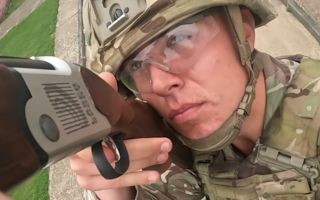
Their comments are backed up by soldiers from 1st Battalion, The Duke of Lancaster's Regiment, who were recently deployed to northern France on Exercise Gaulish to test their urban warfare skills.
France is in the process of replacing its FAMAS bullpups with the HK416, and the British infanteers used the HKs instead of their L85A3s, finding the weapon a bit too long for FIBUA and CQB.
A proven formula?
"Beretta NARP in 6.5 Grendel [another intermediate calibre that was intended for Nato use, but not widely adopted]," said another respondent.
"If we want to go cheap it's Zastava M19/M20 mix in the same calibre.
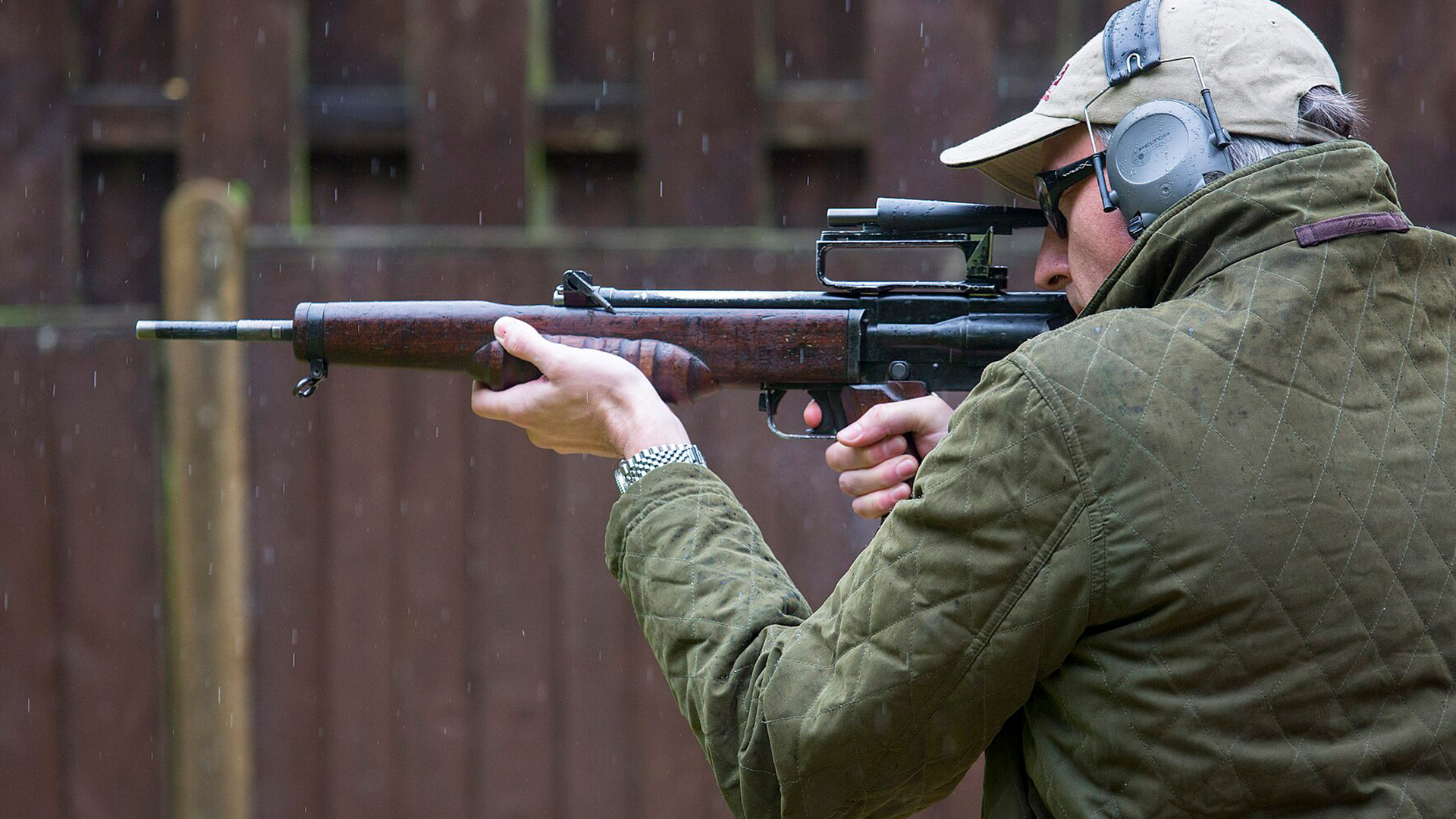
"Of course, the only fully correct answer is the EM-2 in .280 British – 60 years ago. Irony that everyone is finally catching up to where we were back then."
But while you've had your say about which weapon system should be adopted, the final decision rests with Defence Equipment & Support, the MOD's procurement arm.
And it could be a long wait.
Related topics
Join Our Newsletter