Breaching body armour: MOD issues requirements for SA80 family's replacements

The search is on to find replacements for the SA80 family of individual weapons, and arms manufacturers hoping to get the contract have been given the most detailed brief to date about what the MOD is looking for.
Defence Equipment & Support (DE&S), the part of the MOD responsible for procuring and supporting equipment, is seeking direct replacements for the weapons that are currently in service – with some caveats.
The programme, which is called Project Grayburn, also stipulates that the new weapons should be manufactured in the UK and the rounds should be able to defeat body armour.
Let's look at the requirements – and where we are now – in more detail.
What we've got and what DE&S wants
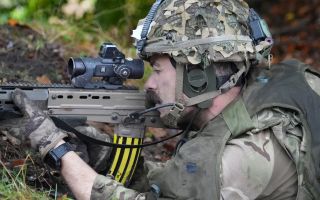
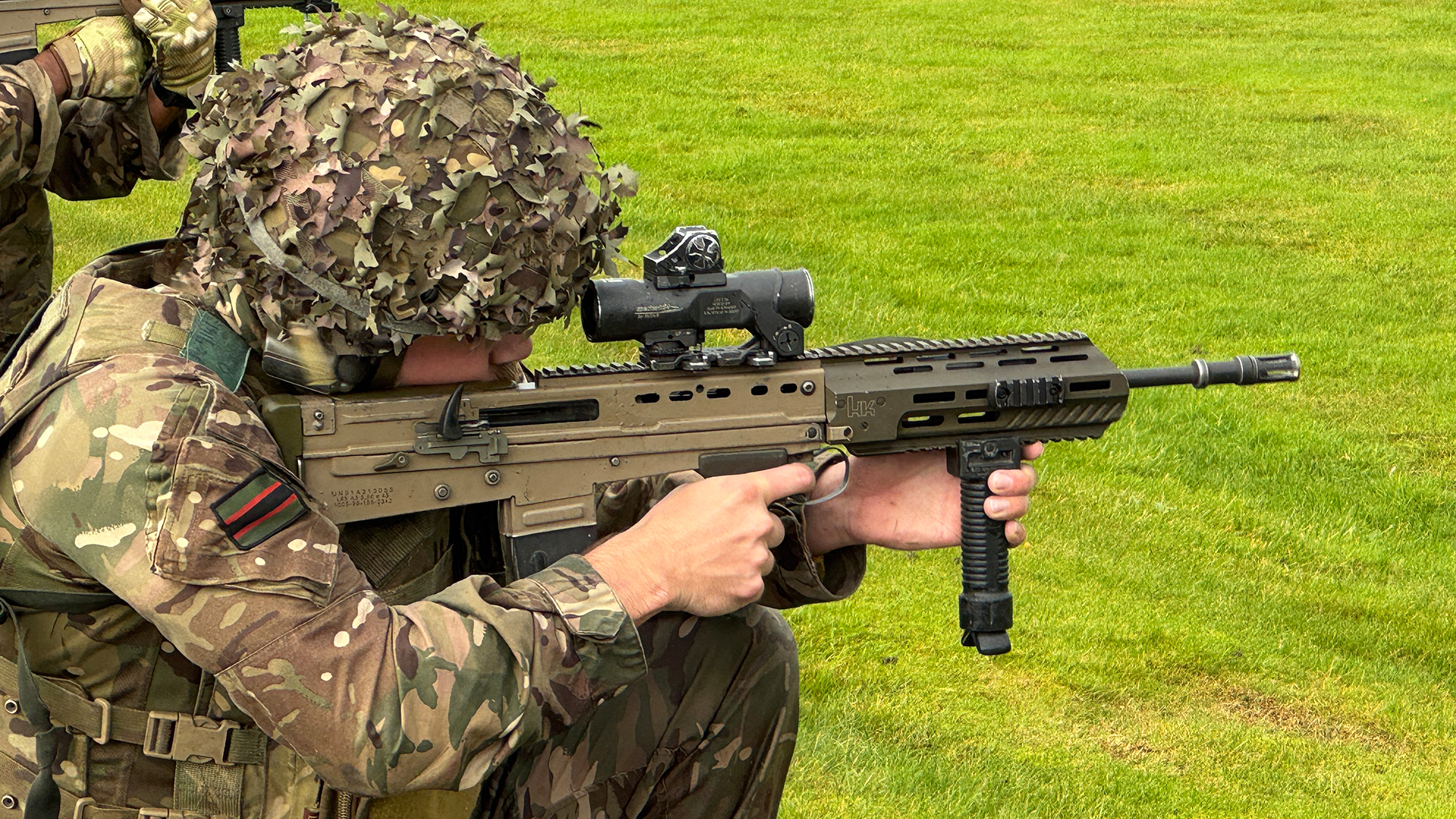
The current SA80 family includes two assault rifles, the L85A3 and A2, the L22 carbine and the L98 Cadet GP – a semi-automatic variant for use by cadet forces. The L86 Light Support Weapon was withdrawn from 2019.
The L85A3 is the most advanced variant of this bullpup family of weapons and is typically issued to frontline infantry units.
It combines all the upgrades of the A2 series, plus new furniture and some improvements to the body of the rifle, which is better known as the upper receiver to non-UK personnel.
The A2, meanwhile, is usually issued to support units and those on guard duty. Some weapons retain the original green plastic hand guard, while others have a rail system.
All these variants are chambered in 5.56x45mm Nato and all are intended to be shot right-handed from the right shoulder.
DE&S wants Project Grayburn to deliver five distinct variants to replace these weapons, "most likely based upon a common lower receiver".
:: Dismounted Close Combat (replacing SA80A3)
:: Dismounted Close Combat (short) (replacing SA80A3)
:: Personal Defence Weapon (replacing L22 Carbine)
:: Generalist (replacing SA80A2)
:: Cadet rifle (replacing L98 Cadet GP rifle)
DE&S points out that there remains the potential to combine the DCC (Short) requirement into either the DCC or Personal Defence Weapon variant.
The long and the short of it
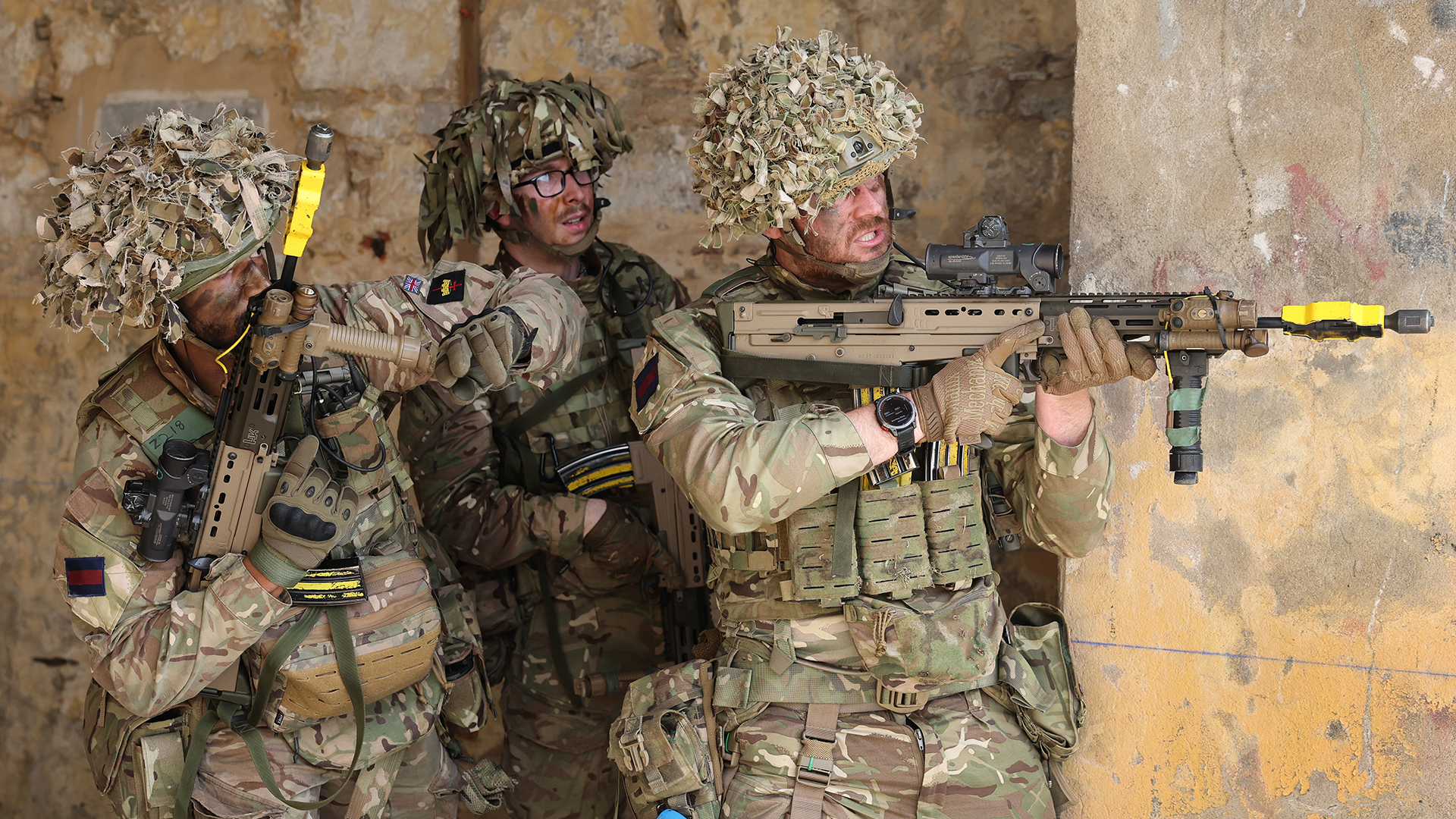
Some may wonder why DE&S is looking for a standard and short version of the same weapon, but another Grayburn requirement is to "employ signature reduction technology on some variants".
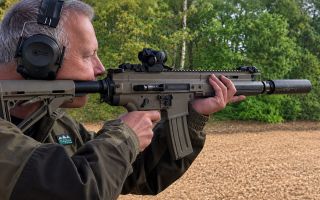
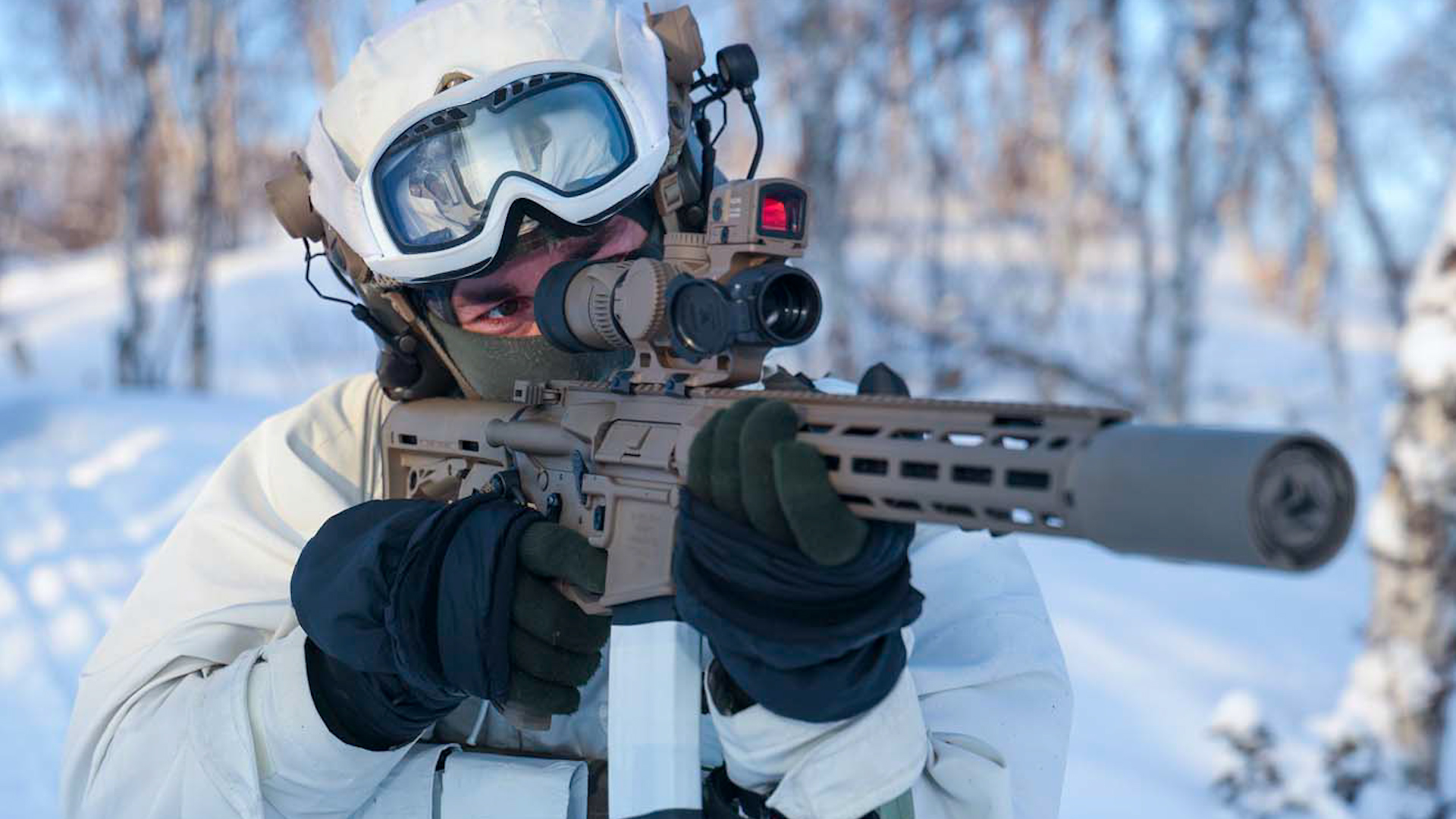
This means some sort of muzzle flash eliminator, the most likely candidate being a short suppressor similar to the one fitted to the KS-1.
Special operations elements of the British Army and Royal Marines use this weapon, officially designated L403A1 in UK service, and the rifle is intended to be shot with a suppressor fitted.
A suppressor will reduce muzzle flash and can also reduce felt recoil, but at the expense of either creating a longer overall weapon system, or requiring a shorter barrel to ensure the overall system is of a more manageable length.
Body armour and calibre options
Lessons were learned from the general lack of availability of body armour during the war in Iraq, and so significant use of it was made in Afghanistan – and the war in Ukraine has seen both sides use body armour.
Project Grayburn's requirement is for the new weapons to "provide sufficient lethality to defeat current and emerging body armour".
This will almost certainly mean a change in calibre from the SA80's 5.56x45mm Nato.
Depending on the distance to the target – and hence the terminal velocity of the round – as well as the exact type and quality of body armour being worn by the enemy, 5.56x45mm has proved to be largely inadequate.
Interestingly, DE&S has not specified what calibre it wants, which could potentially see companies competing for the Grayburn contract come up with some form of intermediate calibre between 5.56x45mm Nato and 7.62x51mm Nato.
There are pros and cons to this approach.
If a new calibre is found to fulfil the Grayburn requirements, then all seems well. However, a larger calibre means fewer rounds can be carried for the same weight.
It also means more pressure needs to be generated inside the cartridge to propel a heavier bullet at the necessary velocity to punch through body armour.
The most efficient way to do this is to use a longer barrel, but this makes the weapon more unwieldy.
The US Army recently introduced the M7 rifle. This is chambered in 6.8x51mm – and that was specifically chosen to defeat body armour.
However, in order to keep the weapon to a manageable length, the barrel is relatively short, while muzzle velocity is relatively high, creating more recoil and potentially wearing out the barrel more quickly.
And unless Nato can find a suitable intermediate calibre and agree to adopt it wholesale, the logistical advantages of everyone using the same cartridge – which we currently have with 5.56mm – will be lost.
Standard layout or bullpup?
Another feature DE&S has not specified – at least not yet – is whether the new platform should have a standard AR-15-style layout or stick to the bullpup configuration of the SA80.
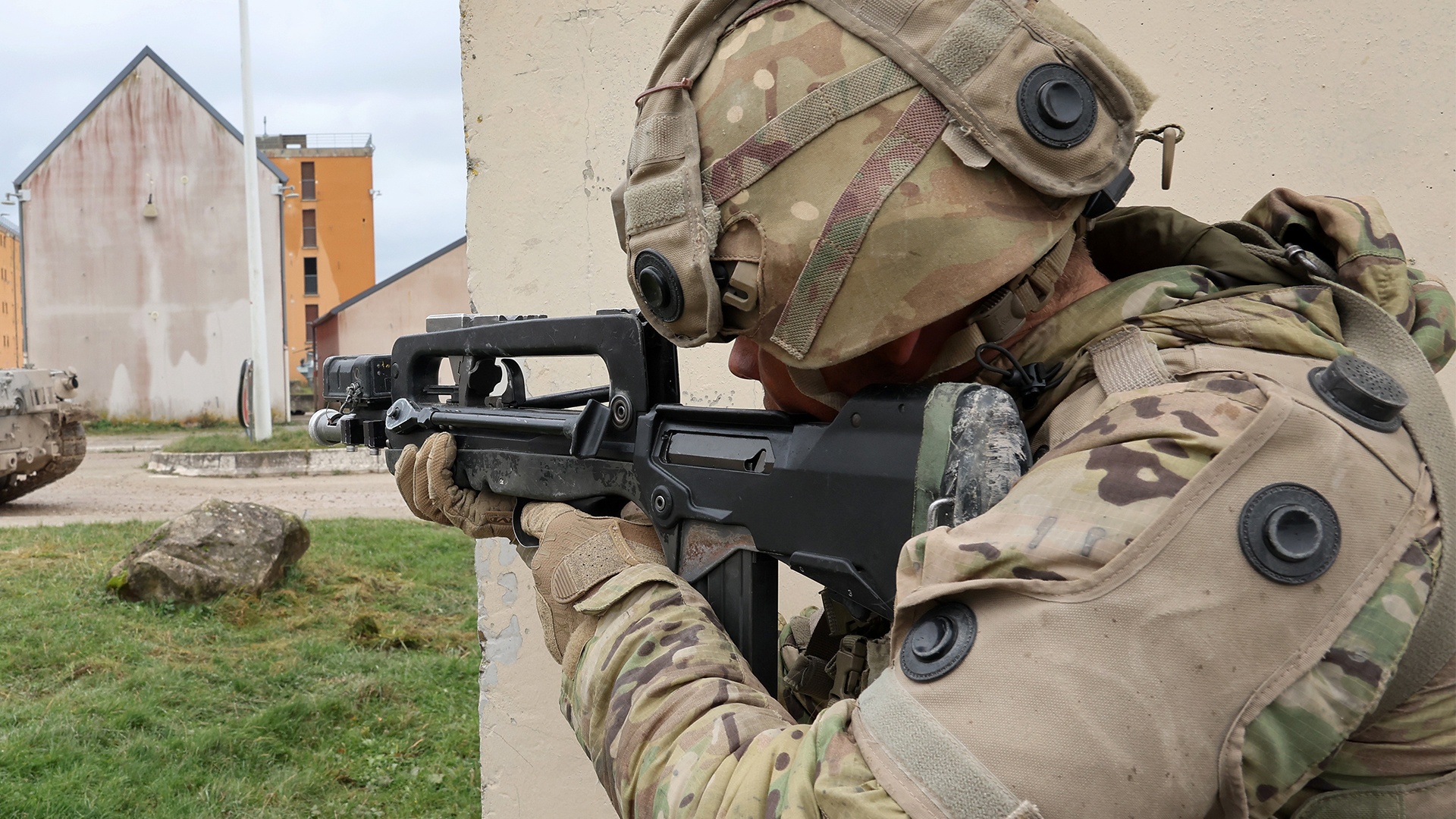
Bullpups have the chamber, magazine housing and working parts located behind the pistol grip and trigger, meaning a longer barrel can be fitted in a shorter overall package.
But bullpups are uncommon, with the likes of France and Croatia being among the few Nato nations to use such a rifle.
One common problem with the SA80 is the fact that although left-handed versions were originally intended to be made, the decision was taken to abandon this, so all current SA80s are designed to be shot right-handed.
Evidence of this can still be found today in the design of the rear sling loop, which can be pushed out to the opposite side, facilitating the now-defunct left-handed operation option.
The French FAMAS, in contrast, can be configured to be shot left-handed, but this conversion cannot be done in the field – and the French army has been moving across to the standard-layout HK416 in any case.
Using an AR-15-style platform would enhance interoperability, as most Nato nations have taken this approach.
DE&S's use of the term "lower receiver" offers a potential clue that the MOD would prefer the new weapon to have a more conventional layout, as this part of the SA80 is known as the TMH - the trigger mechanism housing.
The projected contract dates are 1 April 2028 to 31 March 2045 – a period of 17 years.
It will be interesting to see whether DE&S issues any further refinements to Project Grayburn – or just sits back to see what the arms manufacturers will come up with.
Related topics
Join Our Newsletter