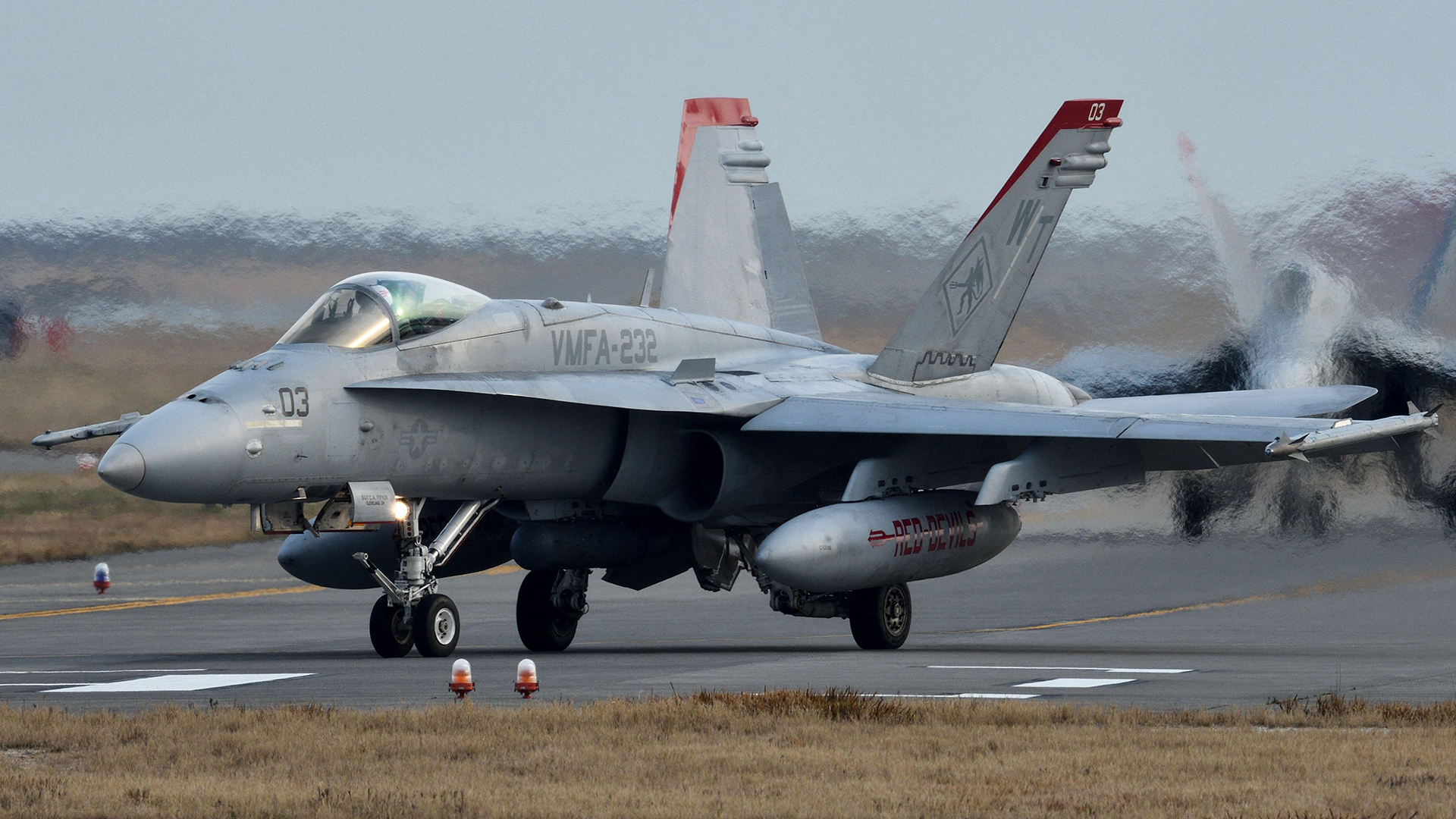
The United States Marine Corps is entering the final stages of its aviation transformation as it prepares to retire the F/A-18 Hornet in favour of expanding its fifth-generation fighting capabilities.
According to an internal message released by the service, the Hornet will retire by 2030, and all maintenance roles associated with the ageing 4th-generation fighter will be eliminated.
It comes as the Marine Corps looks to standardise its fleet around the F-35 Lightning II – widely considered as the world's most advanced multi-role stealth fighter.
According to the 2026 Marine Corps Aviation Plan, the USMC plans to expand its F-35 fleet to 420 aircraft.
Out with the old, in with the new
The F/A-18 Hornet has been held in much acclaim, serving as the backbone of US carrier aviation since it was first introduced into service in 1983.
The USMC's F/A-18C and F/A-18D models are now referred to as Legacy Hornets to distinguish them from their larger and superior successor – the F/A-18E and F/A-18F Super Hornet – an aircraft operated by the US Navy but one the Marine Corps chose not to adopt.
Legacy Hornets have a top speed of Mach 1.8 and boast an array of armaments including the AIM-7 Sparrow for intercepting enemy aircraft and missiles, and the AGM-65 Maverick, designed to target high-value hardened targets such as armoured vehicles, tanks and air defences.
However, airframe fatigue from operations, high maintenance costs and an inability to operate effectively in contested environments against modern threats ultimately led to the aircraft being earmarked for retirement.
Despite this – as the name suggests – it leaves behind a glowing legacy.
Combat proven
As the workhorse of the US Navy and Marine Corps, as well as several allied nations since the 1980s, it has played a key role in numerous combat and peacekeeping operations.
Operation El Dorado marked the first combat action for the Hornet, where they were used to strike Libyan radar sites during the US bombing campaign in 1986.
During Operation Desert Storm – the combat phase of the first Gulf War – the aircraft played a significant role in air operations, including achieving the only two confirmed air-to-air kills against Iraqi MiG-21 fighters.
While retiring from the active US Navy fleet in 2019, the USMC still uses the aircraft as a versatile tactical workhorse, performing land-based close air support, air interdiction and air defence missions.
For US Marines currently serving in one of the six affected specialities – including mechanic, avionics and technician – they will have the opportunity to retrain for F-35 assignments, transfer into other military specialities or leave the service at the end of their contracts.
Join Our Newsletter