General moots the idea of Ajax 2: Find out how upgraded vehicle could be equipped

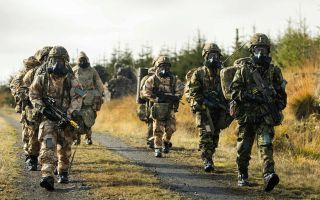
This week, we learnt a lot about the Army's safety investigation into the incident on Exercise Titan Storm that left more than 30 soldiers ill when operating Ajax.
It said the armoured fighting vehicle hadn't been operated properly – and when used as designed, there are no safety concerns.
However, the Army also revealed that some significant changes are being made to improve the platform.
Modifications underway
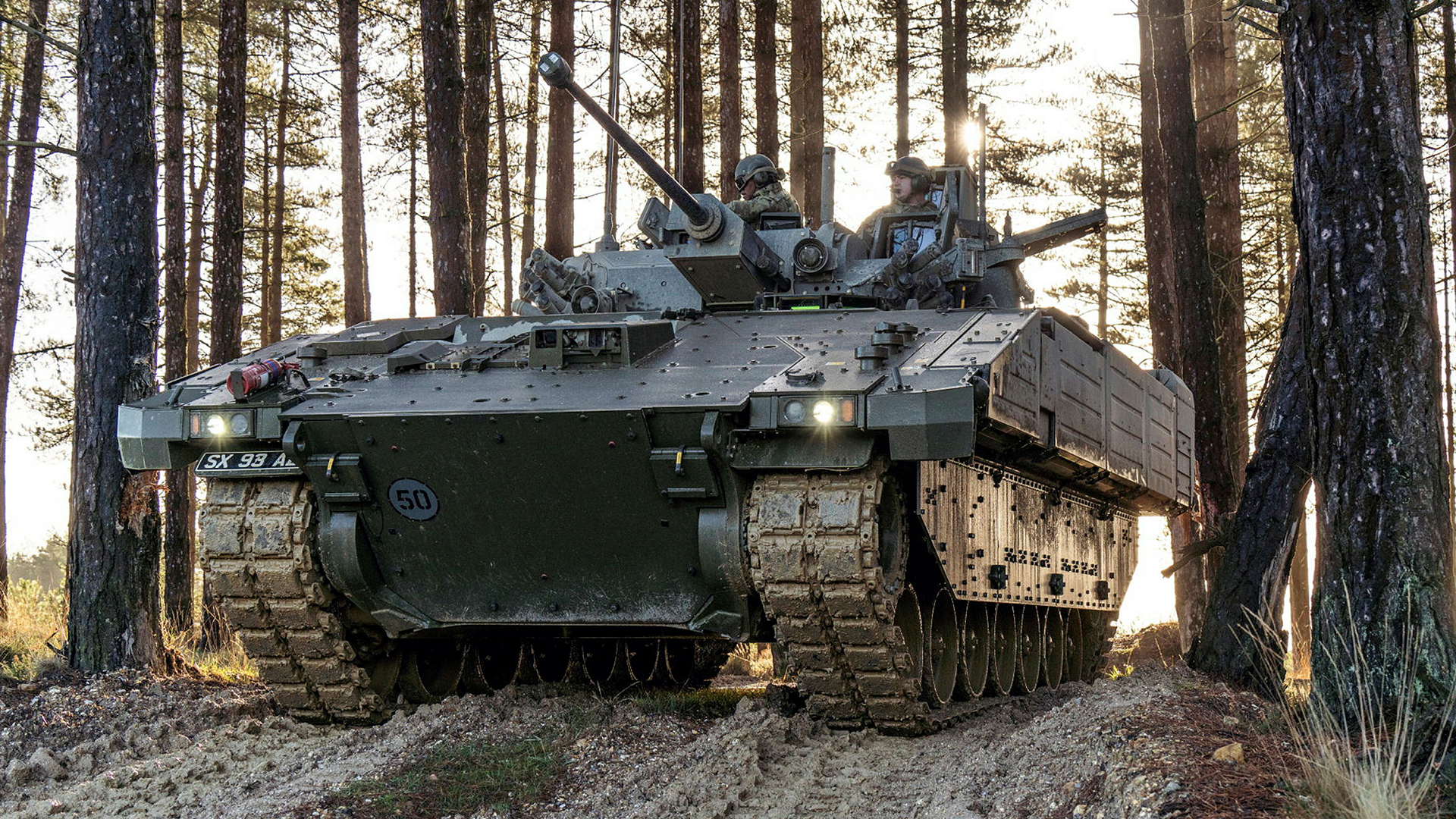
Lieutenant General Anna-Lee Reilly told the Public Accounts Committee: "Industry have been working very hard on a number of activities that will enable us to modify this on a growth to Ajax 2, which is very important.
"So this sees us do things like composite rubber tracks and automatic track tensioners."
This was the first time we'd heard any discussion of "Ajax 2".
Former tank commander and retired colonel Hamish de Bretton-Gordon gave us his reaction.
He said: "Ajax 2 seems to me a sensible evolution of what we've seen already.
"So far, there have been what they call three drops of Ajax. The first one, five or six years ago, the next more recently, and each time they are improved."
Swapping steel for composite rubber tracks
He's spent thousands of hours in tanks over the course of his career and he has recently tried out Ajax himself. So what sort of a difference does he think rubber tracks would make?
He said: "We have known for a long time that rubber tracks are very effective in armoured vehicles for really two main reasons.
"First of all, they reduce weight. Some of these tracks weigh two or three tonnes each, so that is a heck of an addition.
"From what I understand, the rubber track for Ajax is going to reduce the weight of it by a half, up to a tonne – and that's pretty significant.
"But also vibration, taking the steel out of the track, particularly when you're moving on tarmac roads, hard surfaces, that reduces the burden of the vibration significantly."
Slimming down
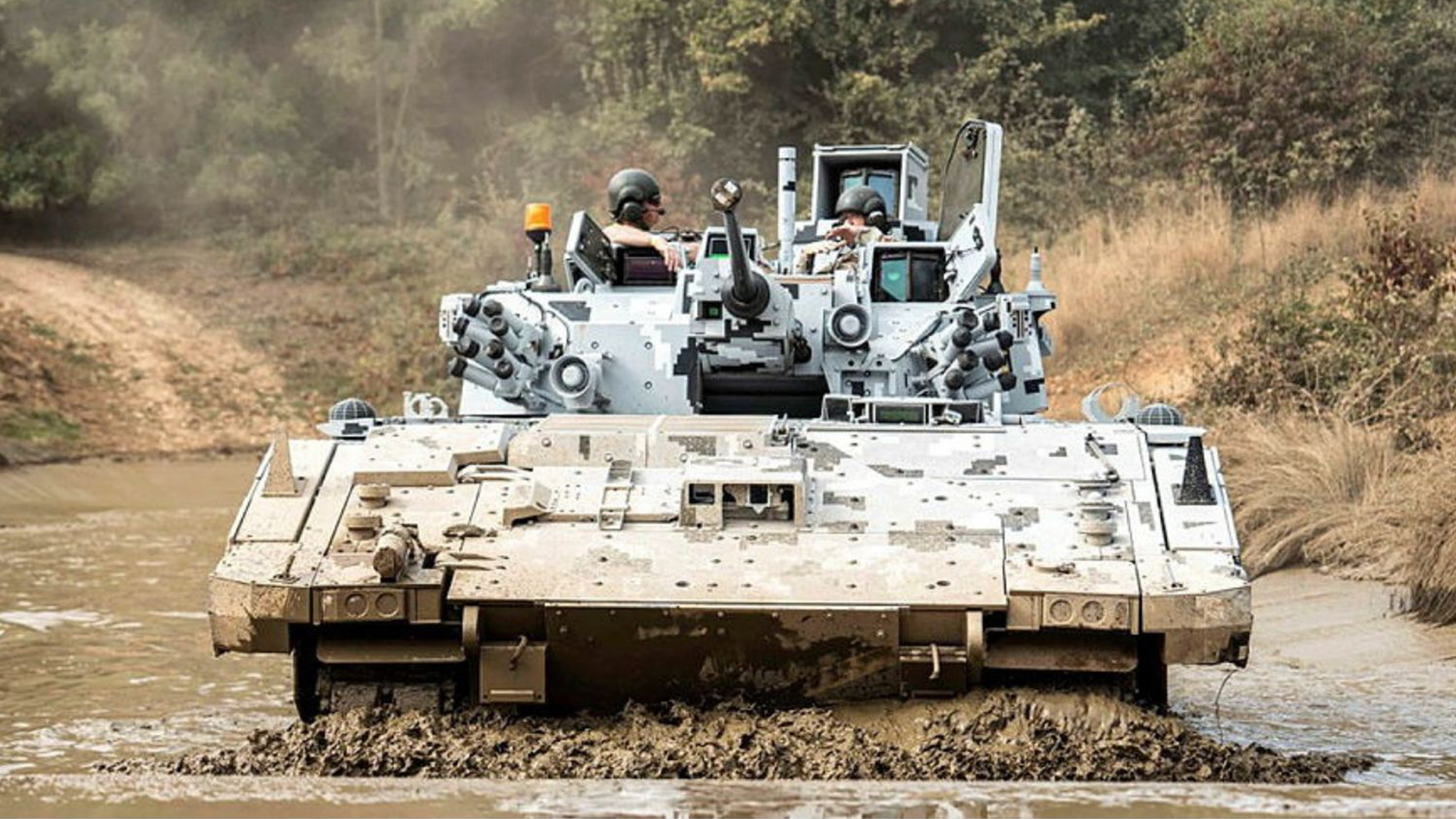
Col de Bretton-Gordon explained how this would have an impact on the weight of the vehicle.
"The combat version of Ajax, the recce strike vehicle we're talking about – is 36 tonnes. But if you put rubber tracks on, you're taking at least another tonne off it.
"So getting down to a much more manageable size so the additional capabilities, when they come in, I think will make Ajax more effective and also make it a better environment for people to operate in for long periods of time, which you know could be weeks or months."
Automatic track tensioners
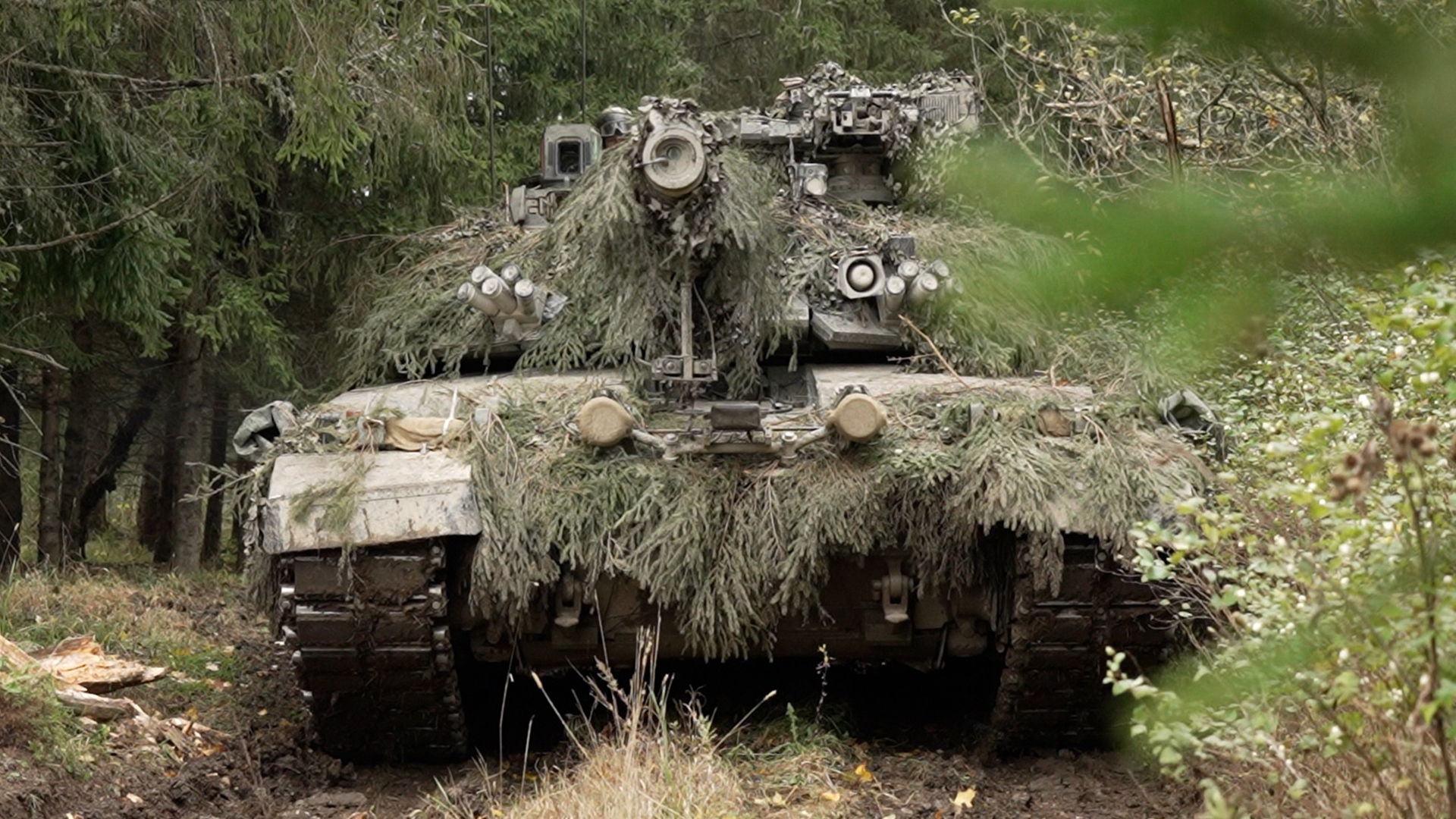
Some people were surprised to hear that, at the moment, troops are expected to keep getting out of the vehicle and manually check the track tension.
After hearing Lt Gen Reilly discuss this at the committee meeting, many were left asking how the crews are meant to do that during a conflict.
"I think that is a really good point," he said. "Certainly, the first tanks that I was trained on and operated on, the Chieftain and the Challenger, were a bit like the Ajax.
"You had to get out of the tank to tighten up the tracks – and you have to tighten up the tracks fairly regularly.
"So for a vehicle that's sort of 30 years younger than Challenger 1 to have the same system, I agree, this seems really short-sighted when you're spending millions of pounds on a vehicle to have this.
"Conversely, of course, Challenger 2 and Challenger 3 – the new tank coming into service – have automatic track tensioners where the driver can just press a button in his cab, and that will automatically tension the track.
"We understand the general said that there were improvements coming down the line, and one of those would be automatic track tensioners.
"So it seems a really short-sighted original element to Ajax, but the fact they've now worked it out and they're going to fund it, it's a big replacement on the Ajax."
Ajax v drones
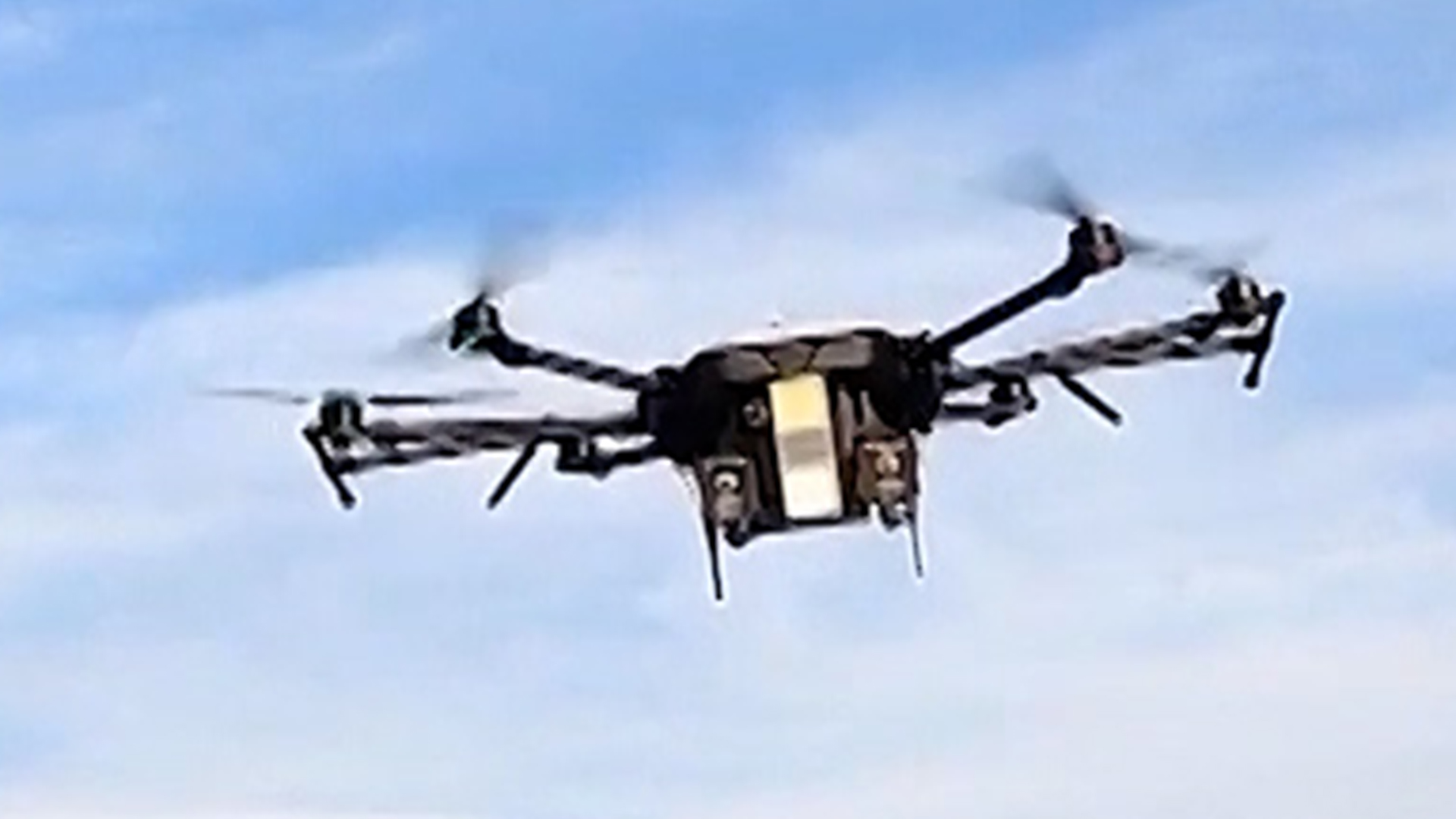
Now that drone warfare is dominating the modern-day battlefield, he believes the capabilities of Ajax are vital, but it's not clear whether the vehicles will get those aid suites fitted.
"The defensive aid suites that Ajax and Challenger 3 are fitted for, but not necessarily with at the moment, are able to take down drones as well," he said.
"So these new platforms have the chance to actually operate in this highly complex environment where drones are really changing the way we operate rather than the way we fight.
"So I think actually that is why I agree with the general. It's essential we get Ajax into the field as quickly as possible."
Ajax v CV90
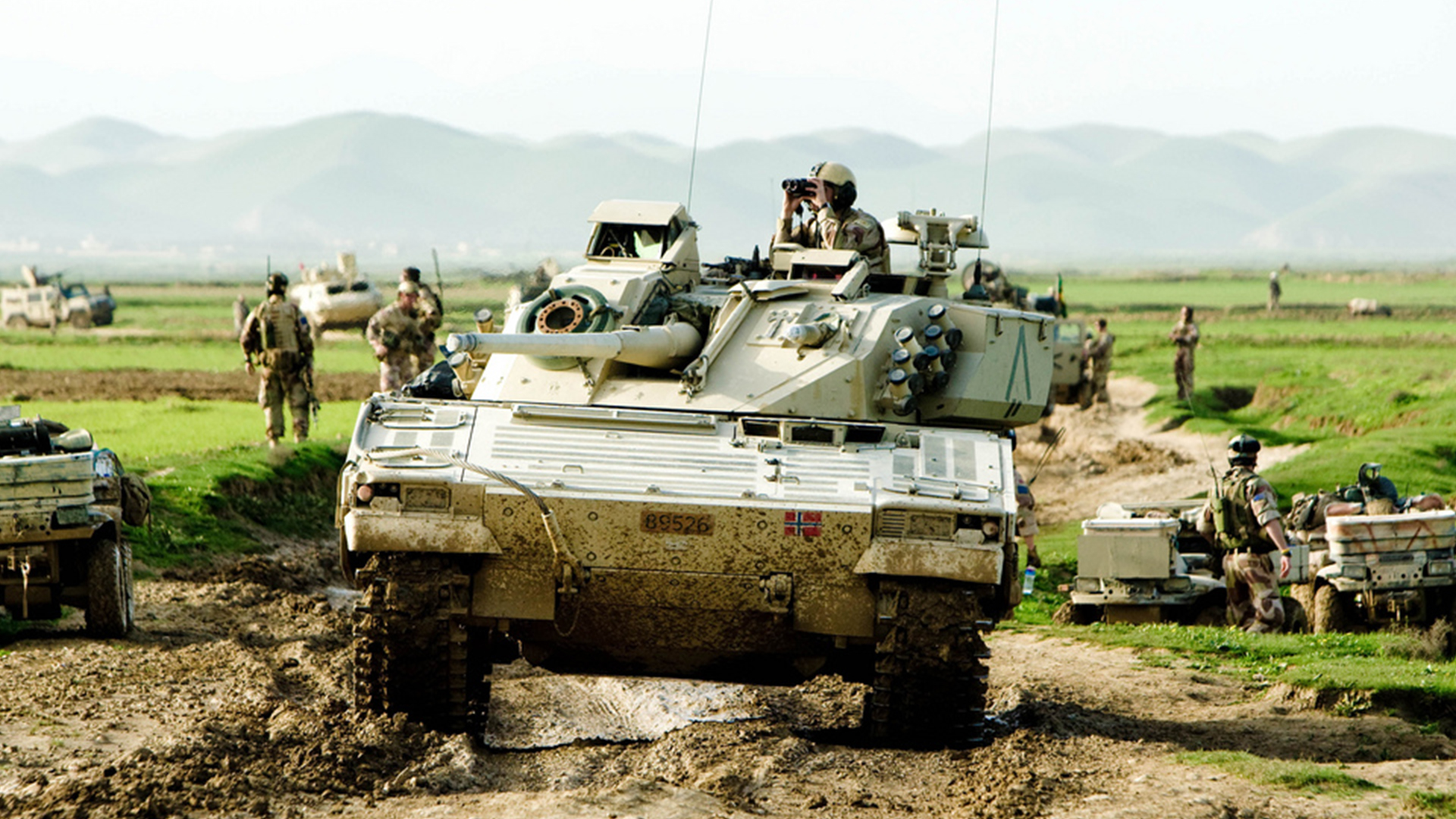
Some critics of Ajax want it to be scrapped and for the Army to choose the CV90 instead, but Col de Bretton-Gordon completely disagrees with this.
"I hear a lot of those people talking and, you know, I'm sure that they have a point," he said. "A lot of them are my vintage, and a lot of them haven't been on tanks for 20 or 30 years – and things have changed markedly since then.
"The CV90 is a very capable vehicle, but it is not a recce strike vehicle. It doesn't have the same capabilities as Ajax, and I think people are slightly losing the point or understanding.
"I accept if you were a tank commander 20 years ago, a recce strike might be a complete anathema to you – it is a different way of operating, and some of the other vehicles that are offered to replace Ajax just don't do what recce strike does.
"It doesn't have the surveillance capabilities, doesn't have the ability to integrate fires and also to acquire targets and to acquire drones.
"So CV90 is a great vehicle – but not in the role that Ajax has been designed for, and I think Ajax is actually the best that we can probably have.
"And I think everybody knows – even some of my fellow commentators know – that if we don't have Ajax there is not £6.5bn available to buy the equivalent CV90."
Challenger 2 comparison
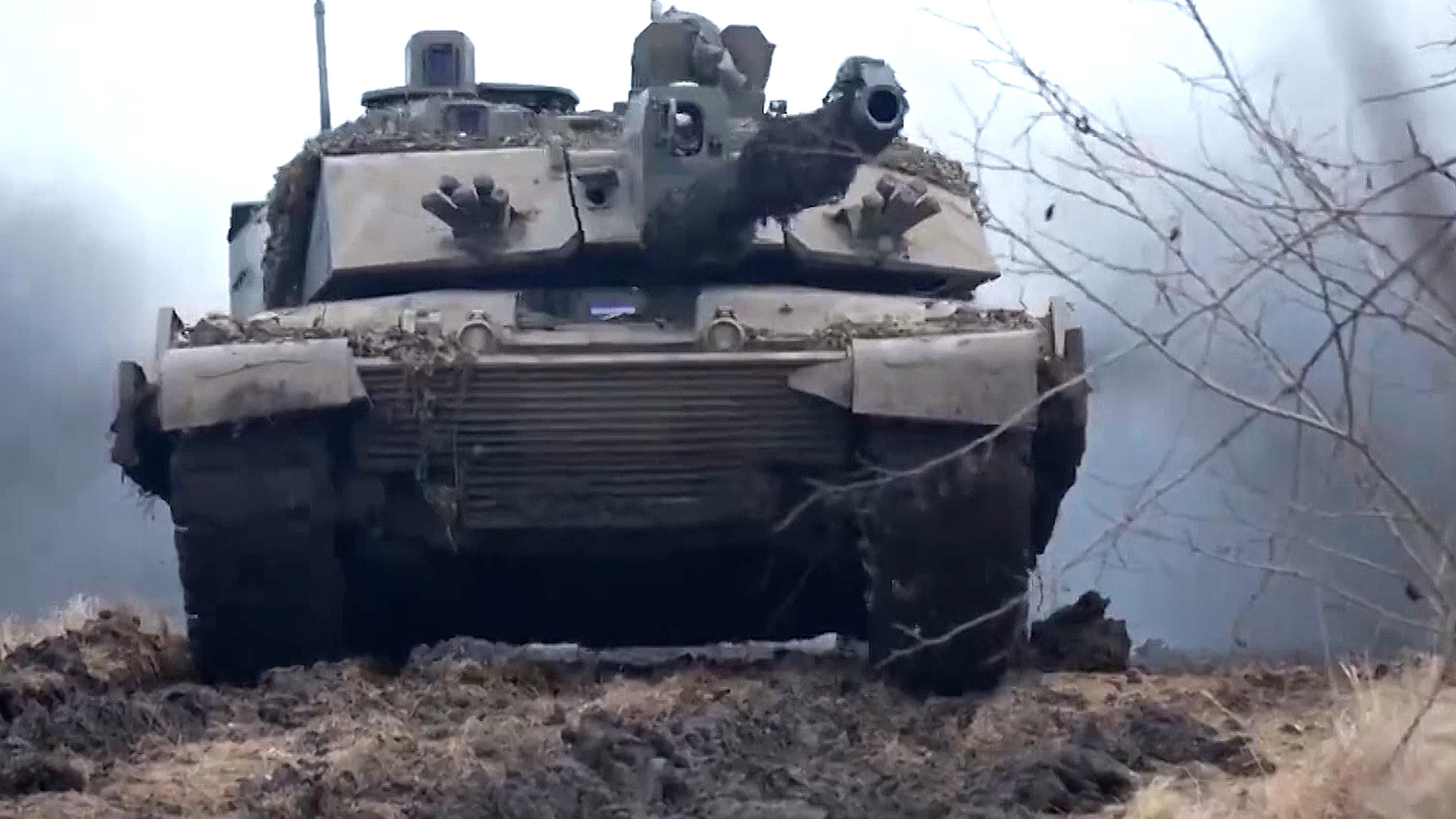
Col de Bretton-Gordon was the second in command of the 2nd Royal Tank Regiment when the Challenger 2 came into service.
He said: "It was late, there were issues with tracks, surprisingly enough, but actually when it eventually came into service it was a great vehicle.
"Challenger 2, 30 years later, is still tearing it up in Ukraine and is the favoured tank of the Ukraine tank corps.
"So Challenger 2 and Ajax's procurement and delivery have not been exactly the same, but they have had similar issues.
"And I think if the Government and the MOD do what they say they're going to do with Ajax and properly fund it and resource it in future, I am sure it will be on the battlefield for the next 20 or 30 years, as well."
It's not clear yet when the MOD will announce how and when it will get to Ajax 2. Ajax was, of course, meant to have entered service back in 2017.
Related topics
Join Our Newsletter