A man, a horse and a gun: Why horsepower could give the Army a tactical advantage
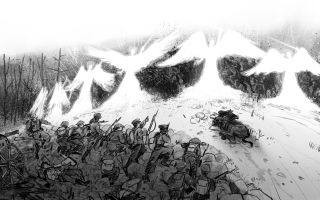
When you hear of horses being used in battle, you could be forgiven for thinking back to the First World War or even the Napoleonic era.
However, the British Army, specifically The Household Cavalry Mounted Regiment (HCMR), is exploring how Military Working Horses could contribute to future operations.
"We are platform agnostic. Whether it's a Challenger 2 or a horse, it doesn't really matter," says Lieutenant Colonel Ben McNeil, HCMR's Commanding Officer.
Saddle up and stay sneaky
The regiment is taking inspiration from other armed forces around the world, including Russia.
In an era where drones are ripping up the playbook of modern warfare, the need for a war horse may seem redundant, however they bring many benefits.
For starters, horses and mules are an effective way of moving troops and cargo across rugged terrain.
They can also carry more weight and travel further distances than troops on foot, saving soldier energy for the fight.
Horses are also low-cost, low-maintenance and can be procured even in remote locations – all qualities an armoured vehicle or tank does not possess.
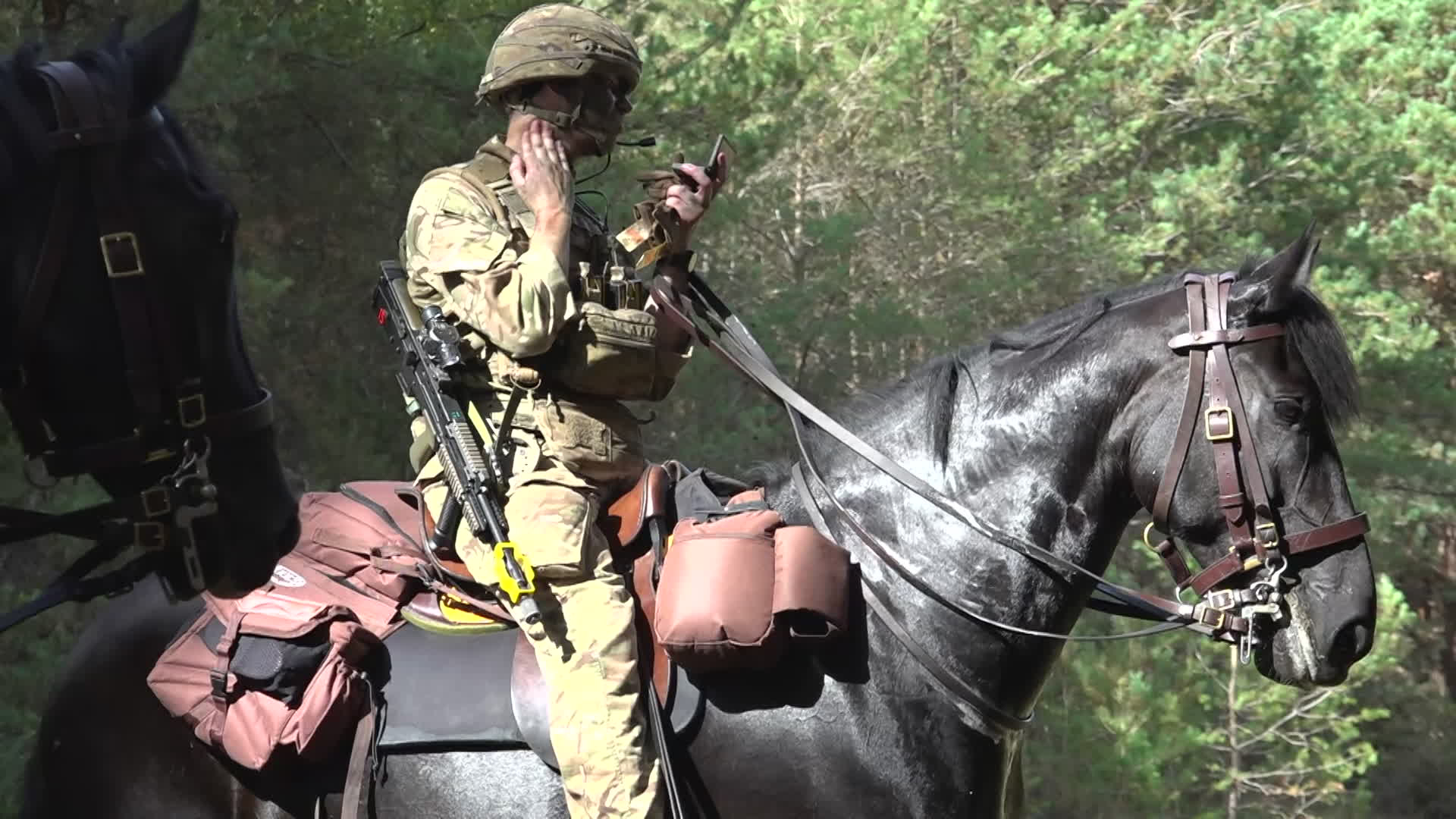
One of the big advantages horses and mules can bring to the battlefield lies in their genetics. They have a surprisingly small heat signature, making them great at evading drone detection.
Lt Col McNeil added: "A horse in a forest is a normal context to be in, and that plays to our advantage versus an armoured vehicle, which has a very mechanical profile to it and thermal profile with it, as well as sound."
Saying hola to horses
These advantages are why we've seen horses used by Russia in the Ukraine war for frontline logistics and transport where regular vehicles are vulnerable.
Videos circulating online even show Russian soldiers attaching Starlink terminals to horses to get internet on the frontline.
"It shows the utility of them," said Lt Col McNeil. "Whilst we give our soldiers the opportunity to do something different and they really enjoy it and are enthused by it, it could grow into a capability that the British Army could use in the future."
Forces closer to home use horses too. "We're learning an awful lot. Our Spanish, our Italian, our German colleagues, our French colleagues in the Gendarmerie, are using them in all sorts of ways, whether that's in ground-holding roles or whether that's in more reconnaissance-related or resupply elements.
"It's about applying a platform, as we are platform-orientated soldiers, into the environment that works."
Household Cavalry soldiers split their time between the Mounted Regiment – the ceremonial side in London, which involves escorting the King.
Then there's the operational side, which involves carrying out reconnaissance in tanks and, eventually, the Ajax armoured fighting vehicle, if all goes to plan, which it hasn’t so far.
No place for parade polish
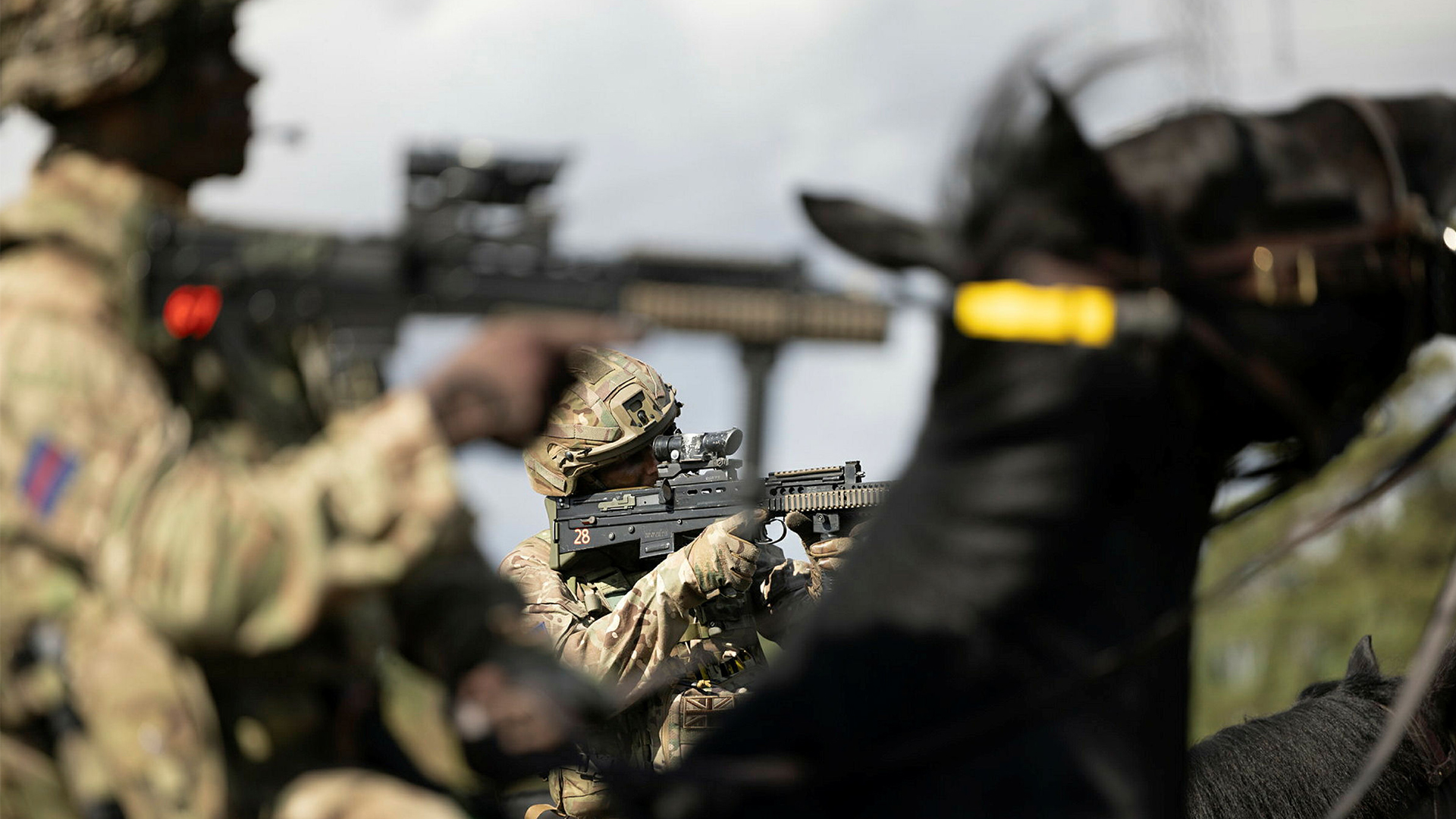
This latest experiment, taking place at Royal Military Academy Sandhurst, gives the regiment an opportunity to test mounted tactics and procedures with modern thinking, as Lance Corporal of Horse Ben Chapman explained.
"We tried some serials earlier, where we were seeing how close we could get to each other without spotting each other," he told BFBS Forces News.
"You would think a 60-kilo animal would be quite easy to spot, but funnily enough we were getting 150m to each other before they were spotted."
He tells me what eventually gave the horse and rider away was the brass on the horse's bridle, which is usually shined to an immaculate standard for parades.
"Something to look at for the future," LCoH Chapman remarked.
Bergens swapped for saddle packs
You don't have to look as far back as you might think for examples of horses used in war.
US special forces from Operational Detachment Alpha 595 were sent to the mountains of Afghanistan to fight successfully against the Taliban on horseback, just after the 9/11 attacks in 2001.
Their efforts were depicted in the Hollywood movie 12 Strong and America maintains a mounted capability today.
The first experiment for The Household Cavalry Mounted Regiment took place during their annual summer camp on Longmoor Training Area.
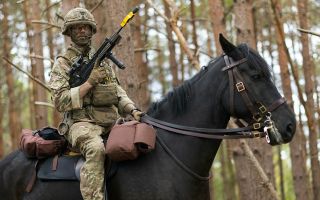
Soldiers learned new skills like emergency first aid for horses and tested using camouflage nets on the animals.
LCoH Chapman explains the soldiers have been trialling different ways of holding their rifles whilst riding – something they don't have to account for during ceremonial duties.
The kit is different too.
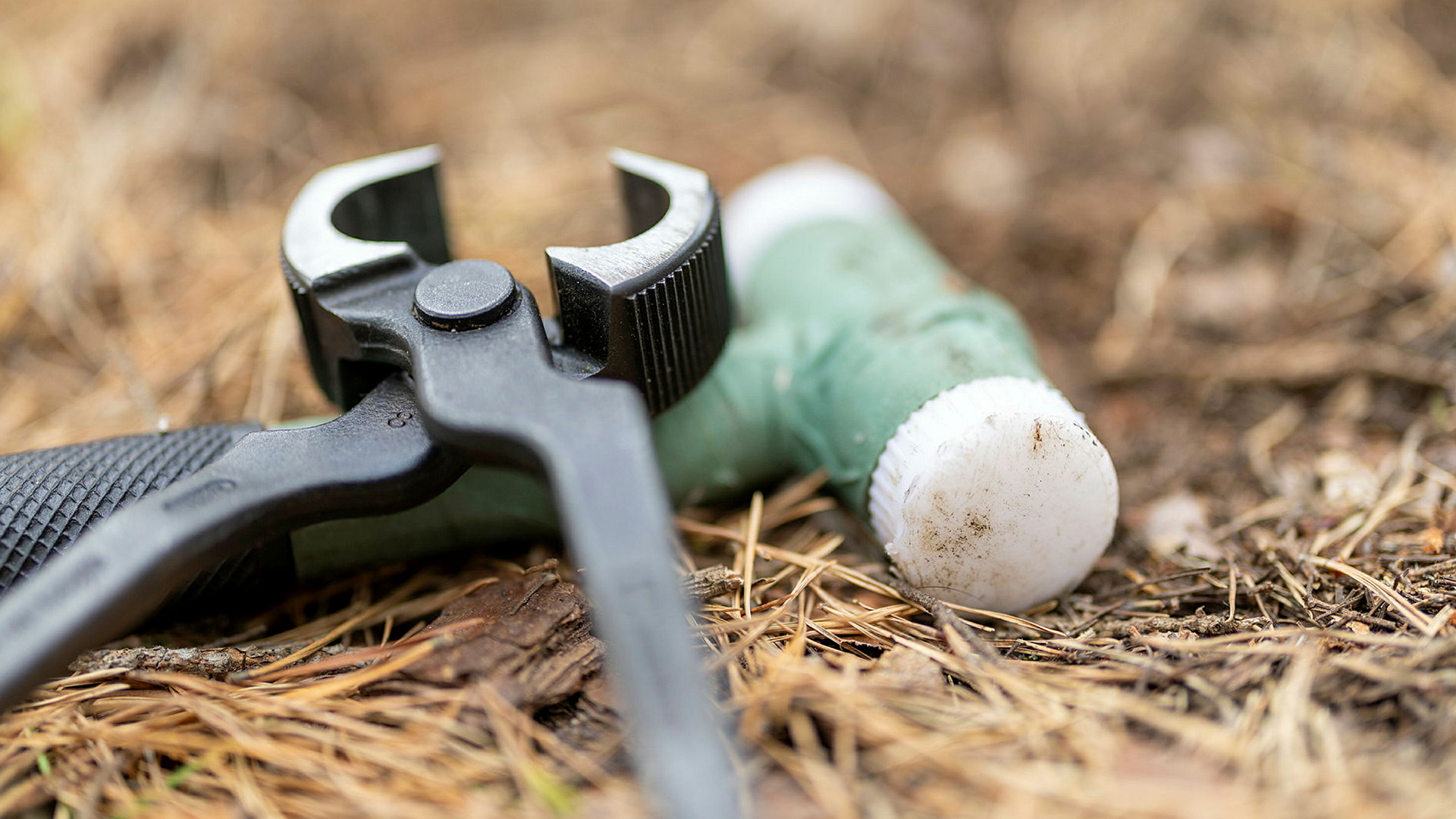
"The main difference that we have out here is the saddle packs that we're trying here," he said. "So as Section Commander, I've taken on the big pouches.
"So in the front here I've got horses' rations, so obviously we need to still be able to feed them out on the ground, same as we would back at camp. I've also got my own personal rations and wet and warm kit.
"In the top [pouch] here, we have a high line which is used to tie up to three horses at a time, so if we haven't got the ratchets we can put those up as a collective.
"I've also got some emergency farrier kit, so if on the grounds a horse gets a loose shoe, twisted, we're able to sort it out as best we can and then wait for veterinary support.
"Looking forward to the future, we'll probably look to fill up with ammunition."
As the experimentation continues, we could see the world-famous cavalry horses go from trotting up and down The Mall to finding enemy locations on military operations.
Join Our Newsletter