Manosphere makes it harder to tackle misogyny and sexual harassment, Army chief says

The manosphere has made it harder to stop misogyny and sexual harassment in the military, the head of the Army has said.
The manosphere refers to online communities that claim to address men's struggles, but often promote harmful advice and attitudes.
The Chief of the General Staff, General Sir Roly Walker, told the House of Commons Defence Committee there had been "deepening rifts within young people", which were being accelerated through social media.
Trends in wider society
Asked by MPs why sexual harassment in the Armed Forces was still as prevalent as it was five years ago, Gen Sir Roly pointed to problems in society.
He said: "My personal view is this gets harder before it gets easier, because of the trends in wider society.
"The level of misogyny, the level of rancorous behaviour and belief systems, and the tension in wider society is something we have to accept as the environment from which we attract."
Gen Sir Roly told the committee that he was tracking recent reports on what is happening with some young men in society.
"I've got children in their early 20s. I’m well aware of what is going on with things like the manosphere and the sense of deepening rifts within young people, all of which is playing and accelerating through social media," he said.
"A lot of that generation are coming through into the Armed Forces."
Don't blame the manosphere
Gen Sir Roly was appearing before MPs alongside his fellow service chiefs – the Chief of the Air Staff, Air Chief Marshall Sir Harv Smyth and the First Sea Lord, General Sir Gwyn Jenkins.
They were asked about the conditions for women serving in the Armed Forces, five years on from the Atherton report, which highlighted serious concerns.
The report author, former MP and ex-defence minister Sarah Atherton, watched the exchanges.
"I think he's wrong to compare the worst of civvy street against the British Army. It's not a race to the bottom. I think he should be looking at how he can improve things and stop sort of blaming the manosphere," Ms Atherton said.
"It's obviously something that he felt quite awkward to say. It felt quite awkward to listen to. It's obviously what the MOD are using as an excuse for this behaviour, and what he said actually normalised the problem.
"It's not normal... You shouldn't be comparing the British Army to the worst of society."
However, she praised what the head of the Royal Navy said during the committee meeting.
"I did like what I heard the First Sea Lord mention about leadership and promotion and how they've looked at how they assess people for promotion. That is a start to changing the culture that, sadly, hasn't really progressed fast enough in the military," Ms Atherton added.
She said that hearing the Chief of the General Staff speaking about the manosphere made her "cringe slightly".
"We want to be making sure our Armed Forces, particularly the Army, is the best. We need to make sure that these behaviours are not normalised, are not accepted, are not excused as 'well, this is part of modern-day society'," she explained.
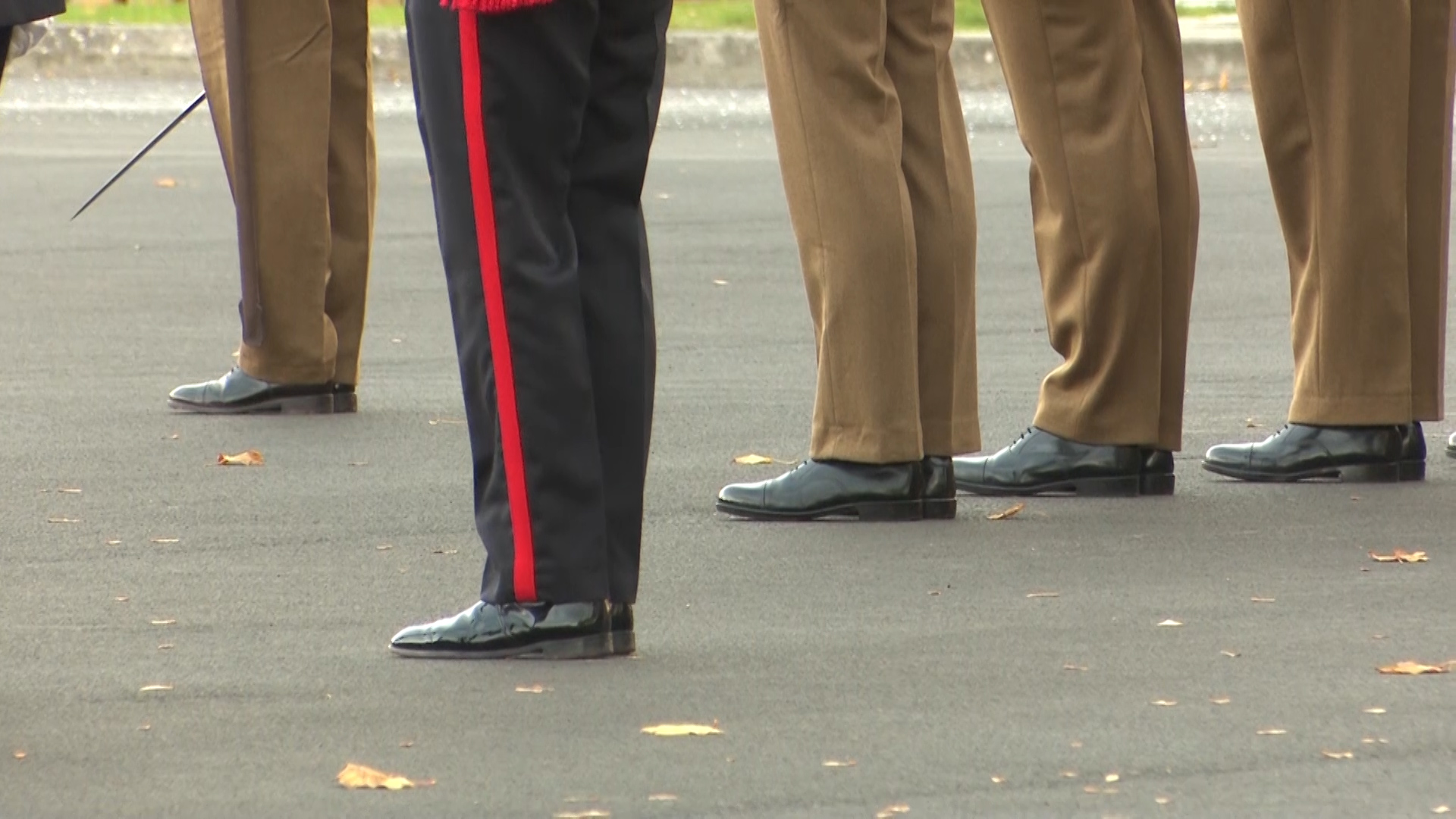
During the committee hearing, Labour MP Emma Lewell said that between 2021 and 2024, there had been 122 investigations into sexual offences against under 18-year-olds at the Army Foundation College in Harrogate, North Yorkshire. Of those, 80 were sexual assault.
In addition, Ms Lewell said, North Yorkshire Council had received 89 safeguarding notifications in the last five years concerning staff at the college.
The Army Foundation College is the sole military training unit for British Army recruits aged between 16 and 17-and-a-half.
Gen Sir Roly said he was not surprised that the sexual harassment figures had not fallen despite a more focused approach within the Army, and said there was a need to recognise the challenges young people have when they join the military.
Gen Sir Roly said: "The level of sexualisation in young people in society, the level of exposure to drugs, drink, alcohol, violence in wider society, it is not a surprise to me that when we take 10,000 civilians, generally between the ages of 17-and-a-half and 20, and train them to be soldiers, that in those early weeks and months of onboarding them into our organisation, we see the greatest correlation of behaviours which are at odds with our values and standards.
"People are drawn to the armed services because they want to be something different, and it takes a while to transform them from being civilians, in my case, into being soldiers, and that is a journey.
"It is not a cliff edge where you walk in the door, and suddenly you're a different person.
"These have got to be learned behaviours and applied, and the guardrails are there to do that and do the very best for our people so they can do the best for the nation."
Not satisfied
Ms Lewell, the MP for South Shields, pressed the CGS to explain how teenage Army recruits would be able to report sexual harassment when they do not always have access to their phones.
He said they should call the police, adding that there were trained staff on site whom they could speak to.
The MP reminded Gen Sir Roly of the number of safeguarding concerns that involved college staff.
Speaking to BFBS Forces News after the committee meeting, Ms Lewell said she was not satisfied with the answers she received from the CGS.
Pressure remains on all the service chiefs to explain not only what they are doing to tackle inappropriate behaviour in the Armed Forces, but to produce measurable data to show what has or has not changed.
Join Our Newsletter