Eyes on: HMS Tyne and Wildcat called out twice to monitor Russian warships in UK waters

Two sanctioned Russian cargo ships and their Russian navy escorts entered UK waters – but their presence didn't go unnoticed.
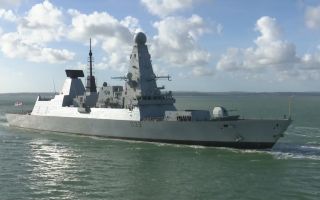
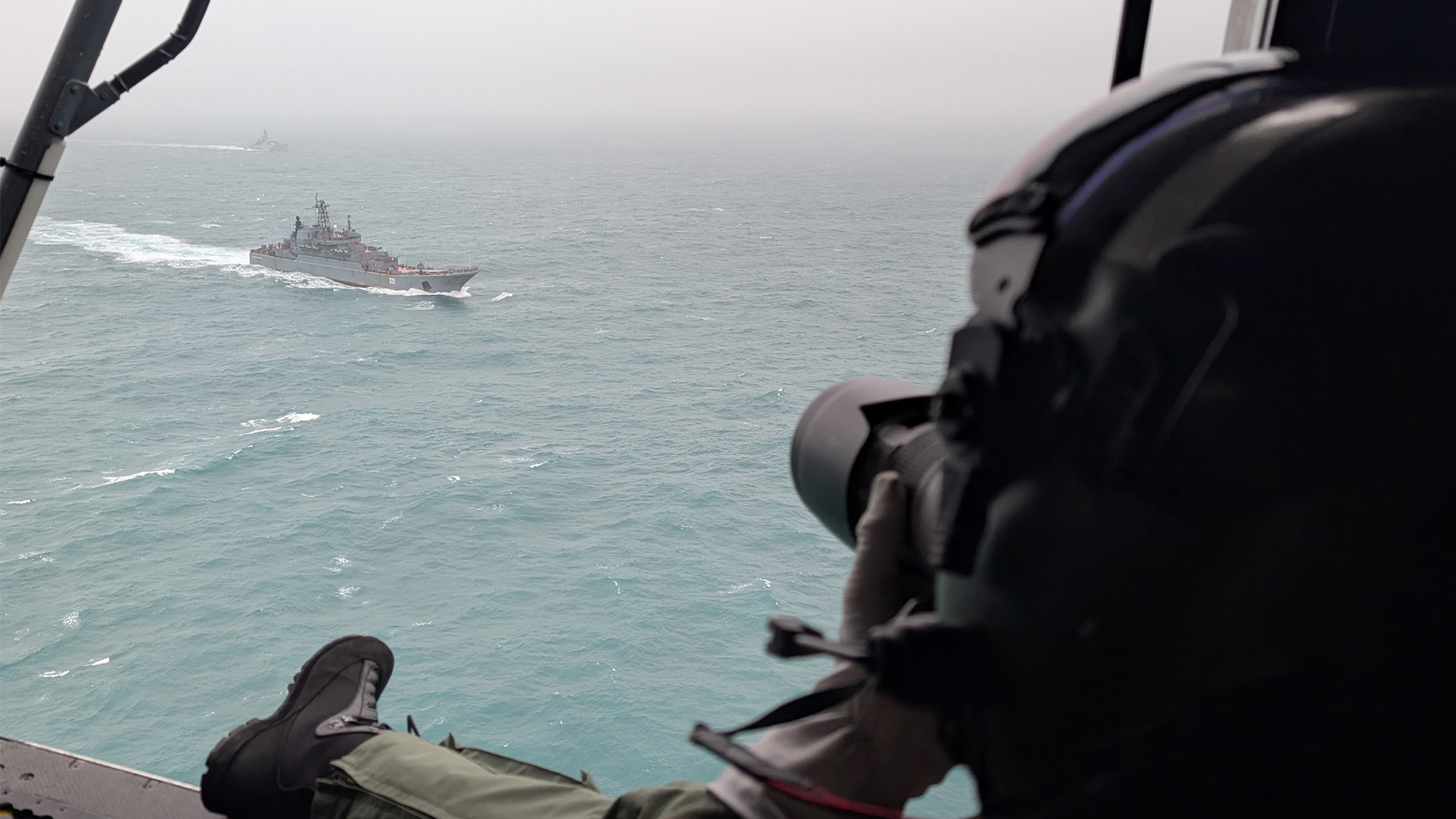
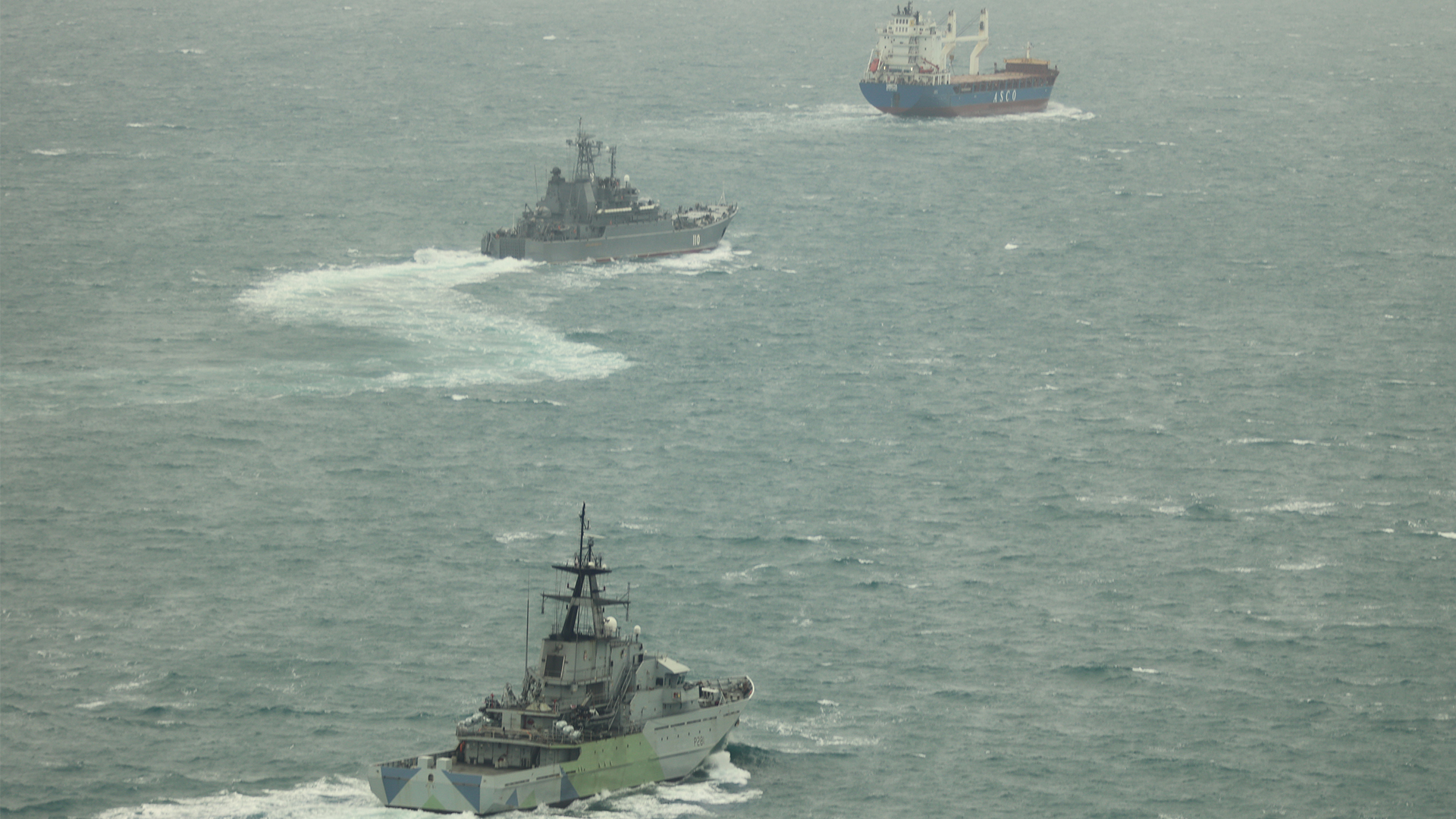
HMS Tyne and a Wildcat were deployed to keep an eye on the visitors as part of a Nato effort to monitor Russian activity from the Mediterranean to the North Sea.
The Portsmouth-based patrol ship and the helicopter from Yeovilton-based 815 Naval Air Squadron were dispatched to intercept the Russian navy's Ropucha-class landing ship Aleksandr Otrakovsky and merchant vessel Sparta IV.
- Royal Navy destroyer shadows Russian warship in historic first under Nato command
- Royal Navy warships team up to shadow Russian vessel passing through UK waters
- Royal Navy frigate shadows Russian warship through English Channel
Russians do the double
During the Russians' voyage through the Atlantic, the English Channel and into the North Sea, HMS Tyne used her sensors and radars to report on their every move.
At the same time, the Wildcat was flying a sortie over the Channel to provide additional surveillance.
The Russian vessels were first intercepted by HMS Cutlass from the Royal Navy's Gibraltar Squadron as they sailed through the Strait of Gibraltar's Traffic Separation Scheme, before an allied warship tracked their journey north.
HMS Tyne was then assigned monitoring duties in the Atlantic approaches to the Channel.
Forty-eight hours after this operation was complete, HMS Tyne and a Wildcat were activated again to track another Russian Ropucha-class warship, the Aleksandr Shabalin, and cargo vessel MV Sabetta as they sailed westward through the English Channel.
Projecting a presence
Lieutenant Commander Matt Cavill, HMS Tyne's Executive Officer, said: "Maintaining the security of our island nation is paramount to ensuring we can project a global presence.
"The way in which we collaborate with allied nations assures us of the collective strength which we require in an uncertain world.
"Operations such as these are vital to demonstrate resolve, protect our waters and gain intelligence to support future operations."
Join Our Newsletter