Ukraine's navy trains in British waters for the dangerous task of clearing Black Sea mines
Ukrainian sailors are preparing for a mission that could take years to complete – clearing Russian sea mines from the Black Sea once the war ends.
With access to their home waters blocked and the threat from Russian mine warfare evolving, Royal Navy training is helping prepare them for the dangerous task ahead.
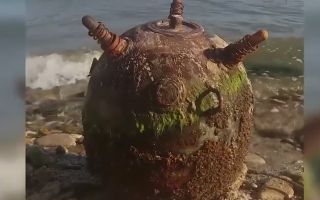
Worldwide, around a million sea mines are stockpiled, with Russia holding one of the largest arsenals.
- Ukrainian minehunters prepare for end of the war when skills can be used for real
- HMS Dragon back home after seven months protecting Cyprus and patrolling near Iran
- Get in, get the job done and get out: The art of covert submarine infiltration
Moscow has used them to threaten Ukrainian shipping, laying an estimated 500 in the Black Sea.
Even after the fighting ends, removing them could take years, presenting a huge challenge to make the Black Sea safe again for commercial shipping.
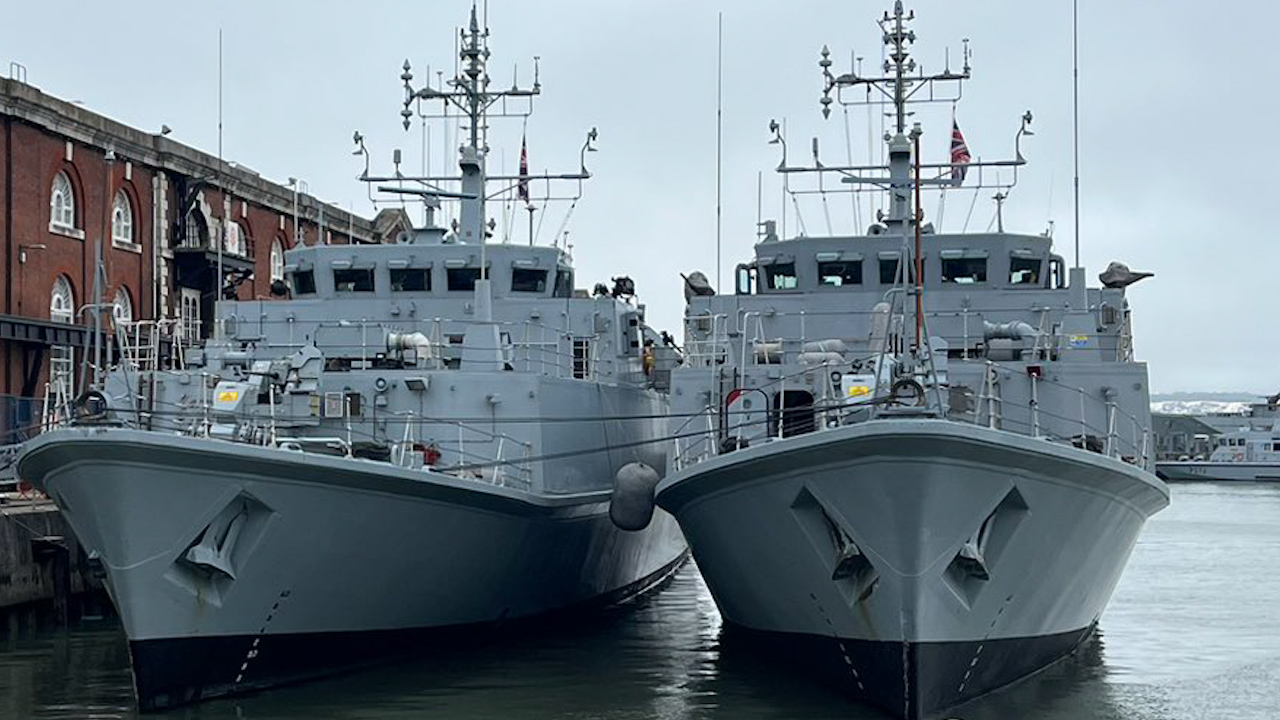
More than 3,000 nautical miles away, in the English Channel, Ukrainian sailors are preparing for that challenge aboard what was once a Royal Navy ship.
Formerly HMS Shoreham, a Royal Navy Sandown-class minehunter, the ship has entered a second career with the Ukrainian navy under the name Ukrainian Navy Ship (UNS) Cherkasy.
She is one of five Ukrainian minehunters now based in UK waters, along with several hundred Ukrainian sailors.
The others include UNS Chernihiv – formerly HMS Grimsby – another Sandown-Class mine hunter, as well as three other Alkmaar-Class vessels transferred to the Ukrainian navy by the Netherlands and Belgium.
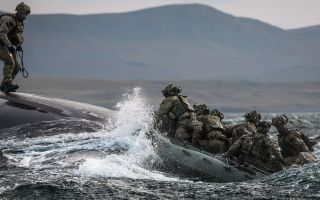
The training is taking place as part of Operation Interflex Maritime, the naval element of Britain's ongoing training mission to Ukraine.
Other parts of Interflex include land warfare training with the British Army, as well as basic flying and helicopter pilot training with the RAF.
Interflex Maritime is overseen by a team of Royal Navy mine countermeasures specialists, including several bomb disposal divers.
We joined them aboard the Cherkasy as they visited to assess the Ukrainians' capabilities, particularly their use of the SeaFox, an unmanned underwater vehicle (UUV) designed to locate and destroy mines.
Lt Cdr James, the commander of Interflex Maritime (the MOD asked us not to use their surnames) told me how the Russian mine threat is evolving, with methods seen in the Ukraine ground war being adapted for use at sea.
"We're seeing different methods of laying," he explained. "With Ukraine having so much control in the northwest Black Sea, they haven't been able to lay mines like they would traditionally.
"They are using stand-off systems like Shahed drones for example, glide bombs with influence fuses. They're becoming more innovative about how they put mines into the water."
These Ukrainian vessels are operating in British waters for two main reasons.
First, entering the Black Sea without adequate protection would expose the crews and these lightly armed ships to considerable danger.
Second, Turkey's enforcement of restrictions under the Montreux Convention has prevented Ukrainian warships from passing through the Bosphorus and Dardanelles straits from the Mediterranean.
It means even if they wanted to, these ships cannot currently reach the Black Sea.
The result is a Ukrainian navy in preparation, with its crews training far from the waters they ultimately hope to secure.
Sub Lieutenant Max, the Cherkasy's executive officer, told me how difficult it has been to watch the war from afar and not be able to return and fight.
"Psychologically it's very difficult for everybody, because we all want to go to Ukraine," he explained.
"Sometimes we have a brain explosion, seeing what's going on, and we want to go back and fight but for the moment we are where we are. We just need to be ready."
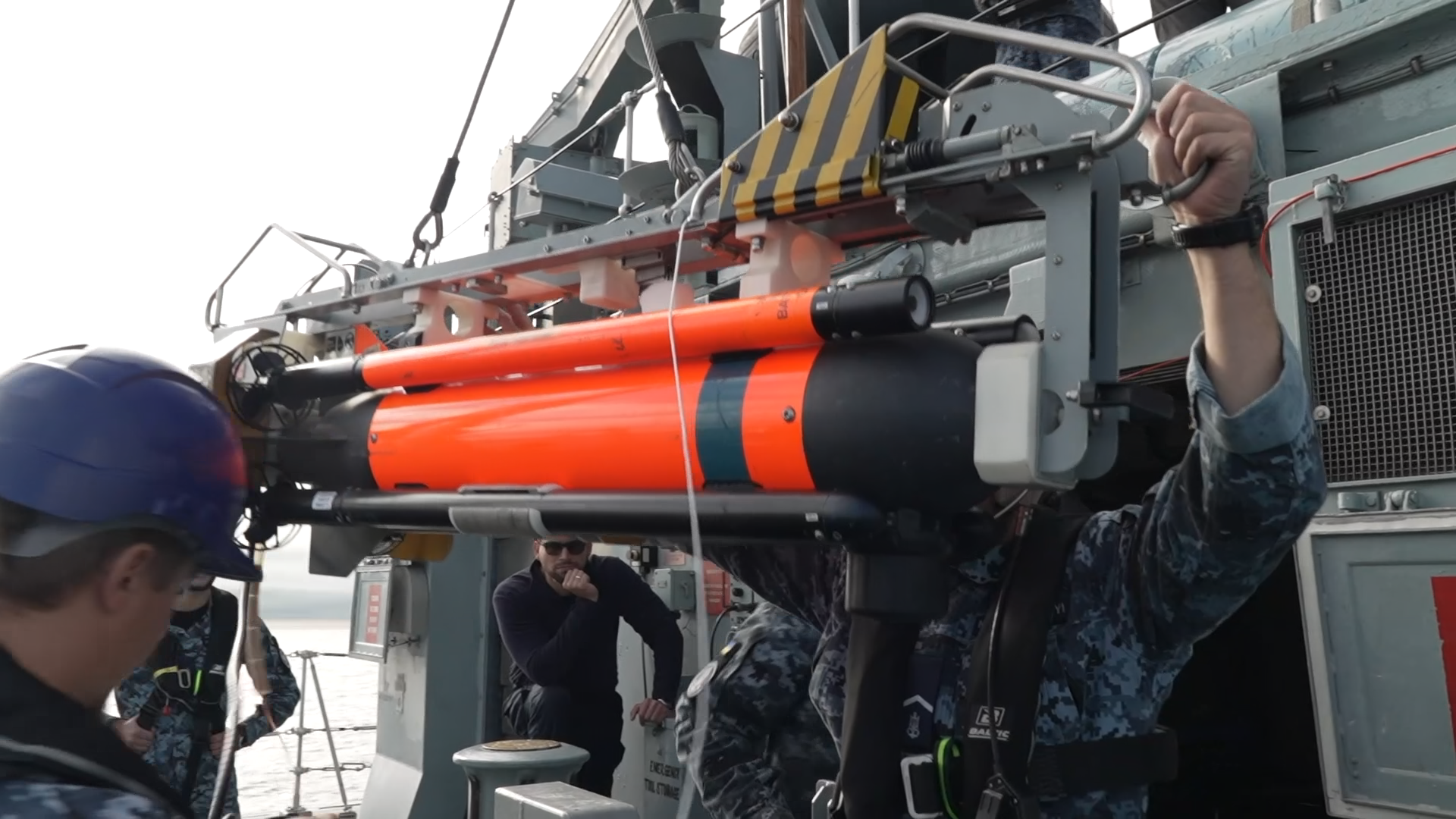
During the exercise, Ukrainian sailors deploy different versions of the SeaFox.
Initially they use an inspection round, an orange-colour fibre-optic guided SeaFox fitted with a camera system and sonar to scan the seabed for foreign objects.
Once they have located the mine – in this case a dummy one around the size of a barrel, placed on the seabed by the Royal Navy – they begin the process of neutralising it.
First, they use a telemetry round to effectively carry out a dry run, checking the mine's location and practising how they will go about destroying it.
Finally comes the combat or 'Charlie' round, a black-coloured SeaFox armed with an explosive charge equivalent to around 1.5 kilogrammes of TNT.
They guide it remotely from the ship's operations room before detonating it alongside the mine.
In the control room we hear a faint thud as the Charlie round explodes, and the screen goes blank.
"Nothing that we do within Interflex is training," Chief Petty Officer Smith, Interflex Maritime's senior mine warfare specialist, told me.
"It's preparing for something that's real, which could be six months, it could be 18 months. That timeline, you don't know."
Join Our Newsletter