HMS Dragon back home after seven months protecting Cyprus and patrolling near Iran
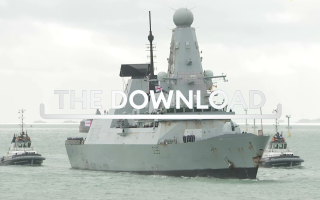
Royal Navy destroyer HMS Dragon has returned to Portsmouth after a seven-month deployment that took it from the Eastern Mediterranean to the Arabian Sea.
The Type 45 warship spent 214 days away from its home port, initially helping defend British military bases in Cyprus following Iranian retaliatory attacks in the region, before being repositioned for a potential multinational operation in the Strait of Hormuz.
Around 950 family members and friends gathered at Portsmouth naval base and along the harbour walls to welcome the sailors home.
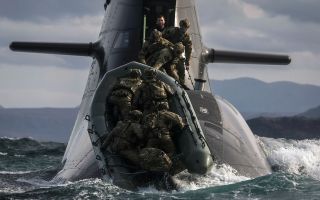
- Get in, get the job done and get out: The art of covert submarine infiltration
- Drebbel's submarine: Radical 1620 invention the Royal Navy dismissed as a novelty
- Vintage meets modern: Swordfish and Seafire conduct flypast over HMS Queen Elizabeth
HMS Dragon departed Portsmouth on 10 March, eight days after a Shahed-type drone struck RAF Akrotiri in Cyprus, causing minor damage.
Her deployment was announced on 3 March, following the outbreak of of the US-Israeli war on Iran.
At the time, the destroyer was undergoing maintenance, with work that would normally have taken six weeks completed in just six days to prepare her for departure.
The ship reached the Eastern Mediterranean later that month, joining British aircraft, helicopters and ground-based air defence systems protecting the bases in Cyprus.
Equipped with the Sea Viper missile system, HMS Dragon is designed to track and intercept aerial threats, including missiles and drones.
Her radar contributed to the wider air-defence network alongside Royal Navy Merlin helicopters and RAF aircraft operating in the region.
In May, the destroyer was sent east of the Suez Canal ahead of a proposed multinational operation to restore safe passage through the Strait of Hormuz.
The narrow waterway between Iran and Oman is a major shipping route for oil and gas exports and became a focus of international efforts to protect merchant vessels during the war.
The proposed operation involved more than 40 countries, with the UK and France coordinating plans that included mine clearance, maritime surveillance and air defence.
However, the proposed mission did not get underway, as the UK and France had said it would begin only when security conditions allowed.
HMS Dragon instead carried out maritime security patrols in the Indian Ocean and operated alongside allied warships, including the French aircraft carrier Charles de Gaulle and her accompanying strike group.
The destroyer also supported the passage of RFA Lyme Bay and allied ships through the Red Sea, providing air-defence cover.
The route took HMS Dragon through the Bab el-Mandeb Strait, where Houthi forces in Yemen have repeatedly attacked commercial shipping with missiles and drones since 2023.
The same waters saw HMS Diamond, another Royal Navy Type 45 destroyer, shoot down Houthi drones and a missile during operations in 2024.
HMS Dragon's deployment also encountered technical difficulties.
In April, the destroyer made a maintenance stop in the Eastern Mediterranean after developing a problem with her onboard water systems.
At the time, it was understood that the issue had not affected the ship's operational capability.
First Sea Lord General Sir Gwyn Jenkins praised HMS Dragon's crew on their return, saying: "Every member of Dragon's crew should return home proud. And to the families who supported them throughout, thank you for the sacrifices you have made."
HMS Dragon is one of six Type 45 destroyers in the Royal Navy, all based at Portsmouth.
Related topics
Join Our Newsletter