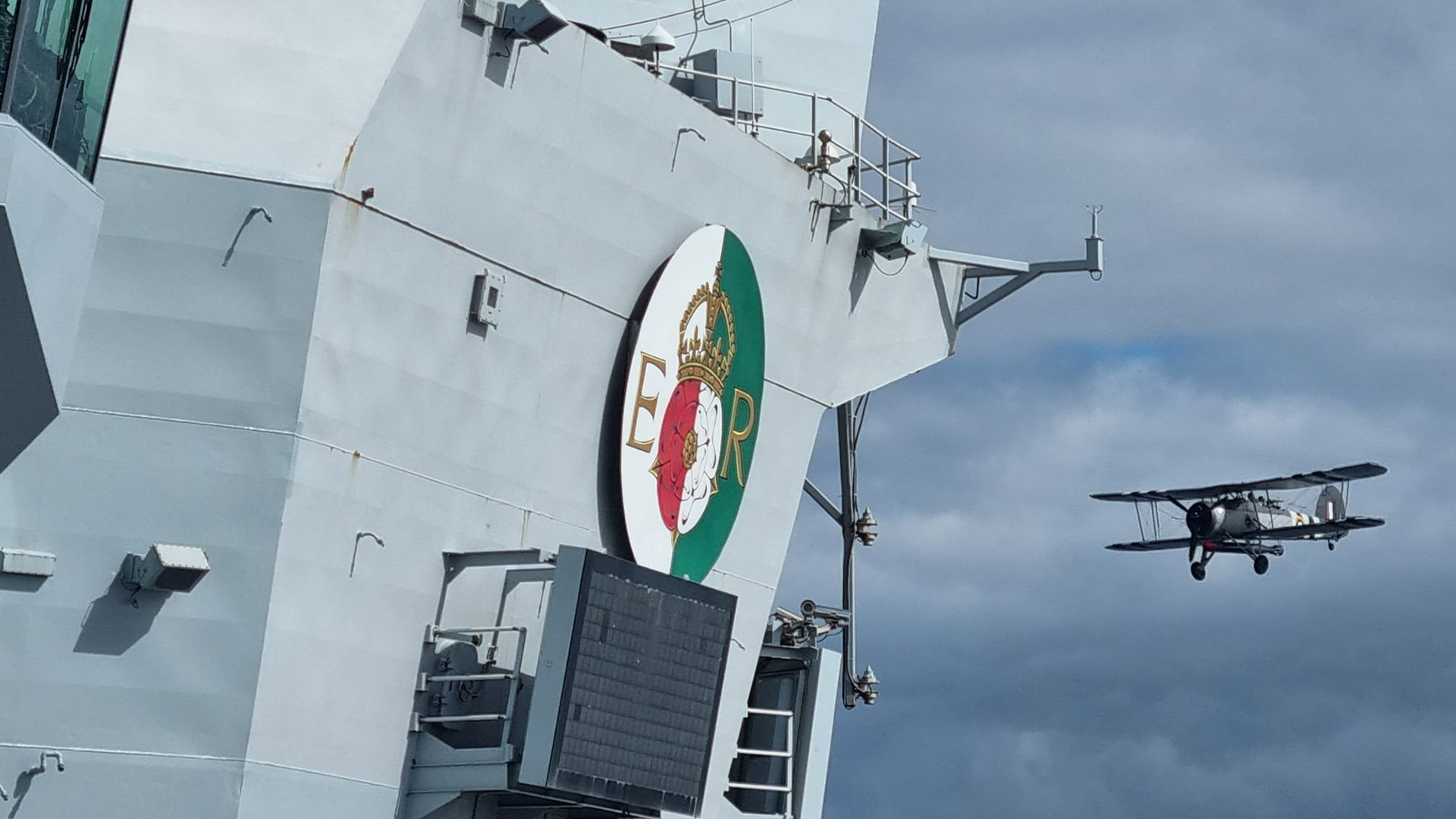
Vintage meets modern: Swordfish and Seafire conduct flypast over HMS Queen Elizabeth

Two vintage Fleet Air Arm aircraft have conducted a flypast over one of the UK's aircraft carriers as she continues on her three-month deployment around the country and northern Europe.
A Swordfish and a Seafire from Navy Wings, a naval aviation charity, flew past HMS Queen Elizabeth in overcast weather.
The 65,000-tonne aircraft carrier's crew caught a glimpse from the flight deck as the duo made their flypast.
"The past exploits of the Fleet Air Arm continue to inspire today," HMS Queen Elizabeth said in a post on X.
The Swordfish became famous for the attack on Taranto in November 1940.
The Battle of Taranto was the first ship-to-ship naval attack involving just aircraft, where 21 Fairey Swordfish biplane torpedo bombers from the aircraft carrier HMS Illustrious successfully attacked Italian warships at anchor in the harbour.
The Seafire, meanweile, is the navalised version of the Supermarine Spitfire.
During the next 12 weeks, the warship and her crew will work alongside allies to enhance collective security, deterrence and readiness.
HMS Queen Elizabeth will undertake advanced training under the Royal Navy's Fleet Operational Standards and Training (FOST) organisation, exercising across the full spectrum of modern naval warfare to make sure that the carrier is ready to respond to threats.
The training will go into next year, including participation in Nato exercises that will prepare HMS Queen Elizabeth to take over from the UK's other aircraft carrier, HMS Prince of Wales, as the UK's flagship and high-readiness strike carrier in 2027.
The Fairey Swordfish
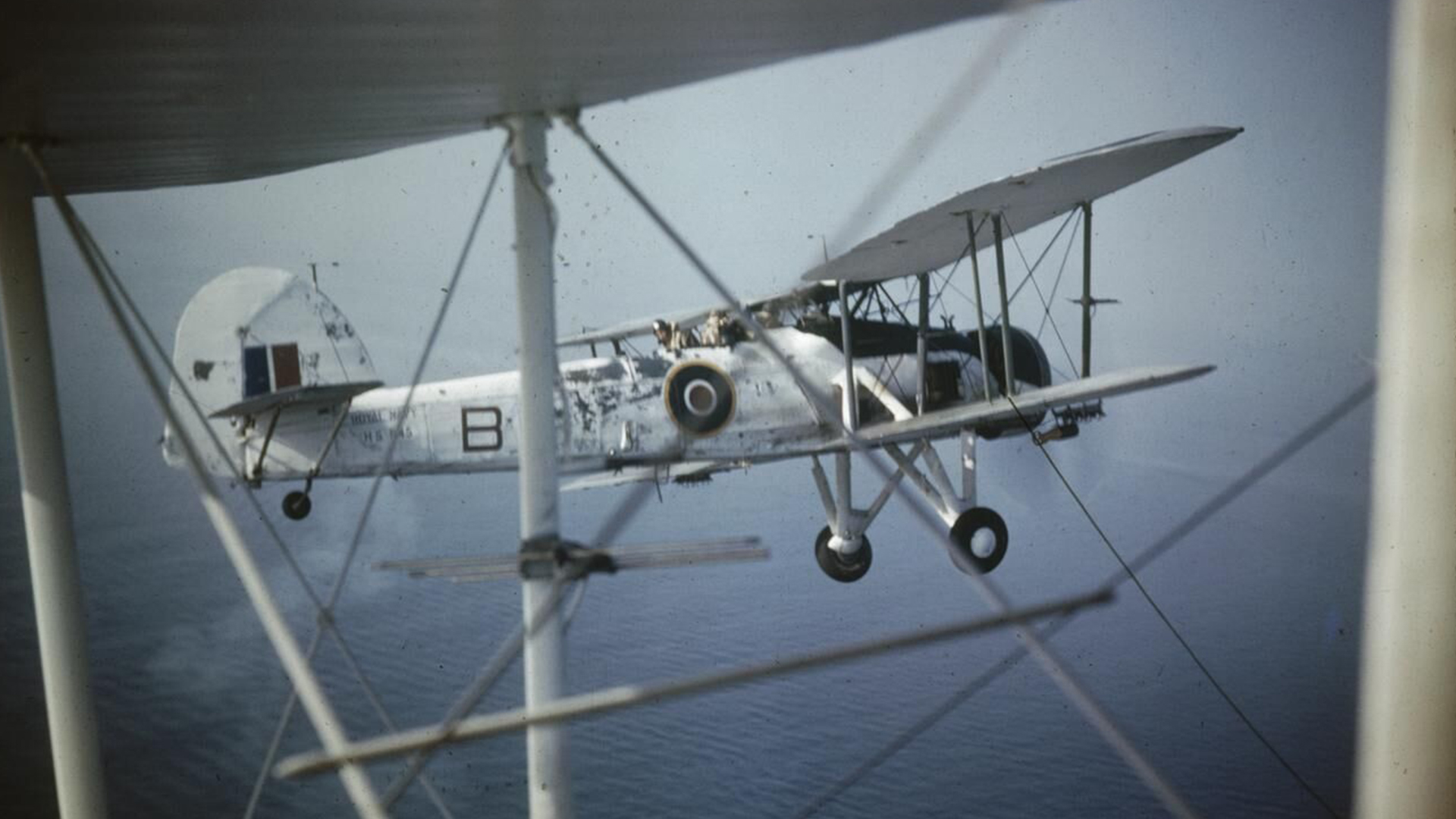
The Swordfish Mk. I first entered into service with the Royal Navy in 1936.
The aircraft, flown by three crew members, was seen as outdated by the beginning of World War II.
Despite that, the Swordfish, otherwise known as the Stringbag, carried a range of equipment during the war, including depth charges, bombs, mines, rockets or flares.
The Swordfish is most remembered for its involvement in Taranto, where just over 20 aircraft nullified the Italian battlefleet.
The Supermarine Seafire
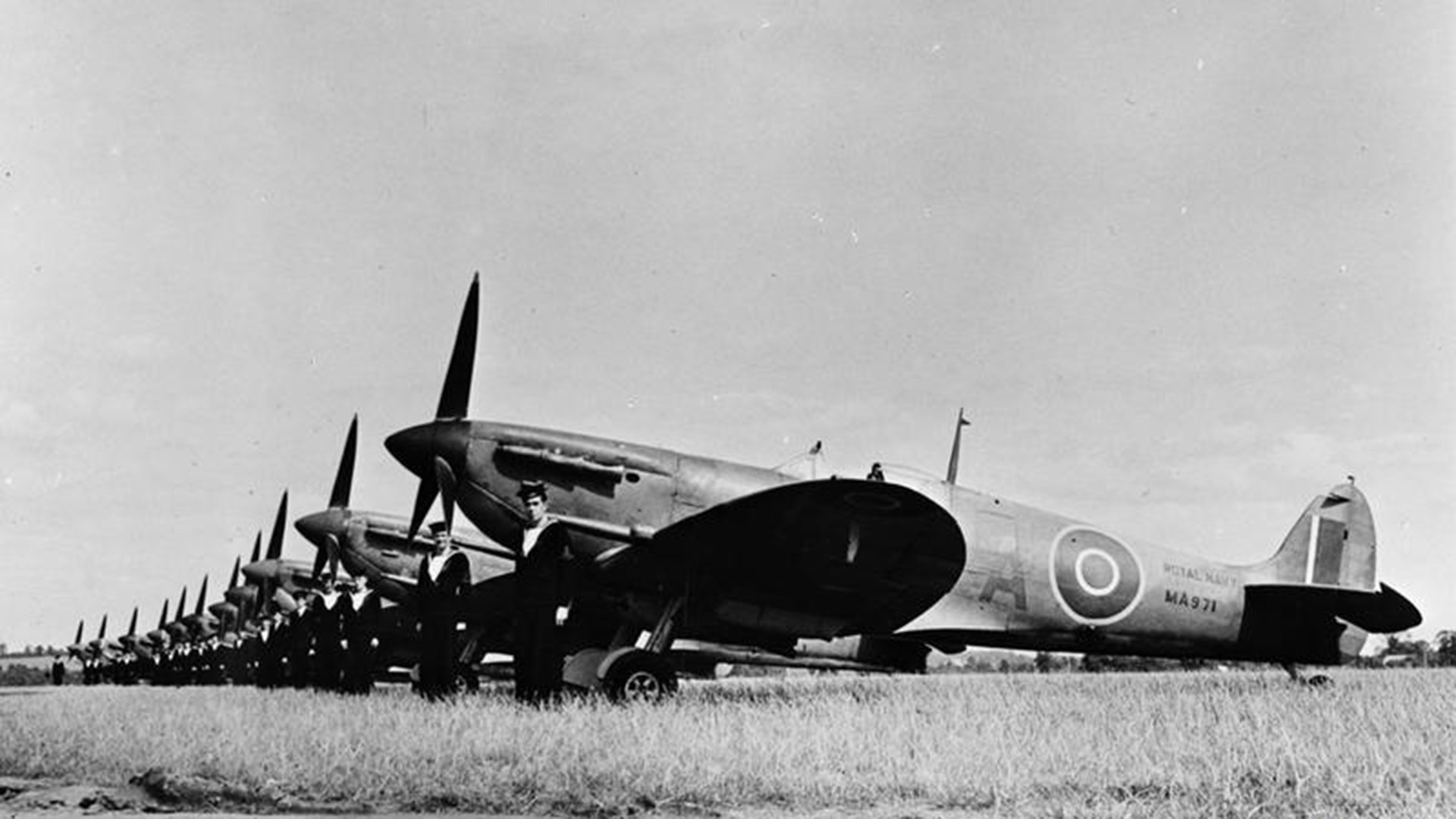
The Supermarine Seafire was a high-performance carrier-based fighter.
The aircraft, which has a top speed of 623km/h (387mph) and a 740km range (roughly 460 miles), was first handed over to the Navy in 1941, when the aircraft was utilised by pilots to learn how to use it at sea.
The aircraft's inaugural mission occurred when it was flown in Operation Torch, the Allied invasion of French North Africa, in November 1942.
It was used throughout the war and gave air support to various Allied missions, including the invasion of Sicily, Italy, the Normandy landings and Operation Dragoon.
The Seafire had problems due to its narrow-track undercarriage, making carrier take-offs and landings very difficult compared with the Sea Hurricane.
The Seafire, which was equipped with 2x20mm Hispano cannon, 4x.303in Browning machine guns and up to 227kg of external ordnance, was retired from service in the next decade.
Related topics
Join Our Newsletter