RAF's first female Typhoon fighter jet pilot on achieving her dream and starting again
Helen Seymour remembers feeling calm as she saw an enemy coastline from the cockpit of a fighter jet. She was nervous and excited, but she knew she had trained for that moment.
Leaving the RAF after nearly 24 years brought what the service's first female Typhoon pilot describes as "a period of mourning".
"You know, being a fighter pilot is what you are," she told BFBS Forces News.
- Ten-mile march, seven tests and a fight with a best friend: What it took to pass P Company
- Warrior women and their contribution to the military through the ages
- Gen Z women v Putin: The young women fighting Russia on Ukraine's frontline
"I really went through a period of mourning, if I'm honest, for the person that I felt that I'd lost."
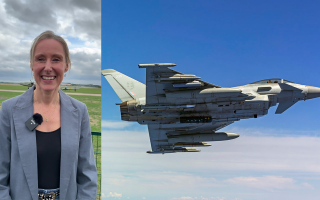
At Duxford Flying Finale, Helen was commentating on the Typhoon display, drawing on years of experience flying the aircraft.
Her RAF flying career had ended after neck pain left her unable to continue and she was medically discharged.
Top Gun and a second chance
Helen's ambition to fly fast jets began with Top Gun.
"Well, I watched Top Gun, if I'm completely honest with you," she said.
She knew little about the RAF or flying jets before seeing the film. Afterward, she joined the air cadets at school and set her sights on becoming a pilot.
"That was back in 1995," she recalls, "the first female fast jet pilot had only flown in 92."
Her mother initially dismissed the idea, telling her that men flew aircraft in the RAF.
Helen said that her mother's words only spurred her on.
But her first attempt at the RAF's aptitude tests ended in failure.
Still keen to join the service, she considered becoming a doctor in the RAF and went to university to study medicine.
Joining a university air squadron gave her another opportunity to fly and pursue her earlier ambition.
She believes that flying experience improved her hand-eye coordination and reactions, helping her prepare for another attempt at selection.
"I went on to take those tests again and passed and didn't really look back, to be honest with you," she said.
From two seats to one
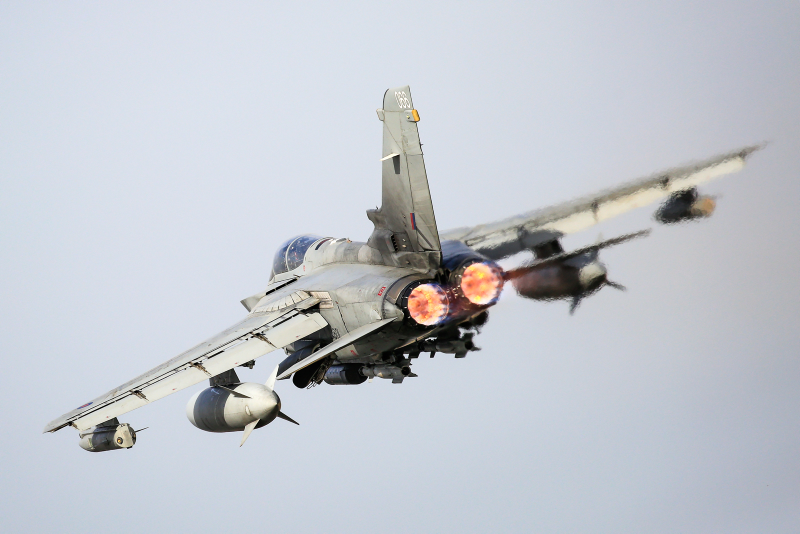
She went on to fly the Tornado F3, an aircraft she loved, before moving to the Typhoon. In 2009, she became its first female pilot.
Both jets were "grey, pointy and extremely fast", she said, but the switch meant a substantial change in the cockpit.
In the Tornado, she had flown alongside a navigator. In the single-seat Typhoon, she flew alone.
"But the Typhoon's performance is just out of this world," she said. "You know, the engines are so powerful. It's got carefree handling."
The aircraft's flight-control system is designed to protect against exceeding its structural and aerodynamic limits, reducing the workload of flying the jet.
"It buys you so much more capacity," said Helen.
Returning from her first solo flight brought the distinction of becoming the first female Typhoon pilot.
"It was a real honour," she said.
Her subsequent career included operations over Libya during Operation Ellamy, as well as instructing other Typhoon pilots and maintaining flying standards across the force.
Calm in combat
Asked about her first combat experience, Helen described the nerves and excitement of putting years of preparation into practice.
She said the RAF's "train hard, fight easy" approach had helped her prepare for that moment.
"And the cockpit was quiet. And I knew what my wingman was going to do and vice versa," she said.
"But also I had this sense of calm because I knew that I'd trained for that moment so many times that whatever was thrown at me, I would be able to deal with it."
That experience now helps her prepare other pilots.
She also co-founded the speaking business On A Mission with her best friend, former Tornado navigator Nicola 'Rosie' Steevenson.
The pair have flown together, and now share their experiences with schools and businesses.
Leaving the RAF was difficult, but Helen said she had begun to look towards the opportunities ahead.
"And I think it's easy to look back at the things you've lost rather than looking at the things that you're going to become," she said.
"But actually, there's always a silver lining. And I really feel like I've, you know, I've found it."
Join Our Newsletter