We're in a new era of RAF bases being attacked, warns the Chief of the Air Staff

The Chief of the Air Staff has warned that control of the air today is "harder to achieve and easier to lose than at any time in modern history".
Air Chief Marshal Harv Smyth delivered a frank speech to delegates at RUSI's Combat Air Conference in which he discussed the challenges facing the Royal Air Force.
"As of the last two weeks, welcome to the new era where RAF bases are once again attacked from the air," he said, referring to the drone that hit a hangar at RAF Akrotiri in Cyprus in the wake of the Iran war.
The need to evolve
He added: "The control of the air game has changed. And we must adapt quickly. We must evolve."
ACM Smyth warned: "[Our] numerical and technological advantage has waned over time, and our opponents are developing fast.
"They're learning through fighting and rapidly closing the technological gap. We must not be outpaced."
Shield and Punch
His first speech at RUSI since becoming CAS was titled Shield and Punch, a reference to Air Chief Marshal Sir Arthur Cunningham, who was described by Winston Churchill as a redoubtable warrior 80 years ago.
"In WW2, Cunningham gave the land component the decisive air support that it needed, which ultimately helped turn the tide in North Africa in the early 1940s.
"That control of the air was appreciated as a vital prerequisite, both to defend against air attack and also to strike the enemy's air power at its source. This was called the shield and punch concept."
And ACM Smyth said this remains a valid proposition today.
"Without control of the air, the joint and integrated campaign becomes problematic," he said. "Control of the air is the foundation upon which all joint operations depend.
"This was true over the skies of North Africa in 1940. It was true in the various Middle East campaigns of the last three decades of my own career, and it remains true today as we wearily witness in Ukraine what happens when neither side can achieve it."
He compared Russian air power at the beginning of the Ukraine war to now.
"And whilst Russian air power delivered an underwhelming performance at the start of the Ukraine war in 2022, four years later, they exploit mass, spiral development, speed, precision and lethality every day and every night to strike at targets across the wide expanse of Ukraine, a country that's two-and-a-half times the size of the United Kingdom," he said.
"The era of mass raids of highly autonomous, low-risk, long-range and high-standoff attack are now upon us."
F-35 the playmaker on the pitch
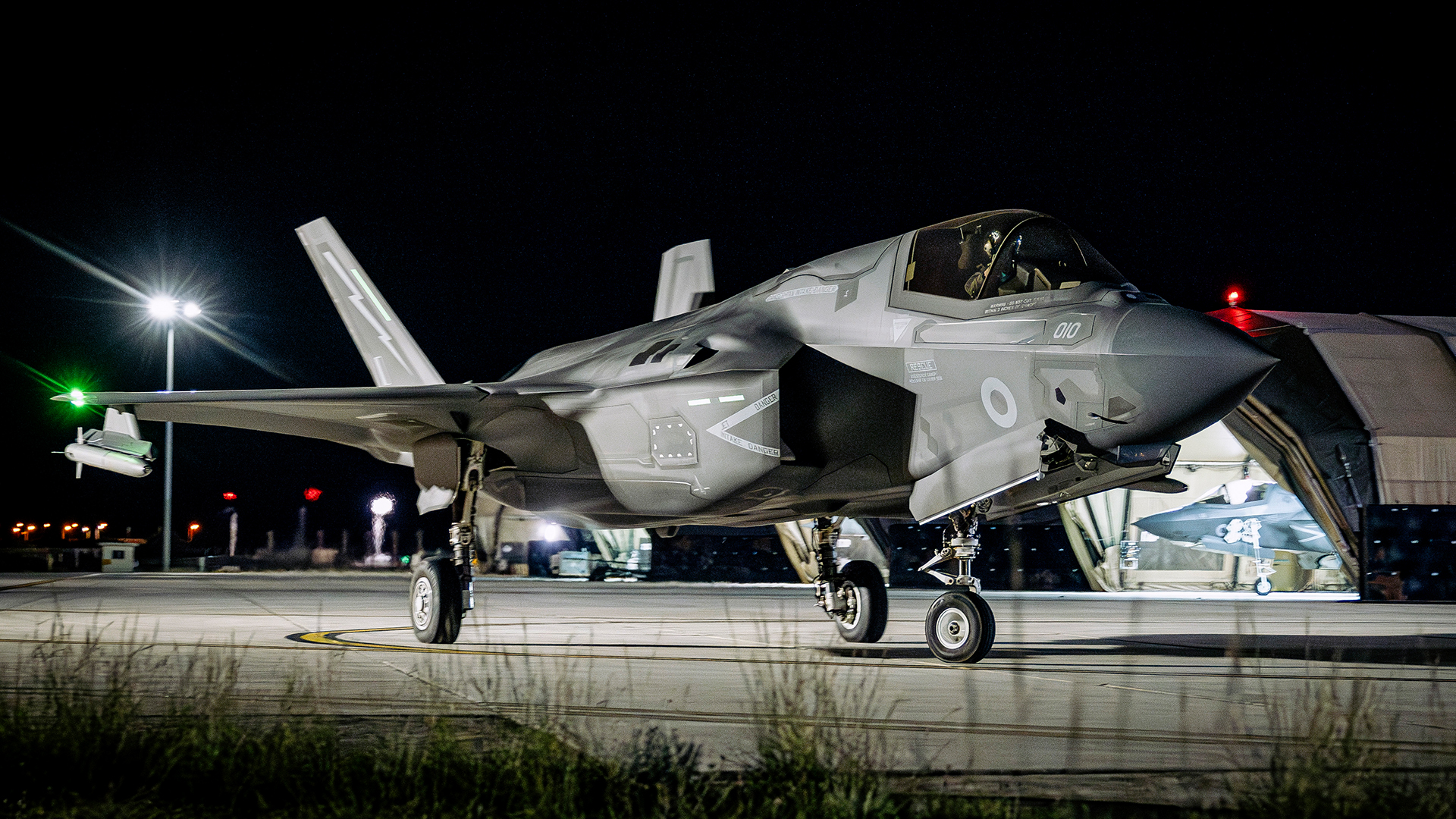
Discussing current capabilities, he used a rugby analogy to reflect the importance of the F-35Bs operated by 617 Squadron.
"An F-35 is less the lone fullback sprinting up the wing on his own, but more an agile fly-half," he explained. "The playmaker on the pitch.
"F-35 makes the whole team better. But even fifth-generation capability is not the end state. Because the future fight will not simply be about better aircraft. It will be about systems and their seamless integration."
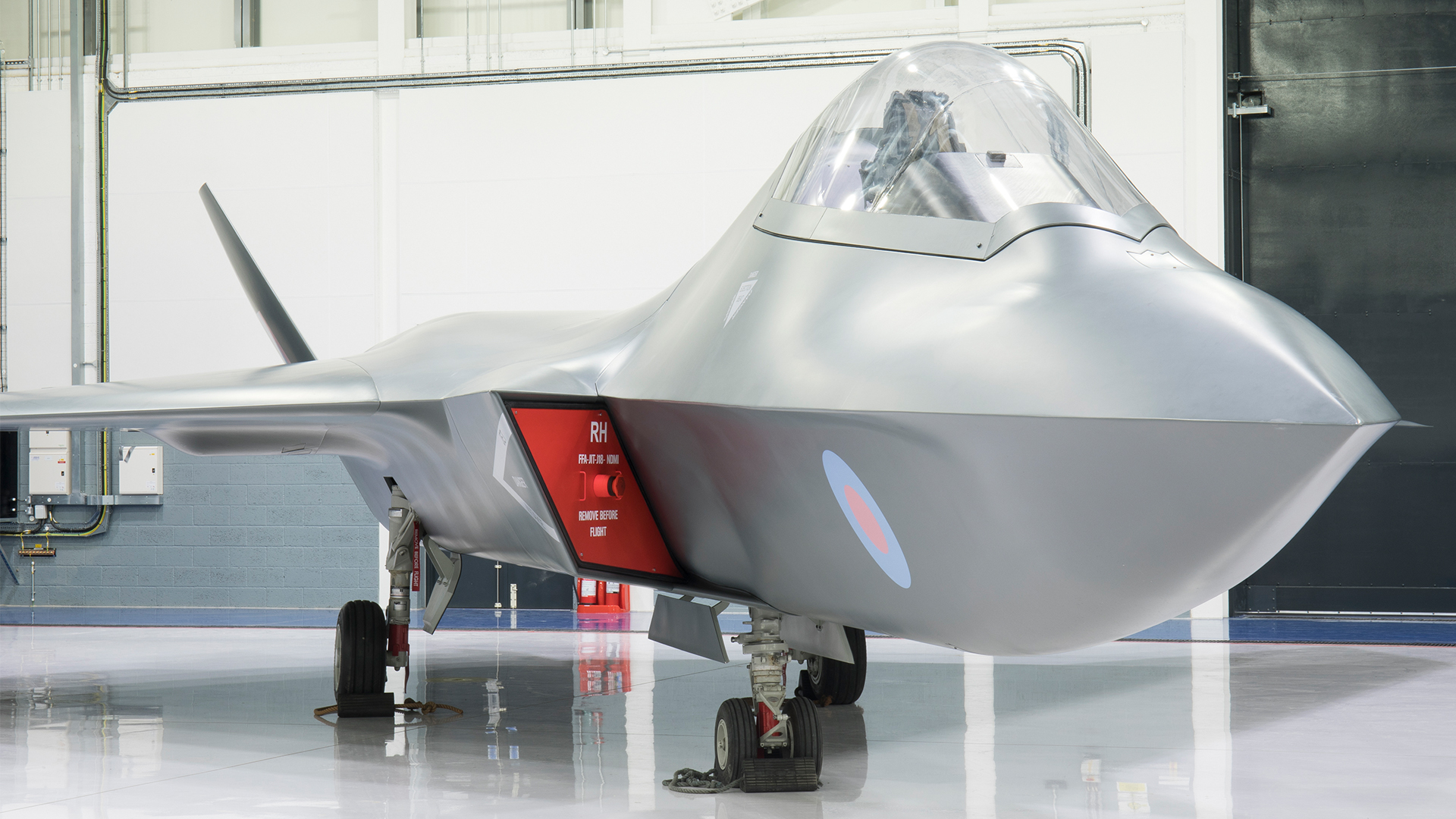
As he discussed sixth-generation capability, GCAP, the global combat air programme which will replace the Typhoon, he said: "It's not simply a replacement.
"If fifth generation gave us information advantage, sixth-generation must give us decision superiority. At scale. At pace. And at range.
"And it will operate in degraded environments. Seamlessly managing autonomous teammates. Surviving in dense threat systems. And projecting power at greater ranges."
Amplifying pilots, not replacing them
ACM Smyth said collaborative combat aircraft or CCAs were now a defining feature of our future combat air system.
"Imagine a future GCAP aircraft commanding multiple autonomous platforms," he said. "Dynamically tasking them. Repositioning them. Reallocating weapons. Dominating the adversary. Controlling the air and winning.
"This is not about replacement, or replacing pilots – this is about amplifying them.
"CCAs are no longer a theory in the thesis of the high/low mix. They are now essential in any serious nation's combat air inventory."
Looking to the future
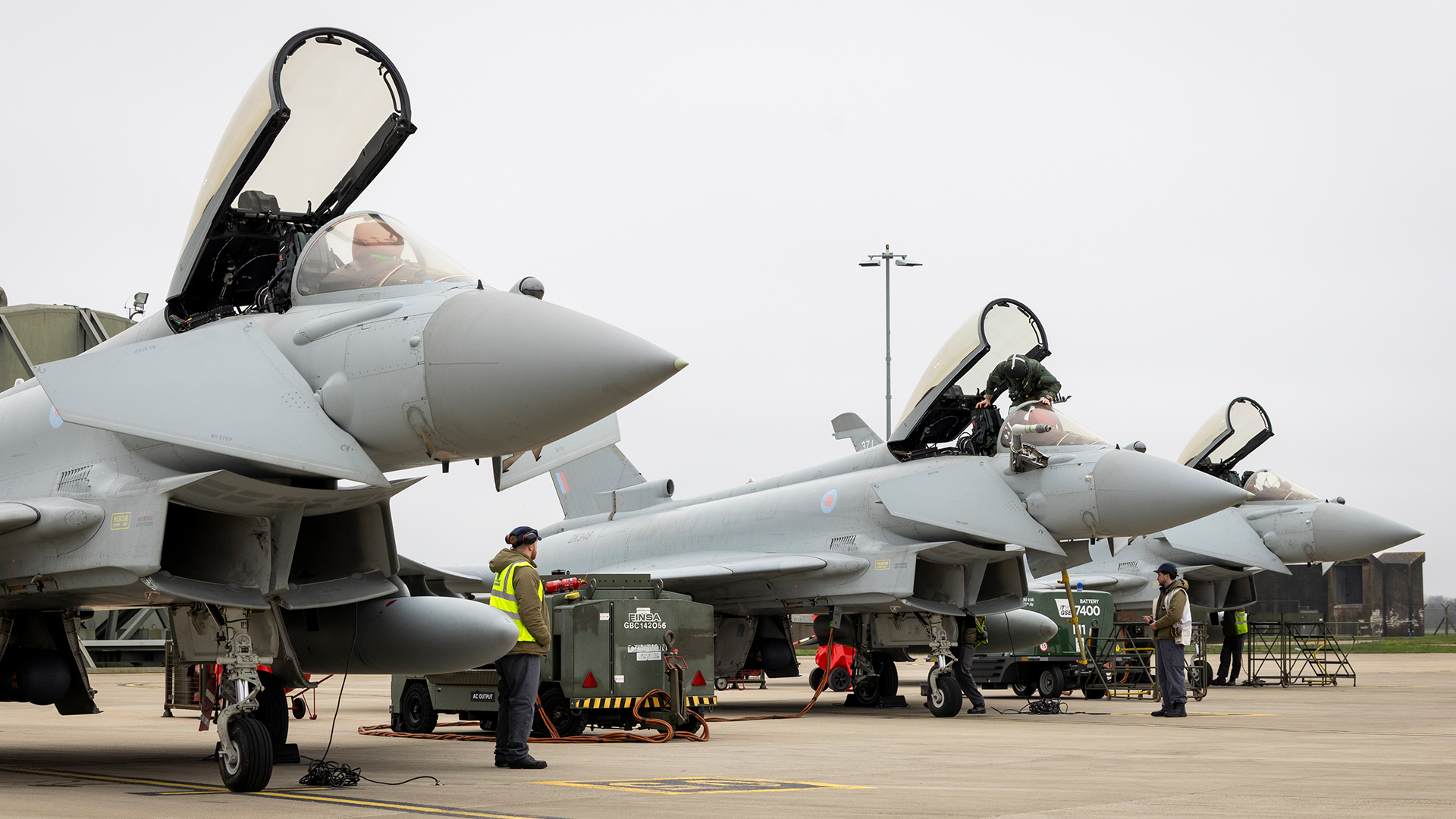
The Chief of the Air Staff outlined what he wants to see happen next, saying: "We must continue to upgrade our fourth-generation capabilities, we must fully exploit fifth-gen integration.
"We must quickly deliver capability like Wedgetail into operational service. We must mature and deliver our CCA programs at pace.
"We must invest in resilience across space, cyber and spectrum. And we must deliver sixth gen to maintain our competitive edge into the second half of this century. But above all this, we must train for high-end warfighting.
"We know that control of the air is not inherited. It cannot be taken for granted anymore. It is earned. It is maintained, and it is re-earned by every generation."
Join Our Newsletter