Scanning the skies: The helicopter crews defending RAF Akrotiri from drones and missiles
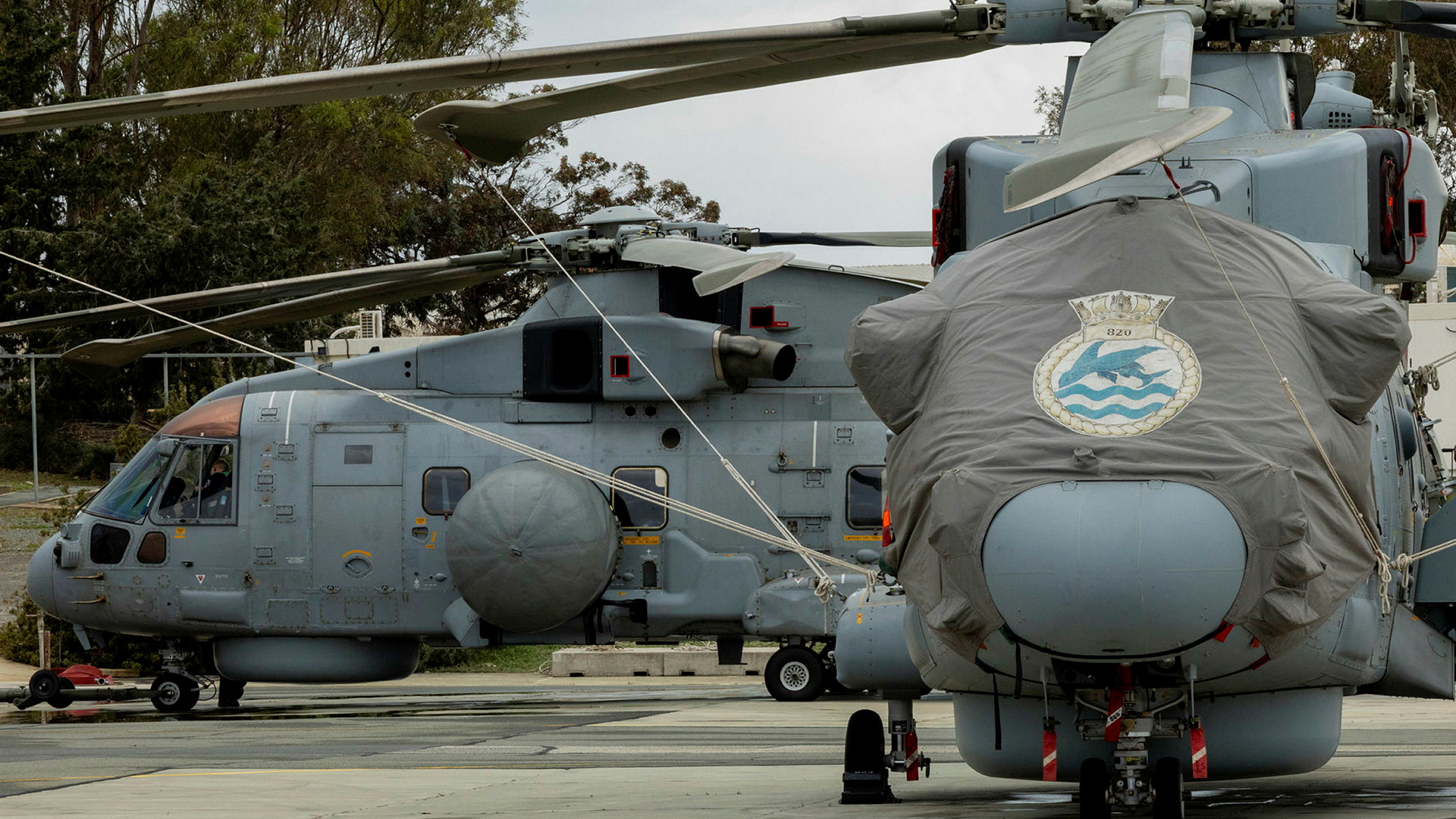
Hanging from the side of the Merlin Mk2, a distinct and drooping Kevlar bag begins to inflate.
Nicknames in the military sometimes feel misplaced, but "Baggers" for the helicopter crew about to fly out of RAF Akrotiri is hard to question.
Piercing through the vibrating sound of turning rotor blades, a high-pitched pinging shows the Crowsnest's sonar is ready to detect incoming threats.
Three of the Royal Navy birds have landed in the last month, better defending the skies around Cyprus since the airbase was attacked.
Baggers searching the skies to secure the Eastern Mediterranean
"The crew are starting this aircraft up ready for a sortie this evening," said the Tactical Mission Commander from 820 Naval Air Squadron.
We've not used his name for operational reasons.
"We tend to fly as a three-person crew.
"First we have the pilot get on board, one observer will sit in the front and another sat in the back.
"Once the pilot's got the engine started and ready to go, the crews will conduct some mission systems checks before that aircraft launches."
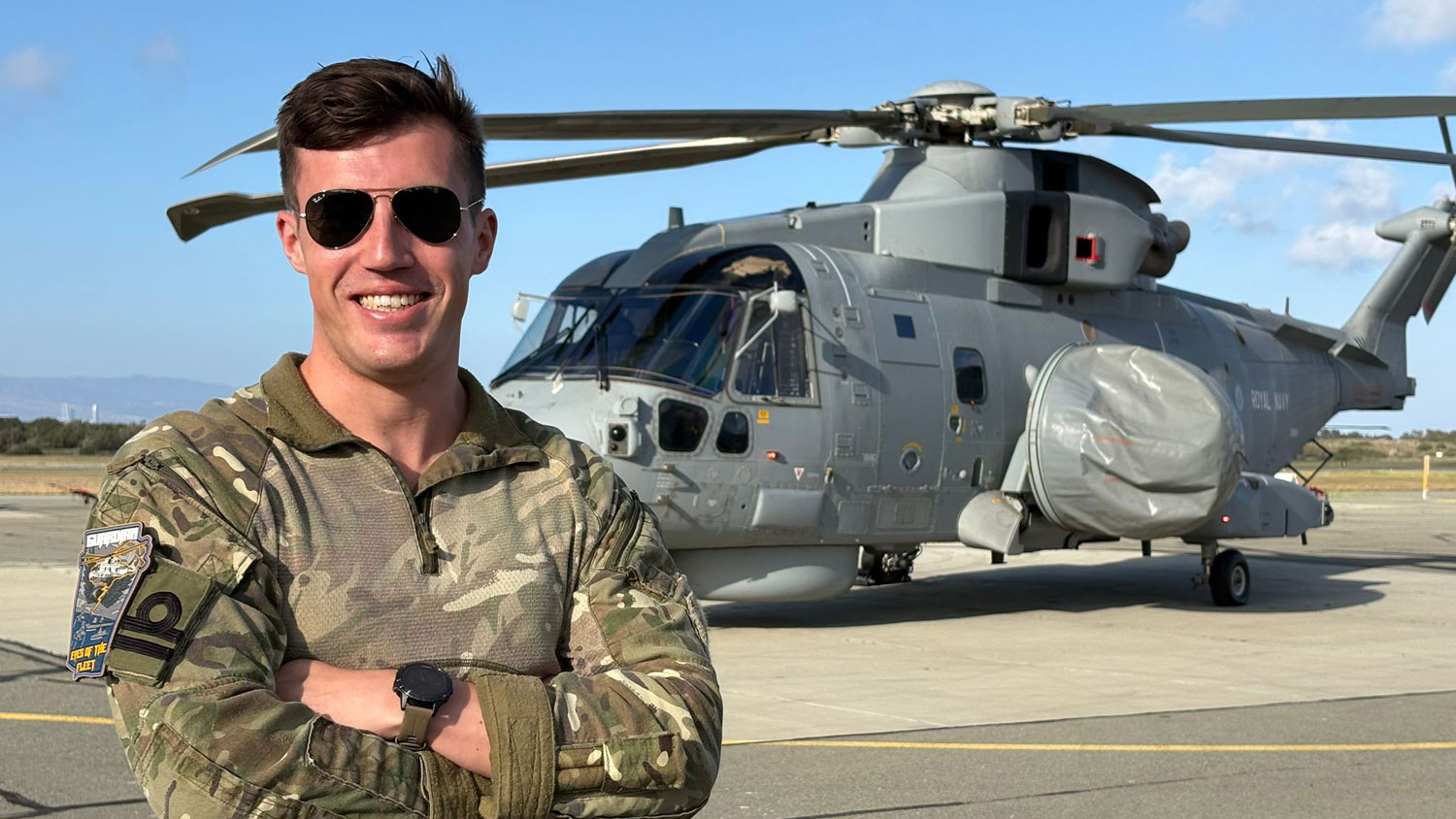
As Britain's busiest overseas airbase, it's not uncommon for a wide-ranging sample of His Majesty's Armed Forces' aircraft to stop by from time to time.
But the Merlins are here for a very specific security mission.
"We're out here doing airborne early warning," said 820's Commander, "looking out for incoming drones and missiles.
"Our crews are very well trained and versed in this."
Bringing Crowsnest from Culdrose to Cyprus
The Baggers from RNAS Culdrose in Cornwall have done the job before, deploying with the Carrier Strike Group last year and in the dangerous waters of the Red Sea.
Yet the US-Iran war has increased threats to British interests ten-fold and the Merlin's reach helps spot them much earlier.
Crowsnest conjures up imagery of a galleon's lookout, high above the waves, peering into the distance.
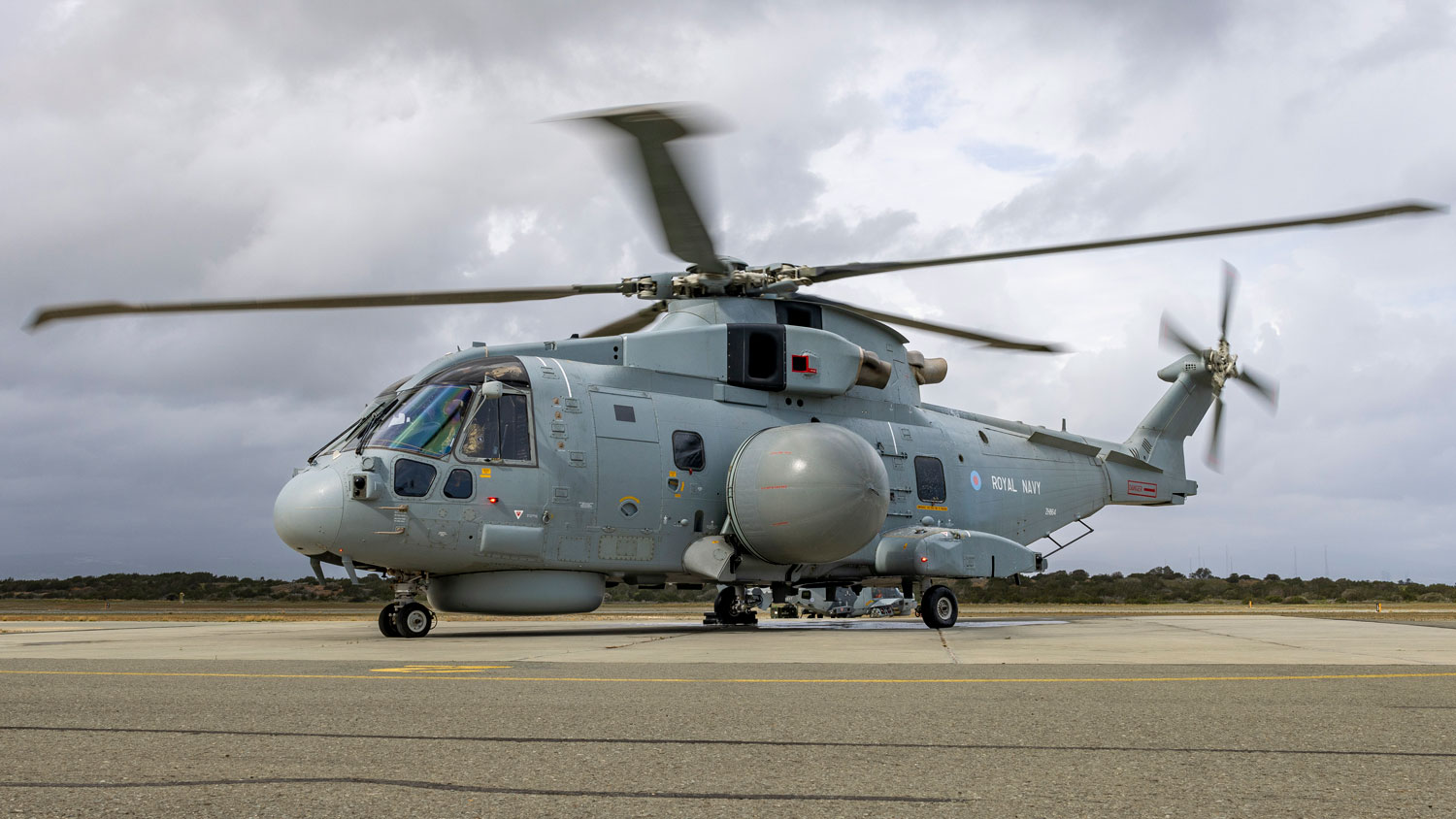
Flying a mile high, the Merlin Crowsnest's airborne surveillance and control (ASaC) system can look far beyond the horizon.
The Merlin Mk2 is the Fleet Air Arm's submarine-hunter, searching below the waves and filtering out the cluttered noise that inhibits other radar.
But at RAF Akrotiri, the helicopter is part of the defensive layers protecting the island alongside fast jets like F-35B and Typhoon, plus Alvis Stormer ground-based air defence vehicles.
It's not the only chopper drafted in to defend Cyprus.
Wildcats prepared to pounce on incoming drones
Three Wildcats swooped in early after a single drone hit a hangar at the airbase.
"We've been operating here for 30 days now, maintaining our readiness and alert for that counter-drone role," said the Wildcat Detachment Commander from 815 Naval Air Squadron.
Like his colleague, we're not using his name.
"In the meantime, we're conducting training missions in the Sovereign Base Areas and out into sea."
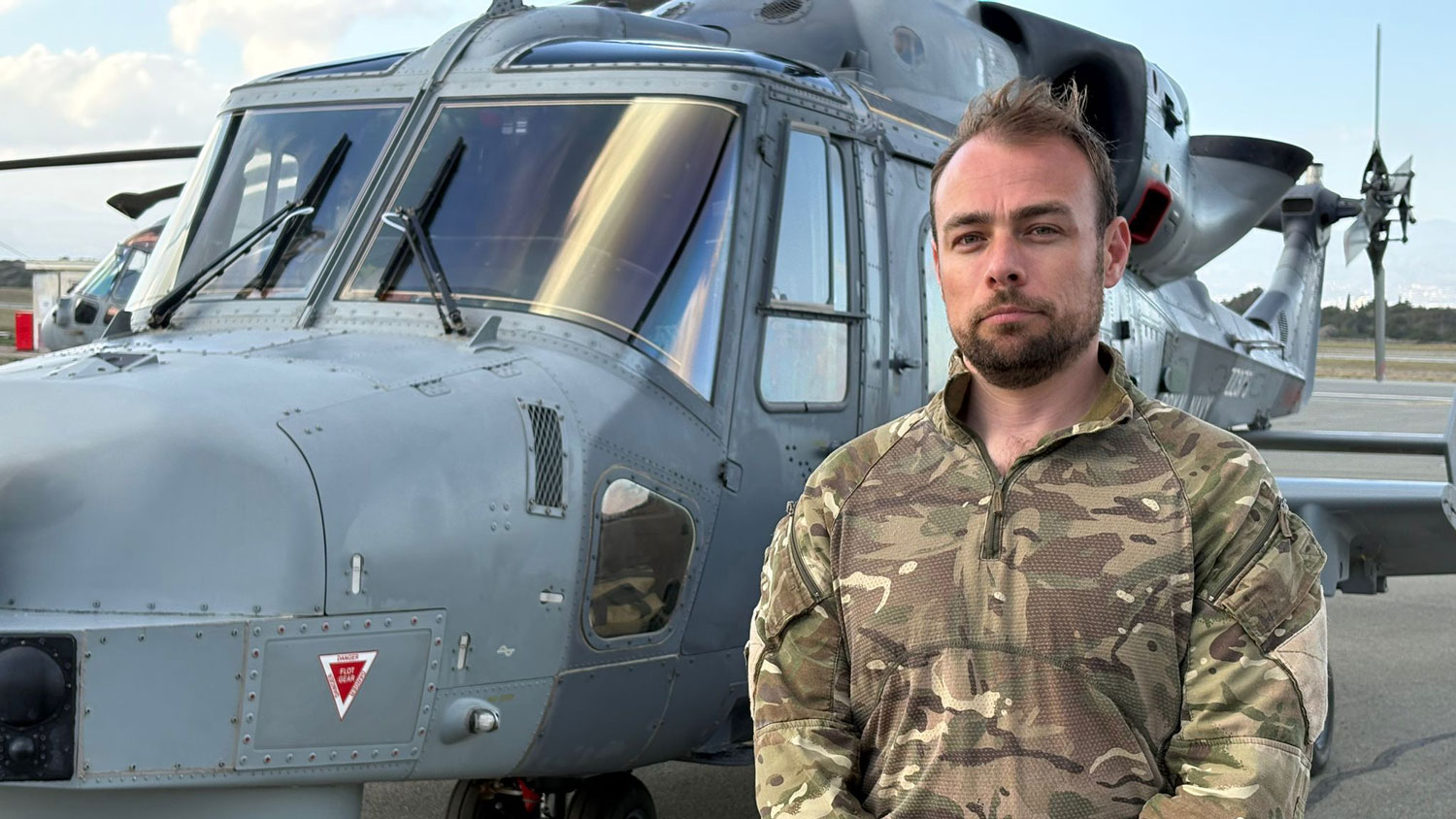
Smaller than Merlins, which were flown to the island, the Wildcats were lifted from RNAS Yeovilton in Somerset as cargo of the enormous C-17.
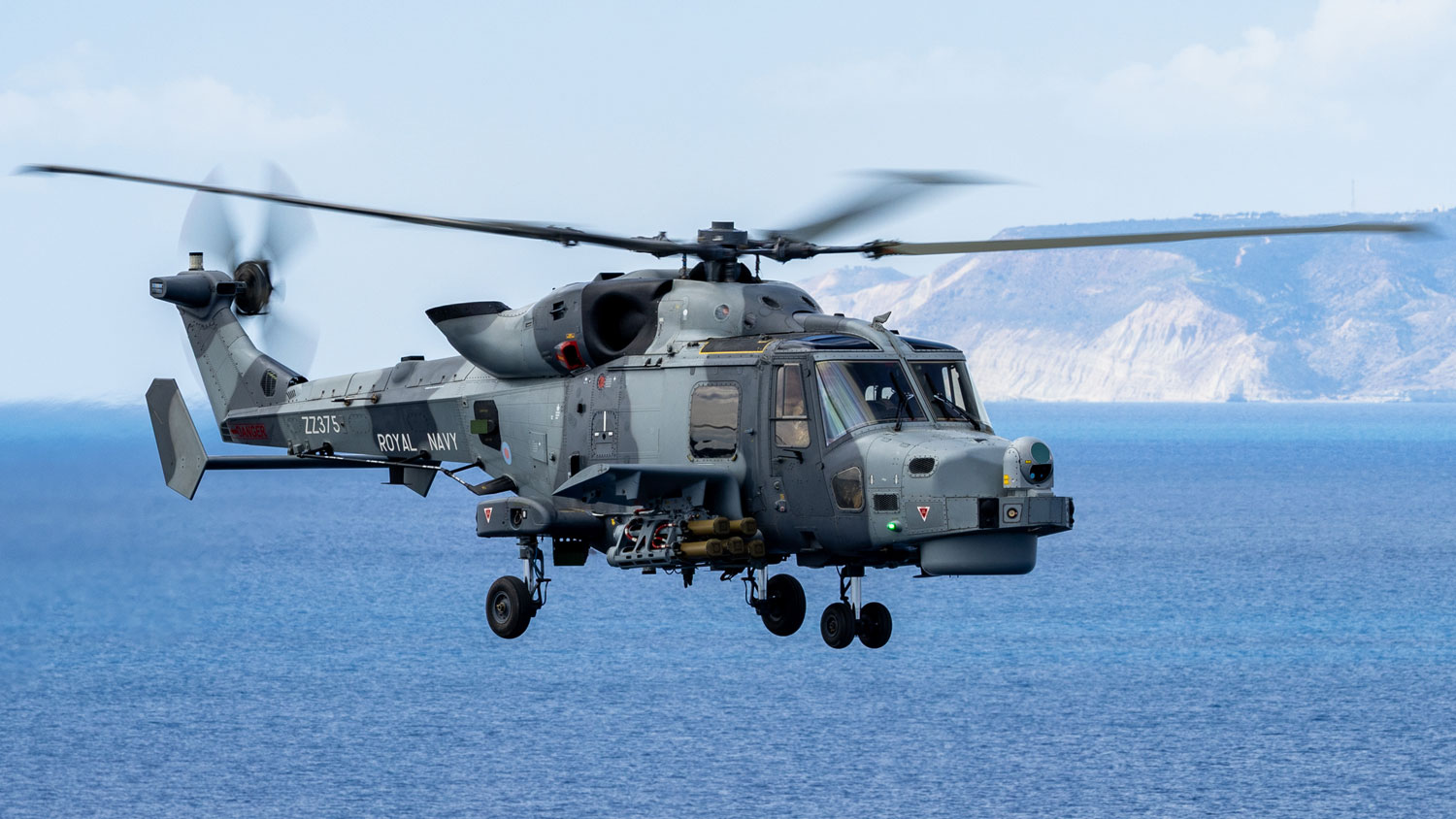
Inside, the pilot and observer team stare out through a digital glass cockpit with a nose-mounted MX-15 Wescam Electro Optical Device (EOD) camera that can detect incoming objects in all weathers.
Armed with Martlet, the Navy's name for the Lightweight Multirole Missile, the Wildcats can shoot down drones five miles away.
There's yet to be an operational kill, but the weapons have been proven on exercise.
"They would take a handover or detect where that drone was using the camera on the front of the aircraft," said 815's commander.
He explained how pilots would then manoeuvre themselves into position and take an engagement using a Martlet missile.
It's undecided how long the six helicopter crews will call RAF Akrotiri home.
The threat from drones sent by Iran and its proxies hasn't faded.
Even if only a deterrence, every layer of defence in Cyprus serves a purpose.
As the ground crew pull the chocks away, a marshaller gives the hand signal for the Merlin to begin taxiing to the runway.
Lifting into the air, the helicopter reaches forward and disappears out of sight.
Join Our Newsletter