Find out how UK is defending assets in the Middle East amid conflict with Iran

The launch of Operation Epic Fury and Iran's response in late February prompted the British Government to deploy more weaponry, personnel, aircraft and ships to protect British and allied assets in the Middle East.
The evolution of the war has seen Iranian and Tehran-affiliated proxies fire drones toward British bases, including RAF Akrotiri, as well as targeting the UK's Gulf allies.
In light of this escalation - but with a ceasefire holding at the moment - the UK has continued to bolster its arsenal in the region, most recently deploying the Military Working Dog Operational Capacity Unit to Cyprus.
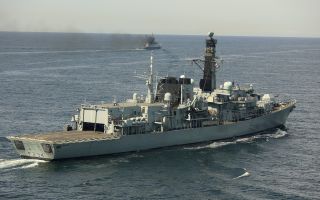
HMS Dragon
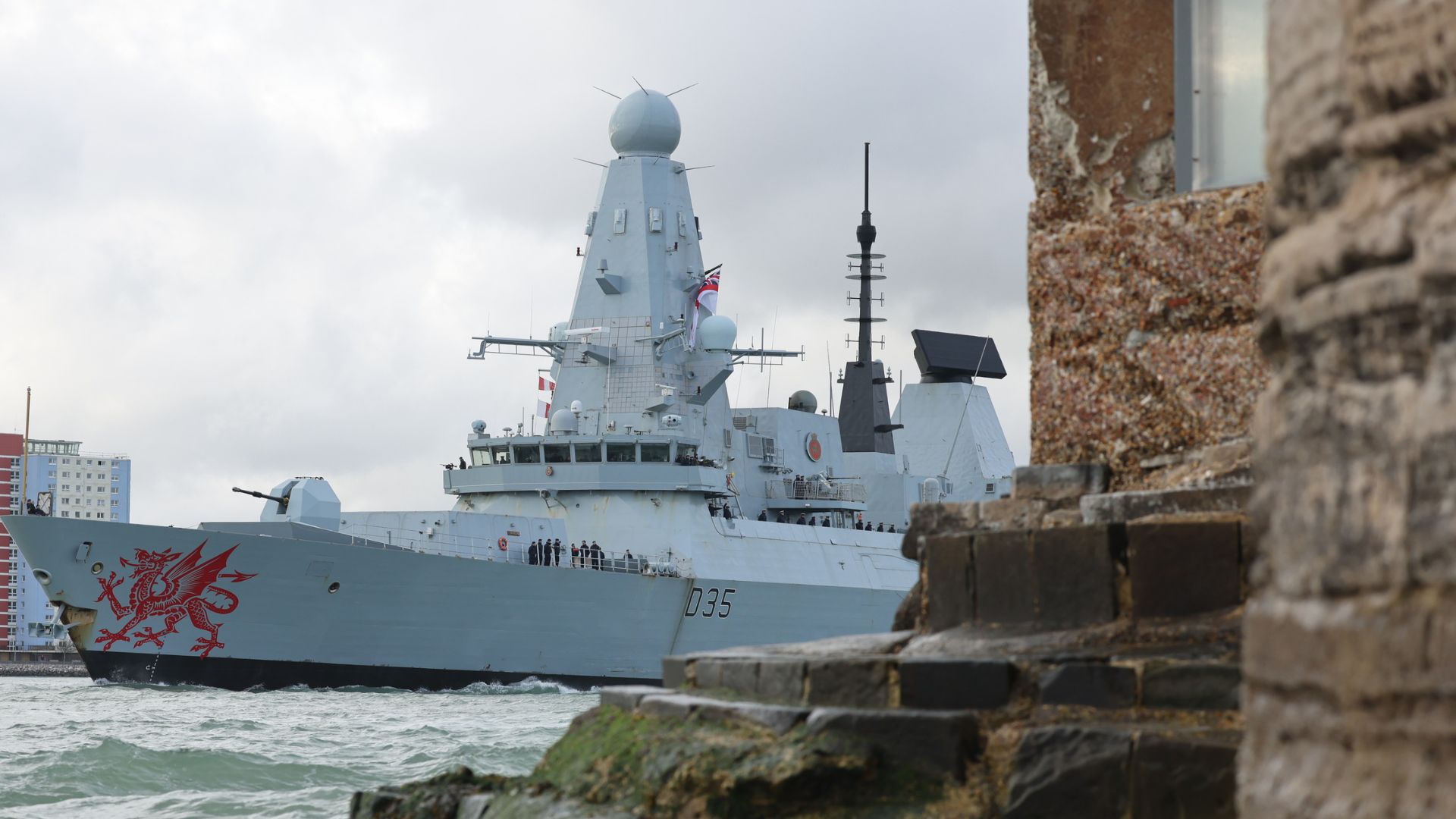
HMS Dragon, a Type 45 destroyer, is in the Eastern Mediterranean to shield Cyprus after a suspected drone strike by Lebanese Hezbollah.
Her responsibilities include air defence, through using her Sea Viper anti-air missile system.
The vessel is currently docked in the region after suffering technical issues with her water systems.
However, the MOD said the warship would still be able to sail at short notice if required.
The Sea Viper is the Royal Navy's highly automated air defence system, which can launch eight missiles in under 10 seconds and fire up to 16 missiles at targets simultaneously.
It can close in on a kill at up to four times the speed of sound, and manoeuvre at G-forces no human can endure.
Sea Viper, which can hit targets up to 75 miles away, was first used in combat three years ago to hit a suspected attack drone targeting cargo ships in the Red Sea.
Rapid Sentry
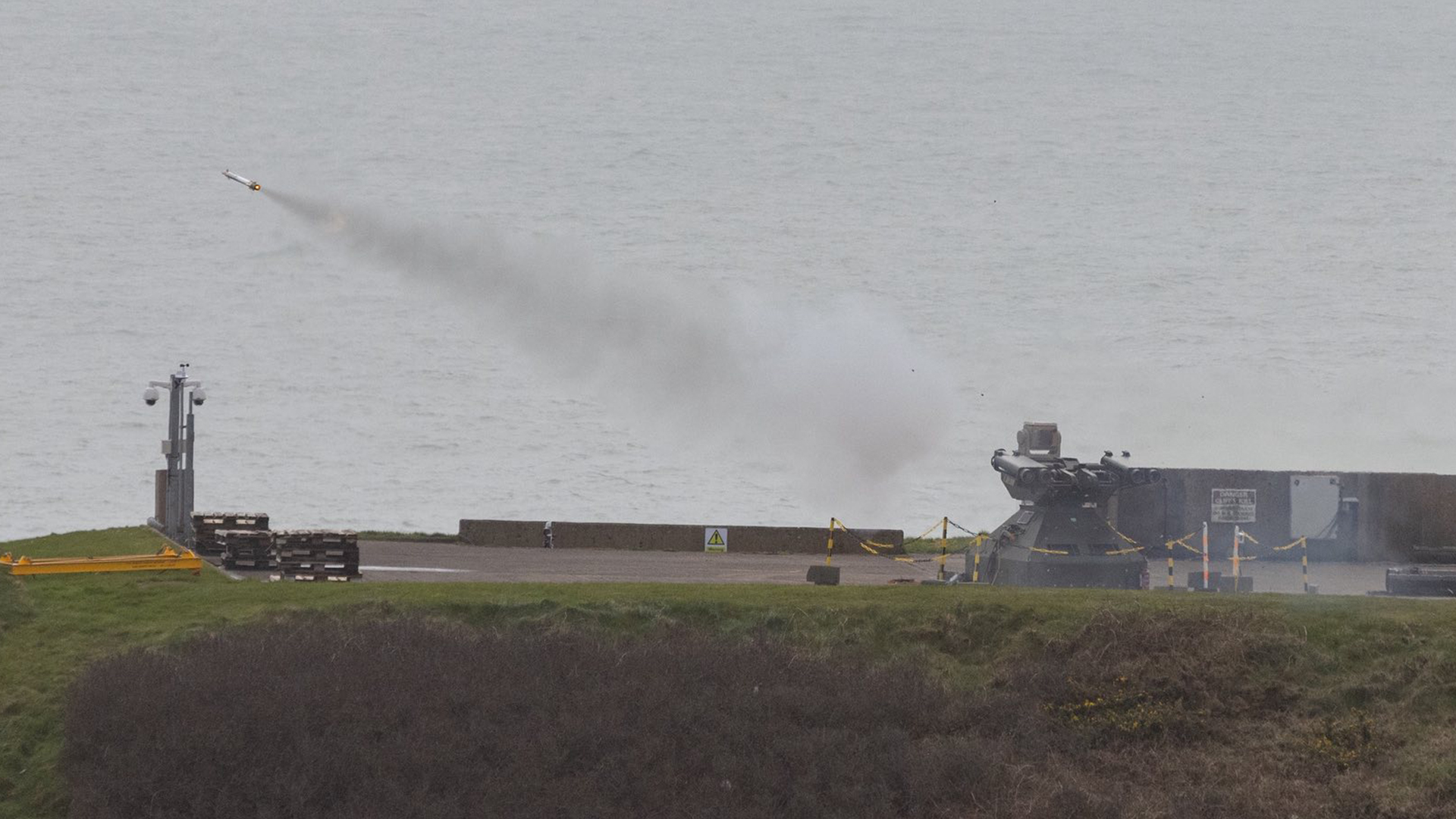
Gunners from the RAF Regiment, who are tasked with protecting bases, aircraft and personnel, use a variety of kit to detect, disrupt and destroy hostile uncrewed aircraft, like the Shahed-136 drone deployed by Iran.
One of those is Rapid Sentry, which has been sent to Kuwait.
"Rapid Sentry is a battle-tested, ground-based air defence missile system that has already proved its worth. It has proved highly effective for UK forces taking down drones in the regions," said Defence Secretary John Healey.
Rapid Sentry involves a radar unit that works together with a launcher that fires the Lightweight Multirole Missile, which is the same weapon that Navy Wildcats are equipped with, although in naval jargon they are named the Martlet.
The RAF recently posted a video that showed 34 Squadron using Rapid Sentry at Air Defence Range Manorbier in Pembrokeshire, where it went up against Banshee drones.
"Rapid Sentry gives us a credible kinetic safeguard when a drone cannot be defeated electronically," said Air Commodore Paul Hamilton, the Commandant General of the RAF Regiment.
F-35s and Typhoons
RAF and Royal Navy pilots have been flying defensive missions to protect Cyprus, Jordan, Bahrain, Qatar and the United Arab Emirates.
F-35s and Typhoons have been supported by Voyager aircraft, which are designed for air-to-air refuelling, so the fighter jets can continue their missions.
In February, six F-35B stealth fighters from 617 Squadron were flown in to back up the eight Typhoon jets stationed at RAF Akrotiri.
Earlier in the conflict, an RAF F-35B shot down a drone in Jordanian airspace. It was the first time that the stealth jet had destroyed an enemy uncrewed aerial vehicle in an active operation.
The pilots have so far accumulated nearly 900 flying hours.
Wildcat and Merlin helicopters
The UK has deployed three Merlin Crowsnest helicopters to Cyprus to guard the island, providing advance warning of any incoming drones or missiles, following a Shahed-type UAV crashing onto a hangar at the beginning of March.
The deployment includes aircraft, aircrews and an engineering team from 820 Naval Air Squadron, who are currently stationed at RAF Akrotiri.
The Merlin, which is crewed by three personnel, is kitted out with the Crownest system, giving the aircraft an ASaC (airborne surveillance and control) capability.
Meanwhile, three Wildcat HMA2 helicopters are also in Cyprus to help secure the island.
The Wildcats are armed with Martlet missiles to take out any drones that may be fired at the island.
The Defence Secretary confirmed that the UK was deploying Lightweight Multirole Missiles to Bahrain.
Counter-drone equipment
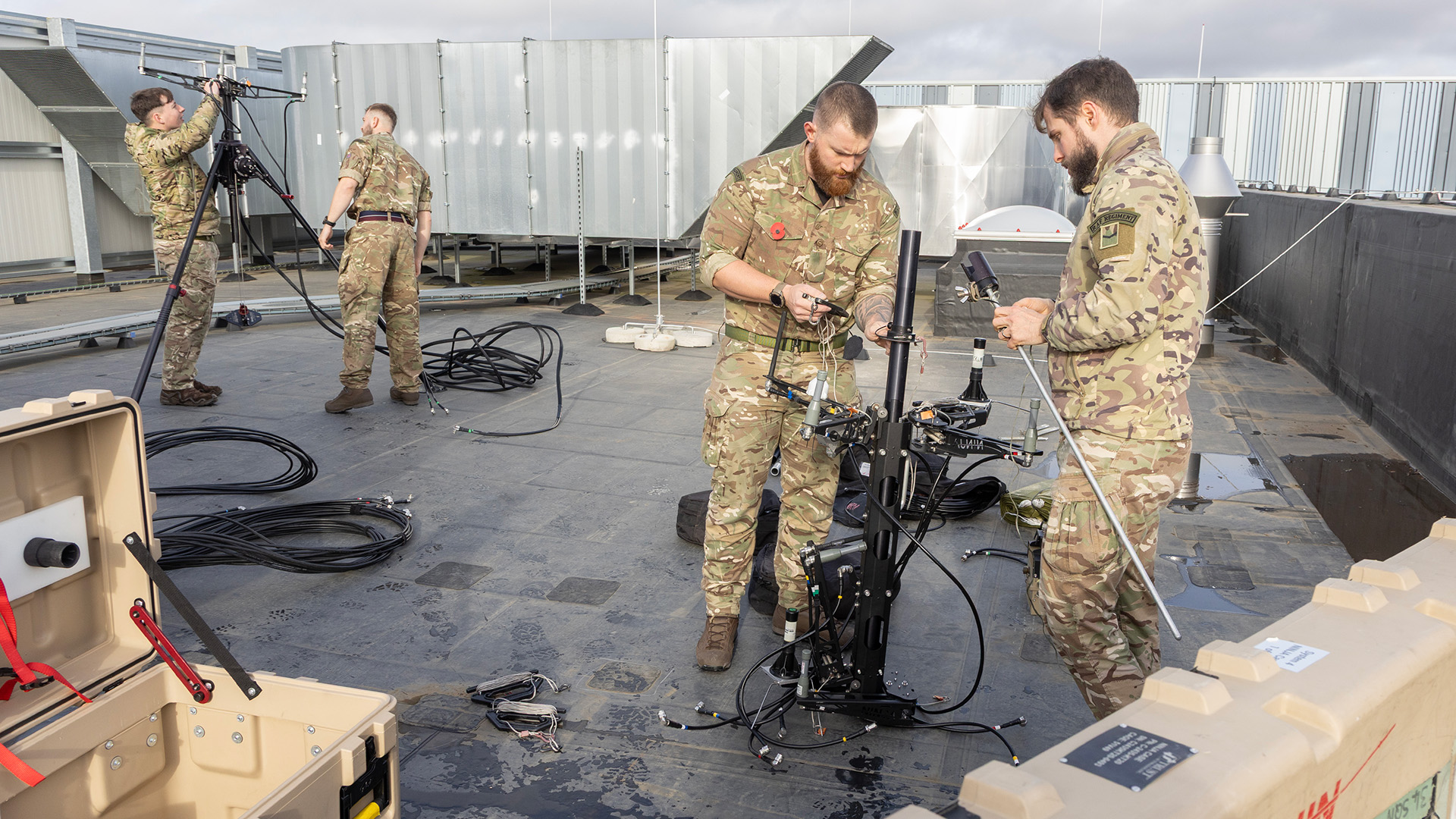
In Iraq, a ground-based British Counter-Uncrewed Aerial Systems unit has been taking out drones launched at coalition forces.
Autonomous minehunting systems
Autonomous minehunting systems are also in the Middle East, the Defence Secretary confirmed during a visit to Permanent Joint Headquarters at Northwood.
These assets are crucial in defending the Strait of Hormuz, which is a narrow waterway south of Iran and one of the world's most important trade routes.
Remote-controlled boats and underwater robots can find and obliterate explosives from a distance.
The Defence Secretary said that the UK was looking to accelerate UK minehunting and drone technology, adding that he wants the UK to play a crucial role in securing the strait.
Stormer air defence vehicles
The Royal Artillery's Stormer air defence vehicles are in Cyprus to bolster the systems already there.
The Stormer is a tracked vehicle derived from the CVR(T) Scorpion/Scimitar chassis.
The armoured vehicle can be kitted out with two types of missiles: the Starstreak High Velocity Missile and the Lightweight Multirole Missile.
The ones moved to Cyprus are fitted with the Starstreak HVM, which is designed to counter threats from high-performance, low-flying aircraft, as well as fast "pop-up" strikes by attack helicopters.
The missile uses a system of three dart-like projectiles, allowing multiple hits on the target.
Sky Sabre
The Defence Secretary confirmed during a meeting with Saudi Arabia's defence minister, Prince Khalid bin Salman Al Saud, that Sky Sabre would be deployed to Riyadh.
It follows a recce by a UK team, and the equipment and teams will deploy, including radars, control node and missile launchers and a Royal Artillery battery and battle space managers, to operate the system.
The system will be integrated into the wider Saudi and regional air defences.
Sky Sabre is an air defence missile system that can manage the flight of 24 missiles at the same time whilst they are flying, directing them to intercept 24 separate targets, according to the British Army.
The Sky Sabre system was deployed to Poland between 2022 and 2024 to defend Europe's eastern flank amid Russia's war in Ukraine.
It was later seen during Exercise Formidable Shield 25 in the Outer Hebrides, showing the UK's defensive capabilities.
Personnel
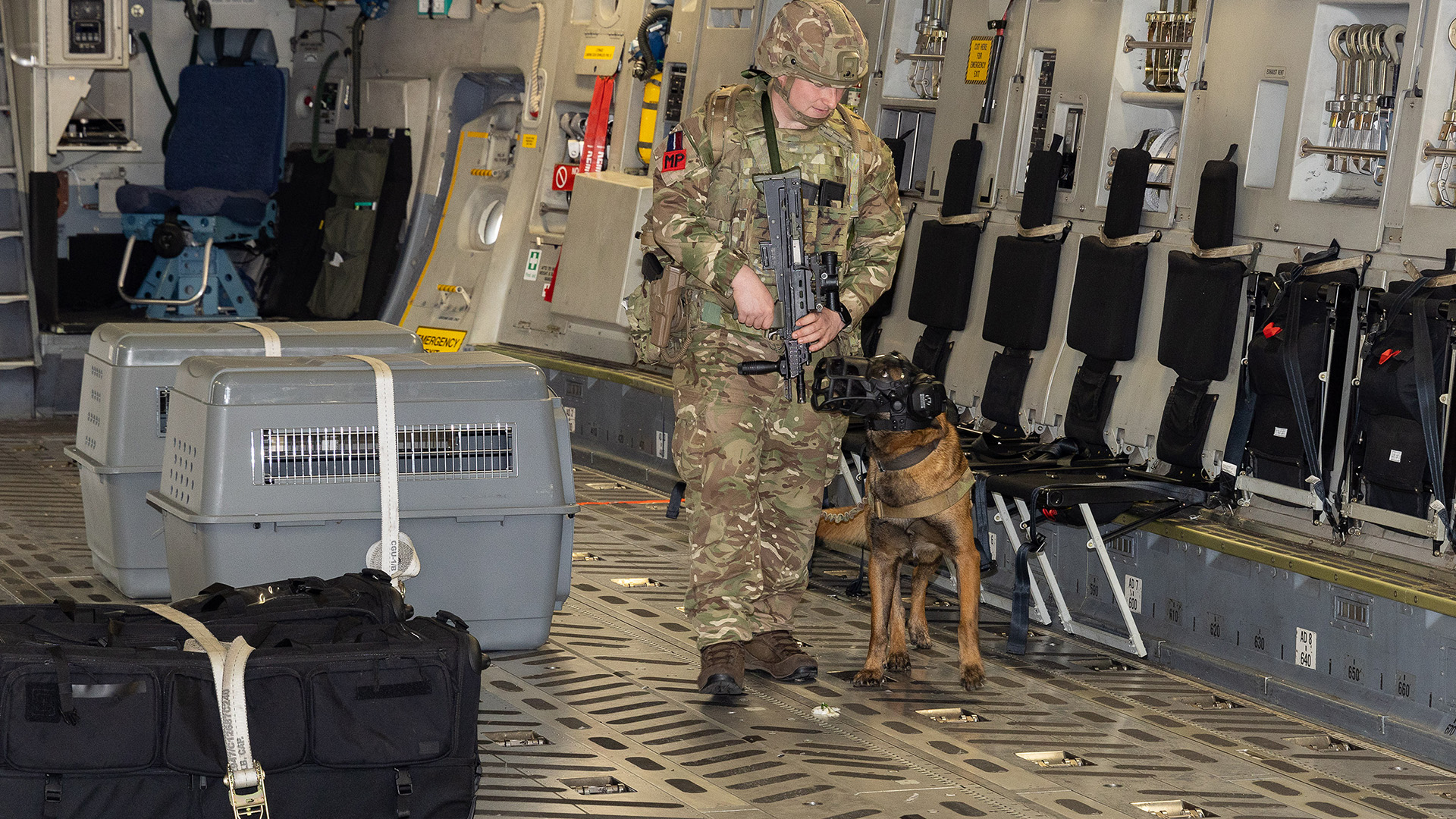
Around 1,000 additional personnel are reinforcing the defence of British and allied assets in the Middle East.
This figure does not include those permanently stationed at RAF Akrotiri, but rather personnel who have been deployed to the region since the outbreak of the Iran war.
Among the personnel coordinating the Coalition air defence in the Middle East is the Royal Air Force's Air Command and Control Force (Air C2 Force).
The force delivers constant control, coordination and situational understanding to help protect people, assets and airspace.
The detachment combines specialist controllers, surveillance operators and planners who maintain a continuous recognised air picture and ensure the safe use of the congested airspace.
It plays a crucial role in managing aircraft movement, supporting air defence missions such as those flown over the Middle East, and ensuring that all Coalition partners can operate together.
The Military Working Dog (MWD) Operational Capability Unit has also been deployed to RAF Akrotiri.
The MWD section helps protect RAF assets that are defending airspace.
The section is made up of multiple MWD capabilities: Patrol, Police, Drugs and Explosive Detection Dogs.
Related topics
Join Our Newsletter