By Sea, by Land: Royal Marines storm German supply ship on Ex Strike Warrior

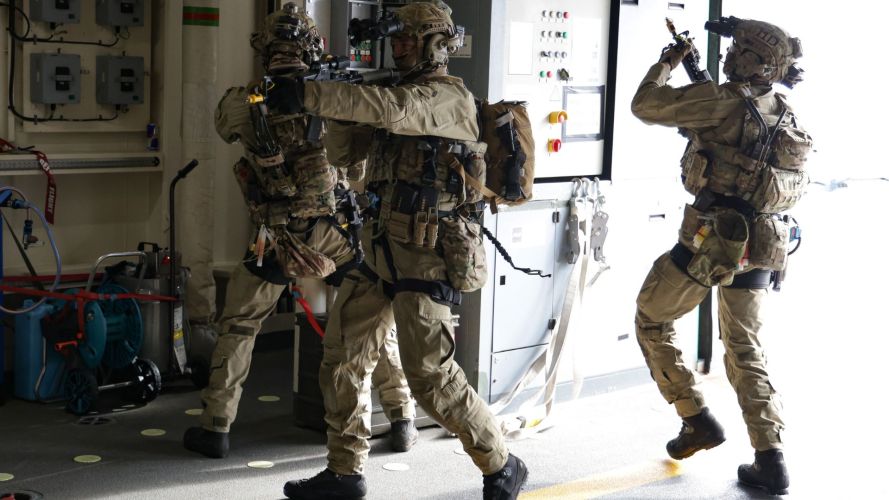
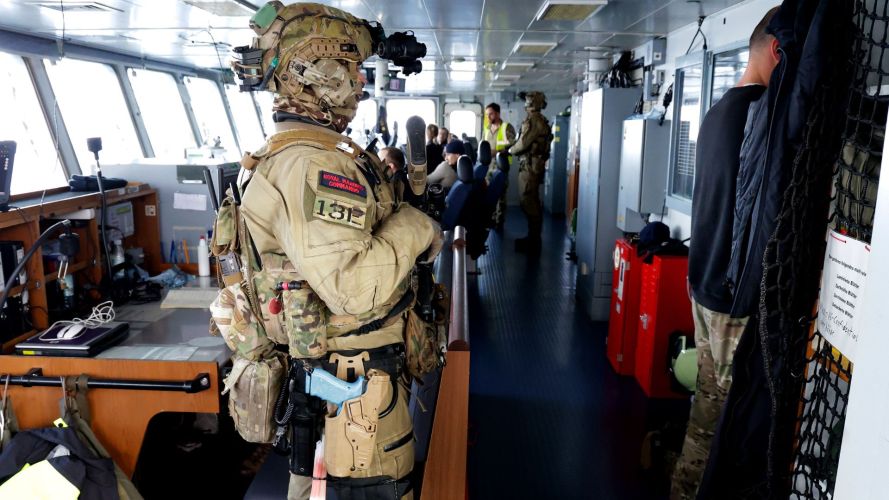
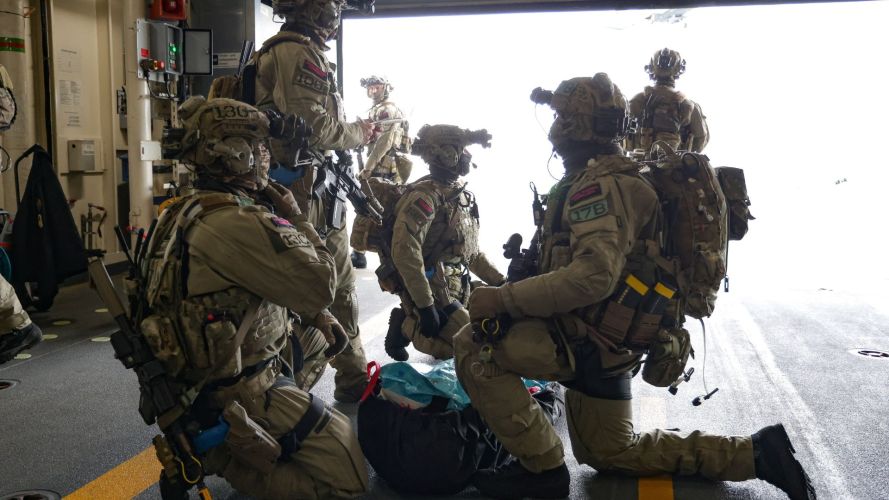
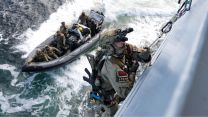
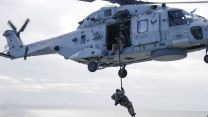
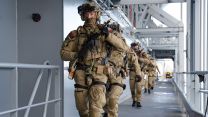
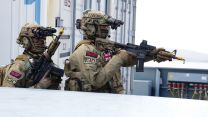
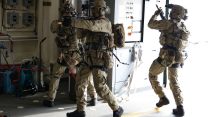
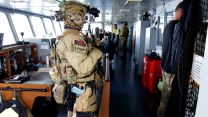
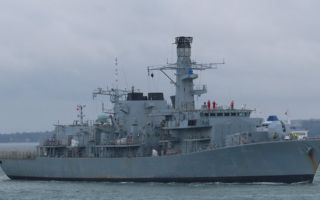
In an undisclosed location in UK waters, Royal Marines from 42 Commando, specialists in maritime interdiction, honed their skills aboard a German Navy supply ship.
As part of Exercise Strike Warrior, personnel from K Company carried out a series of boarding, fast-roping and casualty evacuation drills on FGS Berlin, the flagship of Nato's Standing Maritime Group One (SNMG1).
The UK-led Nato exercise marks the first time since the war in Afghanistan that all elements of the UK Commando Force have operated together.
Activities ranged from boarding operations to Navy and Army commandos from the 148 (Meiktila) Commando Forward Observation Battery, deployed via a German U-boat to carry out reconnaissance tasks.
By sea
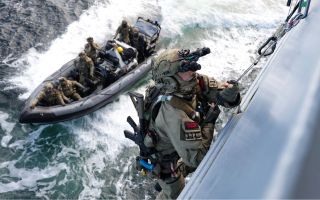
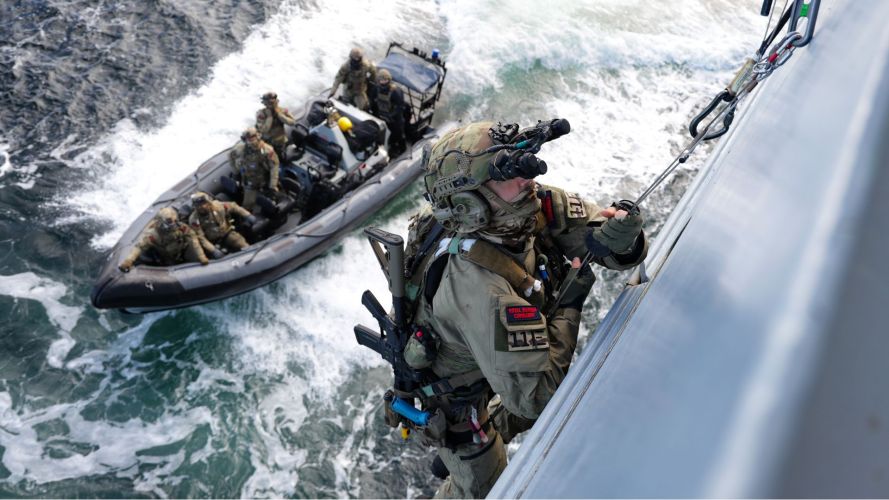
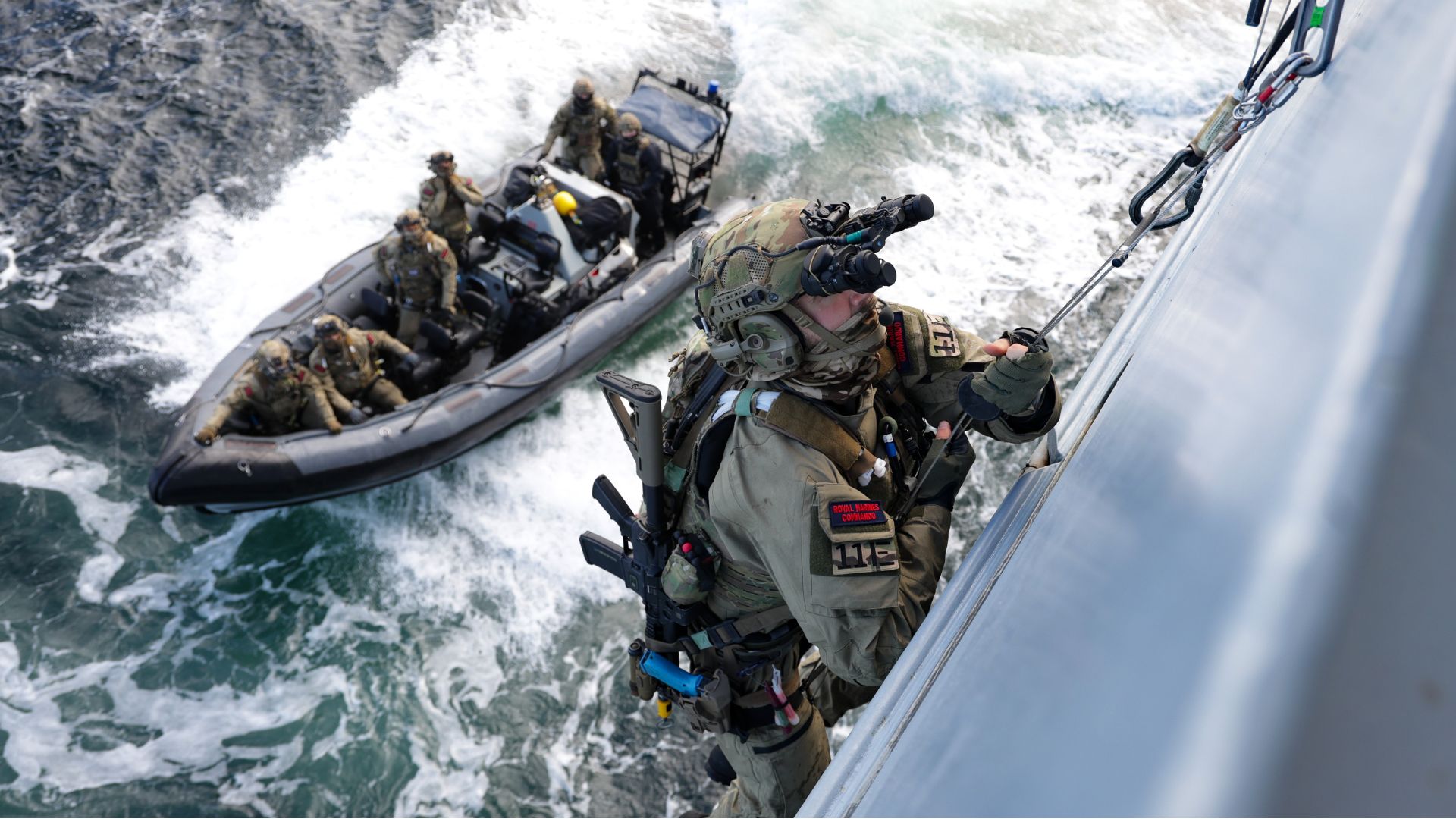
As with boarding operations such as those conducted during Ex Strike Warrior, speed is paramount. From a rigid inflatable boat, the commandos boarded the German vessel using caving ladders.
Although lightweight and offering immense flexibility, it is a strenuous task.
Thin wire cables and barrow rungs mean the ladder can violently twist and turn, especially in strong winds at sea.
Because the ladder hangs freely, climbing it like a conventional ladder would cause the climber's feet to swing out, leaving their arms to support their full body weight.
Instead, the climber adopts the heel-toe lock. Stepping onto a rung with one foot normally, the other leg wraps around the backside of the ladder, and the heel is pushed through the back of the rung.
The arms mirror this action: the climber grips behind the rung to keep the chest flush against the ladder.
Breaching equipment and weapon systems add further weight, making this a skill the Royal Marines must practise repeatedly.
By air
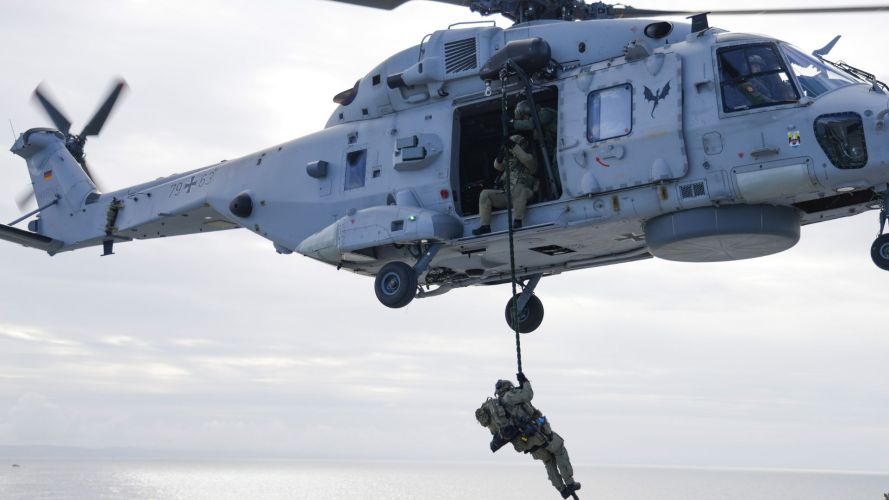
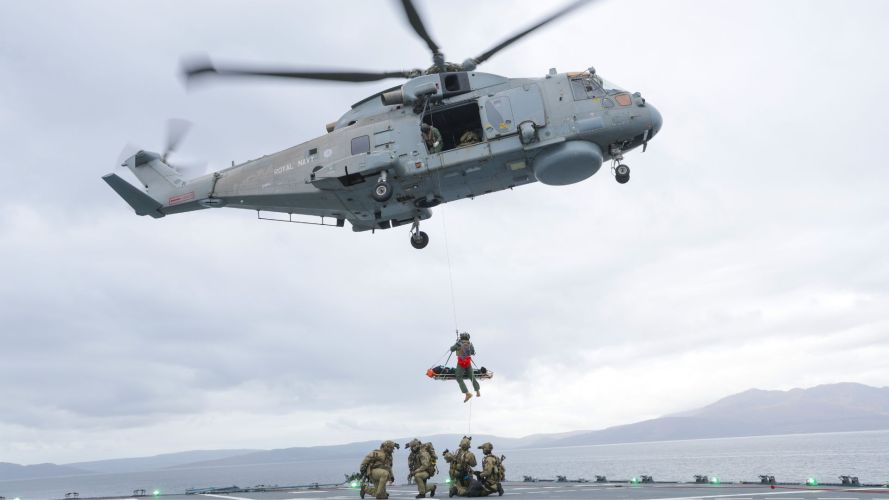
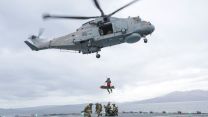
While some personnel from K Coy approached by sea, others descended by fast-rope from a Merlin helicopter operated by 824 Naval Air Squadron. This technique offers a much faster alternative to a maritime approach and is a skill personnel practise routinely.
It is also less physically demanding than the caving ladder method, and allows personnel to carry heavier loads.
However, the increased speed and efficiency come at the expense of tactical surprise.
Casualty evacuation drills
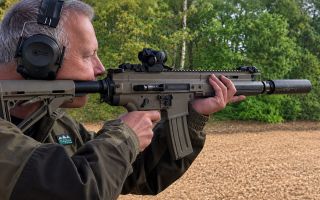
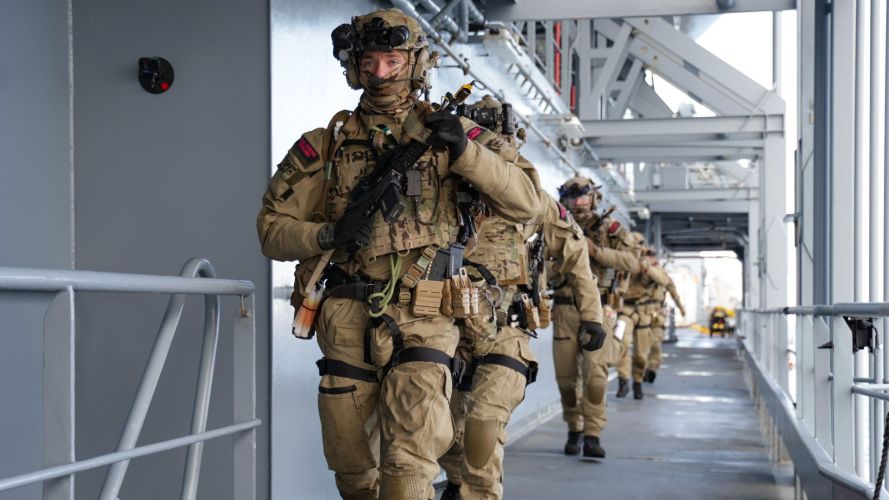
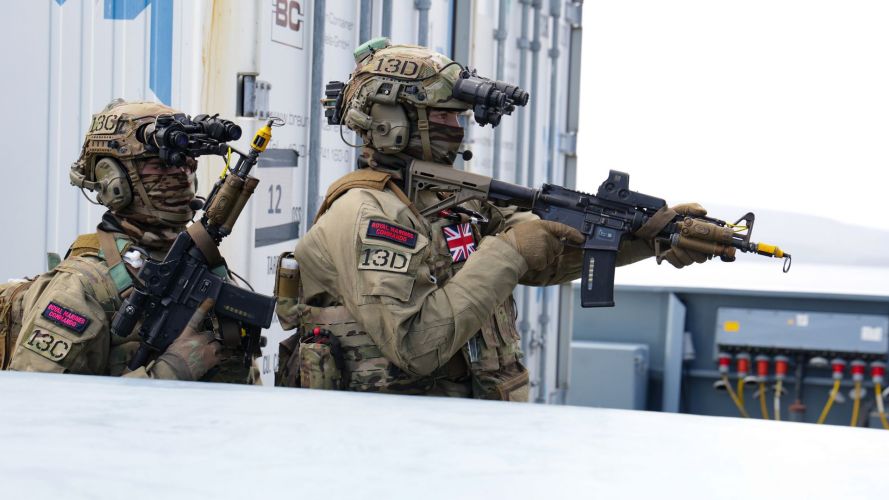
Once aboard, the priority is to secure the ship's bridge and control rooms. Equipped with short-barrelled L119A1s – rifles optimised for close-quarters battle (CQB) – the commandos form a single-file formation known as a stack, then clear the vessel room by room.
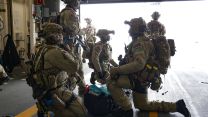
During the CQB phase, a simulated casualty provided both commando and Royal Navy personnel with an opportunity to rehearse their casualty evacuation drills.
Related topics
Join Our Newsletter