Switzerland's first fifth-gen F-35 takes shape as armed neutrality enters the stealth age
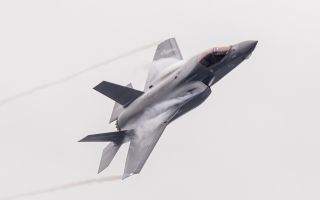
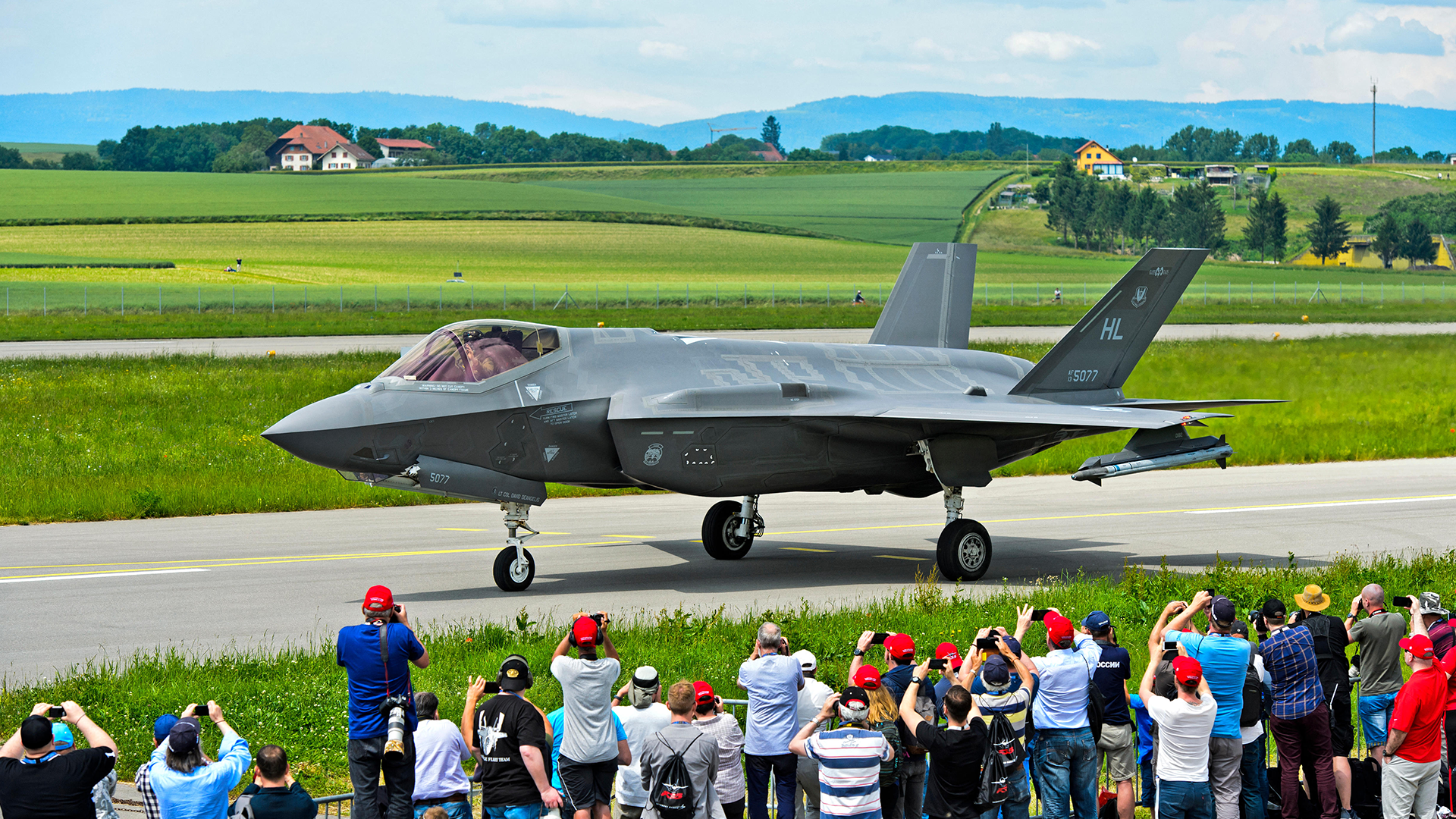
Switzerland's first F-35A stealth fighter has entered production in the United States, taking the neutral country a step closer to operating one of the world's most connected combat aircraft.
The Alpine country has been internationally recognised as neutral since 1815 and remains outside Nato, but its next-generation fighter connects to other F-35s, enabling information sharing.
The F-35A is already in use or being acquired by several Nato members and US allies, including the UK, Italy, Norway, Finland, Germany, Poland, Israel, Japan and South Korea.
- Italian F-35B jets land on Finnish highway as air forces train to fight from roads
- USAF marks a first in Finland as F-35A Lightning II jets come in to land on highway
- UK's 48th F-35B arrives at RAF Marham with first Lightning order now completed
The fighter jet is being built at Lockheed Martin's plant in Marietta, Georgia, with the first Swiss jets due to be delivered from mid-2027 for pilot training in Arkansas. The first F-35As are expected in Switzerland from mid-2028.
The aircraft will replace Switzerland's ageing F/A-18 Hornets and F-5 Tigers used for air policing.
The Swiss Air Force keeps two armed fighters on standby around the clock, ready to take off within 15 minutes if required.
Why Switzerland chose the F-35A
The F-35A is the conventional land-based version of the aircraft, designed to operate from normal runways.
That made it the relevant variant for Switzerland, whose requirement is to defend national airspace from its own air bases.
Most international F-35 customers and the US Air Force use the standard land-based variant. Its sensors and data systems are central to why countries buy it.
The aircraft gathers information from around the jet and fuses it into a clearer picture for the pilot.
It can also share information with other F-35s, allowing aircraft in the same formation to work from a common picture.
The F-35 family has two other versions. The F-35B is built for short take-off and vertical landing, allowing it to operate from ship runways and even roads.
Switzerland is a landlocked country, so the F-35C variant would not be of much interest as it is built for aircraft carriers, of which Switzerland has none.
The aircraft was selected in 2021 after a Swiss evaluation of rival bids on effectiveness, product support, and cost.
The F-35A was presented as the option with the highest overall benefit and the lowest overall cost.
That final point is now carrying the heaviest political strain.
From 36 aircraft to 30
Switzerland's F-35 deal followed a bruising earlier defeat at the ballot box, when voters rejected a plan to buy the Swedish Gripen fighters in 2014.
Six years later, voters narrowly approved funding for new combat aircraft, giving Bern another chance to replace its ageing fighter fleet.
The government chose the F-35A in 2021 and signed a contract the following year for 36 aircraft, with deliveries planned between 2027 and 2030.
The deal was worth CHF6.035bn, about £5.7bn, and was presented in Switzerland as a fixed-price purchase within the budget approved by voters.
The US has since pushed for Switzerland to cover additional costs.
Swiss officials have put the possible extra bill at between CHF650m and CHF1.3bn, about £615m to £1.2bn, after inflation and higher material and energy costs fed into the pricing dispute.
The Federal Council now expects to buy about 30 F-35As, rather than the 36 originally planned.
It is seeking a CHF394m supplementary credit, about £373m, but has decided against asking parliament for the full amount needed to keep the fleet at 36.
Buying all 36 aircraft would require about CHF1.1bn, around £1bn, in extra funding.
The dispute has played out during a wider strain in US-Swiss relations when Washington imposed a 39% tariff on Swiss imports in 2025, before later agreeing to cut the rate to 15%.
Armed neutrality
The F-35A may look like an unusual purchse for a country whose own policy prohibits it from taking part in armed conflict, but Switzerland's neutrality has always been backed by force.
Switzerland has a militia-based armed forces system built around citizen-soldiers, with compulsory service for Swiss men and voluntary service for women.
Most personnel are not career troops in the British or American sense, but people who complete military training, return to civilian life and remain part of the country's defence system through further service.
That model reflects the Swiss view that neutrality requires the means to defend the state if needed.
The Swiss Air Force follows the same logic with Swiss fighters there to police the country's airspace, intercept aircraft when needed and give Bern its own means of response if something happens above Swiss territory.
Air2030
The F-35A is being bought under Air2030, Switzerland's programme to renew the systems that protect its airspace.
The same package includes Patriot long-range ground-based air defence, upgrades to air surveillance and work on the systems used to manage air operations.
Fighters can identify and intercept aircraft, while ground-based air defence and radar systems help detect threats and protect key areas from the surface.
The programme is valued at around $8bn (£6bn).
What happens next
The first Swiss F-35A will continue through production in the US before aircraft are delivered for training from mid-2027.
Swiss pilots will begin on the aircraft in Arkansas before the first jets arrive in Switzerland from mid-2028. Later aircraft are due to come through the final assembly line at Cameri in Italy.
The unresolved question is how many aircraft Switzerland will ultimately receive.
Join Our Newsletter