US-2 Japanese amphibious aircraft: Are military sea planes making a comeback?
Are military sea planes about to make a comeback?
Long-range helicopters like the Sikorsky MH-60 Seahawk, and the ships they can operate from, have largely replaced seaplanes in many military roles. Likewise, there are plenty of military transport aircraft, such as the C-130 or A400M, to deliver logistics to far-flung places, if you can create the landing spaces.
If that is true, why are the US and China both reportedly engaged in developing military sea planes again?
The US-2 and its features
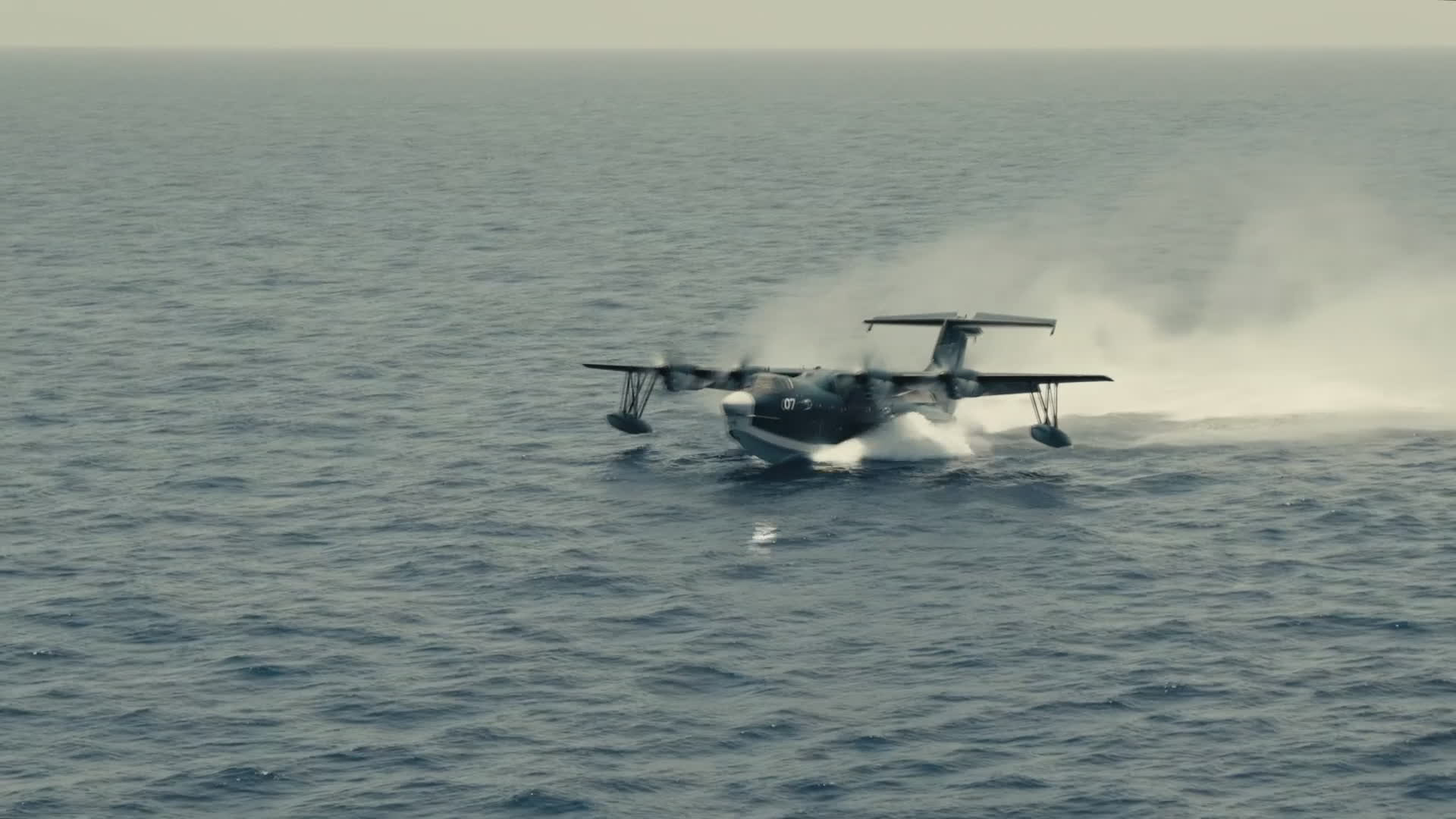
There are six US-2s serving in the Japan Maritime Self-Defence Force. They are used in search and rescue operations at sea and on remote islands, making them a fast-response asset in the vastness of the Pacific Ocean.
A US-2 has been deployed more than 1,000 times for maritime rescue operations already and can land just about anywhere, even in rough seas and bad weather, and it can get to where it's needed fast.
Its four powerful Rolls-Royce AE2100J turboprop engines use jet turbines to rotate the propellers, producing 4,600 horsepower.
They carry a standard crew of 11 that includes divers, paramedics, and sensor operators, with room for 20 passengers or 12 stretchers.
It can also be used for firefighting and can drop up to 15 tonnes of water and its value as a rapid transporter means it can carry cargo and make deliveries to remote island chains and coastal outposts.
The US-2 has an electronic integrated instrument panel, with digital displays integrated into one LCD panel and a pressurised cabin for high-altitude flights to avoid storm systems when carrying casualties.
Its fly-by-wire control system is computer-controlled.
Crucially, it can take off and land at extremely slow speeds to match the sea state, with its design allowing it to land on water with three-metre waves, which is a third of its own height.
Its short take-off and landing capabilities mean that the US-2 only needs one-fourth of the distance a commercial airliner would need to get airborne or land.
That all adds up to an aircraft that can fly further and faster, without any need for a runway, to massively increase the range at which operations can be conducted.
Why are China and the US interested in such a capability?
If a conflict were to break out between them, this could be a critical capability gap.
Naval warfare and war itself are changing rapidly. The advent of Ukrainian sea drones has shown even a superpower's naval forces can be attacked and driven away by kit that can be created at a fraction of the cost of traditional naval assets which would be costly and time-consuming to replace.
The Pentagon has precisely zero military sea planes at its disposal, flying its last in 1968, although it could consider leasing aircraft, such as the US-2.
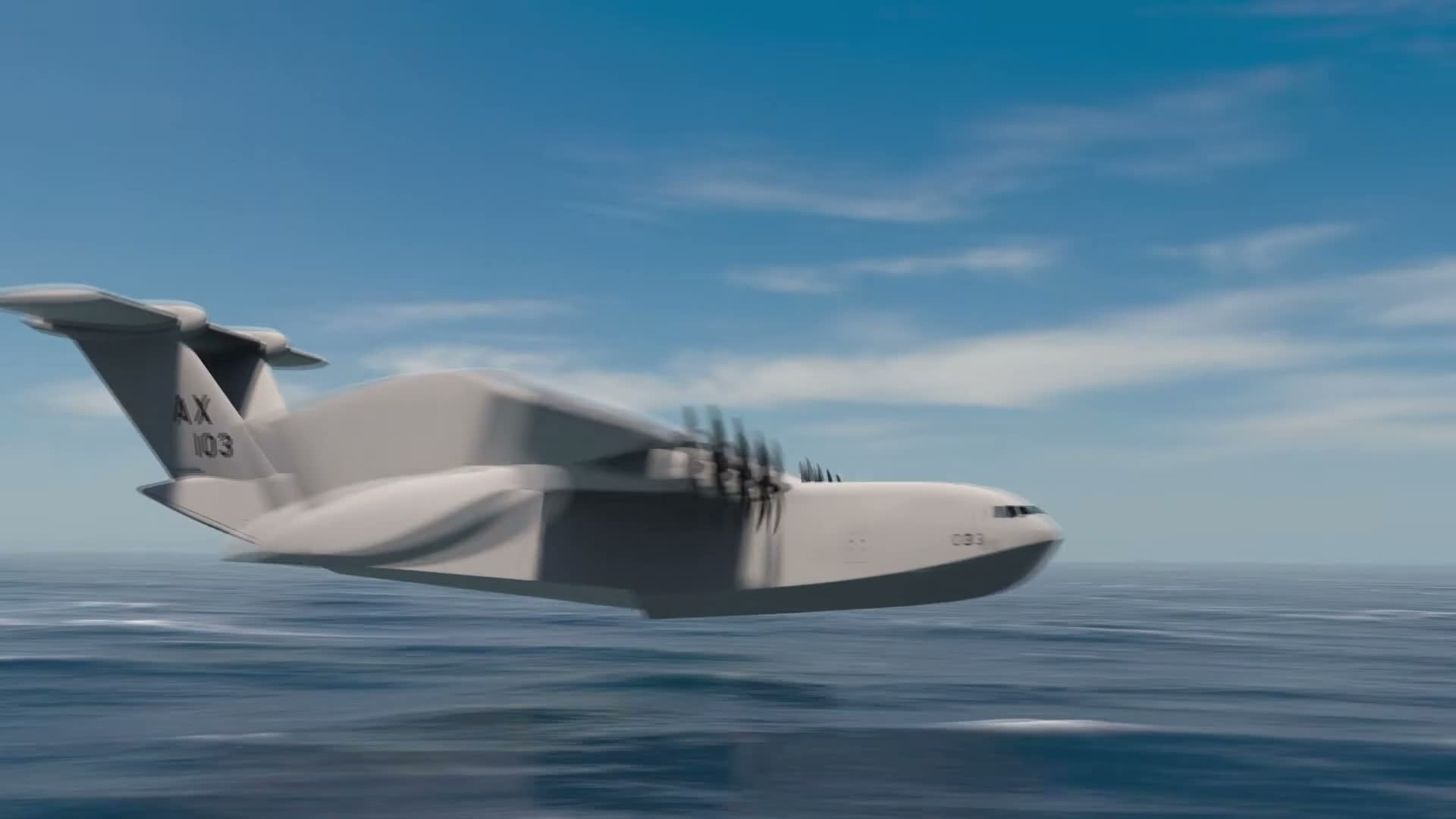
Defence Advanced Research Projects Agency (DARPA), the research and development agency of the US Department of War, has looked at creating "an affordable and innovative sea plane that can potentially transform fast logistics missions" for defence.
It is called the Liberty Lifter X-Plane and combines what's called wing-in-ground effect, allowing it to fly metres above the waves on a cushion of air, with the ability to fly at 10,000 metres to hop over storm systems.
The full-sized version could carry 90 tonnes, including heavy military assets like two amphibious combat vehicles or six standard 20ft shipping containers.
For now, these remain concepts, with the US Navy holding back from making a formal requirement for this capability.
For Beijing, an image released on Chinese social media last year suggested that China may be a few steps ahead with what appears to be a Soviet-era-style Ekranoplan ground effect transporter.
Experts have said that such an aircraft could massively improve the mobility of military forces.
With geopolitical situations shifting all the time, a reinvention of the sea plane could be a game-changer, just as drones have altered all the pieces on the board across land, sea and air.
Join Our Newsletter