Flamingo cruise missiles, missile-drones and a Pelican – what Ukraine used in Moscow attack
Ukraine used at least 10 different types of long-range weapons in its major attack on Moscow and the surrounding region, according to President Volodymyr Zelensky.
The overnight operation targeted Moscow's oil refinery facility and surrounding areas, with Mr Zelensky naming FP-1, RZ-100, MICH-2000, Palianytsia, Vendetta, Liutyi, Bars, Flamingo, Sichen and Pelican among the weapons involved.
The list includes a conventional long-range cruise missile, jet-powered weapons that Ukraine describes as "missile-drones" and several propeller-driven one-way attack drones.
- An interceptor by year's end, an interception by July: The race to build Freyja
- UK joins 10-country push to develop new anti-ballistic missile shield for Ukraine
- Gen Z women v Putin: The young women fighting Russia on Ukraine's frontline
The attack killed at least three people including a 44-year-old woman and an elderly man, in separate incidents.
Moscow's regional governor, Andrey Vorobyov said 400 people had to be evacuated after a drone crashed into a 21-storey building triggering a fire.
Flamingo – the heaviest weapon in the attack
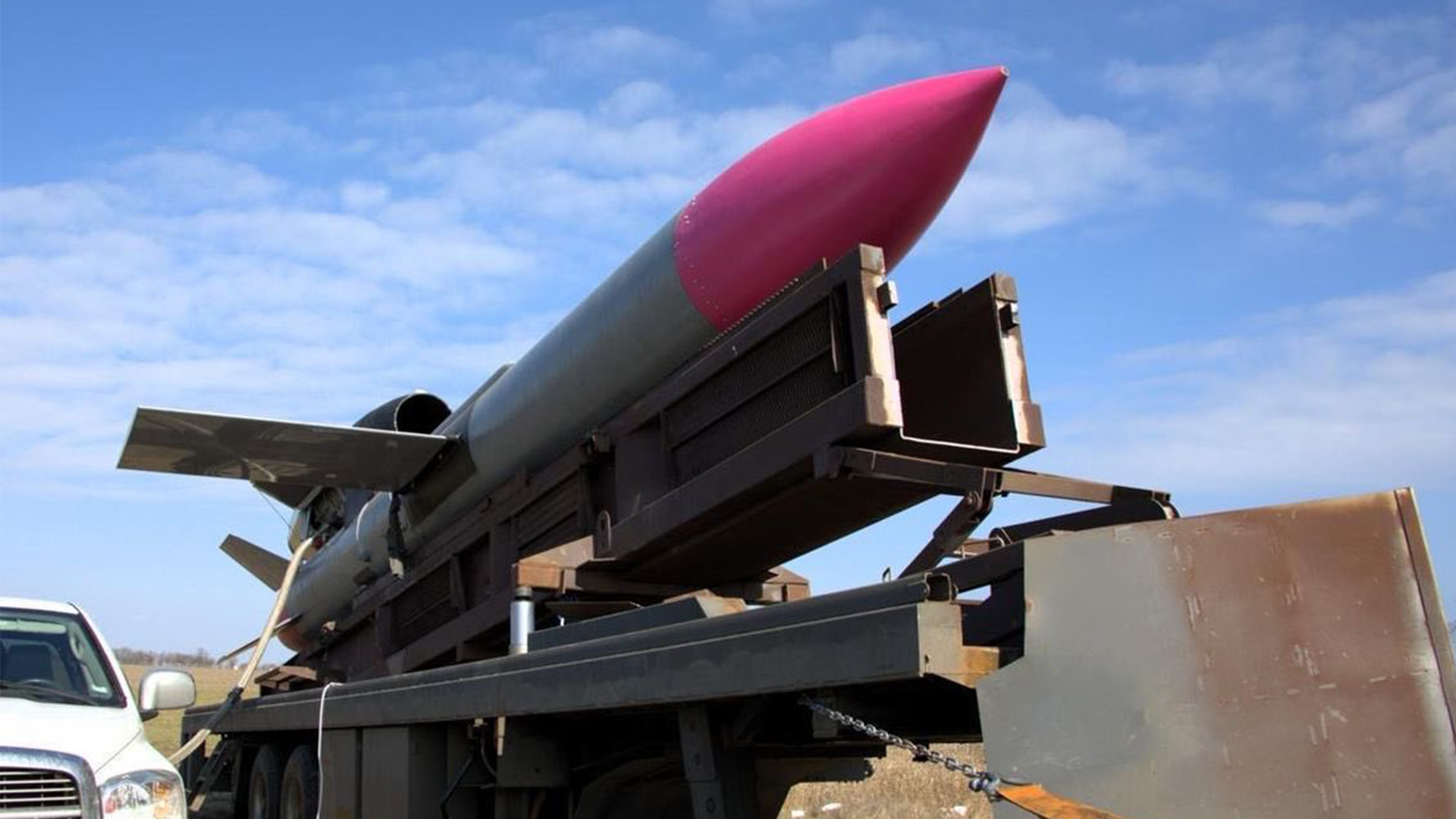
Flamingo is a Ukrainian ground-launched cruise missile with a stated range of up to 3,000km and a warhead weighing more than one tonne.
Ukraine's presidential office said in April that serial production of the weapon began in 2025.
Russia's defence ministry also acknowledged the presence of Flamingo missiles in the 19-20 September attack.
It claimed Russian forces shot down eight Flamingo cruise missiles as well as 1,951 attack drones during a 24-hour period, and said another cruise missile had veered off course and fallen in an uninhabited area.
The Russian MOD further claimed that all Flamingos approaching targets in the Moscow region had been intercepted.
The MOD also claimed that Ukraine's attack was aiming to "disrupt the democratic expression of the will by citizens of the Russian Federation".
Russia's first parliamentary elections, expected to last three days, began on Friday.
The voting marks the first time Russia has held State Duma elections since the launch of the full-scale invasion of Ukraine in February 2022.

Palianytsia – Ukraine's jet-powered missile-drone
Mr Zelensky also named Palianytsia, which Ukraine officially describes as a long-range "missile-drone".
The weapon uses a turbojet engine and was first successfully used in August 2024, according to the Ukrainian president's office.
Unlike Flamingo, Ukraine has not publicly given Palianytsia's range or warhead weight in its latest official catalogue.
The designation illustrates an increasingly blurred dividing line between cruise missiles and one-way attack drones.
Weapons such as Palianytsia use jet propulsion and are intended to fly into their targets, but Ukraine has developed them with some of the lower-cost manufacturing principles associated with its drone programme.
Before Ukraine was able to manufacture it's own long-range weapons at scale, it was reliant on allies for US-made ATACMS.
Bars – another cruise missile-drone
Bars is another of the weapons in Zelensky's list which Ukraine officially classifies as a cruise missile-drone.
Developed in 2024, Bars uses a compact turbojet engine and has an officially stated range of 700 to 800km.
However, a senior representative of the Ukrainian company behind the weapon told Janes in June that a modified version had already been used in a strike nearly 1,000km inside Russia.
The standard Bars was described as cruising at around 400 to 450km/h, with a maximum take-off weight of 135kg and a 22kg warhead, although heavier payload configurations are also available. That puts it in a very different class from Flamingo, whose warhead alone weighs more than a tonne.
What is Pelican?
Less is known about Pelican, which President Zelensky named without identifying it as either a missile or a drone.
Initial Ukrainian media reports linked it to the FP-7, one of two ballistic missiles being developed by Ukrainian manufacturer Fire Point.
The company told Reuters in April that the FP-7 was a supersonic missile with a range of around 300km and was nearing its first military deployment.
But the identification was later called into question. The Guardian reported that military sources described Pelican as a long-range drone, while the Washington-based Institute for the Study of War said a Ukrainian open-source intelligence source had also identified it as a one-way attack drone.
ISW said it could not verify that FP-7 ballistic missiles were used in the operation.
The FP-7's reported 300km range would also be too short to reach Moscow from Ukrainian-controlled territory.
Fire Point's larger FP-9, by comparison, is designed to travel up to 850km and carry an 800kg warhead – a range the company says would put Moscow within reach.
Mr Zelensky did not say which of the weapons on his list was used, leaving Pelican's identity – and whether a Ukrainian ballistic missile was used at all – unconfirmed.
Join Our Newsletter