Two punishing days in the barren expanse of the Sahara desert, up and over vast shifting dunes, and all under the unceasing weight of 35°C heat is what awaited runners taking on the Ultra 4 Veterans ultra marathon.
Taking place in the city of Tozeur, southwest of Tunisia, it offered fitness enthusiasts the ultimate test of endurance and mental resilience.
Among them was Harry Mackarness, a former British Army officer who spoke to BFBS Forces News on completion of this merciless event – 100km in one of the most inhospitable regions on earth.
Beyond the limits
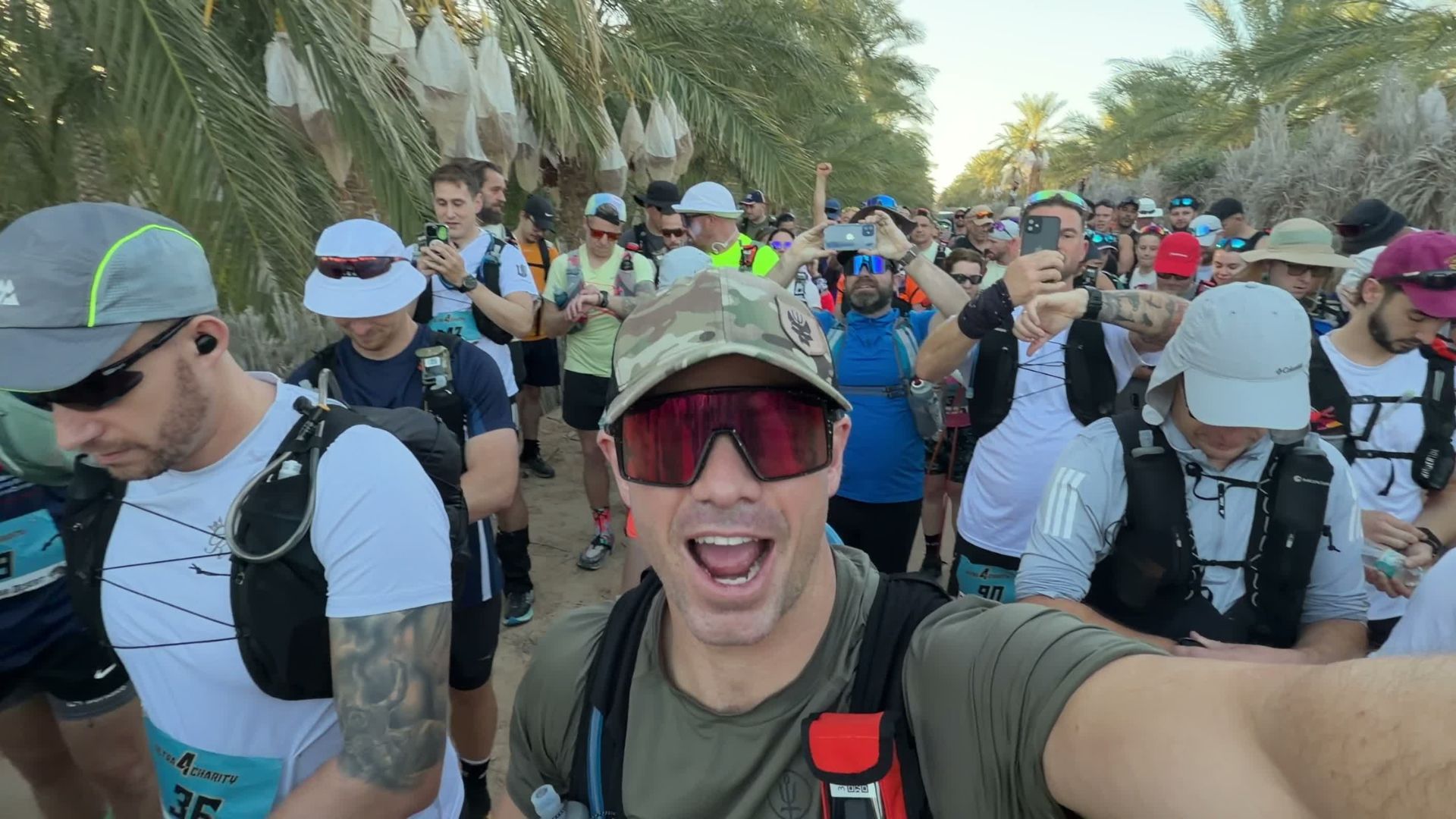
Joining 300 runners at the start line – comprised largely of serving and former Armed Forces personnel – the magnitude of what lay ahead began to dawn on Harry.
"We got bused out to the start line... we had music pumping, everyone's kind of nervous," he said. "And then you just start running… You quickly realise, wow, this is a lot of sand, and there's actually more terrain than I assumed."
The conditions faced here are punishing. Known as the "Gateway to the Sahara", southern Tunisia is characterised by high, almost continuous sunshine, often exceeding temperatures of 50°C, and little rainfall.
In vast arid desert landscapes, heatstroke – when the core body temperature exceeds 40.6°C – can quickly become fatal.
Strict hydration is key, sometimes requiring up to 10 litres a day, while effective heat management and proper acclimatisation are equally critical.
Aid stations situated every 10km supplied the participants with water, electrolytes and buckets of cold water, allowing runners to douse their hats before heading back out into the heat.
"They had medics, physios – everything," Harry explained. "We were really well looked after.
"Barring a couple of people, I think everybody made it through the race. Unfortunately, some got hit with the heat or injuries, but it's to be expected for something so challenging."
The Sahara shuffle
As a fitness coach who strayed into the world of influencing, Harry would admit running rarely took priority.
But while fitness levels may waver throughout the race, one constant endures through adversity: the military mindset.
"We have all been on some really bad exercises, bad operations, where you do just have to grin and bear it because there is an end in sight," he said. "Whether it's the end of an operational tour or exercise, there is nothing that's going to make that happen any quicker.
"You can't just magic yourself there – you have to do the work to get there. And I think that’s just something that you take with you."
Ultramarathons, while inherently solitary, can often be paradoxically social. For Harry, bonds began to form between checkpoint to checkpoint, and that 'one in, all in' military mentality came into play.
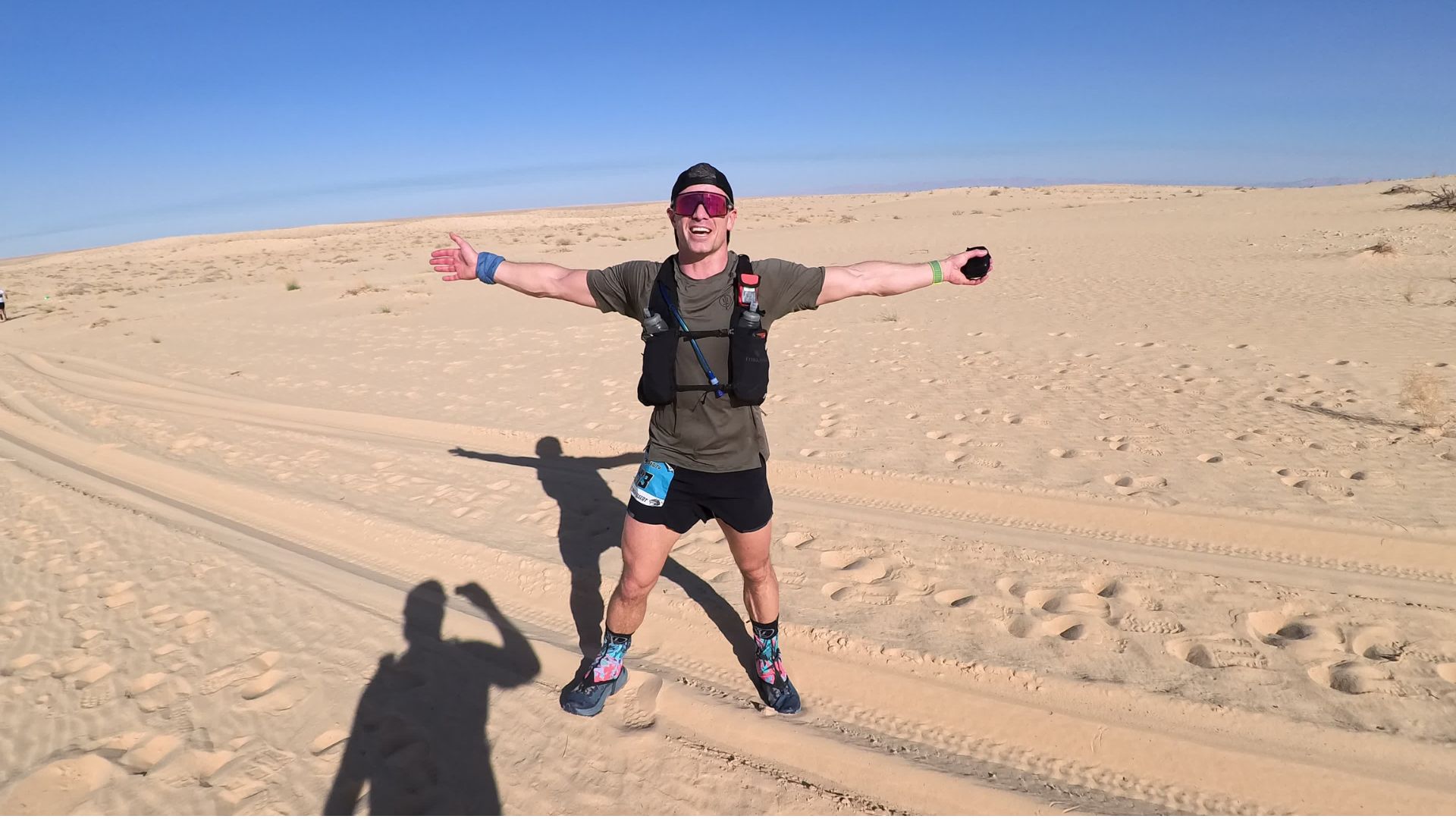
"Having other military people or ex-military around me was really helpful," he said. "The group all got around each other and helped lift people up – the same as being in a cold and wet shell scrape in Brecon in the winter.
"This was just a complete reverse of that, but it's the same way you motivate your oppos."
The 100km race was split into two 50 km legs, a far greater distance than Harry had ever run before.
As the hours pounding the soft sand stretched on, the mental and psychological tolls began to manifest.
"I had a total humour failure about 5km from the end of day one – from the pain and the heat.
"We've been running at nine hours at this point, and the race was actually over, as we'd done well over 50km. I wanted to stop right there and then, but thankfully, my mate got me through it."
The event was split between participants running 100km, 50km, and 25km. For those fortunate enough to be tackling the full distance, the night was spent at a desert campsite provided by the organisers – a brief respite from the unrelenting heat, and a chance for some rest and recuperation.
"The second day, I had to change my running style to avoid the same hip flexor issue. A lot more like shuffling with a bergen on, but using your feet and ankles a lot more.
"I had to grin and bear it and run the last 16km without stopping, tears were coming down my face from the heat, from the exhaustion, from the physical pain, and from the pure stress of just knowing I was really up against it."
Crossing the line
For those taking on a feat of this magnitude, it demanded an equally extraordinary finish.
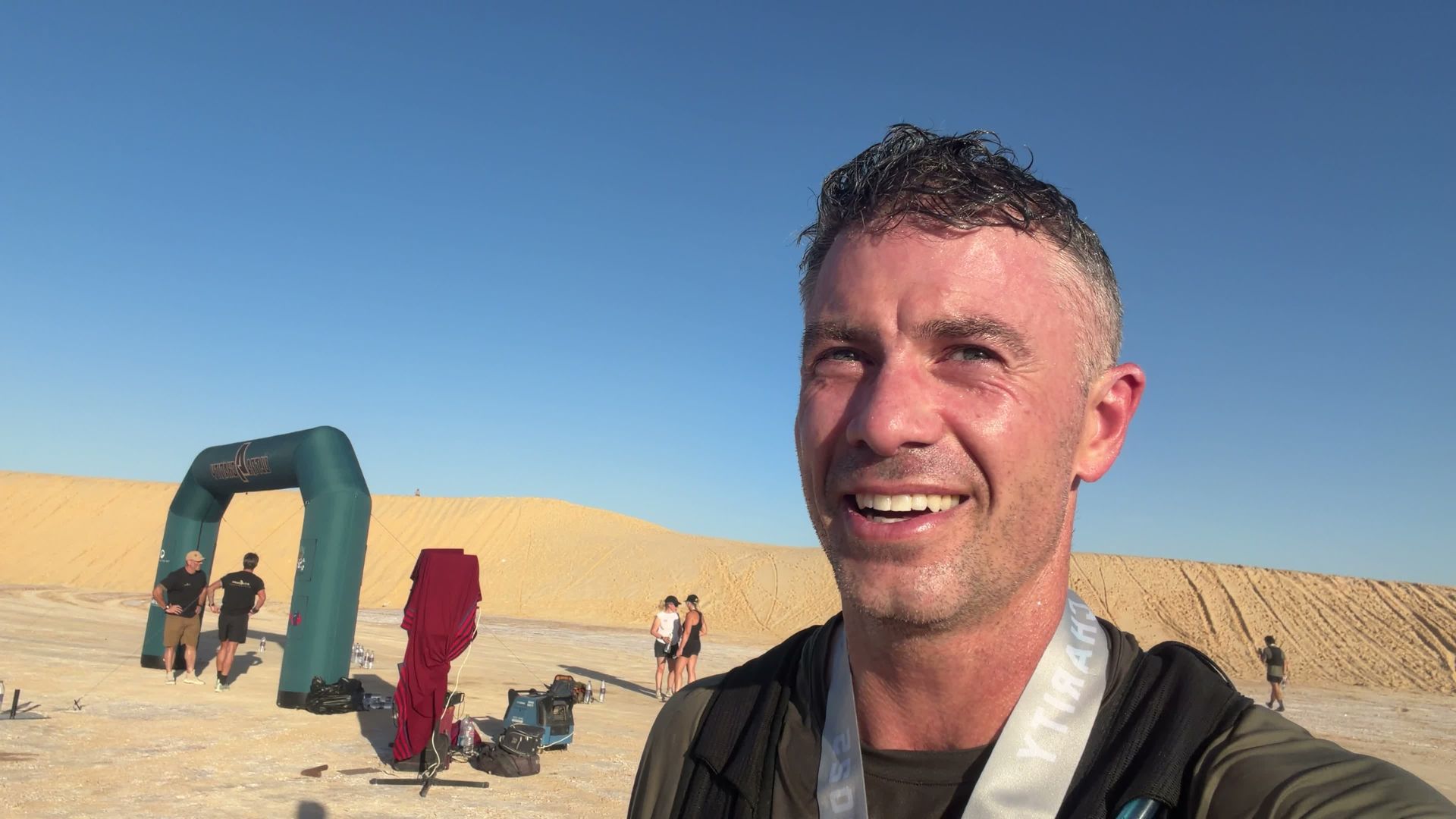
After two days of grit and determination, and as the sun began to set over the horizon, Harry crossed the finish line.
Racing up a dune, he looked out of the vast expanse of the Sahara desert he had just conquered – a landscape made iconic as the setting of Mos Espa – the home of young Anakin Skywalker from the Star Wars franchise.
"I forgot just how painful the previous 10 hours of running had been. It was incredible," he recounted.
Harry managed to beat his previous day's run by an impressive 13 minutes – a testament not only to months of dedication and hard work, but as a tribute to a former oppo.
"I did this [race] in memory of my old Sergeant Major, who sadly isn't with us anymore – Louis Iddon from the Light Dragoons," he explained.
"It’s just one of those things that sat in the back of my head the whole way around. I could just hear him saying 'come on, you're going to get through this, you're going to get to the end of this' – and he would have been thoroughly disappointed if I hadn't.
"That, for me, made it all the more important."
New frontiers
Ultra 4 Charity raises funds primarily for four veteran-focused charities: The Not Forgotten, Team Forces, REORG and Head Up, which provide mental health support and physical rehabilitation for service personnel.
The brainchild of SAS: Who Dares Wins star and former special forces operator Jason Fox, British Army veteran Brian Wood – whose gallantry in leading the first bayonet charge in 25 years in the Battle of Danny Boy earned him a military cross – and former paratrooper Richard French, the inaugural Tunisia desert ultramarathon raised more than £200,000 for veterans' charities.
Over the coming years, the Ultra 4 Charity team are expanding to new locations, from the mountains of Albania and the jungles of Africa to the frozen expanses of Iceland.
Harry's advice for anyone wishing to follow in his footsteps and take this challenge on?
"Absolutely go for it. It's got this amazing military and veteran group around it.
"Understand where you want to go, and what you want to do it for. If you want to do it for yourself, then that is a really big undertaking, but you will find it so worthwhile.
"And if you need anyone to come do it with you, reach out to me, I'll probably come do it with you." He laughed. "I'm kind of scared that I've developed a really expensive new hobby!"
Now a content creator, you can find Harry on all socials at @resurgent_harry
Related topics
Join Our Newsletter