Typhoon tests rocket system that could cut cost of downing a drone from $1m to just $20k

Typhoons and F-35s have successfully shot down a number of one-way attack drones launched by Iran and its allies over the past few weeks, but this has come at a huge financial cost.
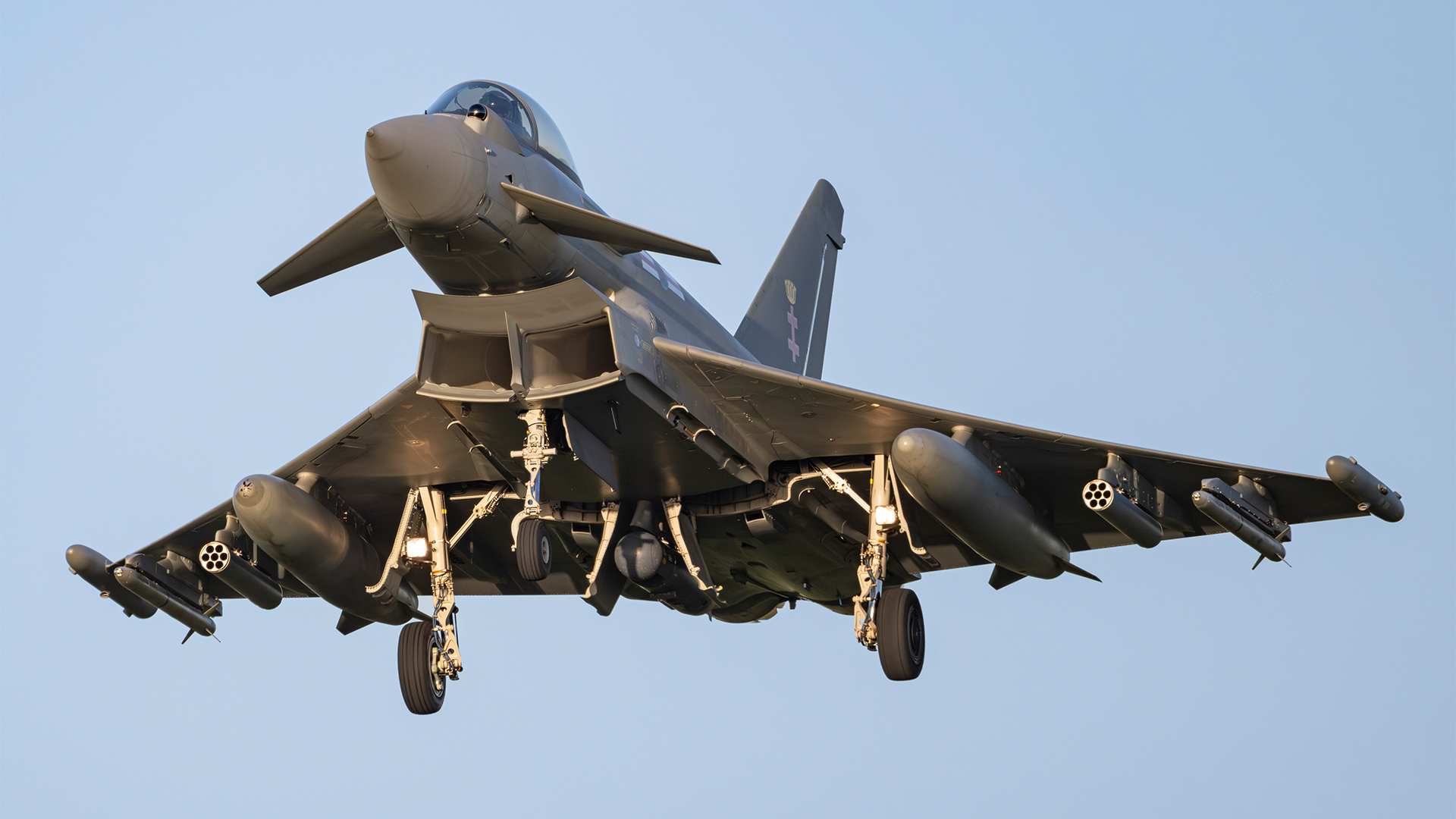
However, BAE Systems has successfully completed the test-firing of a low-cost precision weapon launched from a Typhoon, demonstrating a far more affordable solution to counter UAVs like the Shahed-136.
RAF Typhoon FGR4s are currently armed with a variety of missiles that were largely designed for air-to-air combat against enemy warplanes, and while they may be highly effective, they are also highly expensive.
Hydra meets laser
The AIM-120 AMRAAM (Advanced Medium-Range Air-to-Air Missile), for example, costs around $1m, while AIM-9X Sidewinders are roughly $450,000.
Typhoons also carry short-range missiles such as the IRIS-T (infrared imaging system tail/thrust vector-controlled) and the ASRAAM (Advanced Short Range Air-to-Air Missile), and these are also costly.
When a 617 Squadron F-35B shot down a drone with one such missile, Air Vice Marshal (Ret'd) Sean Bell, a former fighter pilot, likened it to someone using a "sledgehammer to crack a nut".
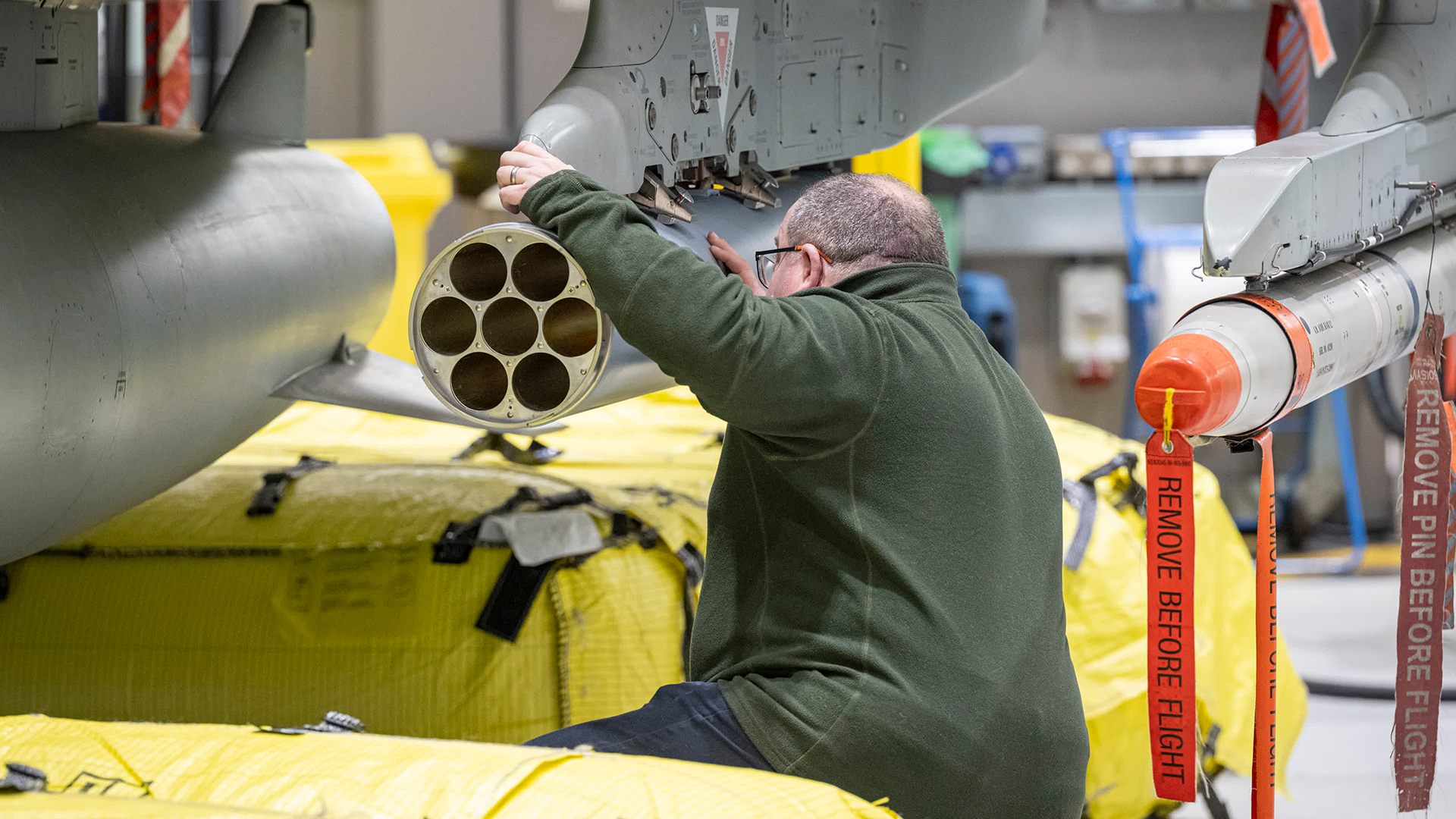
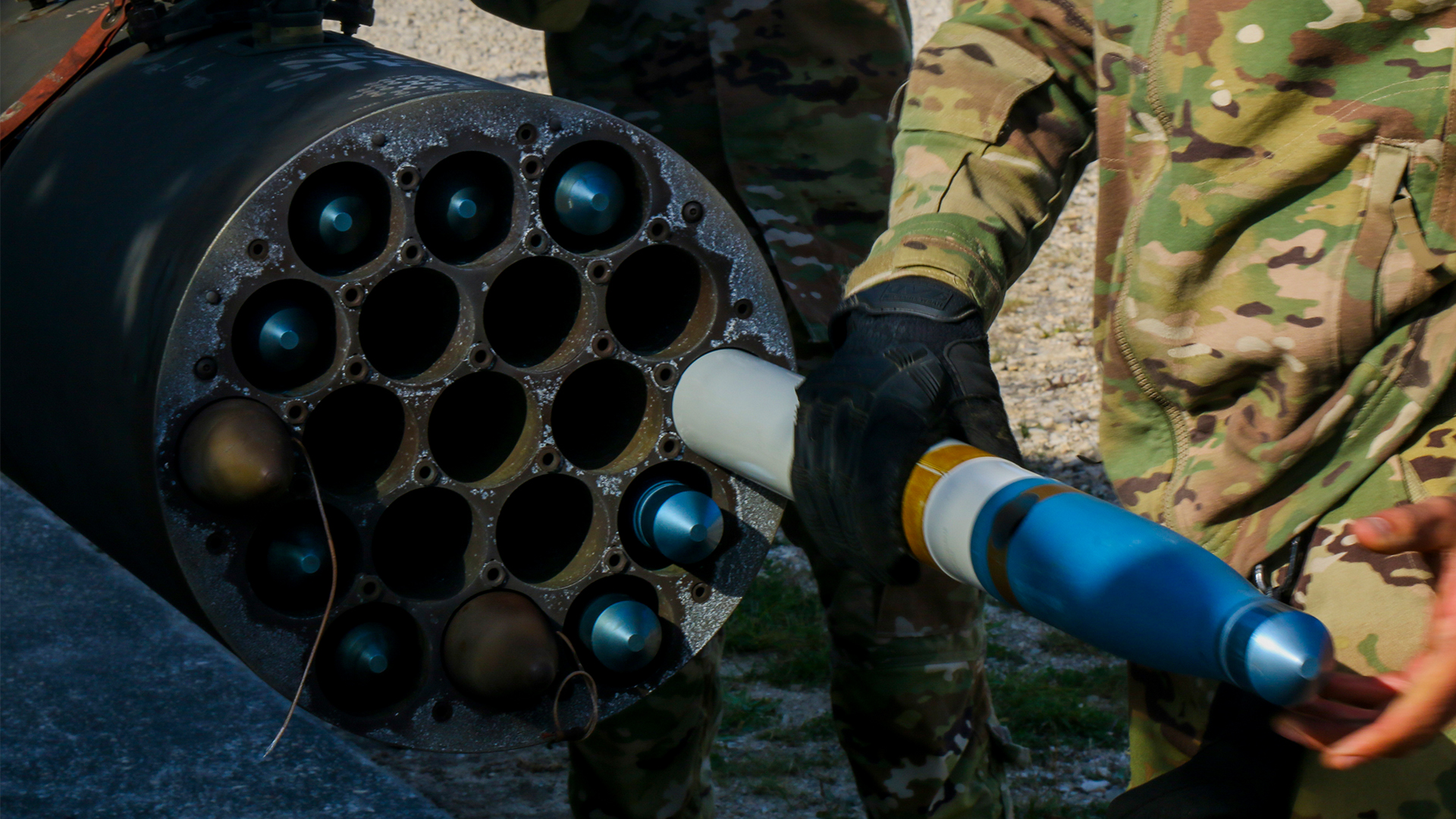
To offer a more cost-effective solution, BAE Systems and the RAF have been experimenting with the Advanced Precision Kill Weapon System (APKWS) laser-guidance kit, a system which is already in use on a number of US aircraft such as the F-16 Fighting Falcon.
This kit adds an additional section to unguided 70mm rockets like the Hydra, transforming them into precision-guided munitions.
The system, which first went into production back in 2008, creates a weapon with better accuracy that can be deployed against air or ground targets.
As well as fixed-wing aircraft, the system can be fitted to helicopters like the AH-64 Apache, uncrewed aerial vehicles, static and mounted ground platforms, and maritime vessels.
How it works
The APKWS kit includes advanced distributed aperture semi-active laser seeker optics located on all four guidance wings on the rocket.
These are protected by wing-slot seals prior to firing, avoiding the adjacent fire damage that can interfere with a nose-mounted seeker.
Once the rocket is fired, the APKWS kit's wings deploy and the optics lock on to designated targets, guiding the rocket to the target.
System proven
The trial involving the Typhoon saw the aircraft fitted out with the kit at the flight test development centre in Warton in Lancashire.
The Typhoon was then able to launch a successful strike on a ground-based target at a military testing range at an undisclosed location.
BAE Systems official Richard Hamilton explained: "As the UK's sovereign provider of combat air capability, we play a crucial role in supporting the UK Armed Forces, working closely with the Ministry of Defence to develop technologies that strengthen our national defence capabilities.
"This trial with the APKWS laser-guidance kit on Typhoon demonstrates a game-changing capability and a cost-effective solution that would enhance Typhoon's already impressive range of weapons capabilities."
Related topics
Join Our Newsletter