For the love of lifting: The superbly simple sport that's exploding across the military
It's that time of year when everyone's eaten too much Christmas cake and starts looking around for their 'new thing'.
One of the fastest growing sports in the British military – and in other countries too – is powerlifting.
For many, this conjures up images of big men with bulging muscles in leotards, but the powerlifting community feel they're perhaps a little... misunderstood.
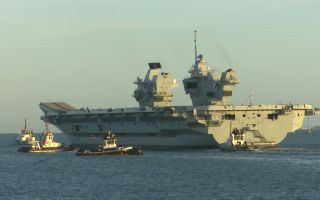
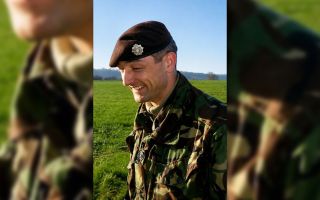
In the back room of the gymnasium of His Majesty's Naval Base Devonport, the Commander of the largest naval base in Western Europe growls as he pushes more than 150kg of metal away from his face.
"It's a very humbling sport," Brigadier Mike Tanner tells me between reps. "Because you're either lifting it, or it's coming down on your head! Without getting too prosaic about it, this is my mindfulness."
Brig Tanner is one of many who have recently fallen in love with powerlifting.
Something to do with weights?
Powerlifting is often confused with bodybuilding (which is all about aesthetics) and weightlifting (which involves funky moves to lift as much as possible above the head).
Powerlifting is very simple. It's three moves – a squat, a bench press and a deadlift. Or as I see it, standing up, pushing something up and picking something up.
"I continue to do powerlifting so that when I'm 85 years old, I can get up off the toilet seat – because that is a squat," says Jenni Sherwood, a referee for British Powerlifting, the governing body of powerlifting here in the UK.
"Mums are deadlifting their children all the time. These are normal body movements – we're just training them to a sports standard!
"I've seen 85-year-olds walk up to the stage with a stick, get on the platform, do their lift, pick up their stick and walk off," says Petty Officer Wesley McGuinness, who's been doing the sport since he was a teen.
A submariner chef, he's now represented Great Britain seven times, competing all over the world.
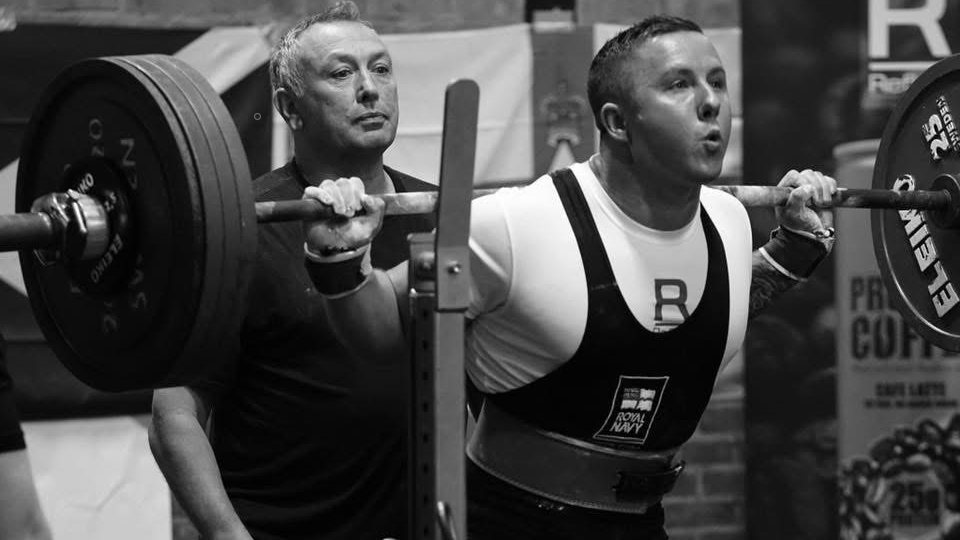
Big angry men with muscles?
Powerlifting must be one of the only sports where a 47kg woman can feasibly beat a 130kg man. All the scoring is weight-adjusted. The more you can lift relative to your body weight, the more points you get.
More importantly, though, the atmosphere at a powerlifting contest is utterly bizarre. And lovely. I've never been to a sporting competition of any type where members of the other team will cheer their opponents on.
Because whilst it's far from a solo sport, everyone's really only out to beat themselves. The big guy who can lift 300+ will be cheering for the guy on the other team with 100 on the bar as much as anyone else.
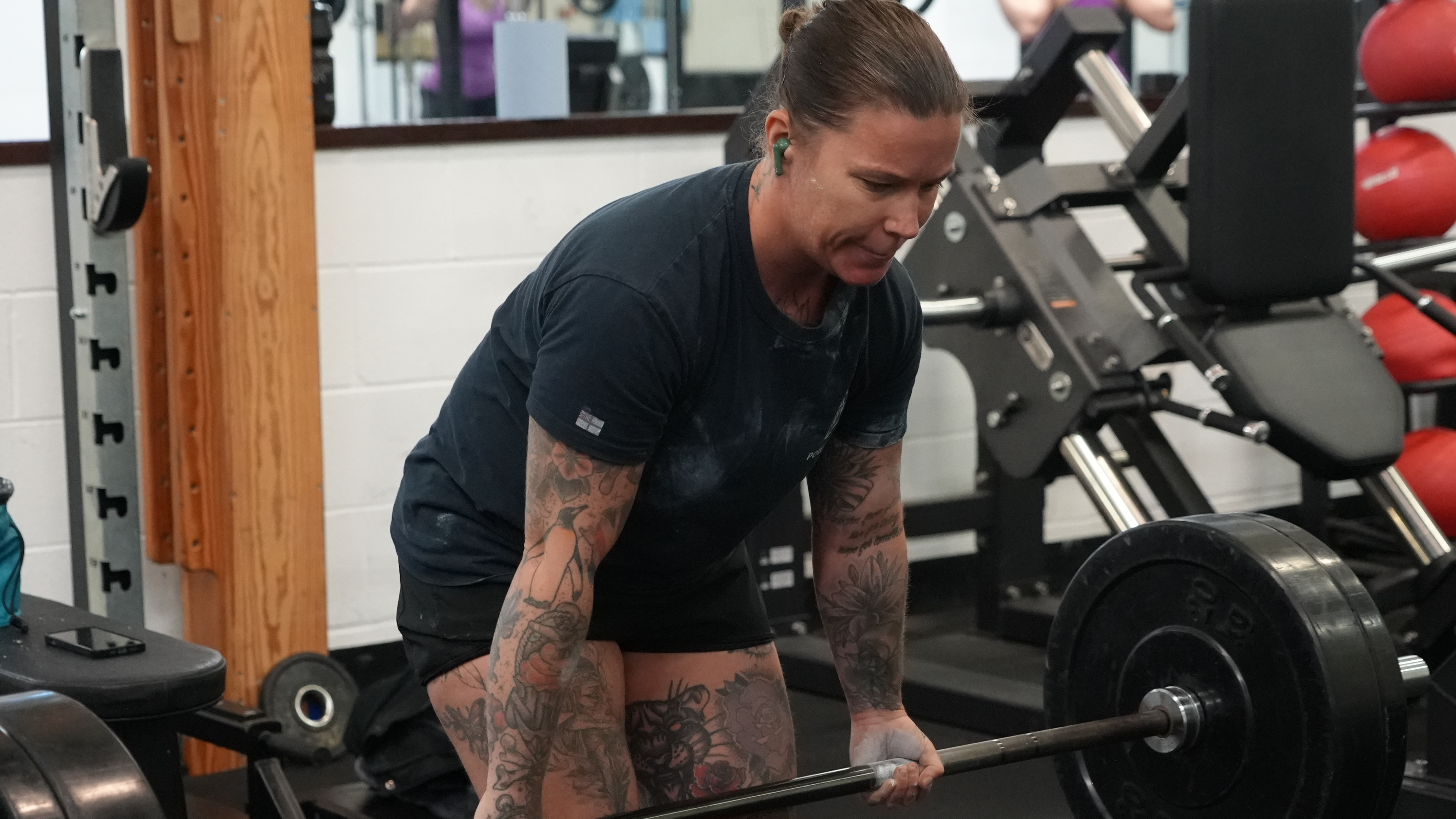
And as for women, they're showing up more and more to the sport. Which is good because recent research all shows women (and particularly menopausal women) should be lifting weights. Not pink fluffy weights. Big weights.
Amongst all its other health benefits, it builds bone density, which is crucial, as bone mass declines in everyone as they age.
Worry about the weight on the bar – not the scales!
Leading Hand Maria Richards, a chef in the Royal Navy, says she used to be a lot bigger than she is now. She only started powerlifting a year-and-a-half ago. She's just started competing in internationals and has become a real ambassador for the sport.
"People would say horrible words – especially on social media – and you think, 'I've got to change', but I don't care what people think now.
"I'm really happy with my body. Everyone's genetics are different, and there's no point wanting to be someone else!
"I do feel fitter than I ever have, it's just nice to have strong legs! And I think all girls should give it a go. Don't worry about what's on the scales – worry about what's on the bar!"
Peeing in a bottle
What about performance enhancing drugs? I hear you ask.
In the US, there are currently 19 powerlifting federations. Twelve allow drugs, seven do not.
In the UK, all the major federations prohibit and test for performance-enhancing drugs, although some do have 'non-tested' categories.
In the military, however, it's not really a consideration. Athletes would have far too much to lose – their career – by taking drugs.
Spreading through the military
Training whilst deployed, as with any sport, has its challenges.
As a submariner, Petty Officer Wesley McGuinness has no way of doing his training on board.
"Obviously, there's the lack of space!" he explains, "but we're also supposed to go undetected – you can't have me down in the bomb shop smashing hundreds of kilogrammes of weights around!"
Similarly, for Maria, whilst her ships may well have gyms on board, in high sea states, lifting becomes dangerous.
"Land is a nice stable surface," she says, "At sea you can get in quite a lot of trouble! I always make sure there's someone there, and sometimes you just can't train."
Why is it becoming so popular?
Some say it holds many parallels with military life – discipline for one.
But ex-RAF man and former CEO of British Powerlifting James Brincat-Smith summed it up nicely. "The military is a family, and this [powerlifting] is the greatest family in the world."
Related topics
Join Our Newsletter