Civil claim brought against Gerry Adams for alleged IRA bombing links is dropped
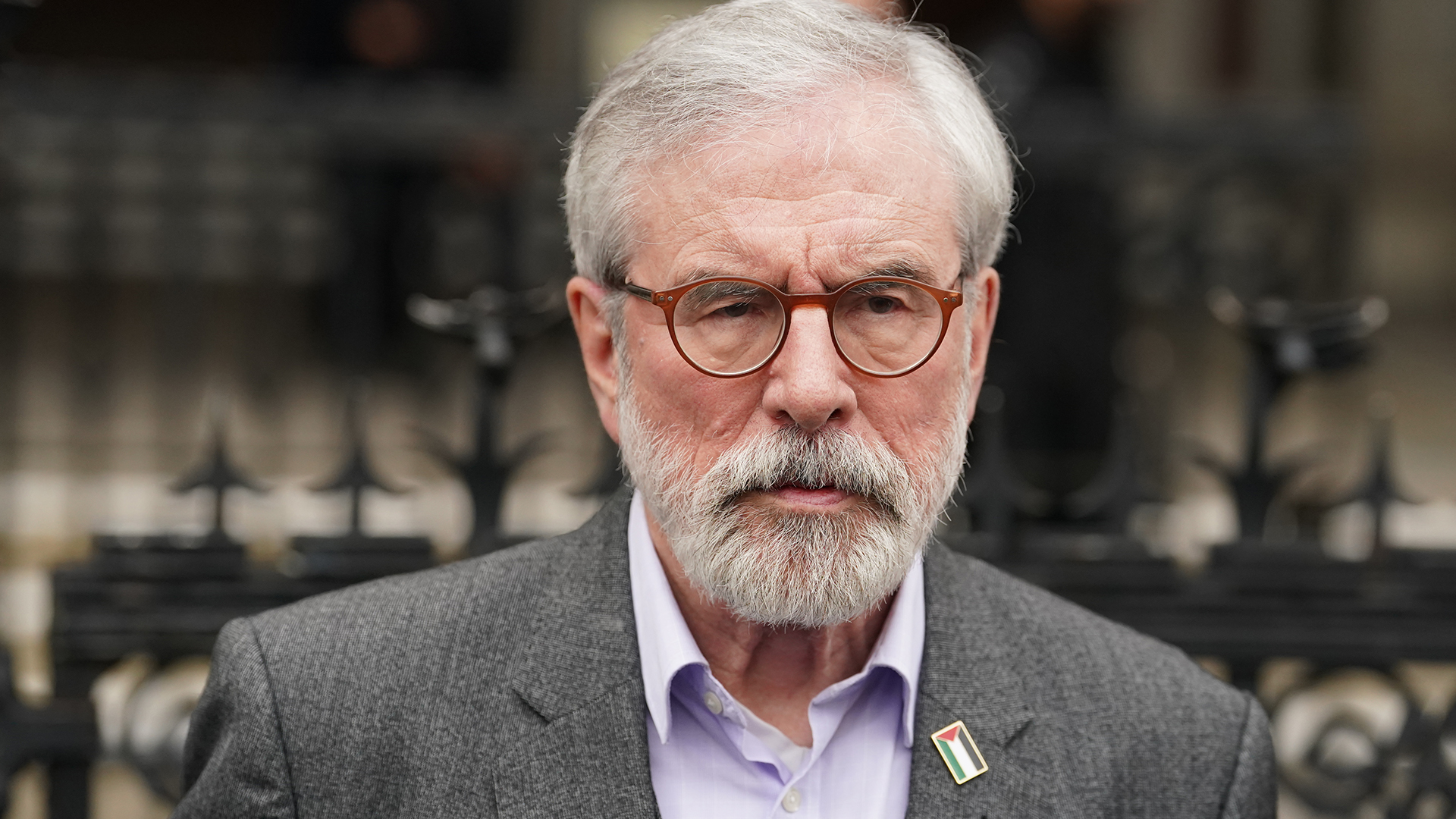
The civil case against former Sinn Féin president Gerry Adams has been dropped, with the lawyers representing the victims saying the claim had been "discontinued" with "no order as to costs".
The claimants were seeking to prove that Mr Adams, whom they alleged was a member and guiding force within the Provisional IRA, held personal responsibility for decisions to plant bombs in England.
But Anne Studd KC, representing the victims, told the High Court the case would be discontinued after proceedings developed overnight related to whether the claim was an "abuse of process".
In a statement following the announcement, Mr Adams said he attended the trial "out of respect" for the victims and to defend himself "against the smears and false accusations being levelled against me".
"I asserted the legitimacy of the Republican cause and the right of the people of Ireland to freedom and self-determination. I do so again," he said.
He added that he welcomed the end to a case that "should never have been brought".
What were the High Court damages brought against Mr Adams?
The claimants were suing Mr Adams for symbolic damages of £1, describing the claim as being for "vindicatory purposes" rather than financial compensation.
Mr Adams has repeatedly denied ever being in the IRA, stating he had no direct or indirect involvement.
The three individuals who brought the case were Jonathan Ganesh, who was injured in the 1996 London Docklands bombing; John Clark, a victim of the 1973 Old Bailey bomb attack in London; and Barry Laycock, a victim of the 1996 Arndale shopping centre bombing in Manchester.
The three men allege that Mr Adams was a leading member of the Provisional IRA on those dates.
What was Mr Adams's alleged role in the IRA?
The case heard from a police intelligence officer, who cannot be named, who told the High Court that Mr Adams was the "de facto leader" of the IRA and "undoubtedly a member of the Army Council".
Witness B said: "A great deal of intelligence which I read communicated, both explicitly and implicitly, that Adams was a senior member of the IRA Army Council and the de facto leader of the IRA."
He also said that if Mr Adams did not hold a high rank in the IRA, then he pulled off "a remarkable coup" in convincing the British, Irish and US governments, as well as many IRA members, that he was.
The witness added: "Had the defendant not been the senior figure in the IRA that he was, there would have been absolutely no point in the British, Irish and United States governments dealing with him the way they did on the road to the Good Friday Agreement in 1998."
Why was Mr Adams accused of being involved with IRA bombings in England?
A former member of British Army intelligence also told the High Court Mr Adams "had a command role in the IRA" and ran his own "fiefdom” in Belfast".
Known anonymously as Witness A, the retired serviceman said in a statement for the trial that he first met Mr Adams when he was arrested by British soldiers in 1973.
"At this point, we realised that Adams was operating at a higher level in the IRA than once thought, given the fact he was with these other PIRA members when we arrested him, Adams must also have had a significant role," he said.
"From this point onwards, I realised that Adams had a command role in the IRA regarding its strategy and terrorist operations."
He also said that the Army Council "had overarching control of all PIRA activity".
Witness A added: "My own beliefs are that Adams would not have been able to do what he did in the political arena if he had not been a member of the Army Council, and this includes all the time up to the Canary Wharf bomb in 1996."
He continued: “I understand that the decision to bomb GB mainland would have involved Adams, given that he was a member of the Army Council."
What did the victims want?
One of the victims who brought the case told the court that he wanted the "truth to be established".
Mr Laycock suffered back and leg injuries in the explosion at the Arndale Shopping Centre in 1996.
In his written evidence, he said he feels "victimised all over again" when Mr Adams denied he was involved with the IRA.
Speaking to reporters outside of the Royal Courts of Justice, Mr Laycock said: "My point of view in respect of this, this is for all the victims of terrorism, not only the British, the Irish and all the fathers, the women, the children, whoever.
"This is definitely for all the victims throughout the GB and abroad."
Asked why it was important to bring the case, Mr Laycock said: "Justice. I really want to see justice. I want to see justice in the end, and I want to see closure, not for myself."
Related topics
Join Our Newsletter