How the Cenotaph in central London's Whitehall became a focus for remembrance
The Cenotaph – a national memorial in the UK to the fallen – was only originally intended to stand for a week.
However, 105 years after the permanent stone Cenotaph was unveiled in London, the monument remains the focal point for the country's annual remembrance commemorations.
The King leads the nation in marking Remembrance Sunday, joined by family members, the Prime Minister and Armed Forces personnel in commemorating the nation's war dead.
How did the Cenotaph come to be constructed?
Cenotaph means 'empty tomb' in Greek, and it represents the unprecedented loss of life in the First World War.
Designed by architect Edwin Lutyens, Whitehall's Cenotaph was originally a temporary structure erected for Peace Day celebrations in July 1919.
Dr Steven Brindle, a senior historian at English Heritage, told BFBS Forces News: "A great many of the soldiers who were killed had no grave at all, their bodies were never found, and all of the rest were buried overseas, so grieving families in Britain had nowhere to go and visit to remember the dead.
"The Cenotaph arose from the crying need for a place of national commemoration."
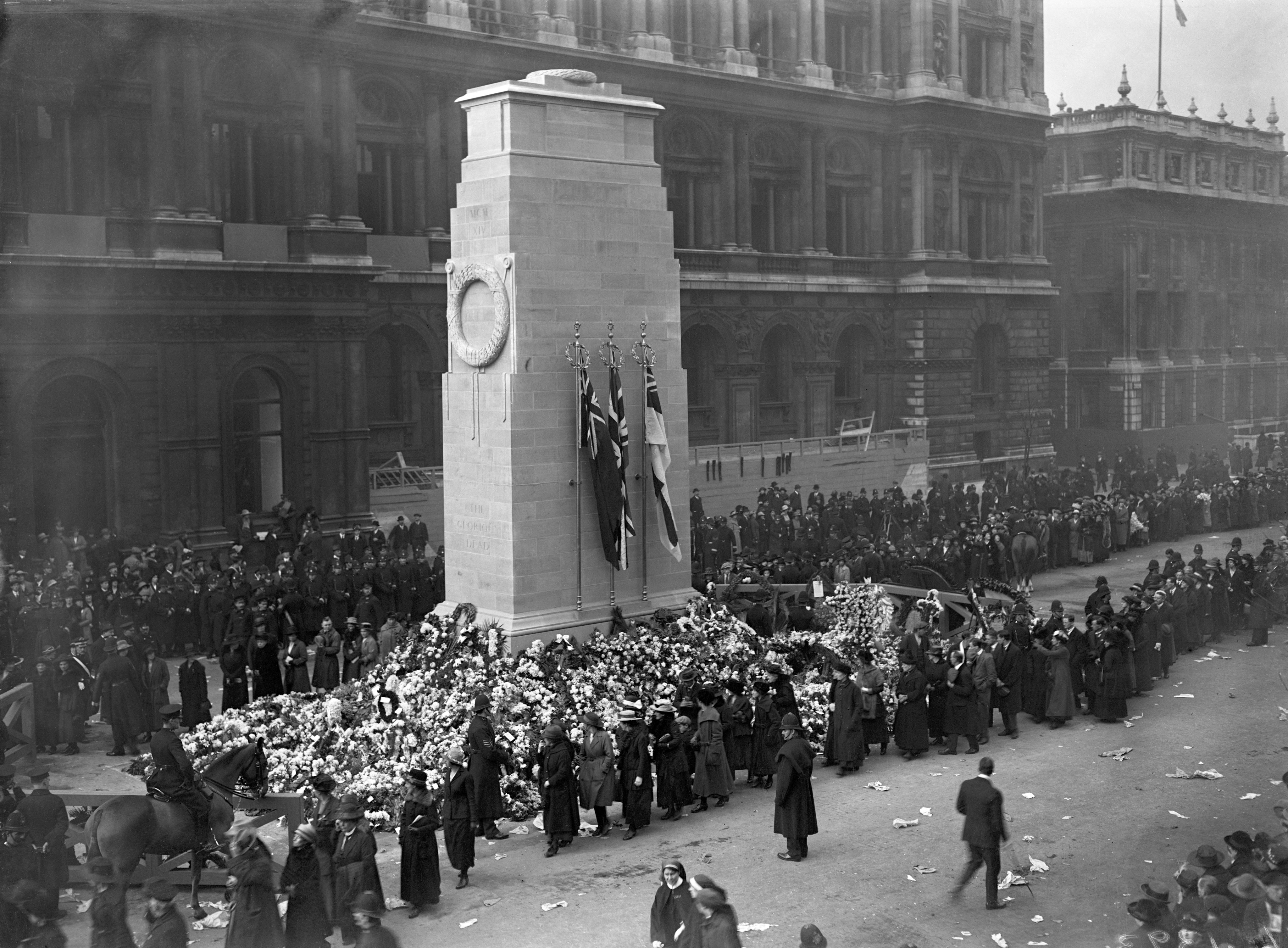
Made from wood and plaster, Lutyens' structure was originally due to be taken down after a week, but it proved very popular with the public.
Following the outpouring of national sentiment, a permanent structure was commissioned and built from Portland stone.
"Over a million and a half people came to visit it, huge numbers of them left wreaths and within two weeks a great field of wreaths and flowers accompanied it," Dr Brindle added.
"The Government realised quite quickly that this represented something really significant."
The original stood until January 1920, with the stone Cenotaph being unveiled by King George V on Armistice Day, 11 November, that year.
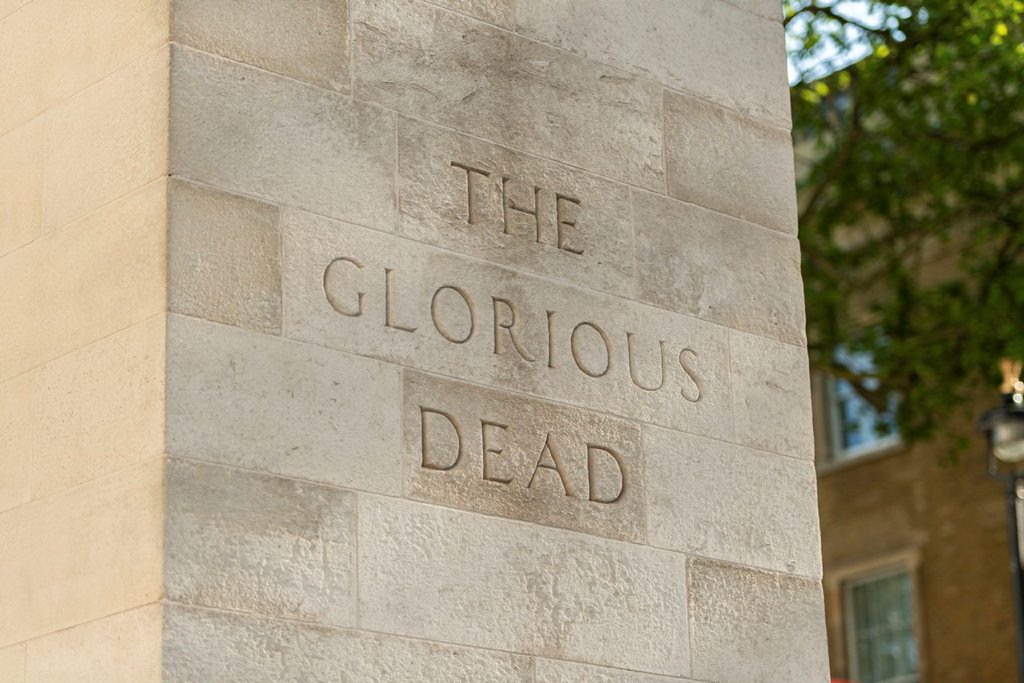
It had an abstract, simple design and bears the inscription 'The Glorious Dead'.
On Armistice Day 1920, the burial of the Unknown Warrior took place, with the king placing roses on the coffin next to the newly-unveiled Cenotaph.
The Unknown Warrior was a British soldier killed during battle in World War One and whose remains were selected for burial at Westminster Abbey, where the tomb remains to this day.
"Lutyens's Cenoptah, of course... [is] in a public place, in the street, in the heart of Westminster," Dr Brindle said.
"It seemed to fulfil that commemorative function in a much more public way than the Tomb of the Unknown Soldier, which is inside a church."
No names are inscribed on the stone Cenotaph.
The wooden top from the temporary 1919 structure went on to be displayed by the Imperial War Museum at Crystal Palace.
Dr Brindle says Lutyens' Cenotaph showed "how a memorial could be timeless and could represent those values of honour, loyalty, duty, could represent sorrow and pride".
"All those emotions could be projected onto a monument which is in itself very simple," he continued.
"The name Cenotaph means 'empty tomb' – an empty tomb to stand for all of the dead."
After the Second World War, a new inscription was added to commemorate the conflict.
Today, the Cenotaph is seen as the national focus for Remembrance for all those killed in the service of their country in every conflict.
:: The interview in this article was originally conducted in 2020 – it has been updated to reflect this year's Remembrance period.
Related topics
Join Our Newsletter