Keep your motor running: RAF carries out its own F1 pitstop as Typhoons take on more fuel
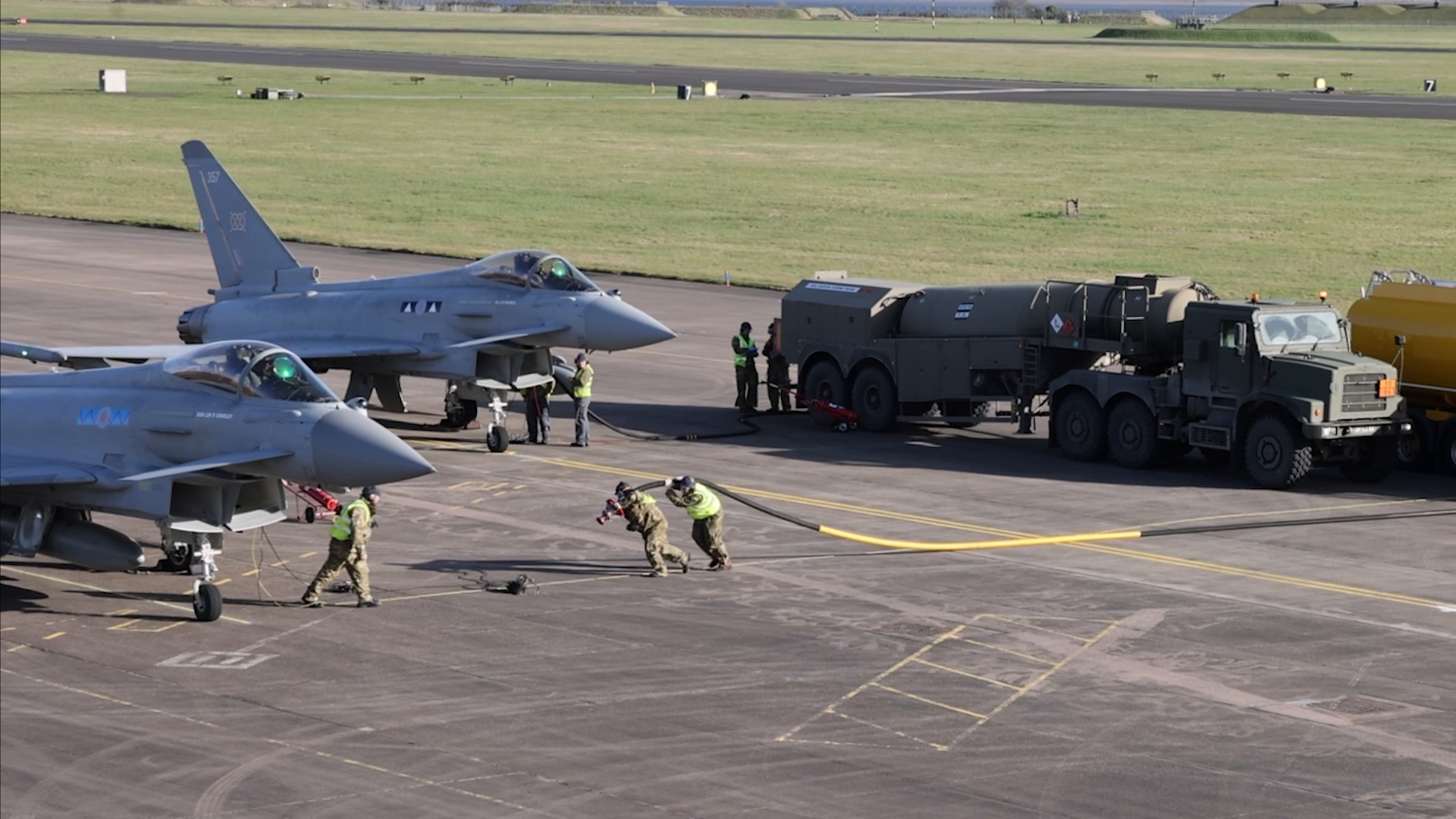
Typhoons have been taking on fuel with their engines still running, as personnel deployed from RAF Wittering carried out hot pit refuelling on the warplanes during Exercise Agile Warrior 26.
Hoses went on while the jet stayed live, with no full shutdown before the turnaround at Leuchars Station.
Using the Joint Operational Fuel System and Tactical Aircraft Refueller, in other words mobile fuel bladders and pumps, ground crews worked quickly to get the aircraft ready for their next sortie.
- RAF Typhoons now hunting for drones in the skies over Bahrain as Iran war rages
- The B-1 Lancers return to RAF Fairford as an old bomber finds a new conflict
- We're in a new era of RAF bases being attacked, warns the Chief of the Air Staff
The drill formed part of the RAF's wider homeland defence exercise, ensuring the Royal Air Force remains ready to "fight tonight".
The RAF's 'F1 pitstop'
The RAF has its own phrase for the drill. During Typhoon hot-refuelling training with the Italian air force in June last year, Squadron Leader John Mercer, the senior engineering officer at No 29 Squadron, said: "The ability to hot refuel is one of the features of Typhoon that gives it a real operational edge.
"Like our version of an F1 pitstop, you keep the engines running, get the fuel in quickly and get the aircraft back in the skies on its next mission. It saves time and allows you to keep all of the key systems powered up."
The process allows a Typhoon to get airborne again with a minimum of time on the ground, saving up to 66% of time in some cases.
The aircraft lands and stays live, the fuel goes in, the key systems remain powered, and the jet is turned around for the next task without the full shut-down and restart cycle.
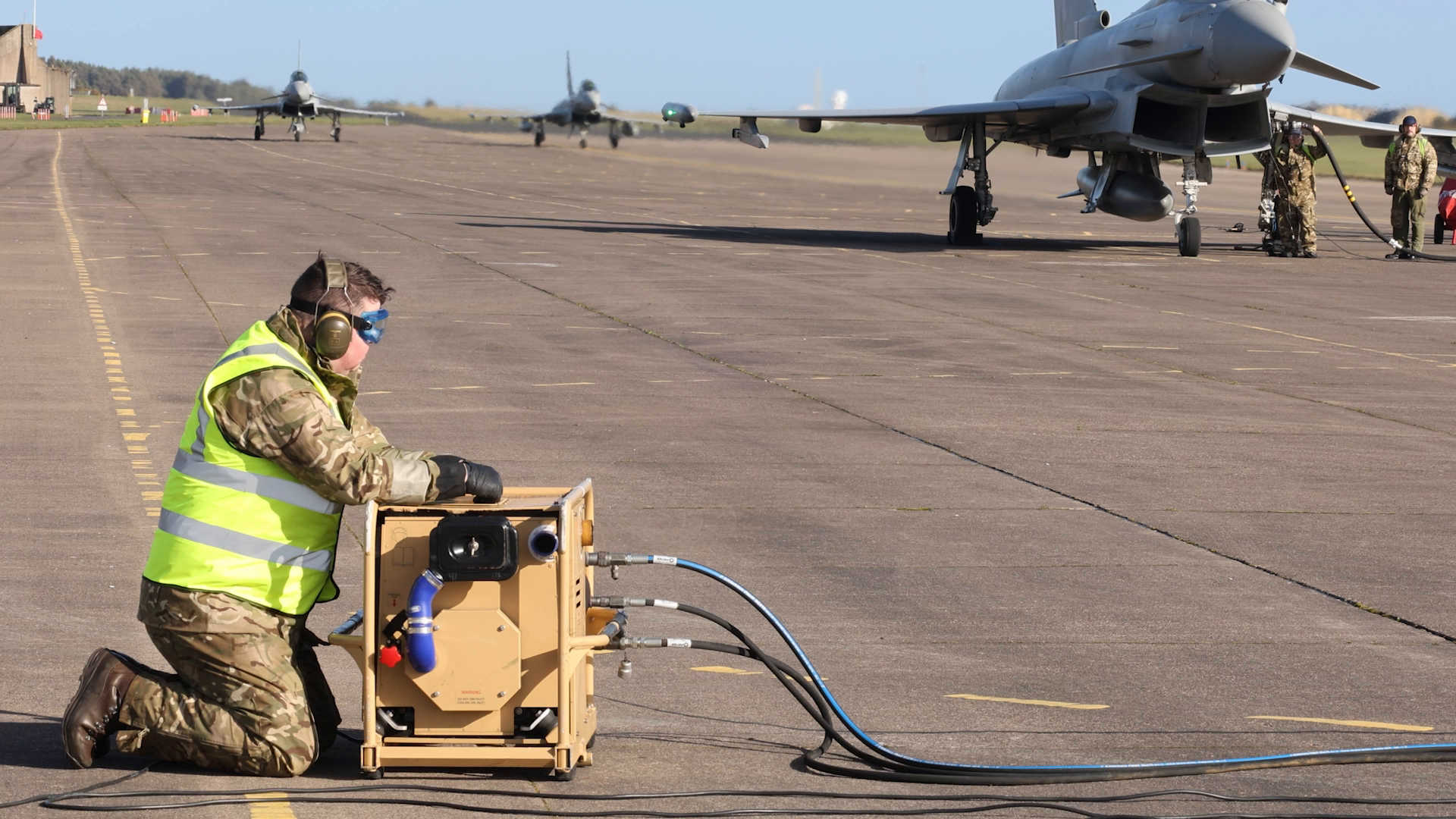
Ground crew personnel draw fuel from fuel bladders and pump it through a filter water separator and hoses into the aircraft. This is done with the help of a generator that creates enough pressure for the fuel to reach the aircraft.
Fuel on the move
At Leuchars, the Typhoon refuelling drill relied on the Joint Operational Fuel System and a Tactical Aircraft Refueller - deployable kit rather than a fixed fuel farm.
RAF Wittering's fuels specialists showed what that can look like in a 2023 trial, setting up a 10,000-litre bladder capable of transferring fuel at 400 litres per minute, building the system in six hours, and refuelling an F-35B with its engine still running after taking fuel forward from an A400M Atlas.
The method has since shown up across the force: on RC-135 Rivet Joint, where the RAF said it cut ground down time and supported operations away from main bases and at Ämari Air Base in Estonia, where RAF crews trained Portuguese and Estonian personnel on Typhoon hot-pit refuelling.
As well as at RAF Leeming during Point Blank 26, where USAF crews worked alongside RAF air traffic control, fuel, fire, safety and airfield management teams, and were able to improve hot-pit efficiency by 60%.
The wider exercise
Agile Warrior 26 involved air and ground units across multiple stations, with key partners including 39 Engineer Regiment, 20 Works Group and embedded capabilities from UK Space Command.
At RAF Coningsby, that included rapid runway repair training with 39 Engineer Regiment, with personnel carrying out battle damage assessment and prioritising repairs to get the airfield back into use.
The exercise built on lessons from Agile Shield 24 and was framed by the RAF as part of its preparation ahead of Nato's Steadfast Defender 27, one of the alliance's biggest exercises.
Related topics
Join Our Newsletter