Aircraft carrier's deployment is a show of force to respond to Russian threat, expert says

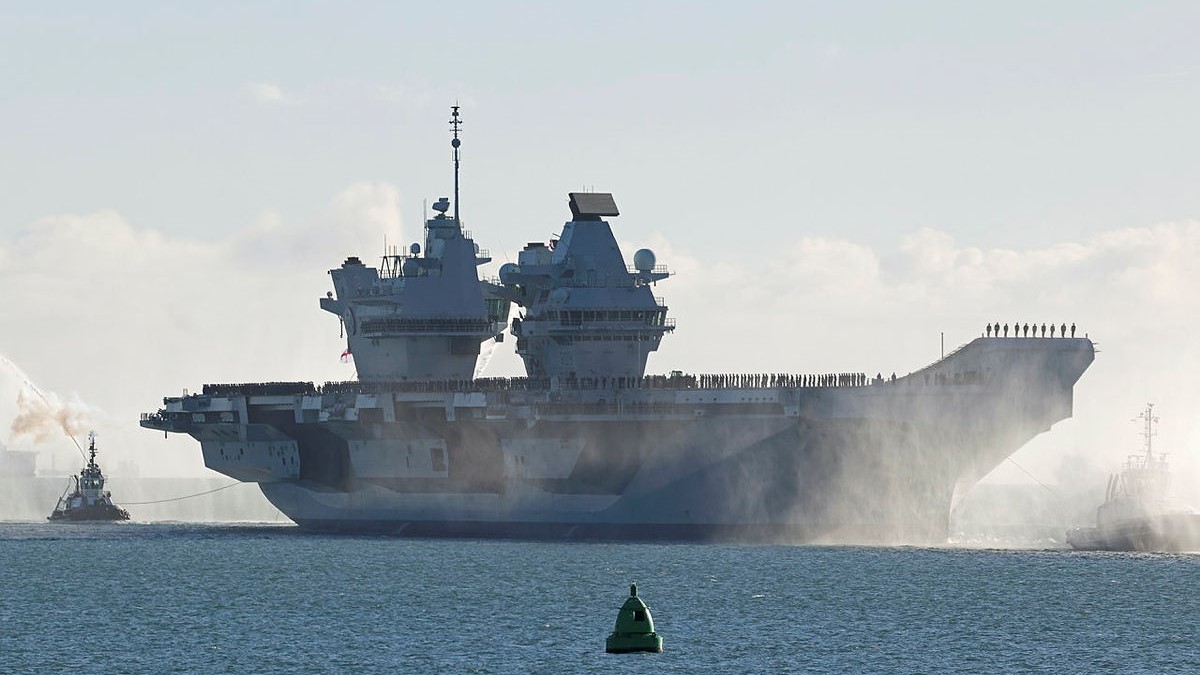
HMS Prince of Wales' deployment to the High North will be used to assert dominance in the North Atlantic to combat the Russian threat, an expert has told BFBS' Sitrep podcast.
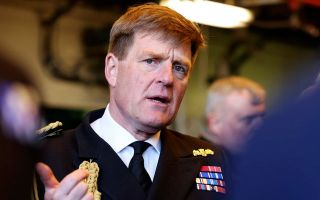
Commodore (Ret'd) Steve Prest said that the vessel's movement to the top of the world is a return to the activities that carriers did at the back end of the 20th century and during the Cold War.
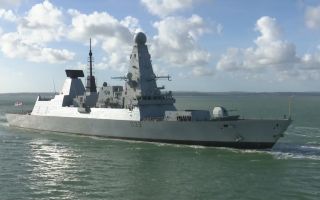
HMS Prince of Wales has recently joined up with Type 45 destroyer HMS Duncan ahead of Operation Firecrest, where the UK will deploy a Carrier Strike Group to the North Atlantic and the High North.
The CSG will work with the US, Canada, and other Nato allies after the MOD said that incidents of Russian vessels threatening UK waters have increased by a third in the last two years and that submarine activity in the North Atlantic is now back to the same levels as the Cold War era.
BFBS' Sitrep podcast, hosted by Professor Michael Clarke and Kate Gerbeau, spoke to the Rusi associate fellow in military sciences about how the aircraft carrier will be used in the High North and how personnel will find the deployment.
How will the aircraft carrier be used in the Arctic?
The aircraft carrier will be utilised on two different exercises, Exercise Tamber Shield and Exercise Dynamic Mongoose, before she begins her role on the CSG.
Ex Tamber Shield will involve helicopters and vessels conducting swarm attack drills in the fjords around Bergen in Norway, while Ex Dynamic Mongoose is Nato's premier anti-submarine exercise in Northern Europe that focuses on training allied forces to detect, track and counter conventional submarines.
For Ex Tamber Shield, Cdre (Ret'd) Prest said that the aircraft carrier will act as an air base at sea, as she has a large flight deck.
However, HMS Prince of Wales' role will be very different on Ex Dynamic Mongoose.
"The carrier there will be a command-and-control platform. It [She] will also deploy the Merlin anti-submarine warfare helicopters," he said.
"If you can get your air base much closer to the scene of the action, which is what the carrier allows you to do, that gives your helicopters much greater endurance on task, because they're spending less time in transit."
How will personnel find the deployment?
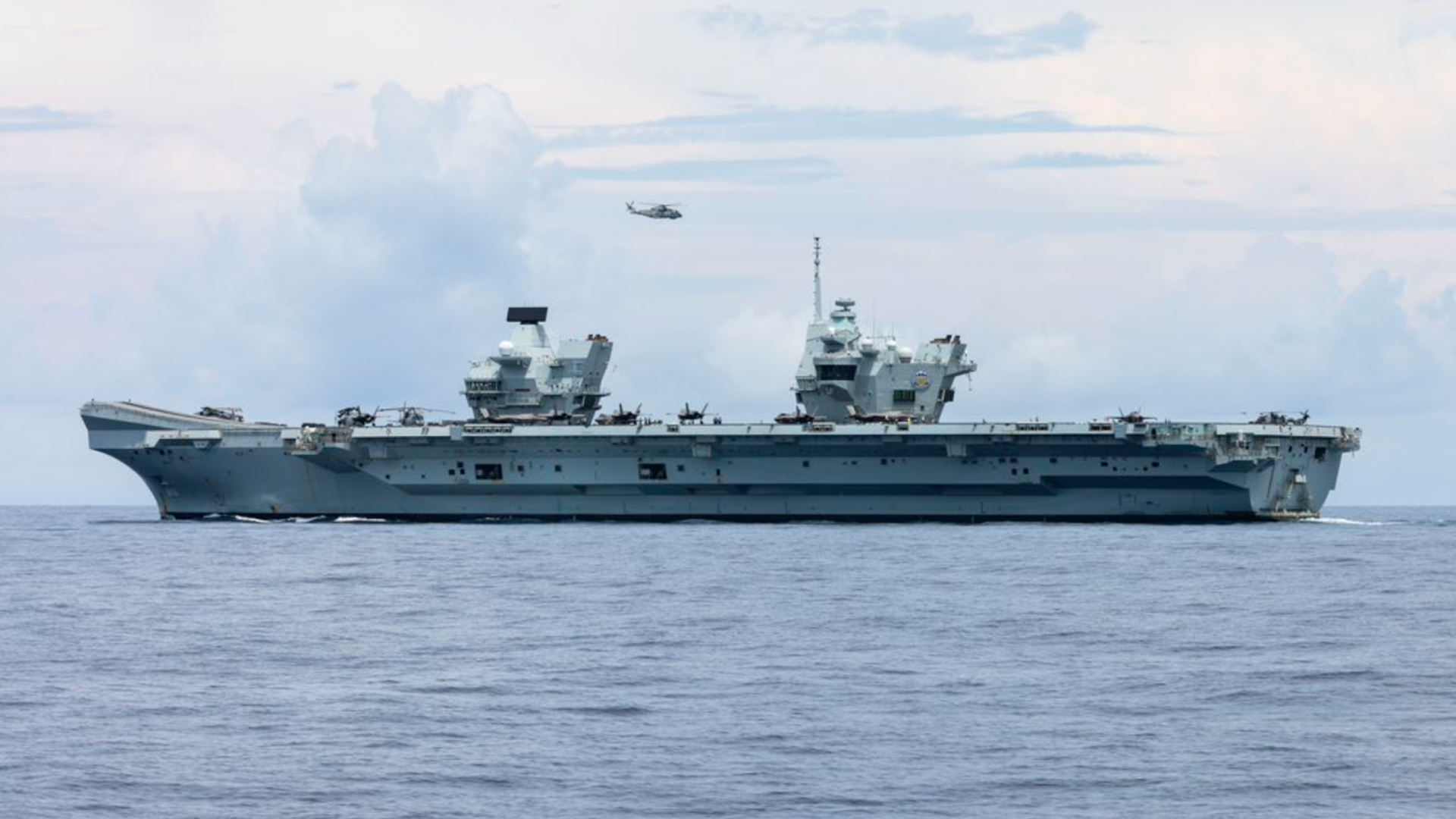
Given that HMS Prince of Wales' last deployment was on CSG 25, where she spent eight months at sea traversing the world on a 40,000-mile journey, taking her to Australia, Japan and the South China Sea, her new deployment will be a vastly different experience for the personnel in the High North.
However, the former Weapon Engineer on HMS Westminster told BFBS' Sitrep podcast that the ship will slip into routine after the aircraft carrier has dealt with 'harbour hassle'.
"So, once you get a ship to sea and it [she] settles down in a routine, particularly when you get into an operational routine, the daily drumbeat of activity, whatever the mission is that day, gets into a pattern," Cdre (Ret'd) Prest said.
"You practise and train inside the ship to deal with fires and floods and the different emergencies inside. Clearly, there's the navigation aspects going on, and then there's whatever your operational job is."
The Rusi associate fellow in military sciences explained that the vessel will be concentrating on its operational role, which is usually based around aviation.
There is also the fact that once the vessel is at sea, the personnel will be working all day, every day to keep the ship sailing and conducting exercises, with little time off beyond the odd maintenance day, with Cdre (Ret'd) Prest, describing those days as "the good days".
"When you're at sea, you're working, you're on. The life of a ship is a 24/7 activity," he added.
"Once the ship gets to sea and it's into its rhythm and everyone's settled down after a couple of days.
"Yes, everybody's working hard, but it feels less stressful because you're just doing what you've been trained to do, what the ship's designed to do, what the ship's company is organised to do, and then you just keep going."
What challenges will the conditions bring?
One of the main challenges for personnel operating in the High North while they are deployed on operations will be the effect of the freezing temperatures on the equipment, because the environment shapes what personnel can do as much as the equipment they have.
With HMS Prince of Wales operating in the High North, there will be several difficulties for the 65,000-tonne aircraft carrier, including managing ice on the runway and the harsh environment affecting some electronics.
"So, what you can do in the English Channel or in the Mediterranean might be different from what you can in the Gulf, where it's very, very hot, or in the Arctic, where it's very, very cold," Cdre (Ret'd) Prest explained.
"And those environments bring with them their own challenges. And you can think about it and game it through and do your tabletop tactics as much as you want.
"You only really get to learn how to do it when you go and do it."
He highlighted that Baltic conditions, and therefore icing, can impact the way that fuel acts and also that personnel will need to make sure that their weapons are free of ice.
"At those low temperatures, fuel behaves differently. Your lubricants that… keep the machinery going behave differently," he said.
"Keeping the weapons free of ice so they're ready to fire should a threat come inbound. All of that is different."
You can listen to BFBS' Sitrep wherever you get your podcasts, or on BFBS Forces News YouTube channel.
Related topics
Join Our Newsletter